Northern Territory, Australia 2020

This trip has changed so many times because of all the chaos around COVID-19. Whenever a new hotspot turns up flights are cancelled and new flights booked. So the first booking was a return trip from Sydney to Uluru with Jetstar. We’d booked 3 nights at Sails in the Desert at Ayers Rock. All good until Sydney became a hotspot according to the Northern Territory government and the flights were cancelled and we were given Jetstar credit coupons. We don’t live in Sydney so we thought we were safe to book Newcastle to Brisbane and Brisbane to Uluru then Uluru back to Sydney. Then Port Stephens was declared a hotspot by the NT and Newcastle Airport is in Port Stephens. After phone calls to Newcastle Airport, the Queensland government and the NT government we found that if we went straight to Newcastle Airport without stopping then stay at an airport hotel in Brisbane we were right to go.

Next, our Uluru to Sydney flight was cancelled so booked Uluru to Brisbane to Newcastle flights. All good until the Aboriginal people closed Uluru National Park and Uluru Airport. This means all flights cancelled and more Jetstar credit coupons.

The closure of Uluru was announced yesterday on Tuesday 4th August but we were determined that we weren’t staying home. We decided to keep the Newcastle to Brisbane flight and work out something from there. So on to the diary ….

Wednesday 5th August, 2020
Newcastle to Brisbane

Our flight from Newcastle to Brisbane leaves at 5.30pm so we have to decide this morning if we’ll just stay in Brisbane for a few days and return to Newcastle on Monday as planned… or to take another week off work and either fly to Cairns or to Darwin. Mark checks out the weather forecast and it looks bad all along the east coast over the weekend and into early next week. Darwin on the other hand, will be hot and sunny so it’s a no-brainer.

Besides, I’ve been talking to Kerrie and she tells me that Ross Kerridge will be on the Brisbane flight this afternoon. Marion is already in Darwin staying with her sister Margaret so I give her a call. She convinces me that Darwin is the place to be – hot and tropical!

Kerrie and David are leaving tomorrow to drive to Brisbane before Queensland shuts its borders to NSW on Sat morning. They want to see Todd in case this thing goes on forever.

But then comes more news that some fuckwit from Sydney had been spreading his germs all over Hamilton on the weekend so there’s every chance that the Northern Territory will now class Newcastle as a hot spot.

I call Marion who’s been calling the NT government and I do the same. So far so good and we decide to take the chance. At 1pm I book Qantas flights for tomorrow to Darwin returning to Brisbane next Thursday.

Besides all the phone calls, border restrictions, both of us sorting out annual leave from work and constant Facebook posts about Hamilton being Covid infected, I still haven’t packed! I’m actually standing in the middle of our bedroom just staring into space.

Part of me wants to just forget the whole bloody thing but then I know this might be the only chance for who-knows-when that we’ll get to go away. We just want to be on a plane and be somewhere hot and steamy.

At 3.30pm we say goodbye to our three darling girls and are heading towards Newcastle Airport in an Uber. We have to track our trip so that we can prove we didn’t get out of the car between home and the airport which is in the Port Stephens hotspot. We chat with Ross then all don facemasks as we board the plane.

In Brisbane we walk to the Ibis Brisbane Airport Hotel where we have to isolate for the night. Originally we’d booked a cheaper place but it was 7kms from the terminal which doesn’t fit in with the Northern Territory’s border rules of staying within 4kms of Brisbane Airport. All this shit can make your head spin!

At the Ibis we have to check in and not leave our room. We’re allocated a quarantine room where we can get room service. A few drinks and a pizza later we’re in bed.

Thursday 6th August, 2020
Brisbane to Darwin

This morning we walk to the terminal and grab a coffee and muffins before boarding at 8am. Once again, masks are compulsory, which isn’t a great experience on a four and a half hour flight. Since we’re flying Qantas we expected to be able to watch inflight movies but because of Covid19 it’s not available. WTF?

The issue today is that our flight lands at 12.30pm which is half an hour after the NT government decides which areas are classed as hotspots. And because of the big deal about Covid cases in Newcastle (they’ve been two confirmed cases overnight) we suspect that it will become a hotspot and we won’t be allowed in and will have to go into quarantine until the next available flight out.

Anyway we can’t do anything about it and just go with the flow. At Darwin airport we all line up to be interviewed and to hand in our border passes. Ross is ahead of us so we know that if he gets through we should be okay as well. And yes, he’s in! Next our turn and we’re asked lots of questions before being waved through.

So, so great to be here and wonderful to walk outside into the warm sunshine. Palm trees and Aboriginal sculptures remind us that we’ve actually made it to the tropical Top End.

Marion is here to pick us up in Margaret’s little yellow car. We all fit and head off to Margaret’s place where Marion has made lunch.

We drive to Fanny Bay which is one of the older and nicer areas of Darwin. And we love Margaret’s house – in a tree-lined street surrounded by tropical plants and tall palms. We sit outside next to the pool, making salad sandwiches and swapping Covid stories.

Lots to talk about and plans to make. Later Marion drives Mark and me around the city to get our bearings. Most of the town is flat with the city proper on a low bluff overlooking Darwin Harbour, with Frances Bay to the east and Cullen Bay to the west. We like how small it is and that the water is never far from anything.

Marion drops us at the Travelodge where we’ve booked a room for tonight. It’s in a good spot in the town centre but not sure if we’ll stay here tomorrow – we’ll check out booking.com later. After dumping our bags we’re straight into the pool. It’s wonderful to be in the water again and surrounded by lush gardens and even a waterfall.

Later while resting in our room, I read up on the history of the area which is what we usually do before we go anywhere but there wasn’t time this trip. This is what I learnt …. The greater Darwin area is the ancestral home of the Larrakia people, but on the 9th September 1839, HMS Beagle sailed into Darwin harbour during its survey of the area. John Clements Wickham named the region “Port Darwin” in honour of their former shipmate Charles Darwin, who had sailed with them on the ship’s previous voyage in 1836. The settlement there became the town of Palmerston in 1869, but it was renamed Darwin in 1911.

At 5 o’clock we meet Margaret outside. We’ve met her a couple of times before when she’s been down to Newcastle for Christmas and for Marion’s birthday parties on Boxing Day.

She drives us back to her place to drop off the car then the three of us walk down to the Darwin Trailer Boat Club on the shore of Fanny Bay. It’s the city’s oldest seaside club, now a Darwin institution. We’re surprised how many people are here and it’s why Marion and Ross had come down earlier to grab a table. Apparently it’s like this every night as people come to watch Darwin’s famed tropical sunsets.


After ordering beers and wine, we enjoy the spectacle of the sun sinking into the Timor Sea. It reminds us of untold times in Bali that we’ve watched sunsets on Kuta Beach – one day again soon, we hope.

After a seafood dinner and smorgasbord, Mark and I call an Uber and head into town. Instead of going back to our room we decide to check out the area for a bar. We find a cluster just around the corner in Mitchell Street – Shenannigans, The Tap Bar and Six Tanks Brewery. We settle in at The Tap Bar for an hour listening to live music and trying to dodge the smokers.

We also book a trip to Litchfield National Park on Sunday – all online in five minutes flat – the internet never ceases to amaze me!

Home to bed about 10.30pm.

Friday 7th August, 2020
Darwin

Because we’re smack in the middle of the dry season (which runs from May to October), we’re not surprised that the weather is warm and sunny without a cloud in the sky. The Top End has distinct wet and dry seasons with the temperature being virtually the same all year round. While the dry season is very dry, the wet season is very wet with monsoonal downpours and thunderstorms every afternoon. Apparently, this is the ‘off’ tourist season but Margaret said that most locals love it.

This morning we decide to move hotels. We’ve found The Palms on booking.com and love the tropical look of it. While the Travelodge has a nice pool area, it’s still one of the generic high rise hotels. And anyway, the Palms is cheaper at $88 a night.

Dragging our packs through the streets we pass lots of Aboriginal people just milling about or squatting in groups – some of them drunk but all looking pitiful. So sad!

We make our way to The Esplanade which runs along the cliffs of Darwin Harbour and the green lawns of the shady Bicentennial Park. The Palms Resort sits on the corner of the Esplanade and Herbert Street, a perfect spot within walking distance of shops and the Waterfront.


After checking out the lovely pool (we’ll be back later) and settling into our room, we head off in search of breakfast. We decide to head down to the Waterfront, walking along The Esplanade.

This is a truly lovely area with lots of old buildings. Actually, we’re surprised to see any old buildings at all as the city has been almost entirely rebuilt four times – after the 1897 cyclone, the 1937 cyclone, Japanese air raids during World War II, and Cyclone Tracy in 1974. We suspect that most of these ‘old’ buildings are replicas of what once was.

What is for real, though, is the very pretty Government House. It’s a white Victorian Gothic villa with shaded verandahs set amongst lush hillside gardens. It’s the oldest European building in the Northern Territory and miraculously survived all the cyclones and bombings.

We also pass State Square which houses the Supreme Court buildings and Darwin’s Parliament House – a huge monstrosity of a building – what were they thinking???

Nearby we find a staircase shaded by trees and vines that leads down to the harbour. At the bottom we come across the historic Oil Tunnels and plan to come back for a tour after breakfast.

Down more steps we find the Darwin Waterfront with manicured lawns, a swimming lagoon, restaurants, bars and the Wave Pool. This is a man-made outdoor pool complete with a sandy beach and where artificially made waves let swimmers ride boogie boards and other floaties. It looks amazing and we wish we’d brought our swimmers – we’ll just have to come back another day.

Breakfast is eggs on toast at an outdoor café then we head back to the Darwin Tunnels. They were built around 1942 after Japanese air raids destroyed the above-ground oil tanks. It was decided to build underground bomb-proof tanks but by the end of the war only a few tunnels had been completed and none had ever been used. Still, it’s interesting to walk along the 650 foot tunnel which is lined with information boards of photographs and stories about the Allied wartime events up here at the Top End.

Back up in the city we find Smith Street Mall where we spend ages in an Aboriginal art gallery. We buy a painting, a bag for me, a wine cooler and fridge magnets all painted by local people. We’re given coloured printouts with a photo and bio of each artist. The shop owner tells me that the lady who did the painting on my bag died in a car crash a couple of years ago – really sad.

On the way back to Palms we buy a couple of kilos of prawns to take to Margaret’s for dinner tonight then stop at historic Lyons Cottage where we sit outside in the shade of an umbrella drinking iced chocolate and iced tea – really hot by now!

So because of the heat we cool down in the pool, loving being here in the tropics. After an afternoon nap in our air-conditioned room, we grab an Uber to Margaret’s place. We sit around chatting, peeling prawns and drinking beer and wine. I actually like the wine – a Tasmanian bubbly called Josef Chromy Roaring Beach – I take a photo to remember it. Ross cooks a barbeque and Marion makes up a salad.

We make arrangements for a trip to Katherine on Monday with Marion and Ross. We’ll stay two nights and stop off at a few places on the way. Very excited about it!

After dinner we call another Uber and get the same lovely young Bangladesh guy who brought us here. He wants to bring his mother to Australia because he’s scared of her getting Covid in Dhaka – not surprisingly it’s rife over there.

Of course, we don’t go straight to bed but have a few drinks at the Darwin Hotel just around the corner from The Palms. This is only after Mark hires an electric scooter which is the rage here in Darwin. I have a try but I’m a wimp so we give up.

Saturday 8th August, 2020
Darwin to Litchfield

This morning we’re being picked up at 7am for our day trip to Litchfield National Park. Because of Covid19, tour companies can’t use minivans – social distancing – so we’re picked up in a big tour bus even though there are only twelve of us on the trip. Our driver is a tall, pretty woman called Marietta who came to Darwin from Holland twenty years ago as a backpacker and hasn’t left. We like her.

We only have one more couple to pick up and we’re soon heading out of town speeding south down the Stuart Highway. ‘The Track’ as its often called, runs almost three thousand kilometres from Darwin to Port Augusta in South Australia and is named after Scottish explorer John McDouall Stuart – the first European to cross Australia from south to north (sorry, never heard of him).

And when I say speeding, I mean speeding – the speed limit is 130kph which has only recently been changed from no speed limit at all!

Marietta introduces herself then we all call out our names and where we’re from – lucky no Melbourne people who are the lepers of Australia at the moment – ha, ha. Melbourne is currently in Stage 4 lockdown and has been for about six weeks – would hate to be them.

Litchfield National Park is just an hour-and-a-half drive from Darwin and is an important area to the Koongurrukun, Marranuggu, Werat, and Warray Aboriginal people. But the park is named after the explorer Frederick Litchfield – another European. It’s just occurred to me that Darwin, the Stuart Highway and now Litchfield are all named after white people – and probably heaps of other places as well. How fucked up for the Aboriginal people!

The landscape is dry and barren, typical of the Australian tropical savanna covered with dense grass and scattered trees. The land is also mainly flat with only a few straggly trees and shrubs – not beautiful but interesting.

Our first stop is for morning tea in the small town of Batchelor, ‘the gateway to Litchfield National Park’ (and you guessed it, named after another whitey, Mr. Batchelor, in 1912). It’s a pretty place with lots of greenery and tall trees. It’s like an oasis after the rest of the trip.

In Batchelor we stop at the Banyan Tree café, of course, named because of a huge banyan tree attached. It’s a cute place with an old car filled with tropical plants and a coffin with a white faced dummy inside.

After everyone loads up on tea and coffee we set off for the termite mounds. A really impressive sight is the hundreds of Magnetic Termite mounds standing two metres high on a wide flat plain. From a distance it looks like a graveyard with tall grey headstones. They’re up to one hundred years old with magnetic compasses – their thin edges pointing north-south and broad backs facing east-west. This aspect thermo-regulates the mounds so the termites don’t get too hot or too cold.

Nearby, Mark and I are more impressed with the four metre high Cathedral Termite Mounds. Always wanted to see these and we pose for photos next to them – tick it off the bucket list!


Now we keep driving through the Park to Florence Falls. Marietta tells us that it’s a bit of a walk but worth it once we get there. We change into our swimmers from the carpark to walk along tracks then down lots of stairs through the rainforest-filled gorge to reach the Falls – spectacular!


Water cascades into a crystal clear swimming hole surrounded by sandstone walls and the monsoon forest. We dive straight in even though the water is ‘refreshing’. Mark swims over to the falls then comes back to get me. This is the first time I’ve ever stood directly under a waterfall – tick that off the list as well!


We spend ages just floating around soaking up the beautiful surrounds. Because of the lack of tourists (Corona Virus), there are only about thirty people here. Normally this place is packed!


Time to head back, we decide to return via the one kilometre Shady Creek walk. This loops along a stream through the rainforest – so pretty. Towards the end of the track we emerge from the shade of the forest into dry open woodlands and the scorching sun. At the top we chat with some of the group then all pile back onto the bus.


Our next stop is Tomer Falls near the western boundary of the park. This time we can’t swim as it’s too hard to get down into the gorge. Instead we walk to the viewing platforms and just take photos.


Heading about 60 kilometres further south, Marietta tells us that we’ll be having lunch at Wangi Falls which is the most popular attraction in Litchfield. This is completely different again with a manicured picnic area and with the falls and pool just a short walk from the carpark.


Before swimming, though, we all have lunch in the kiosk/restaurant. Social distancing here, with our group the only ones allowed to sit down to eat. Lunch is a cold buffet salad which is perfect on this very hot day. We chat with an older couple originally from Scotland. She’s a sweet little mouse and he’s hilarious. Totally politically incorrect every time he opens his mouth (he never draws breath) so we love him instantly.


Now we walk past the Crocodile Warning signs to the pool. WTF??? We’re told that it’s safe to swim here in the dry season as the salt water crocs aren’t able to swim up the river from the coast. But what if there’s one still in there?? And the pool here is surrounded by tall reeds and I’m sure one is lurking in there somewhere.


But no-one else seems worried but I do make sure I’m in the middle. This pool is much bigger than the one at Florence but still lovely surrounded by lush monsoon rainforest. We stand around in the water chatting to the guys from our bus then at 2.30pm change back into our clothes and set off north.


Marietta explains that by now we’re now 150 kilometres from Darwin so we’ll be driving for an hour or two before our last stop at Howard Springs. This is a nature park popular with Darwin locals for weekend picnics. Marietta buys bags of dried fish to feed the turtles and barramundi – huuuge things – in the man-made pond. This area is lush with rainforest plants and was a recreational spot for soldiers during World War II.


We arrive back at our hotel about 5 o’clock and on dark, walk down Mitchell Street for a drink and food at Monsoons. A guy is playing a guitar and singing. Unfortunately he takes requests – ‘Country Roads’ – and I sing along. A fun night ending up at the Darwin Hotel once again.

Sunday 9th August, 2020
Darwin

Today we plan to hang out in the city and meet at Margaret’s about three o’clock so Mark and Marion can get out to the airport to pick up the hire car for tomorrow.

Down on the Waterfront we walk along Stokes Wharf to find the Royal Flying Doctor Museum. It takes ages and the sun is belting down. Darwin Harbour looks amazing with clear blue water and clear blue skies above. The RFDS Museum also houses the Bombing of Darwin Museum so we relive the attack with a Virtual Reality experience of the bombing. We wear headsets that allow us to see a 360 degree view of the attack from where we actually are right now on Stoke’s Wharf which took the brunt of it.


It’s February 19th 1942, and this is the most significant wartime attack ever launched on Australian soil. More than two hundred Japanese aircraft bombed Darwin, destroying ships and the city’s waterfront and killing two hundred and thirty five people. The sight of the planes coming and the sound of the bombs exploding is frightening – a brilliant production. Also my first Virtual Reality experience – yet another thing to tick off the list!

At the rear of the Museum is the RFDS exhibition with a real plane that we can climb inside to see how it’s fitted out. The RFDS is significant to Darwin as the NT is where it began its aero medical operations in 1939 after being founded by the Reverend John Flynn – good trivia question.


We don’t hang around much longer and the staff are shocked that we’re leaving. ‘Oh no, we’ll be back this afternoon’, we lie and quickly fuck off out of there.


We make the long hot trek back to the Waterfront where we hire another e-bike. I’m better this time but still not confident enough to ride it around the streets. Now we change into our swimmers and pay to enter the Wave Pool. The waves today though are rough and we don’t stay long. Anyway we’re hungry and an Uber ride later we arrive at Cullen Bay.


This is a man-made housing and marina development area and is Darwin’s top residential suburb. The Marina is home to over two hundred boats and overlooked by some of Darwin’s best restaurants. We like the look of the very funky Lola’s Pergola decorated with horses from an old merry-go-round. It has a deck over the water with the boats so close we can almost touch them. After a seafood lunch we call another Uber to take us back to The Palms for a rest.


At three o’clock we order another Uber (lucky they’re cheap – about $12 a trip) to take us to Margaret’s. Mark, Ross and Marion leave for the airport to pick up the hire car while Margaret and I chat and empty the fridge. She’s having her kitchen done up and the builder is starting tomorrow. The boys will move the fridge when they get back. At 5.30pm we drive to Mindil Beach for the weekly Mindil Beach Sunset Market.


The market is said to be the heart of Darwin’s cultural melting pot with over two hundred stalls, including more than sixty food stalls. Because of Darwin’s close proximity to Asia, it means that there’s a strong Asian influence, especially in the food scene. But we find many more international food stalls – Indian, Sri Lankan, Cambodian, Vietnamese, Thai etc.

The market has a great buzz even in these Covid times. People are having picnics on the grass under tall coconut palms all along the beachfront. We split up for a while then meet on the beach just before sunset. Hundreds of people have come down to the sand – reminds us again of Kuta Beach when crowds of Balinese people and tourists head for the beach every night for sunset. And the sunset here doesn’t disappoint. As the sun falls, the sky changes from gold to orange to red – stunning!


Later Marion drops Mark and I back in town where we head straight to our local – the Darwin Hotel – but have an early night – off to Katherine in the morning.

Monday 10th August, 2020
Darwin to Katherine

At 7.30 am we check out of The Palms and book another two nights for when we return on Wednesday. Marion and Ross pick us up at the side gate and we set off south for the 320 kilometre trip to the outback town of Katherine.

With Mark driving, we take the Stuart Highway through Palmerston and Coolalinga then past the turn-off to Litchfield National Park. From here on Mark and I haven’t been on this part of the highway but the scenery is basically the same the whole trip, dry savanna with red soil and scrawny trees.

After an hour, we stop at the small township of Adelaide River. We spend half an hour at the war cemetery – Ross loves to read all the signs so we do the same. It’s a peaceful place and, like all war cemeteries, has manicured lawns and gardens.

Back near the main road, Marion and I check out the market. This consists of two stalls – one run by a grumpy woman and the other by a sweet old lady selling jams and pickles. We buy from the sweet lady.

At the servo Mark buys chocolate Billabongs for us all then we head off for Pine Creek. This is an old gold mining town which stumbled into existence when the teams building the Overland Telegraph Line in 1870 dug up some gold while digging holes for posts. Here we drive up to the lookout that has views of a deep lake, once an open cut gold mine but now filled with water.

Back down in the town, we set up in a pretty park, to have a picnic lunch that Marion has brought then decide to go off the Highway onto the Northern Goldfields Loop. The main reason for this is to visit the Grove Hill Historic Hotel. This is
63 km north of Pine Creek so it’s a long hot drive on a dirt road. We find it situated on the old Northern Railway line and it looks amazing – but sadly it’s closed!


Marion tries to chat to a couple of Asian ladies sitting in the shade of a big tree in the side yard. She’s hoping they’ll let us have a look inside but they’re not interested in being friendly. We do manage to get a look through an open shutter though and it’s amazing – full of mining artefacts and all internal walls made of corrugated iron. This industrial look is the real deal!


We keep driving hoping to find our way back to the highway but we seem to have missed the turnoff and end up ages on the horrible gravel road. Very glad to get back onto the paved highway and on our way to Edith Falls where we’re going to have a swim!

After another hour or so, we turn off the Stuart Highway once again and drive a further nineteen kilometres to Edith Falls which is now known by the Aboriginal name of Leliyn Falls – about bloody time! It’s actually a series of waterfalls but the main attraction is the vast natural swimming hole with only a small waterfall on the distant shore. The area surrounding the pool is lovely – fringed with paperbark, pandanus and grassy areas under the trees where families have set up picnics. We all jump in to cool down and spend ages floating around. The pool is spring fed so it flows all year round. We don’t bother with the any of the many walks around here although I’m sure Marion and Ross will be back to explore next week.

From here it’s only about seventy kilometres to Katherine. It’s the fourth largest town in the Territory and is known as the place where “the outback meets the tropics”. Coming into town we cross the Katherine River then turn right onto the Victoria Highway. This highway is almost seven hundred kilometres long, linking the Great Northern Highway in Western Australia with the Stuart Highway here in the Northern Territory.

On the outskirts of town we pull into the Victoria Village Hotel where Margaret has booked us in for the next two nights. It’s a strange place made up of shipping containers and mainly used by FIFO (fly-in fly-out) people working in the surrounding mines. We love it – we’ve never stayed in a shipping container before!


After settling in, we lay around till it’s time for dinner. This comes as part of the cost of the room – so, too, does breakfast we’re told. It’s like being back at residential school at UNE! It’s a buffet style with lots of choices – including desserts.

Later we decide to go star-gazing. Ross has borrowed Margaret’s telescope but we need to get out of town, away from the street lights. Marion drives a few kilometres along the Victoria Highway then pulls into a side road. It’s very dark with a clear sky so a perfect night to see the stars. Unfortunately, the telescope legs break but it’s pretty amazing with just the naked eye.

Back at the Village we play scrabble and have a few drinks before an early night.

Tuesday 11th August, 2020
Katherine

We’ve decided to just hang out in and around Katherine today then do Nitmiluk (Katherine Gorge) tomorrow before heading back to Darwin. After breakfast at 6.30am Mark and I just chill out while Marion and Ross go for a walk. We plan to pick them up in town later.

About nine o’clock we’re all back in the car driving the thirty kilometres north-east out to Nitmiluk National Park. Marion wants to check it out to make sure we can get onto a cruise in the morning.

The Visitor Centre is fairly new and impressive with a vast interior opening onto a large outdoor deck on two levels. Trees come right up to the edge which overlooks the Gorge. We settle in for coffee and cakes then follow a winding path through the bushland down to the river.

Back in town we call in at the Katherine Museum. Inside a weatherboard house we find exhibits of old household equipment and lots of posters showing past floods. Katherine it seems, has a history of flooding, those in 1957 and 1974 but the worst was on Australia Day in 1998 which devastated the whole town and was declared a National Disaster.

In an old World War II regional air terminal we find more pioneer memorabilia and even a Gypsy Moth plane used by the Flying Doctor Service. It’s good to see that there are also Aboriginal artefacts from the region plus furniture, home wares and tools ranging in date from the late-nineteenth century to the mid-twentieth century.

Next we park in the town centre where we split up and plan to meet back in the car in an hour when we’ll find somewhere to have lunch. Mark and I check out the main street walking up one side then back down the other. There are lots of Aboriginal people hanging around and don’t look in any better condition than the poor souls in Darwin.
There doesn’t seem to be anywhere decent to eat in the town centre so we drive to Katherine Bowling Club. This is typical of bowling clubs anywhere in Australia – a bit daggy but cheap food and drinks.


After lunch we head back to the Village to grab our swimmers. Marion and Ross had come across the Katherine Hot Springs on their walk this morning along the Katherine River. These natural thermal springs are actually made up of a series of pools framed by native vegetation. This place is very pretty with the clear spring water shaded by the monsoon forest. And they’re not really hot at all – only about 25 degrees – which would have been not so good on this warm sweaty day. Surrounded by tall paperbark trees and pandanas, we spend a lovely hour or so bobbing around and chatting with the other tourists.


On dark, we eat again in the dining room then play a game of Bananas with Marion and Ross – fun.

Wednesday 12th August, 2020
Katherine to Darwin

After an early breakfast, Marion and Ross set off walking into town while we finish packing the car. Mark drives us down to the river but the ‘WARNING. CROCODILE SAFETY’ signs keep us safely inside the car.

We pick up Marion and Ross then head out to Nitmiluk National Park. The Park is vast with thirteen gorges carved out of the ancient sandstone. But because it’s the dry season we can only visit the first two by boat.

Down near the wharf, we line up (socially distanced) then go through the Covid registering before boarding the boat. We’re introduced to our driver, Josh, and our guide, Jamie. Both guys are from the Jawoyn people who are the traditional owners of the area and who jointly manage Nitmiluk National Park with the NT Parks and Wildlife Commission, as well as owning and operating Nitmiluk Tours. Jamie explains about the Jawoyn people’s association with the area and brings to life the stories of Bula the Creator and Nabilil, a dragon-like creature who camped at the entrance to the gorge.

Cruising the emerald waters, we’re hemmed in by the seventy metre high red sandstone cliffs of the Gorge which snakes its way from here for twelve kilometres along the Arnhem Land Plateau on its way to the sea. At the end of the first gorge we all disembark to a rocky area shaded by the towering cliff above us. Here Jamie points out Aboriginal rock art which he tells us could date back as far as ten thousand years ago! This is another first as this is the first time either of us have seen Aboriginal rock paintings even though we’ve seen so many on the tele. It’s awesome to know how old they are! Apparently rock art sites are dotted all over the Park and Jamie’s dreamtime stories are special.


We all follow him across a rock bar that separates the first two gorges. Boarding another boat we chug quietly up this second gorge stopping in a shady inlet to turn around. This gorge is even more spectacular but I’m sort of glad we’re not visiting all thirteen – been there, done that as they say! And it’s so hot I wish we could jump in for a swim.


Back at the Visitor Centre we’re soon speeding towards Katherine then onto the Stuart Highway heading north to Darwin. This will be a three hour trip which we break up at Lake Copperfield just south of Pine Creek. Marion and I can’t be bothered getting out of the car but Mark and Ross walk down to the water’s edge. Here they find the remains of a fresh water crocodile nest and take photos.

About six o’clock we arrive in Darwin where Marion and Ross drop us off at the Palms. We’ve booked a more expensive room with a wide balcony overlooking the thick gardens. This is much nicer than our first room as we can leave the door wide open.

On dark we set off for our nightly drinks and dinner. At the farther end of Mitchell Street we set up in the Six Tanks Pub. Mark orders beer while I go for the half priced margaritas. You get what you pay for as they say because they’re undrinkable.

Soon a DJ starts playing terrible music but then, to make it worse, we realise this is a karaoke night and tragic wannabes are out in force. We move to a table on the balcony to try to escape the noise. The singing is atrocious and we leave as soon as we’ve eaten.

Next door is Shennigans where we’d had a drink on our whistle-stop visit to Darwin in 2012 when we’d had a three hour stopover on our way to Bali. A couple more drinks here then a last one at the Darwin Hotel.

Later we have another drink on our balcony while Mark feeds cute possums that pop out from the palm tree overhanging our balcony.

Thursday 13th August, 2020
Darwin

Today will be our last full day in Darwin as we fly out tomorrow at lunch time. Marion drives in to give us the car for the day then she’ll walk home after visiting Margaret at work in the building just next to our hotel.

We head first for the George Brown Botanic Gardens just north of the CBD. They were established by European settlers in 1886 where plants could be tested for their suitability in the tropics. But in 1974, Cyclone Tracey destroyed most of the plants. Restoration was led by George Brown and so the gardens were renamed after him – get it?


We wander around seeing fountains, shaded walkways, a small waterfall, and especially love the rainforest area. At the lower level we find Eva’s Café which is set up in the old Wesleyan Methodist Church which was moved to the gardens for preservation. A broad deck has been built into the foliage which is where we choose to sit on this lovely warm day.

Next we head out of the city towards the Adelaide River where we’ve booked a Crocodile Jumping cruise for this afternoon.

After about forty kilometres, we turn left off the Stuart Highway onto the Arnhem Highway which, of course, leads to Arnhem Land and Kakadu National Park. We don’t have time this trip but it’ll be something to come back for.

Our first stop is Humpty Doo – gotta love that name! – which is really just a stopover town for people travelling between Darwin and Kakadu. Its main attraction is the Big Croc – one of the ‘big’ things towns use to try to attract tourists. The croc stands thirteen metres high and wears a pair of red boxing gloves. It was inspired by the “Boxing Kangaroo” logo used in Australia’s successful 1983 bid for the America’s Cup. We stop to pose for photos to send to the Dollies.

Another thirty or so kilometres is the Fogg Dam Conservation Reservoir. This is totally uninspiring but we do drive across the dam wall, stopping to check out the wetlands from the bird hides. Been there, seen that, so we hightail back onto the highway and head for the Jumping Crocodile Cruise place about ten kilometres further east.

I’m stressing that we’ll be late but Mark is calm as usual and we get there in time. At the entrance is another ‘big’ crocodile and a rustic café overhung with palms and bougainvillea. A group of us line up for the boat to arrive. This includes four intellectually disabled Aboriginal ladies with their carer workers – reminds me of my job at home.

On the flat-bottomed boat we set off down river while our guide, Davey, tells us what to expect and, more importantly, the safety rules including no arms outside the boat! We don’t go far when someone spies a crocodile coming straight for us. Great excitement especially when Davey holds a piece of meat on the end of a long stick. The croc leaps spectacularly in the air to grab it. Soon another one turns up and then another all jumping high right alongside the edge of the boat. Apparently the crocodiles know the boats and they leave their place of hiding, knowing they’ll be fed. And Davey knows them all individually – they even have pet names.


It’s thrilling to see these scary cold-blooded creatures so up close in their natural habitat. There’s supposed to be about 80,000 salt water crocs roaming around the Northern Territory waterways. Apparently this is a good thing after being declared a protected species in 1971 when they were facing extinction.

Now we make for Darwin and to return the car to Marion and Ross. At the Palms we have a last swim then dress for our last night.

We’d been talking to Marion and she’s given us a few options for dinner. One was Jimmy Shu’s restaurant, Hunaman, but because I’m a total bogan I’d never heard of him and elected to go somewhere on the Waterfront. Later back home, we find Jimmy Shu’s Taste of the Territory on SBS which is one of our favourite shows ever! Yet another reason to come back to Darwin!


At 6.30pm Mark and I walk down to the Waterfront and being early we stop for a drink at an Irish Pub near Chow which is where we’ll be all meeting. Obviously this is an Asian restaurant set up in an outdoor setting. And because Darwin is Covid-free it’s happily vibrant and busy.


We have a fabulous night with Margaret, Marion and Ross talking about our time here then Mark and I say our goodbyes before walking up into the city. The Darwin Festival is in full swing despite Covid19 and we wander in for a look. A big stage has local bands playing and food stall are dotted around. We don’t stay long but move onto the Darwin Hotel. Our local!

Friday 14th August, 2020
Darwin to Brisbane

Our last day in Darwin! Our main plan before we leave for the airport is to visit Margaret’s workplace because Marion has told us about the awesome view from her office. So at 9am we walk around to her building. Margaret meets us at the lift and shows us her office and the conference room. It’s like having a million dollar view of Sydney Harbour – she’s so lucky but we suspect that it’s because she’s doing a great job.

Back at Palms, we pack then order an Uber to the airport. This time in the Top End has been a wonderful surprise. Not only didn’t we expect to be here but we’ve loved both Darwin and our trips into the outback. There’s still much more we didn’t get to see and we know we’ll be back. That is unless we can get to Asia and then forget it!!! Ha!!

Landing in Brisbane we can’t wait to meet up with Kerrie and David. We’ve booked a room in the same cute boutique hotel as them and we’ll be catching up with Todd and Briny tonight.

Great excitement until we’re stopped by police and army to be interviewed. That idiot Queensland Premier Anastasia Palaszczuk still has the border closed between NSW and Queensland. But we’d crossed before she shut it and we’ve been to the Northern Territory for the last 8 days, which has zero Covid cases, so all should be good.

Actually no! A police woman asks “have you been in NSW in the last 14 days?” – yes we have but we crossed into Queensland three days before the border closed – too bad, sunshine – “you have to go into quarantine for 2 weeks!” Wtf?????

After a lot of negotiating we’re allowed to quarantine for 2 nights before catching our flight to Newcastle on Sunday. This means we won’t get to see Kerrie and David at all! For fuuuuck sake!!

Kerrie actually rings right now and thinks I’m having her on when I tell her we have to go into quarantine. She had some great plans for us and can’t believe this bullshit either. Mark tries to reason with the police and while they agree that it’s crazy, they’re just following the rules. They’re all pretty nice especially to a distraught NSW’s lady who I try to comfort as well. But, bloody hell, get a grip woman!

There’s also a group of four guys from Tweed Heads who have spent a week fishing in the Northern Territory. They’d driven their cars to Brisbane Airport and expected to drive straight home tonight. What they’ll have to do now though is fly to Sydney then catch another flight to Ballina and get picked up from there.

What we realise in the end is that there’s nothing we can do, so neither of us get stressed. Actually this is yet another first – never been in quarantine before so we’ll just think of it as an experience.

So after lots of organising there are about twelve of us who are frog marched through the terminal surrounded by police and army. If anyone comes anywhere near us they’re shooed away. Of course, people are staring and we feel like drug runners on our way to gaol – ha. A special bus has been ordered for us which will drive us to the Ibis just over there.

Off we go but speed past the Ibis and keep driving for another ten minutes. We think we must be going to another Ibis but then we literally do two laps of a roundabout and head back towards the airport. I’m nearly wetting myself laughing by now as the driver is obviously lost!

Finally at the Ibis, it takes ages to get allocated rooms – endless paperwork etc. The ‘distraught’ woman thanks me before being led off still crying. Our room is actually not too bad with a large window with a stunning view of the Brisbane CBD far away in the distance. So near but so far!

I have my Bacardi and Mark can order a six pack so this is not a total disaster! We order food, make phone calls, watch tv then get drunk.

Saturday 15th August, 2020
Brisbane

Not a whole lot is happening today. Just more food and more television. When the food arrives someone knocks on the door, dumps the tray in the corridor and runs away like we’ve got the fucking plague which we don’t have!


Sunday 16th August, 2020
Brisbane to Newcastle

Our instructions for this morning are to wait till police come to escort us to the airport but then we get a call to tell us to just walk over ourselves. What the fuckety fuck???!!! None of this shit makes any sense!

In the terminal we just mingle with everyone else spreading our non-existent Covid germs far and wide. Again, what the fuck! On the plane we do wear masks and I’m sitting next to a very friendly young Scottish guy who announces “we’ll be best friends by the end of this flight!” He never draws breath the whole trip.


At Newcastle Airport there aren’t any taxis and no Ubers in the area so we wait for a bus which will be heaps cheaper anyway. Lauren picks us up from the Interchange and we’re home to our three darling girls.

Another great trip!


Posted in Travel, Uncategorized | Tagged , , , , , , , , , , | 1 Comment

Kenya 2018

20180131_132026250_iOS

Saturday 27th January, 2018

Newcastle to Sydney

We catch the 2pm train from Hamilton Station to Sydney where Jillian meets us at Central Station. She walks us to the new apartment she and Michael are renting in Chippendale. We all walk to the Everleigh Hotel in Darlinghurst sitting on the pavement for food and drinks catching up with our lovely mates. Home about 9.30pm.

Sunday 28th January, 2018

Sydney to Johannesburg (South Africa)

Up at 7am to shower and pack before walking over to Central to catch a train to the international airport. At check-in we don’t have any luck getting window or aisle seats so we’ll just have to sit up the whole way. Immigration is fast with the new Smart Gates then we buy duty free Bacardi before experiencing our first sushi train for lunch.

We board our Qantas flight at 11am to find that we’re in the middle section with a spare seat between us and a friendly South African/Indian lady. She tells me that she was hoping to sit near ‘someone who smile’. Sweet! We chat for hours. She has been visiting her son in Sydney for three months and has four children, eleven grandchildren and two great grandchildren.

Mark is happy to watch the whole Season 7 of Game of Thrones while I watch Goodbye Christopher Robin, Victoria and Abdul and the whole season of Big Little Lies – not like we don’t have the time. The food is good and I take a Temazapan to try to get some sleep – only half an hour out of the entire fourteen hour flight. I look a fucking wreck!

At 4.30pm we land at Johannesburg’s O.R. Tambo International Airport in South Africa. There are long lines at immigration but baggage pick-up is quick. We’re not actually staying in Johannesburg tonight but our flight to Rwanda isn’t till 3am tomorrow morning which means we need to be back here at midnight.  Instead of hanging out in the airport, Mark looks up booking.com for somewhere cheap nearby where we can crash out for a few hours.

In minutes we’re off to the Aero Guest Lodge in Kempton Park, just a five minute drive. Our black driver drops us down a dusty side street where only coloured families only are walking around. It’s obviously a poor area but we like the feel of it anyway. Of course, like everywhere in Johannesburg, the guesthouse is protected behind tall metal gates where we need to use the intercom to get inside.

The nice girl on reception shows us around – a pool and a dining room but we’re too tired to do anything but fall into bed. Our room is just off the jungly garden – we have a tv, our own big bathroom and comfy beds. It’s also very quiet so for AUD$90 it’s worth it. I have a shower then we both sleep from 6.30pm until 11.30pm when we’re woken by the alarm.

Monday 29th January, 2018

Johannesburg to Kigali (Rwanda) to Nairobi (Kenya)

Mark has a shower then we meet the airport shuttle outside. At Terminal B we hang out in the coffee lounge for hot chocolate, coffee plus bacon and egg croissants. We text Lauren as Abi is going back to school today and Elkie back to preschool tomorrow.

At 3am we take off on Rwandair for the four hour trip to Kigali, Rwanda’s capital. We couldn’t get a direct flight to Nairobi, needing to have a stop-over in Kigali on the way. Originally this trip was to be Rwanda and Uganda to see the gorillas but after endless research we realized we’d have to do a tour which doesn’t fit in with our dates. We decided to do Kenya this trip and do Uganda and Rwanda in a year or so.

20180129_054429888_iOS - Copy

The Joburg/Kigali flight is a breeze with three seats each so we both manage to sleep for a couple of hours. Coming into land at misty Kigali International Airport, is quite an experience with the airport and runway seemingly built on top of a hill with its head chopped off creating a plateau overlooking the city. The terminal is small as we expected but we amuse ourselves people-watching for the one and a half hour layover.

At 8.30am we’re off in the air again with three seats each again meaning we both have a window seat for great views of Lake Victoria dotted with lots of small islands and the impressive Mount Kilimanjaro sticking up through the clouds.

I cry for Angie – just comes out of the blue sometimes.

Breakfast is croissants, yoghurt, tea and juice then we read a magazine article about Mali – add it to the list! The captain tells us to put our clocks forward one hour before we land in sunny Nairobi at 11am at Jomo Kenyatta International Airport. Mark withdraws enough cash to last us the next few days – 1AUD = 67 Kenyan Shillings.

So this is what I’ve learnt. Nairobi is Kenya’s capital situated in the south-central part of the country, on the eastern edge of the Rift Valley, 1661 metres above the sea level.

The city originated in the late 1890s as a colonial railway settlement then in 1905 it became the capital of the British East Africa Protectorate establishing itself as a major trading centre.

Today Nairobi is the home to 4.5 million people and they all seem to be on the road from the airport today. Only eighteen kilometres from the CBD, it takes nearly an hour and a half to reach our guesthouse through the horrendous traffic jams. This is Manyatta Backpackers which we love on sight although it’s hidden by a tall fence and gates – we are in Nairobbery, after all!

Even though it’s almost in the heart of the city, it has a rural feel with a tangled garden, crowing roosters and we can see chickens running around outside our window. Our $50 AUD double room is basic to say the least and the shared bathroom is a bit dodgy but we love it even more. The website boasts ‘a communal dining and living area’ with a fireplace, restaurant and bar located outside’. A bit of a stretch – ha – but the friendly Mum and her daughter at the desk just add to the appeal. When we ask for a key, the Mum has to rifle through all the drawers to find one.

20180129_100039028_iOS - Copy

They do manage to book us a safari to the Maasai Mara for tomorrow – three days and two nights for $920AUD for the two of us. This is a budget deal and about what we expected to pay.

After showers and Mark washing some clothes, we ring a taxi even though I feel very jet-lagged and a cold coming on. Not going to miss out on anything and, anyway, I’m sure alcohol will help!

Our driver is Maxwell, a friendly local who takes us to a shopping centre as Mark wants to buy some boots. At the entrance, security guards with rifles look inside the car and the boot and even the glove-box. And we have to be body searched and our small packs scanned before entering the main entrance – so lucky not to have to put up with this shit at home. Anyway Mark buys his boots for $24 then a SIM card as we want to be able to book things ahead.

Even though we’re not far from the CBD, it’s another hour of nightmare traffic and choking fumes and me feeling even sicker. Finally back in the city, Maxwell drives us to the Sarova Stanley. This historical five star hotel was built in 1902 and still retains its gorgeous heritage character. We always seek out these colonial hotels – for the bar rather than the food – can’t afford to stay but love to hang out in luxury for a while.

20180129_142236463_iOS - Copy

We make our way to the first floor Exchange Bar so-called because it was originally the site of Nairobi’s first Stock Exchange. With a polished dark wood bar, oriental carpets, old leather couches and luxurious drapes it’s a haven from the chaos outside. Grace introduces herself as our waitress – we order chicken drumsticks and a cheese platter – all beautifully presented and tastes awesome. But best is two margaritas for me and two Tusker beers for Mark. And, yes, I’m feeling one hundred percent better already!

Downstairs we visit the Thorn Tree Café. The original thorn-tree noticeboard in the courtyard inspired Lonely Planet’s online Thorn Tree travel forum so I leave a note – ‘Thanks for the memories, Lonely Planet’. We never travel without one.

Now it’s time to head back to Manyatta. Maxwell charges us $36 and we think he’s ripping us off. But then we ask him where he lives, ‘one hundred kilometres away’. So ‘where do you sleep?’ He says it’s in the car ‘but I lucky today. I can go home because I have you’. Oh shit, now we feel like total assholes and give him $40.

20180129_160652019_iOS

At Manyatta, we sit around the fire pit which one of the staff has set alight. We order hot chips from the open-sided little kitchen as we’re not too hungry. The girls in the kitchen take forever – God love them.

Drink Bacardi and beer then bed at 8.30pm.

Tuesday 30th January, 2018

Nairobi to Maasai Mara

Both have a good sleep but woken by the roosters at 5.30am then the call to prayer soon after. After a snuggle and showers we order pancakes for breakfast sitting outside again.

20180130_043238628_iOS

The tour company sends a van to pick us up about seven o’clock. The streets today are completely different. With barely any traffic we pass trucks of soldiers carrying rifles, police everywhere and a noisy demonstration of young men. We ask our young driver and his mate what’s happening? They try to avoid answering so we get the impression they’re too scared to say anything against the government or army or whoever is behind it all.

The city centre is almost deserted and we’re finally told that people have been warned to stay away from the inner city today as it could be too dangerous. So why are we here??

At a travel agent we wait half an hour for other passengers to arrive. So far we have an Asian girl called Leela and Rizzy, a friendly Turkish man. At another stop we pick up a handsome Italian couple who introduce themselves as Francesca and Eduado. Everyone seems really fun so we’re looking forward to a nice time with these people.

The only downside is our new driver called Jackson who is already giving off bad vibes. After an hour we stop at a lookout with fabulous views of the Great Rift Valley stretching forever into the distance. Down there somewhere is the Maasai Mara where we’ll be staying for the next two nights. We all take photos then drink tea in one of the little basic tea houses next to the market stalls.

20180130_074431735_iOS

Here we also pick up two more people – a shy young Japanese couple called Kwan and Li. Poor Li suddenly faints for some reason but she soon seems to be okay. Meanwhile we’re all ready to leave but Jackson is having a lovely time hanging out with other drivers and gives us filthy looks when we ask if we can go now.

20180130_073724957_iOS

Heading down into the Valley, the red soil must be very fertile – lots of greenery, bougainvillea, green houses for flowers and corn fields. We pass through small towns where women sell watermelons from the side of the road then tea pickers in the many tea plantations. Cows, donkeys and goats are a common sight but we’re especially excited to see our first real Maasai herding cows towards a large waterhole. More Maasai are herding goats as we head up out of the Valley.

Through lots of little dusty towns we eventually arrive in Narok Town, 1800 metres above sea level. It’s the major centre of commerce in Narok district with a population of around 40,000 people, mostly Maasai. It’s also the last major town before the Maasai Mara – we’re getting close!

But first we have a toilet and lunch stop at a roadside café. This is a buffet lunch paid for as part of the tour – rice, chicken, vegetables and dosa. While I just stick to soda water, Francesca buys beers for everyone to share – love this crew! Mark has another beer before we leave – why not!

On the road again, Jackson continues to spend the whole time either on the phone or on the CB radio to his friends. He’s so fake, pretending he likes us but he’s fooling no-one.

Half an hour later we turn off the paved road of highway B3 onto a bumpy dusty road leading towards the Maasai Mara Reserve. But things only get worse the closer we get to the Park. Jackson says, ‘everybody ready for a Mara massage?’ The road becomes a rutted mess as we bounce from one pothole to the next. Of course, Jackson is driving like a maniac so we ask him to slow down! And guess what, he’s pissed off and deliberately slows down to a snail’s pace – ass-wipe!  Everyone is pulling faces at him behind his back – ha!

Despite the horrible Jackson and the horrible road, the one and a half hour drive is fabulous as we pass Maasai herding goats, sheep and cows and even lots of wild life – wildebeest, giraffe, zebra, warthog and gazelle.

Relieved at last to reach our camp for tonight – the Miti Mingi Eco Camp which is located just five hundred metres from the Ololaimutiek Maasai Mara entrance gate. There seems to be a few other camps nearby and also a real Maasai village. We’re welcomed by Regina a jolly local lady who shows us our tents. These are permanently erected army green canvas types nestled under a canopy of indigenous trees creating a cool retreat from the heat of the plains.

Inside we have a painted cement floor, two single timber beds and a curtained off bathroom at the back. The bathroom is far from luxury with a cracked cement floor and a shower that’s supposed to be hot but isn’t. Regina has told us that lights are only available between 5.30am and 7.30am and in the afternoon between 6 and 8 – no electricity outlets in the tents so we’ll need to charge our phones etc at the dining hut.

20180130_123330162_iOS

We’re given half an hour to settle in then we all meet Jackson in the carpark at 4.30pm for our afternoon safari. With the park entrance only five minutes away, we’re soon inside the Maasai Mara seeing zebra, gazelle, wildebeest, cheetahs, giraffes and, most exciting, lions!  Some are just lying around and others are eating a buffalo. And we’ve still got all day tomorrow!

Returning to the Camp at 6.30pm, we drive past groups of Maasai men wearing their traditional red checkered cloths wrapped around them and carrying long wooden sticks. We meet the crew for dinner in the dining hut but I can’t eat anything much – just prefer to have watermelon and pineapple.

20180131_031316450_iOS

Later Mark and I find a table next to an open fire outside for a couple of drinks. We’re soon joined by Francesca, Eduado, Leela and Rizzy. We knew these people would be fun and they are – a good night sitting under the stars.

Finally chased inside at 9.30pm by the mozzies.

Wednesday 31st January, 2018

Maasai Mara

Up at 6am ready for our big day in the Maasai Mara. Breakfast is toast, baked beans, sausage, tea and coffee then we all meet Jackson at 6.30am.

‘We are team and I am the leader’ – we all just look at each other thinking wtf?  – ‘Ask me anything you want’ then ‘You all have water’ (a statement not a question).

We set off with Rizzy in the front seat next to Jackson. Soon Leela pipes up from the back, ‘What happened to the one litre of water we’re all supposed to get according to the itinerary?’ Jackson screams to a halt and turns to face Leela giving her death stares. ‘I tell you to bring water – here take mine!’ as he shoves a bottle at her. She’s totally unfazed and says ‘I have water. That was not my question.’ We love this brave little girl standing up to this pig. But now he’s even more pissed off especially when poor Rizzy tries to calm him down by saying ‘Sometimes you say things that upset people’. Jackson’s eyes nearly bulge out of his head, ‘Me? me? I am good! I am good!’ he yells. But then comes the biggy, ‘I can ruin your safari!’ Oh my fucking God, this man is a lunatic!

The rest of us are sitting here like stunned mullets but realise that this prick really could ruin it for us so we all try to brush it off and make out we’re all friends again – not! Like yesterday, we all pull faces behind his back – ha.

Setting off again sweet Rizzy tries to engage him in conversation by asking him questions but Jackson completely ignores him. On one of Jackson’s many cigarette breaks, Rizzy cracks everyone up when he says in his broken English, ’this guy, I give him zero!’

Soon the sun rises over the mountains and we can see how very lovely it is here. A seemingly endless green plain stretches towards far rolling hills. The landscape is more appealing than Kruger National Park that we visited in August 2007. It’s much greener here but maybe it’s just the different season.

20180130_145255135_iOS

It’s thrilling to suddenly see three lions hunting a gazelle. They manage to trap one by forming a circle but it manages to escape – weirdly we were rooting for the lions. Nearby is a pride of lions and even some little bubbas wrestling – cute!

Of course, the goal of all safaris in these big game parks is to seek out the Big Five – elephant, lion, leopard, buffalo and rhino. So far we’ve seen buffalo, hundreds of them, and lions but now we see two rhino on the side of a hill. We drive closer for a better look.

Other trucks, lots of other trucks, are in the Reserve as well but because the Mara covers over one and a half thousand square kilometres, we’re not actually on top of each other. All the drivers carry CB radios so they tell each other if they spot something good. Jackson spends all his time on the radio talking to his mates mainly we think so he doesn’t have to talk to us. And he never tells us anything unless we specifically ask.

Whenever we come across a truck he stops to chat to the other driver for ages. One van is carrying a group of tourists who are all wrapped in Maasai blankets. Mark says, ‘looks like someone’s been to the gift shop’ – ha ha.

In the meantime, we see two gazelle fighting by locking horns while a group nearby are running around like maniacs – must be teenagers. Later we see ostriches on the side of the road then black and red necked Ground Thorn Bills as big as vultures.

Someone spots two big baboons who scarper up into a giant tree which sets off hundreds of them who drop down off the branches and make a run for it into a gully apparently to hide from us. Little heads keep popping up to check us out. This should be cute, but baboons are horrid things always screeching like they are right now.

Later we come across a herd of elephants with cute babies sticking close to their mums. Then we find three lions lounging around on a small rise. We drive up close to them but they still don’t move. Seeing lions is what we hoped we’d see here as we only saw one from a distance on our Kruger safari.

20180131_063632344_iOS

Suddenly Jackson gets a call and off we fly in the opposite direction. In the distance are about twenty or so other trucks parked close together. Joining the crowd we watch five cheetahs walking stealthily in the long grass. We soon see that they’re heading straight for a small herd of gazelle and then the chase is on – thrilling!

About 1pm we stop to check out a pile of stones that represent the Kenya/Tanzania border then we all do wee wees in the bushes – no toilets in the Mara. From here we drive to a hippo pool on a bend of the Mara River. John, dressed in camouflage and carrying a very big gun, introduces himself as one of the park rangers. He tells us that the the hippopotamus is apparently the world’s deadliest large land mammal, that kill about five hundred people every year. They submerge themselves in the river water all day then come out to look for food at night. John said that they’ll kill you – bite you with their very big teeth – if you get between them and the water because that’s where they feel safe.

20180131_092723770_iOS

Right now in the river are families of them, each group separated by about thirty metres. John says that the group nearest the carpark are accustomed to tourists but the further the group gets from here, the more aggressive they are.

So, with all this scary talk about hippos why are we now going for a walk through the bush? We are being accompanied by a couple of other rangers with rifles but I just hope they’re a good shot because apparently hippos can run really fast despite being big fatty boombas!

At a pretty spot under shady trees we come across Jackson who has spread out blankets on the grass. He hands us each a lunch bag provided by the Camp – apples, poppas, a chicken leg and a sandwich. While Jackson sits back in the truck and ignores us, Eduado juggles the apples. He’s actually a circus performer and performs all over the world!

Now Jackson gets another call that someone has spotted a leopard – pun, get it, leopards have spots!! We find it curled up in a tall tree so, yes, we’ve seen the Big Five once again – lion, rhino, elephant, buffalo and, the hardest to find, a leopard!

20180131_114514570_iOS

On the way back to Camp we see a family of warthogs with lots of cute little ones, a family of giraffes and three rhino at the top of a hill. Jackson drives off-road to get closer and tells us he’d be in big trouble if a ranger saw him. Is he actually being nice to us?? Don’t believe it!

20180131_125435043_iOS

At Miti Mingi, Mark and I have a cup of tea in our tent then meet the group at 4.30pm for our visit to the Maasai village next door. Our guide is Moses, a proud Maasai man who leads us over to a grassy area just outside the boma. This is a group of huts surrounded by a circular fence of thick, thorny bushes to keep out the wild animals.

Here we meet a group of about fifteen Maasai men carrying wooden staffs and wearing a sort of cotton tunic under a mix of striped or checked wraps all in different shades of red. The men also have long knives in sheaths hanging from a cord around their waists. Moses introduces us to Alan, the chief’s son. Alan will become chief when his seventy-five year old father kicks the bucket. He’s a gentle soul who explains the adamu or jumping dance which the Maasai are famous for.

20180131_133125933_iOS

The men gather in a line away from the crowd. They make loud grunting throaty noises while pounding their feet. They move forward not as fifteen men, but as one. There are no drums, only their voices as instruments. They move in a steady rhythm – up, bend, forward. Mark, Kwan, Eduado and Rizzy are all good sports being wrapped in Maasai cloths and joining the men in the dance.

Now the men take it in turns to jump straight up, each time higher than before. Apparently the higher each warrior jumps, the less bride price that he has to pay when he finds a girl to marry – this is usually about ten cows. Cattle play a big role in Maasai lives – the more cattle, the wealthier the warrior and the more wives he can buy. Our guys try really hard but can’t match the height of the warriors.

20180131_132026250_iOS

Seeing this Maasai jumping dance is a bucket list thing – it really has lived up to our expectations. And these people are really sweet. Alan takes us into the boma where some of the men show us how to make fire with a hard stick twirled on top of soft wood. Mark has a go, too.

Alan tells us that about two hundred people live here and that the houses are all built by the women. They use sticks, straw, mud and cow dung so they really are very primitive. He takes Mark and me into a tiny house where two adults and four children live in the most basic conditions imaginable. There are two bedrooms no bigger than a cupboard and a fire pit dug into the dirt in another miniscule space which is the kitchen.

It’s so dark inside we can hardly see until our eyes adjust. The hut has only one tiny window so the mosquitos don’t invade them at night. Besides these three rooms there is another ‘guest’ room (another cupboard) where we could stay the night. We really, really should do this but it looks flea ridden (sorry, judgemental) and anyway underneath is where the family will bring in the baby animals for the night. They need to do this so predators won’t kill them – mainly those horrible baboons.

A little boy comes home from school and we give him whatever we can find in our packs – lollies, pens and perfume for his Mum. Outside the other kids are playing in the red dirt then Alan takes us behind the hut to sell us crappy trinkets – we pay $70 and think of it as a donation. We find out later that everyone else did the same thing – ha ha.

Now we find the village ladies sitting outside the boma with more stuff to sell laid out on the grass – we buy more things we don’t want.

At our Camp, Mark has a shower but I don’t because it’s cold water only. We read, doze then meet the others at the dining hut at 7.30pm. Like last night we move outside to sit around the fire and have a great time bagging out Jackson. We all hate him with a passion!

Thursday 1st February, 2018

 Maasai Mara to Nairobi

Today we’ll be heading back to Nairobi but first we’re doing a nature walk with Moses. Mark and I have a snuggle then breakfast at six o’clock. We all meet Moses at 6.30am and set off on foot. The morning is beautiful with clear skies – the sun rising on our right and the moon going down on our left.

Moses shows us termite mounds that will eventually eat the village houses which means they have to move every three years. I stop to talk to another warrior who has huge holes in his ear lobes, then he twists the lobe up and over the top of his ear – gross!!!

Most of the men have their ears punctured like this but if you go to school it’s forbidden. We also come across a plaque for some poor man from Cambridge University who in 2000 came out of the Camp to take a photo of an elephant. It wasn’t happy and gored the guy to death.

Moses explains what all the wild plants are used for then we follow him down into a leafy gully where a small stream is the only source of fresh water for the village. After a group photo we head back to Camp. This group has been a lovely surprise and really made this little trip so much better – won’t mention Jackson.

Back at Miti Mingi we pack and set off at 8.45am. We pass lots of Maasai men herding goats and cows on this long bumpy ride. In one small village Jackson turns off the main road to detour along narrow dirt lanes behind local houses. He tells us that he’s hiding from the police who are after him for going off-road in the Park yesterday. He’s obviously made this up to make himself look like a hero – wanker!

20180201_065448178_iOS

Another small town is having a cattle market on today and herds are being led towards it from both directions. Soon Jackson informs us that we’re having a toilet stop which is really just an excuse for him to have a fag. A tree just near our van is full of little yellow birds who have built perfectly cylindrical nests – the cutest thing! Pretty blue birds are here as well so we feed them our potato chips.

Later we stop again for lunch but I can’t eat anything. We ring Lauren as we haven’t had wifi for the last two days – 9pm at home. Kwan and Li go off with another driver as they’re not going back to Nairobi today. Hours later on the outskirts of the city we drop off Leela, Francesca and Eduado.

We’ve all noticed that Jackson has been trying to be friendly today – all gushy smiles and teeth. And we know why – he wants a tip! Kwan and Li had given him the equivalent of $2 – he was so disgusted that he refused to take it. We don’t know how much Eduado and Francesca paid but we know that Leela only gave him $5 – more disgust and he winges about it all the way into the city. We get out with Rizzy and hand over $25 for being good at finding animals and not for being an asshole! Goodbye and good riddance!

We decide to stay at the same hotel as Rizzy – $50 AUD a night right in the middle of everything. After hot showers we meet Rizzy at the hotel bar at 5.30pm where we sit out on the verandah overlooking a nice park. We have wifi again so Mark books a train for Mombasa on Saturday. We would have preferred to go tomorrow but the website says no seats available either on the morning or afternoon train. I should have booked days ago!

Never mind we’ll do some sort of day tour with Rizzy tomorrow. The three of us walk around to a Turkish restaurant (he’s Turkish remember) where we all order kebabs and then free drinks come out – hot and coloured either red, orange or green and all very sweet.

Rizzy decides to go for a walk which is good as Mark and I would prefer to be on our own now. Our plan is to find Fairmont The Norfolk for cocktails so Mark checks out the map. I’m not really sure we should be walking around here in the dark but we get there eventually. The hotel is gorgeous and we drink caipirinhas and margaritas, probably one too many. A taxi home to bed at 10pm. There seems to be more mosquitos here in our hotel room than in our tent in the Maasai Mara!

20180201_163129907_iOS

Friday 2nd February, 2018

Nairobi to Mombasa

I wake at 5.30am to the sound of mozzies buzzing around our heads. Mark is up at 7.15am to shower then we meet Rizzy for a buffet breakfast at eight o’clock. This is great – French toast, bacon, sausages, baked beans, juice plus tea and coffee. We ring home to Lauren and our dollies. Abi is happy to be in the same class as her boyfriend Ollie – ‘that handsome devil’, she says! Elkie tells us a long story about pweschool and cockroaches that we can’t quite follow and, thankfully, Lauren sounds rested.

At 8.30am we check out then meet Rizzy outside with our driver for the day, Raphel. We’re paying $70 to have Raphel drive us to the main tourist sites on the outskirts of Nairobi – a good deal.

The first thing we need to do is to confirm our train tickets for the Indian Ocean port city of Mombasa tomorrow. Raphel drives us to a shopping centre to look for a travel agent. As before, we have to go through strict security but then realise there isn’t a travel agent here anyway. Rizzy and I wander off to look at the shops while Mark and Raphel get on their mobiles to pay for the train tickets – it’s totally confusing! We end up buying two more train tickets just to make sure we can go tomorrow – Mark gives Raphel a generous tip for helping us.

All done, or so we think, but anyway now we can go ahead with our day trip around Nairobi. First on the agenda is the Giraffe House. Heavy traffic in the city slows us down until forty-five minutes later we reach the lovely leafy suburb of Karen – obviously named after Karen Blixen – more about this awesome woman soon.

This area is about gorgeous old houses behind tall vine-covered walls and the home of the very expensive Giraffe Manor. This is a plush guesthouse where the endangered Rothschild’s giraffes roam free and stick their heads into the dining room while you have your meals. Another bucket list thing but at $700 a night it won’t be happening for us – waaaay too expensive!

20180202_065418390_iOS

But what we can do is visit the Giraffe Centre to check out the Rothschild’s giraffes for only $10 each. This is a lovely leafy area with an outdoor café and gift shop plus a raised platform where we can feed the giraffes at eye level. But the best bit is when we stick a pellet in between our front teeth and the young ones pick it straight from our mouths.

Here we see a glamorous woman all decked out in safari clothes – white blouse, khaki skirt, white safari hat and tan leather shoes – ha ha! She must have a stylist!

From here it’s only a fifteen minute drive to Karen Blixen Museum. Situated at the foot of the Ngong Hills, this is the former home of the famous Out of Africa author Karen Blixen, also known by her pen name, Isak Dinesen. She lived in the house from 1917 to 1931, where she ran a coffee plantation. The house is a bungalow-style colonial farmhouse in vast leafy grounds. We pay $12 each for a guide, Sharon, to show us around and explain the history of the house. We try to tell her that we’re in a hurry but it doesn’t seem to register as she slowly explains the Karen Blixen story.

20180202_073229172_iOS

Back in the car we’re now off to the David Sheldrick Wildlife Trust. This is an orphan-elephant rescue and rehabilitation program set up by Daphne Sheldrick in 1977 in memory of her late husband David who was a former warden at Tsavo East National Park. The centre cares for young abandoned elephants and rhinos and works to release them back into the wild. Hundreds of people are here all crowded around an enclosure where a dozen or so baby elephants are rolling around in muddy ponds.

20180202_082242436_iOS

More ‘on safari’ tourists are here as well including the woman from the Giraffe Centre. One man is resplendent in a pith helmet and long khaki socks. They must be Europeans as no self-respecting Aussie would bother.

Meanwhile, we’re given a long winded explanation about the elephants’ rehabilitation then get bored and leave.

Now we’re having some doubts about the train situation to Mombasa and ask Raphel to drive us to the train station. This was originally in the centre of Nairobi where you would expect it to be and the train to Mombasa was romantically called the Lunatic Express. But tragically for us this was replaced by a brand spanking new Chinese train called the Madaraka Express just a few months ago. The Lunatic Express was an overnight train taking over twelve hours to get to Mombasa while this new Chinese train only takes five hours. Obviously Mark and I are devastated to have missed out on the old train which would have been an awesome experience.

But for now we have to either fly to Mombasa, get a bus or get the train. We’ve opted for the train but the new station is way out of the city in an ugly industrial area out past the airport. We finally arrive at a huuge modern monstrocity amongst weedy fields and light industries. Hate it on sight!!

Even worse is that to just get in to the station to check out if there are any seats for today, we have to go through the weirdest security. In a shed we have to place our day packs in a row then stand opposite while station security paces up and down in front of us and sniffer dogs check our bags and then us. The bags then still have to go through a scanner and then we’re body searched. This is to get on a train, not a bloody airport!

Inside we’re told that, despite the website info, that we can actually buy first class tickets for this afternoon at only $30 each. Racing back out to the car we say goodbye to Raphel and our lovely new friend Rizzy. He’s flying back to England tomorrow where he’s been living for the last few years.

Now we grab our big backpacks and go through the whole sniffer dog/xray thing. The security people pull out our duty free Bacardi – ‘Is alcohol?’ – yes – ‘you cannot take alcohol on train’ – ok then it’s not alcohol, it’s water – ‘but you say alcohol’. They make a phone call and a new security guy arrives letting us take on our unopened bottle but then confiscates the opened one. Again this is to get on a train! Chinese rules, not Kenyan!

Mark lines up for a refund of our second class tickets that we’d bought this morning. Funny how huge and ultra-modern this train station is, but they can’t get their bloody online booking right!! And even more weird is that there isn’t anywhere to buy food and drinks. Over it – wish we’d just caught a flight.

First Class boards first but we’re held up having another argument when they put our bags through yet another x-ray machine and try to take our unopened bottle of Bacardi. They make a call to another guy who also wants to confiscate it until the original guy comes to our rescue and tells them we can keep it.

The platform rigmarole is a bit of a joke with female Chinese guards standing to attention as we board the train. On board is very clean and totally boring/featureless/soulless. Anyway we move to the dining car after an hour but can’t stomach any of the hideous food. We end up with potato chips, juice and Tusker Light for Mark.

At one stage, a recorded announcement tells us tell that we’re entering Tsavo National Park where we will see elephants, zebras, and giraffes – don’t see any! The scenery is generally forgettable but the five hours passes quick enough.

Darkness has fallen by the time we reach Mombasa about 7.15pm at another huuuuge train station. The train holds one and a half thousand people who are all trying to get into the city. Outside is very dark and the whole place has a bizarre, unreal feel about it. Passengers pile into buses and waiting cars while we’re left almost on our own until a guy in a car (a taxi he tells us) says he can drive us into the city.

His name is Joel and tells us ‘traffic impossible’. This is because the whole way in is convoys of trucks keeping traffic to almost a stand-still. It takes an hour of traffic jams, pollution, noisy trucks and police stopping people for nothing but to collect bribes.

So relieved to arrive in the city which is comparatively quiet. The first thing we see are the famous giant Mombasa elephant tusks crossing Moi Avenue. The tusks were built for the visit  of Queen Elizabeth in 1952. It’s hard not to think of McDonalds.

Joel drops us at the New Palm Tree Hotel on Nkrumah Road (old Fort Jesus road) in Old Town Mombasa. Inside the bland exterior is a cavernous busy space with a pizza oven and cake stand on one side and the hotel desk on the other. A lovely old timber staircase with fat carved posts leads to the next floor where the rooms are set around an inner courtyard. We’re pleased with our $40 room with air-con, television and hot water in the bathroom.

20180202_173630271_iOS

It’s time to eat so we head down to the Al-Yosra Restaurant next to the main foyer. The hotel is Muslim run so no alcohol and all food halal. We order one chicken and mushroom pizza and a coke but end up with two chicken only pizzas and a water. What?  We give away one of the pizzas to a large local family then head straight for bed at 9.30pm. Sooo tired!

Saturday 3rd February, 2018

Mombasa

After a good sleep we have showers at 7.30am then breakfast is buffet style in the first floor courtyard – juice, tea and coffee while one of the staff cooks us eggs and sausages. Most guests are Muslim families with all the ladies and little girls wearing head scarves. There’s a nice old-world colonial feel with shuttered doors to all the rooms and lots of potted palms around.

Despite really liking it here, we plan to walk around to look for a different guesthouse for tonight – always like to experience different places to stay. But after checking out the area on foot we decide to get a tuktuk to the heart of the Old City. Our driver is Moses, a friendly local man who drives us to the only hotel in the old part of town but it’s just too dark and dingy.

20180203_052940960_iOS

We really like the Old City, though, with its narrow streets, Arab houses and shops with carved doors. Moses takes us to the elephant tusks to take photos and then to check out the Lotus Hotel. Yes – we love it and book in for the night. Moses drives us back to the New Palm to pick up our bags then on to Lotus to book in.

20180203_070359385_iOS

After a quick rest we’re up at 11.30am to walk to Fort Jesus which is the most popular tourist spot in Mombasa. But first we want to have lunch and run into Moses just near the Fort. We tell him we’re going to Rozina Restaurant first but apparently it closed down three years ago, obviously we’re using an old Lonely Planet – so Moses takes us to Fodorhani Restaurant on the water. At first we sit on the lower level but it smells like a toilet so we move to the top deck. Here the view is spectacular – clear torquoise waters at the entrance to the Indian Ocean and a lovely breeze to cool us down. We order prawns and fish in coconut sauce with rice.

20180203_070934027_iOS

From here we walk with Moses to Jesus Fort which was built by the Portuguese in 1596 and today is a UNESCO World Heritage site. After the Portuguese left it was used by the Arabs as torture rooms and prison cells where slaves were kept before being shipped away – awful but we want to see it all. Moses acts as our guide because he’s probably brought tourists here hundreds of times. He shows us canons, a whale skeleton, Portuguese toilets, look-out towers and steps that lead down to the water where the Portuguese brought in supplies but later where the Arabs took the slaves out to the boats.

20180203_112235787_iOS

Leaving Fort Jesus we walk down to the water to see wooden boats from Tanzania then through the narrow alleyways of the Old City where men wear long white robes and white kufi caps. Women are in the full black burqua with only slits for their eyes – so interesting!

20180203_111336392_iOS

Other narrow streets wind between a mix of Portuguese and Swahili architecture while robed men pull wooden carts piled high with fruit, men and women sew on old treddle sewing machines right on the street and curbside stalls sell fruit and vegetables. Wooden balconies hang over the street some with flowering vines, arched doorways and heavy carved doors reminding us of Stonetown in Zanzibar.

20180203_124016175_iOS

At the clothes market we watch people using sewing machines then we buy pineapples for the three of us – best we’ve ever tasted! At the spice market we buy a bag of passionfruit for $2 then ask Moses to take us to a bottle shop. Yes I need more Bacardi after having most of it confiscated on the train! And amazingly we find it!

Back at the Lotus we shower then sleep till 6.30pm, when we head downstairs for a drink at the bar. From here we tuktuk to Tarboosh Café that I’d seen on a traveller’s blog. This is a very local, busy and very interesting place – love it! We sit outside under fairy lights with metal tables and plastic chairs. Mark has a beef curry and chips while I order a shish-kebab sort of thing plus a passionfruit juice. I also have to embarrassingly kabumbah in the bathroom.

20180203_163131521_iOS

From here we catch another tuktuk to the Casablanca Club over near the Tusks. This is a big, open-air place pumping out very loud doof doof music. A young woman is dancing by herself and all the other ladies are obviously prostitutes.

After one drink each, too loud, we meet a young woman outside who says ‘where you go madam. I did not dance with you’. What???

Back at Lotus we head straight for the bar where a guy is smoking his head off so we move to the dining area.

Bed at 9.30pm.

Sunday 4th February, 2018

Mombasa to Kilifi

Like last night I’m still shitting but I’m dosing myself up on Imodean and trying to ignore it. After showers and a snuggle, we have breakfast downstairs – juice, tea, coffee, sausage, bacon and eggs.

After packing we catch a tuktuk to the bus station as we plan to head up the coast to the coastal town of Kilifi. At the bus station we’re confronted with desperate touts vying for us to get on their bus. ‘Express Malindi’ and ‘we leaving now’. We head straight for the bus where a man with food all around his mouth sell us tickets at $1.50 each. As Mark throws our big packs underneath, we ask when will we be leaving – ‘in few minutes’ – ‘but the bus isn’t full’ (we know only too well the transport system in these countries, only leave when full to bursting) – ‘we go anyway’ – big fib!

20180204_052552562_iOS - Copy

At least the bustle outside keeps us amused while we wait. Tall spreading trees shade makeshift kitchens and old wooden benches where people sit to eat. Other stalls sell drinks and local food while tuktuks buzz in and out the gate. Most ladies are wearing head scarves and wrap around sarongs while some wear the full burkas.

Half an hour later we’re still sitting on the bus and I know that even if we miss it I have to get off to look for a toilet. I’m frantic to find it and a nice man shows me the way.

This is not something I’m looking forward to as I know, without even seeing it, the toilet will be a horror chamber. And it is – a filthy squat type with a poo in the bottom! No choice but to go and ahh the relief. After much hand washing, I’m back on the bus swallowing more Imodean. Can you overdose on Imodean? The pains and urges keep coming in waves as we drive north up the coast.

We cross a wide, lazy river then pass corn fields, cows and goats grazing on the side of the road. The vegetation is lush – palms, giant flowering bougainvillea and coconut trees. Markets are busy in every village where ladies sell vegetables and fruit laid out on the ground on small squares of canvas – nearby is the ever present pile of rubbish.

Roadside villages are made from scraps of wood and all with rusty corrugated iron roofs. Village people come and go either on foot or on motorbikes, usually with the driver plus two more on the back.

People just flag down the bus any old where then unhurriedly climb aboard while I’m sweating it out trying not to poop. Going over road humps is the worst.

We pass signs to other beaches like Watamu and Nyali but they’re a bit close to Mombasa and so maybe a bit touristy. That’s why we didn’t head down to Diani Beach which is the most popular beach in Kenya probably because of its close proximity to Mombasa.

For kilometre after kilometre we drive past plantations of sisal as far into the distance as we can see. Sisal looks like a rosette of sword-shaped leaves only about a metre tall and is used to make rope and twine. There must be a huge market for it somewhere.

After a few hours we arrive in Kilifi which lies on Kilifi Creek at the estuary of the Goshi River. We’re dumped at the bus stop in town then desperately (me)
ask about a toilet – ‘come this way mumma’ a friendly guy beckons. The toilet here is worse than the one in Mombasa and I almost can’t go in there but I’ve no choice. Oh and no water here to wash my hands. Tip – never use a toilet at a Kenyan bus station!

Catching a tuktuk out of town, we’re headed for the Distant Relatives Backpackers – awesome name and the photos looked good on booking.com. The road out here is unpaved dirt and rocks, very bumpy so more urges to poop. Oh God, I’m frantic again but at least out here I could make a dash for the bushes.

20180204_120225693_iOS

After ten minutes passing thatched villages we arrive at the entrance and we bounce into the dirt carpark. The path to the reception is just sand and tiny rocks that clog up the wheels on our backpacks so Mark ends up having to carry them. While Mark books in, I make a run for the nearest loo. Why isn’t the Imodean working?

The people here are lovely and one of the girls takes us to our hut called Guava Bungalow. This is made of tan mudbricks with a thatched roof and shaded by tall trees and surrounded by pretty gardens. Inside is a towering vaulted bamboo ceiling and a four poster bed draped with a mozzie net. With no glass on the windows and gaps between the roof and the walls, I think we’ll definitely need it tonight. We also have a roughly built table and chairs. Our private bathroom is an outdoor setup surrounded by a woven bamboo fence with a hand basin, shower and urinal under the eaves and the toilet in a little hut up five stairs. This toilet experienced is something new.

Distant Relatives in an ecolodge so the toilets are dry toilets meaning that your wee wees are caught in a cup at the front and the poopadoops drop into the dry leaves at the back. When you’re finished you scoop in crushed leaves from a big cane basket then shut the lid.

After settling in, we check out the volleyball court (no thanks), the sunbathing beds (no thanks) and the pool (yes please). This is a kidney shape with little bamboo cabanas and just outside the main chill-out room. This is a Portuguese style with arched windows with fancy metal grates, white stucco walls, cane lounges covered in colourful cushions, swirling ceiling fans, a What To Do blackboard and a bar. All we need for a fabulous stay!

We meet Steve the barman and Mwanase the female manager. Before lunch we decide to go to the beach which is four hundred metres down through the grounds along dirt paths overhung with thick vegetation. This is not actually a beach as we know it but a pretty sandy spot on Kilifi Creek. Some of the boat guys are being overly friendly but we’ll probably go out with them later anyway. We swim around with some African guys in the warm water – gorgeous.

Back up to swim in the pool then order lunch of a warm chicken salad for me and a beef curry for Mark. Bob Marley music is playing – ‘No Woman No Cry’ for Angie – and we do.

Later I have a massage in our room with a local lady called Josephine – one hour for $30. Her husband was killed in a road accident five years ago and she’s supporting four sons living in a mud hut in the neighbouring village. I love her.

After a rest, a sleep and reading on our Kindles, we walk over to the chill-out area in the dark. Dinner is fish and vegetables for Mark and nothing for me. Don’t feel like eating but I do feel like drinking. Mark has Castle Light while I have my usual duty free Bacardi.

We chat for ages with Mwanase who tells us that our plan to get a bus right up the coast past Malindi isn’t a good idea as the road is terrible and too dangerous as it’s still a hotspot for terrorist attacks. Last year, insurgents attacked passenger buses and even police vehicles.

She says we should fly from Malindi to Lamu and will help us book a flight tomorrow. Love these change of plans! Bed at 9pm.

Monday 5thth February, 2018

 Kilifi

I’m still shitting! I take Imodean then we have breakfast by the pool – fruit salad and yoghurt with passionfruit juice and a coffee for Mark. We’ve decided to stay here again today firstly because we love it and secondly so I can try and get rid of this bug.

Mark has a massage with Jospehine at nine o’clock and I book her for a half hour one this afternoon. We spend the rest of the morning hanging out on multi-patterned colourful mattresses and pillows in a big airy room with wide openings decorated with black ironwork.

20180205_055158886_iOS

We book a dhow ride for this afternoon at 4.30pm as long as I’m feeling okay. For lunch Mark orders chicken wings and we share a cheeseburger and chips. Mwanase turns up to tell us that she’s booked us a 3.30pm flight tomorrow from Malindi to Lamu for only $30 each!

Josephine turns up late but still in time for both of us to have a half hour massage each. We give her the bag of passionfruit we’d bought in Mombasa to take home for her kids.

I’m still constantly on the loo so we have to cancel the boat ride but still have to pay 2,000 KS anyway. Later we chat with Mwanase who rings her parents who live in Lamu town. They own a guesthouse which she books for our first night on the island. Their hotel manager, Kesh, will meet us at the airport. She also gives us the number of the boat captain who can take us to Shela Beach. All a bit confusing but we’ll sort things out when we get there.

Tonight a movie has been set up outside where we all sit on the sand. Lovely here under the stars having our drinks but we’ve seen the movie before – Inglorius Basterds – and we can’t read the subtitles anyway. Besides that a Rasta guy is smoking a bong so we move to the pool.

Tuesday 6th February, 2018

 Kilifi to Malindi to Lamu Town, Lamu Island

I’m feeling heaps better this morning so after a good sleep, we have a snuggle then have20180131_132026250_iOSbreakfast by the pool. The weather is perfect once again – same blue skies and high temperatures every day so far.

After a swim we laze around next to the pool reading on our Kindles – monkeys are playing in the trees next to us. We ring Lauren – Abi has two new worlds in Minecraft and Elkie has two dummies in her mouth. They have a long talk to Pa about cockroaches.

Time to leave soon so we shower in our lovely outdoor bathroom then pack before paying our bill of $240 for two night’s accommodation plus all our food and drinks.

At one o’clock we set off in a taxi to Malindi with two French girls who are also on our same flight to Lamu. They are Constance who lives in Germany and Aminata who lives in Addis Ababa. Our driver is excruciatingly slow almost coming to a stop at speed bumps and crawling through small towns until we arrive at Malindi Airport forty-five minutes later. This has a small open-sided, pleasant terminal painted white and decorated with Maasai artwork.

Our plane to Lamu is small with propellars but looks ok. We leave on time at 3.30pm for the twenty minute flight. We have lovely views of the coastline and islands but the wind is a real worry and we come into land almost sideways. The tiny airport is actually on Manda Island which means we need to get a boat to Lamu. Kesh from Amu House meets us and we follow him to the jetty where about thirty of us cram into a small boat. The water is choppy because of the wind and we hope it dies down soon. Lamu is only fifteen minutes from Manda so luckily we’re not out on the water too long.

From the boat, Lamu town spreads out before us along the waterfront opposite. It reminds us of Stone Town on Zanzibar where we stayed in 2014 – palm trees, mosques, an Omani fort and crumbling Portuguese buildings. And like Zanzibar, Lamu is a Swahili island.

20180206_132753444_iOS

The Swahili culture embraces all parts of Lamu’s society and is very appealing but very complicated. It’s not a single culture or way of life, but a mixture of traces from European, African, Arab and Asian traditions and cultures brought to the island by sailors and traders centuries ago.

At the busy wharf we jump out while our bags are handed up to us. We follow Kesh through narrow alleyways lined with coral rag walls and where people call out ‘jambo’ (Swahili for hello) and donkeys roam free. This is a different world, not feeling like Africa at all.

Amu House is a very old Swahili house which opens up inside a carved door off one of these tiny alleyways into a sort of courtyard with steps leading up to the rooms. We run into Constance and Aminata – they must have got the same deal with Mwanase from Distant Relatives as well.

Our room is huge with a sitting room between the bedroom and the bathroom. We have a beautiful carved Swahili bed with a mosquito net and louvred shutters at the windows.

On the rooftop terrace we find colourful woven day beds under a soaring thatched roof. All around are other thatched roofs and views of the water. We’ll come back in the morning but for now we need to find somewhere to eat/drink.

We head back down to the waterfront then the main square next to the Fort. Two huge spreading trees shade the square where lots of men are just sitting around chatting while fruit and vegetable vendors sell from wooden carts. The women wear the full burka with just slits for their eyes – they’re very friendly. And there are donkeys!

On dark, we find a locals-only rooftop restaurant called the New Mahrus which has a great menu but they don’t seem to have anything on it including seafood – but the water is just over there!!!! Also the menu has photos of succulent chicken drumsticks but they don’t actually sell them – ever. There is also no beer (Muslim) so we just order a pineapple juice each. These come out in huge glass tankards that we can’t finish.

20180206_163347221_iOS

Down on the waterfront the wind is still up so we seek out the Bush Restaurant as recommended by Lonely Planet. This old place has been a favourite with travelers for years and we love it too. With a rough cement floor, a grass roof, cross beams made from the trunks of trees, cane light fittings and wooden tables and chairs, it has a rustic, unpretentious feel. A group of local men wearing white robes and caps are talking animatedly around a big table but otherwise we’re the only other people here except for Constance and Aminata. Mark orders calamari, salad and beers but there is only full strength coke for me so I don’t bother. Anyway, I’m still not feeling the best on the stomach so we go to bed early.

Wednesday 7th February, 2018

 Lamu Town, Lamu Island

We have a bit of a sleep-in as we plan to stay here in Lamu town today even though we will move guesthouses as we always do. Before breakfast we head up to the roof where we ring Lauren and the dollies – all good and we really miss our three darling girls.

20180207_061532796_iOS

On the dark bottom floor we find breakfast set up for us in a windowless dining room – very atmospheric. Constance and Aminata soon turn up so we share stories over fruit, mango juice, toast poached eggs and scrambled eggs.

Next we check out Jannat House then a few other guesthouses along the waterfront. But it’s still windy so we decide on Jannat which is tucked away amongst the alleyways and so totally protected from the wind.

Returning to Amu House, we grab our packs stopping to chat to a local man just outside who says ‘wind make me crazy’. We’ve seen him every time we come and go and he’s always feeding the endless starving cats around here. Word has it that the feral cats of Lamu are the descendants of the ancient cats of the Egyptian pharaos – true story!

20180208_060628335_iOS

We really love Jannat House and especially our room which is actually two rooms with bathrooms and decorated with wood-carved Swahili furniture and African/Arabic antiques. We also have our own private balcony overlooking gardens and the pool. The House is an 18th century merchant’s house, now a guesthouse apparently popular with writers. The rooms are up and down higgledy piggledy staircases with hidden away open-sided seating areas all over the place – it’s easy to get lost. All this for only $50AUD.

And because a pool is usually a luxury on our budget, we head straight for the water. This is heaven!

20180207_064618432_iOS

On our way back out, we talk to Kara who works here. She tells us that she’s going to Shela this afternoon and if we meet her here at one thirty, she’ll take us there to show us around.

So now we decide to just wander around the Old Town with a list of things to check out but mainly to just take in the atmosphere of this exotic town. We make our way through the maze of narrow streets dodging donkeys laden down with anything that needs transporting around the town – rocks, boxes of soft drinks, bags of sand – we feel sorry for them.

20180207_063226067_iOS

There are no cars in Lamu town at all so you have to either walk or ride a donkey. Cars wouldn’t fit through the winding alleyways anyway. Wandering the small streets, we pass Maasai men, more starving Egyptian cats, Muslim women in colourful veils and black dresses and the ever present donkeys. Of course, where you get donkeys you donkey poops so the whole place stinks – maybe we’ll get used to it.

20180207_153023907_iOS

The tiny alleyways are lined with tiny shops usually with the owner sitting on a stool out front. Local people go about their day, shopping or talking in groups – it’s a nice feel here. We find an appealing outdoor restaurant on the harbour – leafy and cool as the day is heating up. We share an expensive hamburger and chips – sooo good.

Nearby is the Al Maawiya School where school girls in crisp white pants and veils with dark blue dresses are playing skipping games out front. Now we check out the Donkey Hospital then the Lamu Museum before meeting Kara at Jannat House.

20180207_101633094_iOS

We follow her down to the wharf where she argues with a boat guy who is trying to charge her too much. She finds another boat but now another woman is screaming at the new guy saying that she sent us to him so he should pay her a commission – poor lady must be really desperate for money.

By the way, Lamu’s port has a horrible history. It was founded by Arab traders in the 14th century when the island prospered on the slave trade until the British eventually closed the slave markets in 1873 – similar to Zanzibar’s history.

The trip to Shela is quite scary with the water even bumpier and choppier today, still because of the dreaded wind. Kara and I are drenched by a couple of rogue waves that crash into the boat but we have a great laugh about it. In fifteen minutes we pull into Shela and jump out into the water – no wharf here.

20180208_065754594_iOS - Copy

Most ex-pats live here at Shela but many locals as well so there’s a mix of really beautiful villas and family homes. Kara leads us through the same type of narrow laneways as in Lamu town but this is definitely cleaner although the donkeys roam free here as well.

She takes us to Pwani Guesthouse, an old Swahili house, where the owner shows us a room on the top floor with wonderful views of the water and Manda Island opposite. The room opens up onto a rooftop dining/chillout area sheltered by a grass roof. Oh yes, we’ll take it and book in for tomorrow night.

Just below Pwani is the very exclusive and very expensive Peponi’s Hotel – we never expected there’d be anything like this on Lamu. It’s run by a Dutch family who came across an abandoned Arab style house in the 1960’s and turned it into a small hotel. Today the hotel has expanded but still seem small and intimate with Swahili architecture and a tropical feel.

While Kara leaves us to go to a meeting, Mark and I have drinks inside and enjoy an hour of people watching – mainly Europeans. This will definitely be on the agenda over the next few days.

Instead of risking the boat ride back to Lamu town, we decide to walk. Luckily a couple of motor bike riders are going our way and give us a lift. The bikes can only be used out of Lamu town and Shela. They drop us near the Lamu Palace Hotel where we think we’ll stay when we come back from Shela.

Nearby we meet a lady called Zeena who tells she can do massages for $12 AUD an hour. She walks with us back to Jannat stopping on the way at a tiny shop to buy coconut oil. I go before Mark then we both have showers before heading out for the night. The first job is to find a supermarket to buy Coke Zero or Diet Coke – can’t do the full sugar thing. The supermarket is up a steep staircase but no luck. We’re told that there isn’t any on the island at all.

Tonight we’re back at the Bush Restaurant and because I’m feeling heaps better we order up big – Mark has fish fillets, vegetables and salad while I have calamari, chips and salad. The owner is really sweet and brings out a vase of flowers and lights a candle to put on our table – very romantic.

20180207_160534212_iOS

From here we find Petleys Bar in a dark upstairs room. After a few drinks though we can’t stand the loud music and head back to Jannat to bed.

Thursday 8th February, 2018

Lamu Town to Shela, Lamu Island

Breakfast at Jannat is on the rooftop dining area – passionfruit juice, mango, pineapple, watermelon, eggs and toast. We’re serenaded to the sound of donkeys loudly braying in the laneway down below. We call Lauren who sends us gorgeous photos of Elkie in her new hot pink dance uniform

The guy on the desk arranges for a boat to take us to Shela. After packing we meet Mohammed downstairs at 9.30am and follow him to the wharf. Dodging donkey poop all the way we pass veiled women and white robed men shuffling by. Sadly we come across a group of army or police in camouflage gear and carrying big guns, who are escorting eight bedraggled men hand-cuffed together in pairs.

20180208_063926622_iOS

At the wharf we hand over 5,000KSh to Mohammed for our ‘private’ boat but then a man and a lady jump in as well – whatever. Funnily we stop at a petrol station which is actually an old wooden hut floating in the middle of the harbor. Petrol is banned on the island as it’s too dangerous apparently.

20180208_064857998_iOS

We’re dropped at Shela near Peponi’s and jump out into the water with Mark carrying our big packs above his head. At the Pwani Guesthouse we’re met by Mwini, the friendly, chubby owner. Before showing us our room he wants us to order food for tonight so he can go to the market.

But now we’re ready to settle into our lovely room. Our beds are the traditional hand-carved, wooden Swahili type with fancy wooden footboards and
headboards decorated with glass tiles. The bedroom is big and airy with windows along two walls plus a very big bathroom down two cement steps. The view from our window is picture-postcard – coconut palms, a white sandy beach, turquoise water and picturesque dhows sailing past.

20180208_080637481_iOS - Copy

Outside our room is a sheltered sitting area with a palm roof and white stucco arches. Concrete benches are covered with thick cushions plus a big wooden table and chairs are all under the shade.

On the rooftop deck we meet Barbro and Alf who are staying in the only other room that opens up onto the terrace. They’re an elderly Swedish couple who come to Kenya for two months every year to help in a Maasai village. They build schools and do whatever else is needed then come to Lamu for ten days before going home. We love them already.

Now Mark and I walk down to Peponi’s for lunch sitting inside the posh dining room. After club sandwiches and lime sodas we wander back up into the labyrinth of laneways to explore this small Islamic village. Past white washed walls overhung with pink and orange flowering bougainvillea we come across the inevitable braying donkeys, howling Egyptian cats and cute school children walking to their madrassa (Islamic school).

20180209_080925131_iOS - Copy

Dinner is downstairs at Pwani in a cool inner courtyard. Our host, Mwini, proudly brings out the dishes – fifteen king prawns for me and a whole fish for Mark plus a huge salad to share. We take our time before heading back down to Peponi’s for drinks.

We watch darkness fall sitting out on the terrace under a pergola dripping with a white flowering vine. People watching is excellent – a mix of wealthy Europeans (no Australians funnily enough) and hippy types – most people are barefoot. Later we move inside to the bar for more drinks – Cascade light for Mark and Bacardi for me. I’ve discovered that if I water down the full strength Coke with soda water it’s sort of like drinking Coke Zero – think I’ll do this at home as well – even Coke Zero is bad shit!

Peponi has a resident dog who spends his time dropping pebbles from his mouth onto our table so we can throw them for him. We don’t stay long but have another drink on our own terrace before going to bed fairly early – sensible!

Fri 9th February, 2018

Shela, Lamu Island

Breakfast is downstairs then we walk along the water’s edge towards the southern end of the island. This southern coastline is composed of mainly sand dunes and a deserted twelve kilometre beach. Of course, I’m not walking that far so we turn back to Shela. On the way we meet a guy with a donkey who gives me a ride. It’s only a few feet off the ground but I’m still scared I’ll fall off.

As we reach Peponi we find a guy tagging turtles in the grounds then we walk uphill to the little market area. Mark decides to have a haircut as he always does while we’re overseas – always a funny experience. Another customer waiting is a guy called Osman who says he will arrange for us to go on a dhow sail this afternoon. This is something we’d planned while we’re here so let’s do it!

Later we see a group of tiny school kids all dressed in white walking down to the beach with their teacher. They’re incredibly cute all holding hands and it makes us miss our dollies even more.

20180209_074819761_iOS - Copy

After less than one day on Shela we’ve fallen Iove with it so we think we’ll stay at least again tonight. But while we also love Pwani we’ll have a look at a few other places just in case we’re missing out on something magical. We check out a couple of traditional houses which have amazing rooms but don’t have the view or the appeal of Pwani so we’ll stay there again tonight at least.


Around every corner is something to see – gorgeous white washed villas with thick tropical gardens, little local shops, people carrying baskets hanging from a stick over their shoulders and, at one corner, even a donkey jam. We sit outside a shop drinking soda waters to watch the local life go by.

We eventually come out at the water where Maasai men are selling trinkets and a donkey being dragged into the water to be washed. Lunch at Peponi’s is samosas and wine for Mark while I’m extra happy with a cheesecake.

At two o’clock we meet Osman down at the beach who shows us a motor boat – what?? No we want a traditional dhow so he makes a phone call and in minutes here comes a beautiful old dhow around the corner. We’re to pay 3,000KSh for an hour. Our captain and his mate are lovely telling us to chill out on cushions on the deck as we sail over towards Manda Island and then down to Lamu town and back. Tick this off our bucket list!!

20180209_113535547_iOS - Copy

Before going back to our room for an afternoon nap, we stop at Peponi’s for Mark to have a wine and to share a mozzarella, tomatao, basil and ham bagel. The food here is always perfect. On sunset we’re back for hot chips, a beer for Mark and a margarita for me.

But we’re not staying as tonight we’re off to Manda Island with Alf and Barbro. They’d told us that every Friday night the Diamond Beach Resort puts on a movie and organises a boat to take people from Shela across to Manda. About twelve of us wade into the water and jump into a small boat that chugs across the Lamu Channel.

Not sure how safe this is with no life jackets so I don’t think I’ll have any more to drink till we get back. At Manda we again jump out into the water then walk across the sand to Diamond Beach Resort. Lots of people are already sitting in the dining/bar area which is a large open-sided space sheltered by a thatched roof. We sit with Alf and Barbro ordering pizzas and soda water. A nice lady hands Barbro and me little flowers to pin to our tops but they smell so strong I have to sneakily throw them away. The movie is ‘Hell or High Water’ which we’d wanted to see anyway.

Time to go, we all meet back down on the water’s edge but the boat doesn’t appear for ages – Lamu time. Finally we cross the channel under a million stars – have loved this night. At Pwani the four of us have more drinks on our shared terrace.

Saturday 10th February, 2018

Shela, Lamu Island

Today is Jackie’s birthday so we send her a message then have breakfast on the terrace with our lovely neighbours. They’re going to walk to Lamu today to buy wine but Mark and I think we’ll go back to Diamond Beach. So at eleven o’clock we meet a guy called Abdul who says he’ll take us across then pick us up when we call him.

20180211_052803620_iOS - Copy

The water is calm today so it’s a pleasant crossing. The sand is red hot on Manda beach which has a few sunbakers lying around under roughly made shelters while a small herd of cows mills arund.

We share a baked chicken salad and a seafood pizza washed down with our favourite lime sodas then I wander around the grounds. I come across a small shop where I buy brass earrings and a glass bead necklace from an English woman who actually owns the resort.

We’re not sure if this was the place, but in 2011 a woman was kidnapped from a resort around here by Somali pirates who had been terrorizing communities along the Kenyan coast. She was returned okay in the end and things have been calmer the last couple of years.

20180210_101235881_iOS - Copy

We both have a swim then Mark decides to walk to the point to see what’s around the corner. Not me, I spend the time lying on a comfy rattan cot under a palm shelter. When Mark returns he finds a hammock close by and we both read for an hour.

Mark calls Abdul about three o’clock and we have another swim before he arrives. Back on Shela beach we’re approached by a young guy carrying a reed basket. He shows Mark hot samosas which is very popular around here. We buy some.

20180210_090130942_iOS - Copy

Nearby down on the concrete ledge near Peponi’s, a group of Rasta dhow boys ask if we want to go with them on a sunset cruise – no thanks, they all look stoned!

Dinner is with Barbro and Alf in the lower courtyard. They’ve also invited a friend called Momma Sophie who they met when they first started coming here. Momma Sophie is from Germany but lives here six months a year. She has brought along a big bottle of red wine to share and flowers for me and Barbro.

We all share garlic prawns, three whole fish, salad, rice and a big plate of vegetables while Momma Sophie never draws breath. ‘I have a story to tell you’ and off she goes again and again.

Have enough of her in the end so Mark and I escape to Peponi’s. We see Osman from yesterday and a crazy local who’s here every night making a total pest of himself. Fun! 

Sunday 11th February, 2018

Shela to Lamu Town, Lamu Island

Today we say goodbye to Alf and Barbro after eating breakfast with them on the terrace. We swap email addresses and hope we see them again one day but know we never will – just too far away. They’ve made our stay in Shela all that much better.

Mark pays Mwini then rings Yusf to pick us up in his boat. The water is calm today with blue skies above, so the fifteen minute trip to Lamu town is the best we’ve had since we’ve been here. At the main wharf we drag our packs down to the Lamu Palace Hotel where we hope to get a room for tonight.

20180208_065011386_iOS - Copy

This Arabic style hotel faces the sea front and sits in the heart of town. Inside, tall columns support impressive arches and the spacious foyer has high ceilings with a wide staircase leading up to the rooms. Luckily they have one for us but it’s not ready just yet so we lie around inside on one of the antique lounges while we wait.

20180211_071719646_iOS

We see Zeena walking by so we make arrangements to meet her back here at two o’clock for a massage. Until then we hang out in our room for an hour reading and repacking. At eleven o’clock we set off through the maze of streets in this busy little area that we hadn’t visited when we were here last week.

20180211_101658283_iOS - Copy

Our plan is to visit the Fort but we know that we need to buy the tickets from the Museum. An old man latches onto us rattling off things about Lamu that we already know. At the Museum he says ‘you will need at least two hours’ – not bloody likely!

As we sort of expected, the Museum is pretty boring except for the interesting architecture. It was built in 1813 by the Sultan of Oman who was trying to suck up to the people of Lamu as he wanted control of the East African coastline. Now another man approaches us wanting to be our guide but we’ve had enough and take off.

We can hear singing coming from the church next door and stick our heads in to have a look. It’s packed with young girls all dressed in white and green, who all pile outside to buy ice blocks. We do the same then buy extras for two local ladies and their four children – a nice time hanging out with them.

20180211_093233004_iOS - Copy

Lunch is in a basic restaurant on the waterfront but because it’s only local food, I’m not game to risk my stomach again. Mark is fine and hoes into rice with a fish soup. From here we walk back to the main square to visit Lamu Fort which served as a British prison from the early twentieth century right up until 1984. We climb up to the parapets for good views of the town and the Indian Ocean.

20180211_090300509_iOS - Copy - Copy

The square is very busy at the moment with people coming and going to the market. This is tucked away next to the Fort and as fabulous as all fresh food markets all over the world. More stalls are set up along adjoining alleyways – fruit, vegetables and chickens for sale in cages.

20180211_101109829_iOS

Zeena doesn’t turn up for the massage so we spend the rest of the afternoon hanging out in our room then come downstairs at 6.30pm. We decide to have dinner here tonight as the food is supposed to be good. We could have our meal inside the restaurant or out on the terrace overlooking the ocean. We choose inside to enjoy the wonderful Arabic ambience and also to escape the stink of donkey poop. I don’t think we’ll be able to get the smell out of our nostrils for a week.

Dinner is garlic calamari and a seafood pizza. Later we wander around the streets which are even busier and interesting after dark. More drinks at the Palace then bed at 8.30pm.

Monday 12th February, 2018

Lamu Island to Manda Island to Malindi to Nairobi

Sadly this is our last day on Lamu and we wake to a gorgeous day. We’re up at seven o’clock for showers and to pack then we have breakfast downstairs – passionfruit juice, fruit, tea, coffee and eggs on toast – same, same but good.

At 9.30am we catch a boat to Manda Island, flying out at 11.15am. We have a layover in Malindi then land at Nairobi’s Domestic terminal about one o’clock. We grab a taxi to a market where Mark buys a t-shirt and I buy earrings and bangles for presents. Even here there are armed guards who check the taxi inside and out.

From here we drive to Karen where we’ve booked a room at Milimani Backpackers where Julie and Steve stayed last year. This renovated house is set behind a big garden with leafy side and back gardens as well. After reading on couches in the big chill-out area we dress for a night out at Carnivore.

20180212_132503467_iOS - Copy

It takes forty-five minutes to get to there through very uninteresting suburbs and lots of peak hour traffic which shouldn’t be as bad on the way back. Someone described the interior as a rustic setting with a medieval banquet hall which is spot on.

Carnivore is known as “the ultimate Beast of a Feast” where exotic meats like ostrich, crocodile, camel and venison are roasted over hot coals then brought to our table on long skewers. Mark tries them all but I stick to the normal boring meats like chicken, lamb and beef. We just choose what we want and how much we want.

20180212_162333664_iOS - Copy

This is a fixed price menu which includes dessert and side dishes like soup and salad. It’s all a bit daggy but lots of fun and we’re glad we came.

Back home to bed for a very early start in the morning.

Tuesday 13th February, 2018

Nairobi to Addis Ababa (Ethiopia) to Johannesburg

Our alarm is set for 1am to get a taxi to the airport for our 5am takeoff on Ethiopian Airlines. There are no direct flights to Johannesburg which means we now fly two hours north (not south) to Addis Ababa in Ethiopia where we spent a few amazing weeks back in 2017. A two hour layover in Addis then a five hour flight (south finally)

to Johannesburg. Here we have a six hour layover before a fourteen hour Qantas flight to Sydney – a loooong day!

Wednesday 14th February, 2018

Newcastle to Sydney

Land in Sydney at 3.30 in the afternoon then a train to Central then a train to Newcastle to our darlings.


Posted in Travel | Tagged , , , , , , , , , , , , | Leave a comment

Jordan and Israel 2019


IMG_7143


    Our Itinerary

2/05/2019 Thurs Newcastle to Sydney
3/05/2019 Fri Sydney 6am to Dubai 2.10pm, Dubai 5pm to Bahrain 5.15pm, Bahrain 5.55pm to Amman 8.30pm
4/05/2019 Sat Amman to Jerash to Amman
5/05/2019 Sun Amman to Wadi Musa-Petra
6/05/2019 Mon Wadi Musa-Petra to Little Petra
7/05/2019 Tues Little Petra to Wadi Rum
8/05/2019 Wed Wai Rum to Aqaba
9/05/2019 Thurs Aqaba (flight to Amman ) to Jerusalem (Israel)
10/05/2019 Fri Jerusalem
11/05/2019 Sat Jerusalem to Masada to Dead Sea to Jerusalem
12/05/2019 Sun Jerusalem
13/05/2019 Mon Jerusalem to Nazareth
14/05/2019 Tues Nazareth
15/05/2019 Wed Nazareth to Bethlehem (Palestine)
16/05/2019 Thurs Bethlehem to Madaba (Jordan)
17/05/2019 Fri Madaba to Amman. Amman 21.55 to
18/05/2019 Sat Dubai 2.05am, Dubai 8.45am to
19/0/2019 Sun Sydney 7.40am

Thursday 2nd May, 2019

 Newcastle to Sydney

This morning we take the dollies to school then Mark heads off for work. I meet Chris and Kerrie at Café Inu for our usual Thursday lunch. Later I dye my hair then pack before Lauren drives us to Hamilton Station to catch the 4.20pm train to Central Station in Sydney. We’re staying at the Royal Exhibition Hotel – an old favourite in Surry Hills. Drinks and dinner downstairs in the bar then an early night.

Friday 3rd May, 2019

Sydney to Dubai to Bahrain to Amman

Our Emirates flight leaves at the super early time of 6am so we set the alarm for 2.15am to take a taxi to the airport. After checking in at 3 o’clock we buy Bacardi then eat McDonalds which is our usual airport routine. We also use the massage chairs – another Sydney airport routine.

So why are we going to Jordan? ‘Is it safe’ everyone asks us. Yes, even though Jordan borders both Syria and Iraq, it’s still a stable oasis. But it does have its own massive problems (I googled it). The Jordanian government often plays the role of mediator between neighbouring countries and has taken on enormous numbers of refugees – 2 million Palestinian refugees live in Jordan, many since 1948, and more than 300,000 of them still live in refugee camps. They’ve been joined by some 700,000 Iraqis, and most recently, one and a half million Syrians.  Since the start of the conflict in Syria in 2011, Jordan has shouldered the impact of this massive influx of Syrian refugees with the Jordanian people paying the price as it places huge pressure on the country’s already over-stretched resources.

Another problem for Jordan is the Israeli/Palestinian situation which, God forbid, Donald Trump is sticking his dopey nose into. King Abdulla of Jordan met with Trump in April but couldn’t get a straight answer (who’d have thought) about the Israeli/Palestinian Peace Plan. The Jordanians need to know as it will impact Jordan because it borders the West Bank. If Jordan’s current stability depends on Donald Dump then God help them!

But back to the trip. Our Emirates flight leaves on time at 6am and we’re in heaven with a spare seat between us! And besides having three seats, the leg room is so much bigger than we’ve experienced in years. We usually fly budget airlines but even Qantas doesn’t have this much space.

So for the fourteen hours in the air, we read, sleep, eat, and watch the inflight tv. Mark is over the moon watching the last season of Game of Thrones while I watch The Mule, Crazy Rich Asians, Green Book and The Wife. The time passes quickly and comfortably.

Finally we see desert below and land in Dubai in the United Arab Emirates. We only have three hours before our next flight at 5pm and need to get from Terminal 3 to Terminal 1. Getting there is confusing to say the least – up lifts, down other lifts, a train then a bus.

20190503_114924017_iOS - Copy - Copy

Luckily, our Gulf Air flight is running half an hour late. This is good for this connection but we’re flying to Bahrain with an hour to spare before our flight to Amman in Jordan. In the end we take off on the same plane but allocated different seats. The flight is only two and a half hours but it seems forever since we left our bed in Sydney. Arrive at Amman’s Queen Alia International Airport at 9pm where we take a forty minute taxi into the city.

Neither of us can keep awake, both nodding off most of the way. At last we’re dropped at Zaman Ya Zaman Guesthouse in downtown. It’s very cute and atmospheric but we’ll see it all tomorrow. For now, we collapse into bed.

Saturday 4th May, 2019

 Amman to Jerash to Amman

At seven o’clock we’re up for showers and to head downstairs for breakfast. Our room is tiny but clean and the shared bathroom is close by so we’re happy. Best is the view from the landing – directly across from the two thousand year old Roman Theatre – a huge amphitheatre cut into the hillside. It can seat up to six thousand people and is still used today for concerts. Funny how our cheap little guesthouse has the best view in town!

20190504_050932881_iOS - Copy

We’re served breakfast in the foyer sitting on an old lounge and surrounded by very Arabic furniture and decorations. After scrambled eggs, baked beans, tomato, olives, sausage, hummus, yoghurt and pitta bread, we’re served hot mint tea.

Today we plan to visit the ancient Greco-Roman city of Jerash which, after Petra of course, is Jordan’s main tourist attraction. Mark organizes for a driver to pick us up at 9am. He’ll drive us there and back for $80AUD – this is not Asia!

Our driver is Ead, a friendly local man who drives very fast. Leaving Amman behind, we cross the fertile hills of Gilead (is this where Margaret Attwood took the name for the Handmaid’s Tale?) about fifty kilometres north of Amman – which, by the way, was once called Philadelphia.

The green countryside with olive groves, green-houses, goat herds and evergreen forests is a surprise as we expected all of Jordan to be desert. Actually only Eastern Jordan is characterized by desert terrain, dotted with a few oases, but here in the western highlands the climate is more Mediterranean.

After an hour we arrive in modern Jerash, a small town that has sprung up around the ancient ruins. These ruins are said to be one of the most complete examples of a provincial Roman city to be seen anywhere in the world.

We pass through a covered market and buy red and white chequered scarves worn by the local men. At the entrance, we’re given free entry as we show our Jordan Pass. We’d been advised to buy this on all travel websites. You have to buy it before you arrive in Jordan as you don’t need to buy visas on arrival and there’s free entry into most historical sited including Petra. For $140 AUD each, it’s a good deal.

20190504_074635790_iOS

For the next two hours we wander through the streets of ancient Jerash made even more atmospheric with the rugged backdrop of the Gilead Mountains. The colonnaded streets, theatres, public baths and fountains are amazingly well preserved despite the passage of time.

20190504_082252993_iOS

We especially love coming across young goat herders from the adjacent village watching over very long-haired goats. Music is coming from an amphitheatre above us where we find musicians playing traditional instruments.

20190504_071351888_iOS

The sun and heat is finally getting to us so we head back to the entrance where we find a table under trees to drink orange juice and coffee.

Back in Amman, Ead drives us to the Jett Booking Office where we hope to buy bus tickets for Wadi Musa tomorrow morning. A young woman takes our passports and says ‘you wait here’. She ignores us for half an hour until Ead comes in to see what’s taking so long. The woman tells him ‘bus full’ – wtf? Why didn’t she tell us?? No worries about the bus, though – we’ll sort something else out later.

Now it’s time to eat so Ead drops us off near Zaman. The street is hectic with traffic on both sides of the road. We find a restaurant with a second storey balcony that overlooks the madness down below and the Roman Theatre opposite. Young couples are smoking sheeshas and Mark orders a beer.

20190504_055934274_iOS - Copy

After a rest in the coolness of our room, we set off again at 3.30pm to find a taxi to take us to Al Pasha Turkish Bath. I’d found this on the internet after researching hammams (Turkish baths). The photos looked amazing and it doesn’t disappoint. The entrance is leafy and welcoming and the interior is awesome – like a huge Bedouin tent complete with real palm trees.

The main area is dominated by a large water fountain and surrounded by Ottoman couches, antique tables and chairs, mirrors, Arabesque tiles, coloured glass chandeliers and Persian rugs.

20190504_131633524_iOS

A young man leads us to the changing area where we strip down to our swimmers before taking a shower. Inside, the hammam is other worldly – dark and steamy with stone floors and walls, arched ceilings and stone collumns.

First is the steam room which is stiflingly hot but made bearable by an ice cold hibiscus tea. Next is a hot tub with the emphasis on hot. I keep jumping out to sit on the side to try and cool down.

Next we’re taken to the scrubbing area where we’re loofa-ed raw then have buckets of water poured over us to wash away all the dead skin. Now back to the hot tub before an oil massage lying on old wooden tables – all so atmospheric! This is definitely the highlight but we still have more punishment to come.

We’re beckoned to a sauna which is so hot it’s unbearable and we don’t stay long. The final stage is to lie on our backs on top of a round marble slab for twenty minutes with our feet sticking up against the wall.

After dressing we’re given cold drinks near the fountain – loved it all! The cost was $50AUD each for two hours and worth every cent for such an amazing experience.

20190504_151135604_iOS

Returning to Zaman we can hear music coming from the rooftop of a house next door. About twenty people are crammed into a tiny balcony, some playing traditional instruments while the others dance and clap – so lucky to have seen this.

Before dinner we decide to walk up to the Citadel but after climbing hundreds of steps we think we’re lost and decide to see it when we come back in a couple of weeks.

Finding an interesting restaurant we head up to the rooftop bit. The weather is perfect and we find a table right on the edge overlooking the street and of course the Roman Theatre. The city looks especially lovely at this dusky time of day – all soft creams and whites. All buildings in Jordan are covered with thick white limestone or sandstone and apparently limited to four stories creating a very appealing and harmonious view.

20190504_153442477_iOS

While we eat pizza and drink Petra beer (Mark) and Bacardi with Pepsi (yuk) for me, we check out the locals – no tourists here – and the mini zoo. Ducklings, baby chicks, guinea pigs, bunnies and a tortoise run free under the tables and I’m scared someone will step

20190504_164502776_iOSon one.

Later we move downstairs to the very Bedouin bar for more drinks and tapas.

Bed at 9.30pm

20190504_170351348_iOS

Sunday 5th May, 2019

Amman to Wadi Musa-Petra

Up at 6.30am to shower and have breakfast in the little sunny dining room. The same deal as yesterday and, as we’ll soon find out, will be the same breakfast every day and wherever we go – ha ha.

20190505_041805079_iOS

Last night we’d organized with the desk for someone to take us to Wadi Musa but now we’re informed that the driver is sick. There doesn’t seem to be anyone else but we’re told that we can get a bus at the Southern Bus Station – what? – thought they were all full! One of the guesthouse guys comes with us because he says there are two Southern bus stations and he’ll have to make sure the driver takes us to the right one – what, again?

Luckily there’s one last bus to Wadi Musa today but we have to wait till it fills up before we can leave. Unluckily we’re the only takers so far. This means a two hour wait but in the meantime I seek out the ladies toilet and meet some lovely ladies from Petra who’ve come to Amman for the day. Mark walks across to a shop to buy coffee but it’s so thick and black he chucks it away.

At 10.30am we’re on our way for the 250 kilometres to Wadi Musa. Wadi Musa (Valley of Moses) is the closest town to Petra which is our actual destination and where we’ll visit tomorrow. For the four hour trip, the scenery is flat and barren and nothing of interest to see but arriving in Wadi Musa is much more as we’d hoped. The town sits spectacularly on the side of a bare rocky mountain where our Rocky Mountain Hotel sits perched looking over the town.

20190505_105020984_iOS

The man on the desk is very friendly and explains about getting to Petra tomorrow and we order packed lunches to take with us. It’s been fairly easy to converse with the locals because, after Arabic, English is Jordan’s second language.

This is probably because Jordan actually came into being in the 20th century as part of the French and British division of the Arabian Peninsula then became a British Mandate under the UN’s approval until 1946, when it became independent.

Our room has a wonderful view but we’re too hungry to hang around and walk up the hill in search of food. We buy hot chips – nothing else to buy around here – which we take up to Rocky Mountain’s rooftop Bedouin dining room which doesn’t serve food – ???

We lie around on woven, red Bedouin cushions. In fact the whole room – ceiling, walls and floor is the same Bedouin fabric! Back in our room we sleep till 6.30pm then dress up (sort of) for a ‘posh’ night out on the town. We catch a taxi to the Cave Bar – another great find on travellers’ blogs. Occupying a 2000-year-old Nabataean rock tomb, the bar claims to be the oldest in the world. It sits almost at the entrance to Petra itself.

Inside are rough sandstone walls, solid rock columns, dim lanterns and even little niches carved into the rock walls themselves with individual tables. We’re lucky to be able to grab one of these – very romantic and good to sneakily top up my coke with Bacardi. Because the bar was once a tomb, Mark says there’s lots of ‘spirits’ around. Ha, ha!  We order Caesar salad and chicken wings while Mark drinks Petra beer. Love, love it here!

20190505_161759464_iOS

One thing I must add here is that today is the first day of Ramadan. Ramadan is Islam’s holy month of fasting celebrating when God revealed the Quran to Muhammed. Between dawn and dusk Muslims are obliged to refrain from food, drink, sex – bloody hell!

I should have researched Ramadan dates for this year which I always have in the past if we’re going to a Muslim country. This is a big boo boo on my part especially since Jordan is 92% Sunni Muslims. Anyway, we’re lucky to find anywhere that actually sells alcohol.

Also from now on we’ll have to be mindful that while it isn’t illegal to eat or drink during the day, it’ll be pretty rude to be scoffing our faces in front of hungry Muslims. We’ll see how this will impact on our trip.

Outside I buy a hat at a market stall then we walk across to Movenpick. Love this too! We hang out in the gorgeous central area decorated with Arabic lights and a huge blue glass chandelier. Tall palm trees and marble columns add to the Middle Eastern feel. We check out the restaurants and other seating areas – all beautiful.

20190505_175307796_iOS

Outside we can’t find a taxi for ages but finally a young guy stops us and rings his brother-in-law to pick us up. Probably bullshit but soon Mohammed arrives and drives us to the Rocky Mountain for just a few dollars. We ask him if he’ll drive us to Little Petra tomorrow afternoon.

20190505_190152103_iOS

More drinks on the verandah off the dining room – another perfect night with the lights of Wadi Musa twinkling below us.

Monday 6th May, 2019

Wadi Musa-Petra to Little Petra

Today we’ll visit Petra. The reason for this whole trip. Showers at 5.30am then upstairs for a buffet breakfast – same, same – olives, pitta bread, yoghurt, boiled eggs, etc. We leave our bags at reception then catch a taxi to Petra Gate.

All travel blogs recommend visiting Petra as early as possible to avoid the crowds and it seems to be good advice. With only a couple of other people around, Mark walks the one kilometer to the Siq while I pay for a horse. Ha ha love it!

20190506_042702076_iOS

Even the ride there is fabulous – rock carvings and hand hewn caves dot the way while stark hills surround the path. Now we’re at the start of the Siq which is the main entrance to the ancient city. It’s a one kilometre dramatic passageway varying in width from three to twelve metres. We really enjoy the peace of the walk enclosed by the beautiful limestone cliffs and then suddenly, there it is! The Treasury! 

20190506_045518718_iOS

The Treasury is the jewel in the crown of Petra and what everyone imagines Petra to be. It’s thought to have been constructed in the 1st century BC, but its purpose still isn’t clear. The façade is lit up as the sun rises above the cliff face opposite. Later it will glow pink which is the reason Petra is often called The Rose City.

Camels sit in the foreground with their Bedouin wallahs, creating picture postcard opportunities. Very few other people here so we take our time to enjoy ‘the serenity’.

20190506_045955245_iOS

But Petra is much more than just the Treasury. The city was carved into the rock face by the Nabataean civilization, a nomadic Bedouin tribe who roamed the Arabian Desert and who established Petra as a major trading hub. It became the capital around the 6th Century BC but was hit by a major earthquake in the middle of the first century before being abandoned by all but the Bedouin who inhabited the caves and tombs – their ancestors still live here today (Googled).

From The Treasury we walk through a passageway where donkeys are tied up ready for the tourists to pour in later in the day. We walk past hand dug caves and tombs to emerge in a huge open area where we see the Royal Tombs just above the Lower Road. On both sides of the road are lots of decorated Nabataen burial facades.

Nearby we stop at a small open-sided café for tea then continue on past the amphitheatre to the Colonnaded Street. No point in describing it all – just as amazing as we’d imagined and we can see why it’s a UNESCO World Heritage Site and named as one of the New 7 Wonders of the World.  We can also see why it was immortalised in Indiana Jones and the Last Crusade as the lost city in Indiana Jones’ hunt for the holy grail.

20190506_061236677_iOS

The sun is scorching by now and shade is non-existent. So, completely unlike me at least, we decide to climb up to The Monastery – supposed to be a long hard walk but we’re only here once, as they say. I’d also promised Den that we’d do it after he watched a documentary on Netflix.

We decide to ride donkeys instead of walking and set off uphill. Ha, ha – Mark’s donkey is mental and careers off in the wrong direction bringing back memories of Egypt when it always happened to him. The donkey guy starts to lead us up the steep rocky path then tells us to go up on our own! But, oh shit, the edge is right there and all donkeys are fucking crazy so we scream at him to come back. He’s not happy but we throw him 5 Dinar and set off walking. Rather die of exhaustion that fall off a cliff on the back of a donkey.

20190506_063019986_iOS

With 850 steps to the top we take our time and even stop in the rare shade of a cliff at one stage to drink poppas packed by our hotel. We notice a hole in the cliff wall high above us then out come a herd of about twenty goats followed by a lady goat herder. Some Bedouins still live here, living nearly the same as they would have a thousand years ago.

20190506_064607629_iOS

Most of the way is stairs carved into the rock but they’re uneven and shallow and we also have to dodge the many donkey turds. Lots of other people are on their way up or back so it can’t be that hard. The worst thing is the heat, 34 degrees C by now and still no shade. The steepest part is towards the end but at last there are small Bedouin stalls lining the path and we’re at the top!

20190506_073110180_iOS

But wait, the Monastery looks just like the Treasury although the setting is much less spectacular and the façade not nearly as ornate. All the same, it’s bloody awesome! So happy to see people sitting opposite on a wide rock ledge. Even happier to find a cave with lots of seating and we can even buy cold drinks and ice-creams. Our faces are as red as beetroots but we’re very proud of ourselves to have made it. We chat to a friendly English woman and her husband who can’t believe they reached the top as well.

20190506_073242637_iOS

Of course, the walk back down is less strenuous but we still have to dodge donkeys, donkey poo and tourists. We feel very smug seeing other people still on their way up – ‘nearly there’ we lie – ha ha.

20190506_071625613_iOS

I actually start to feel a bit weird and my skin feels clammy – think I’ve got heat stroke (just did my First Aid course so I’m paranoid!) At the bottom of the trail we stop to buy two big bottles of cold water that I pour all over myself to try to cool down.

Now we just want to leave so I talk Mark into getting donkeys back to the Treasury. The site looks very different by now with tourists crawling all over it. There are thousands! Apparently cruise ships pull into Aqaba which is only a couple of hours away and buses ferry the hordes up and back every day. I really don’t think we would have been so impressed if we’d come at this time of day nor had that wonderful first impression in the calmness of the morning.

We leave the donkeys at The Treasury and walk the one kilometer back through the Siq which is packed with people and so, it too, has lost all its atmosphere. I ride another horse to the gate because I’m lazy but a fabulous experience too – not going to miss out on anything! Hey, I’m riding a horse in Jordan!

Back in Wadi Musa we stop at a pizza place to buy cold lemon sodas plus hot chips and chicken wings – fun. Mark asks the owner to call Mohammed and we’re soon back at the Rocky Mountain Hotel to pick up our bags.

Now we’re off to Little Petra as we’d booked a tent for tonight at Little Petra Bedouin Camp. Little Petra is only about eight kilometres north of Wadi Musa on the edge of the Arabian Desert. The road follows the edge of the arid mountains around Petra then through the small Bedouin village of Umm Sayhoun. The Camp is just off the road and sits in a compact canyon surrounded by tall sandstone walls.

20190507_052655157_iOS

The owner, another Mohammed, is very friendly and shows us to our tent – a double bed and that’s it. Showers and toilets are in a separate building behind the central fire pit. We love the raised chill-out area lined with the red and black Bedouin fabric we’ve come to expect. There are lots of floor pillows, Turkish rugs and sheeshas so we feel very at home.

After a read and a sleep – our afternoon routine – we’re up for dinner in the Old Cave Restaurant. It actually is inside a cave and the buffet meal is good – meat balls, chicken, coleslaw, tomatoes, hummus and lots of sweets to choose from – we try one of each.

Dark by now and the cliffs surrounding the camp are lit up like fairyland. We didn’t realise how many little caves there were in the day but tonight each one is lit up with a light inside. It’s truly magical.

20190506_170931661_iOS

We sit around the fire while a local man boils water for tea which we’re served in tiny glass tumblers. I do have my duty free Bacardi so I just order a coke but no beer or any other sort of alcohol for Mark. I reluctantly share my Bacardi until one of the staff tells Mark that he can get him a beer. Heaven – until Mark reads the label – zero percent alcohol. Anyway we have a lovely time sitting out here on this warm, starry night.

Tuesday 7th May, 2019

 Little Petra to Wadi Rum

Our plan for today is to check out Little Petra then somehow get to Wadi Rum. We also need to book a camp at Wadi Rum but we’ll work that out after breakfast. This is back at The Old Cave Restaurant with the same breakfast we’ve had since we arrived in Jordan – olives, hummus, boiled eggs, tomatoes, flat bread plus coffee and hibiscus tea.

20190507_043517869_iOS

Next we set off for Little Petra which the owner says is ‘that way’ as he points in a vague westerly direction. We ‘hike’ across rough ground, hills and dry gullies, past Bedouin tents and herds of brown Damascus goats. In the distance we can see a few buses so we must be going the right way.

20190507_060728022_iOS

Little Petra or Siq Al-Barid, was given its name because of the similarities with the main site and is entered through a narrow opening similar to the Siq. But everything is on a much smaller scale – a mini-me. Besides tombs, temples, water channels and cisterns carved out of the rock we stop to watch a very old man playing a stringed musical instrument and a very old lady spinning goat hair. We like it here.

20190507_055316725_iOS

Walking back to the Camp we pass a simple Bedouin tent and meet a young boy herding the family goats – not much for them to eat around here. He races back to his tent to bring a pack of dusty old postcards – we buy them.

20190507_062542724_iOS

Seeing real Bedouins is a special experience. Some Bedouins, meaning desert dwellers, still practice pastoralism and still drive their herds of goats, sheep or camels across the desert for grazing. They camp in one spot for a few months until the animals eat all the grass then move on. This is probably why the camp looks so temporary.

20190507_062659924_iOS

Back at our tent we ask the owner to ring Salman Zwaedh Camp at Wadi Rum – only $70AUD a night for the two of us including food, a jeep tour and camel ride. We still have a few hours before Mohammed (the first one) picks us up so we have showers, repack and chill out in the chill out area.]

20190507_080911884_iOS

Right on noon, Mohammed arrives and we’re soon speeding back through Wadi Musa and on our way to Wadi Rum. The landscape is very uninspiring with ugly wind farms most of the way. Besides this Mohammed is on his phone constantly and even when I chat him he soon goes back to it. No more trips for you Mohammed – you’ve blown it!

As we near Rum Village we see box shaped houses which is where most Bedouins now live. Very unromantic compared to the black camel hair tents. Instead of leading a nomadic lifestyle these Bedouins have settled down and make a living growing crops.

At the Rum Visitor Centre we piss Mohammed off, ‘promising’ to call him to drive us from Aqaba to Madaba on Thursday – ha ha. We’ve been met by the very handsome Salman who piles us into the back of his jeep. Off we fly through the Arabian Desert passing dramatic sandstone and basalt mountains that jut out of its sandy floor and sometimes caravans of camels.

20190507_114353295_iOS

We stop at an area of rolling dunes where a few other jeeps are stopped. Mark climbs to the top of a huge dune while I spend the time cracking up at a group of Chinese ladies posing for photographs. They’re having a ball and they even have the guides laughing.

20190507_115540358_iOS


Off again to later stop at a Bedouin camp for tea. More handsome men are here all wearing loose white robes and the traditional red and white shemagh wrapped around their heads. A roaring fire in the middle is used to boil water in big blackened kettles then the guys dress Mark and I in traditional clothes – fun because we’re the only ones here. Soon though more jeeps arrive and out pile the Chinese tourists.

20190507_114604721_iOS

At the entrance to the camp is a boulder with the face of Lawrence of Arabia carved into the rock. Wadi Rum was actually introduced to the western world by T.E. Lawrence, a British officer-turned-author, who was based here during the Arab Revolt of 1917. I’d just watched David Lean’s 1963 movie, Lawrence of Arabia starring Peter O’Toole a few weeks ago. It’s why we’re adding Aqaba to our itinerary.

We don’t drive too much further as the wind has come up so we head for Salman Zwaedh Camp which will be our home for tonight. The camp is tucked into a protected natural niche in the orange cliff face with black goat hair tents forming a ring around a central area. The camp also includes a kitchen, a dining tent and an outdoor sitting space squeezed into a crevice in the rocks.

20190508_040432435_iOS

We love our tent – very spacious and even our own bathroom. After a rest we prepare for our sunset camel ride. Our camel wallah is waiting for us and Mark is given a blonde beauty with a snooty expression. We’re led across the silent, red sand desert.

20190507_152415720_iOS

Wadi Rum is named “The Valley of the Moon” because of its other-worldly landscape. But with reddish sand and mountains looking like the arid and red surface of Mars, Wadi Rum has also been the location of lots of films set on the red planet. We saw The Martian a couple of years ago but didn’t realise then that this is where it had actually been shot.

20190507_153547185_iOS

We eventually stop at a rocky outcrop where we leave the camels to climb to the top to watch the sunset. This must be the best place to watch the sun go down as we can see jeeps and other tourists on camels heading for this same spot.

20190508_162322000_iOS

Riding back to the camp the wind has come up and we cover our faces with our scarves – very Lawrence of Arabia! A brilliant experience!

20190508_024518226_iOS

At camp we’re in for another unique experience. Dinner is zarb, a sort of Bedouin barbeque which is all cooked underground. A cylindrical metal cage with layers of chicken, lamb and vegetables is lowered into a pit of burning coal, sealed then covered with sand and left for about three hours. We’re just in time to see it being pulled up out of the ground. The sand is dug away and the metal cage lifted up. When the lid is removed, the smell is amazing!

We head for the dining tent and sit around the walls on floor cushions to chat to the others. About twelve other people are staying here as well and we recognise the lesbians who’d also been at Little Petra last night. They’re hilarious and come from Italy while a gay couple from France tell us how they didn’t make the climb to the Monastery at Petra. A very funny night. A young Norwegian couple talk about their adventures in Israel so we gather some good information. Later we all sit out near the fire and drink tea.

20190507_180709890_iOS

No alcohol here so we don’t stay long. Before going to bed though Mark grabs a blanket each and we wander away from the camp to see the stars.

Out tent is warm and cozy.

Wednesday 8th May, 2019

 Wadi Rum to Aqaba

We’ve organized for Salman to pick us up at 7am so we’re up very early to pack and walk out into the desert to watch the sun rise. We climb up to the top of a sand dune to wait for the sun. As we look back at the camp, a caravan of camels passes below us. Oh, yes!

20190508_032203716_iOS

It’s freezing up here and we’re glad when the sun finally rises and we can head back for breakfast. You guessed it – pita bread, tomato, olives, fuul, cheese and boiled eggs.

20190508_024535004_iOS

The sky is especially clear today so it’s a nice drive to the Visitor Centre where we’ll catch a bus to Aqaba. But apparently the bus left at 630am but, of course, no-one bothered to tell us. And there are no more buses today and there are no taxis – ever. Mark asks a man leaving in a car if he can drive us to Aqaba and luckily he agrees for $40 – a good deal for him too.

The only issue is that he’s just as mad as Mohammed – spends most of the time ringing people on his mobile. Must be just calling everyone he knows!  We’re sick of these arse-holes!

We ask him to take us to Tana Bay which is where the best snorkeling is supposed to be. Snorkelling is one of the main reasons we’ve come to Aqaba after our amazing experience in the Red Sea in Egypt many years ago.

Aqaba is Jordan’s most important access to the sea and we see the city on our right as we head down the south coast. Our driver tells us that from here we can see three countries at the same time – Jordan, Israel and Egypt!

We’d booked a room yesterday on booking.com at Darna Village Resort for only $35. There seems to be a string of these ‘resorts’ along this road opposite the beach. Darna is a bit on the shabby side and our room is featureless but we do have a nice pool and pool area.

The temperature has climbed so we’re straight into the pool. Mark then walks down to check out the beach then we hire snorkeling gear from the Darna Dive section. Lunch first of chips and tuna salad then a quick nanna nap. We’ve been waiting for the breeze to die down and at three o’clock we set off for the beach. Not as spectacular as Egypt but we still experience the amazing underwater world that still blows me away.

20190508_102242674_iOS

At Darna we have another swim then dress up for a night in a posh hotel further down the coast. Darna is Arabic so no alcohol – goodbye!!

Outside we find a funny taxi driver called Mamoud who invites us to his house to break the fast (it’s Ramadan – remember) with his family. We really, really should do this but since we’re both drunks we want to get straight to Movenpick.

We organize for him to drive us to the airport in the morning as we’ve decided to catch a plane back up to Amman then cross into Israel tomorrow.

20190508_161608134_iOS

At Movenpick we’re in time for Happy Hour drinks so we order up big. We’re sitting outside on a second floor balcony overlooking the lovely hotel grounds and served by sweet waitresses – one from the Philippines, one from Thailand and one from Kenya. Mark has four beers and I have four Bacardi and cokes then we share a seafood platter. By now it’s very dark and we can see the lights of Egypt twinkling on the opposite shore. Sitting in the warm still night air, we really enjoy this place.

20190508_164208153_iOS

Now we catch another taxi back to Darna but head for a bar next door. It’s very Arabic looking and the beer is non-alcoholic so Mark tops it up with Bacardi. Flashing coloured lights and loud music must be an attempt to draw a crowd but we’re the only ones here. Ha ha – lucky for us!

Thursday 9th May, 2019

Aqaba to Amman to Jerusalem (Israel)

We deserve our hangovers but it was worth it! At 6.30am we meet Mamoud outside as arranged. He’s asleep in his taxi and says ‘you drive’ when we get in – ha ha – he’s been up partying with his family all night. He said he’ll go home to bed after he drops us off. We give him a bag of children’s clothes we’ve brought with us.

We’re off now to Aqaba Airport, known as King Hussein International Airport. Mamoud stops at a petrol station – not to get petrol but to buy us drinks, biscuits and apples – ‘you miss breakfast’, he says. Oh, how sweet! A guard stops at the airport gate and asks ‘where you going?’. Mamoud turns to us and says ‘where he think we going – swimming?’

20190509_050507916_iOS

While we wait for departure everyone stands at the windows to watch three bright red jets belonging to Royal Jordanian Airlines performing impressive manoeuvres then landing right in front of the terminal.

We take off at 8.40am for the short trip to Amman’s Queen Alia International Airport. We stop at Starbucks for coffee, a hot chocolate and a cheese cake then catch a taxi to the border – $60.

It seems to be in a busy village area and we really don’t know where to go. We ask a few people and eventually find the right window – we think. There isn’t any signage and no-one is inside. People say ‘you sit, you sit’. Next we’re sent to another window and then back to the original. Finally we’re put on a bus to drive us to the Israeli border across the King Hussein/Allenby Bridge.

After much research I found that this is the only border where you can cross from Amman to Jerusalem and back on your single entry Jordan visa.

Even though we’re technically in the West Bank here, it’s Israel controlling the border crossing. Uniformed men with guns protect the border but it doesn’t take long to receive our piece of paper which is the equivalent of having our passports stamped. This is a fairly new thing as before if you had an Israeli stamp in your passport you were refused entry into any Arab nation.

Back in the bus we’re driven somewhere else where there is more stamping before we find a mini-van to drive us to Jerusalem. So far Israel looks very much like Jordan – barren, dry and rocky – as we hoped and expected. Soon we see The Dead Sea on our left as it actually straddles the border of Israel and Jordan. We see goat herders and small basic settlements before reaching the outskirts of the city which sits picturesquely high up on a plateau in the Judean Mountains.

Jerusalem is the capital of modern day Israel and said to be the religious and historical epicenter of the world. The city is holy to Jews, Christians and Muslims but more about that later.

20190509_120124222_iOS

The van drops us all off but we have zero idea where we are. We decide to try to get a room at Abraham Hostel which has a big rap on the net. We catch a taxi which costs a fortune and I hate the area he drops us on sight. It seems to be in a business district with no character at all.  I also hate the look of Abraham Hostel but we go in anyway.

The foyer is buzzing with backpackers so things are looking up. But, bloody hell, they want $140AUD for a double room! We settle instead for a dorm room on the third floor. It only has four beds and we’re sharing with a European guy who can’t speak a word of English so we just smile and nod to each other.

On the first floor is the vast dining/chill-out/bar where we find a seat near a friendly Canadian girl called Sarah. She’s very smart and here on some sort of work/holiday thing – a good night.

Friday 10th May, 2019

Jerusalem

While it’s been an experience staying here at Abraham’s we’re leaving this morning. First we have breakfast downstairs which is an all-you-can-eat buffet style.

20190510_045007127_iOS

I check out booking.com and find a great hotel very close to the Old City. So after a quick pack we find another expensive taxi to take us to the Addar Hotel. When the driver tells us what the price will be, I whinge, “but it’s just over there!” He laughs and says “how many days you stay in Jerusalem?” I say “One!”. He laughs again. Very funny – this place is super expensive!

We like the Addar Hotel which set in a quiet side road diagonally across from the gorgeous old American Colonial Hotel – our destination for tonight, for sure! The Addar is an Arab Hotel – the real thing and decorated with brass urns, arches, mosaic tiles, velvet lounges and a huge blue glass chandelier hanging from the vaulted ceiling in the foyer. It has just the right amount of shabbiness and we love it. Our room is big with a verandah and all the trappings for the same price as a bunk bed at Abraham’s!

A quick shower and change and we’re ready to take on the Old City. Our taxi driver had warned us not to go today which is the first Friday of Ramadan and it will be packed for some reason. We’re going anyway.

We walk along Nablus Road past lovely old buildings, a school and churches all behind high stone walls overhung with vines. Nearer the Old City we walk through a market then come out near the very impressive Damascus Gate.

20190510_071212233_iOS

There are seven gates in all but we keep walking to New Gate which is the main entrance to the Christian Quarter. By the way, the Old City is divided into four uneven quarters – the Muslim, Christian, Jewish and Armenian quarters which all flow into one another. We’ll be able to visit them all today because the entire Old City is only one kilometer square. We plan to do a general walk around today then come back to see things more in depth on Sunday.

20190510_073311440_iOS

Entering through North Gate we’re immediately transported back in time. The Old City remains as it was thousands of years ago and people still live and work here in these ancient buildings. It’s an exciting, exotic and spiritual world of narrow cobbled laneways. Thick stone walls and archways lead to dark alleyways lined by eateries and souks. We stop in a cave-like café for coffee and tea and love it here already.

20190510_072834242_iOS

But this is the Christian Quarter and the star is without question the Church of the Holy Sepulchre. We wind through narrow alleys to find the church fronted by a small square busy with tourists and pilgrims.

20190510_075607374_iOS

Inside, the church is a beautifully ornate and cavernous structure with many small chapels and intricate art work. The church dates back to at least the 4th century and houses the site where Jesus was crucified at Calvary, the tomb where he was buried and resurrected and the last four Stations of the Cross.

20190510_080332843_iOS

We light candles for Angie and for Grace who is very sick. I don’t know if there really is a presence here but I start to cry – takes me a while sitting outside to settle down. I don’t have a religious bone in my body but something unusual is happening here.

20190510_081201923_iOS

On the funny side, I’d read about this thing called ‘Jerusalem Syndrome’. This can apparently happen to some people who get totally carried away with the religious thing after visiting the Holy City. They can be found roaming the streets of Jerusalem wearing biblical robes, taking on a different name and refusing to leave the city. Mark thinks I’m starting to show the signs!!

20190510_082924969_iOS

Near Zion Gate is the Armenian Quarter which is the smallest quarter of the Old City. It’s the home to Christian Armenians who arrived in Jerusalem in the 4th century AD. We visit St. James Monastery and the Cathedral of St. James. The Jerusalem Armenians are known for their distinctive hand painted tiles and handmade ceramics and lots of small shops sell them – too hard to bring home, though.

20190510_073218141_iOS

From here we follow the signs to the Jewish Quarter. We come across the excavated ancient Roman remains including the Cardo, which would have been the colonnaded main street during Jesus’ lifetime. But of course the major attraction in this quarter is the Western Wall also known as the Wailing Wall. This is the last remaining part of the 2nd Holy Jewish Temple which was destroyed in 70AD.

The Western Wall opens up to a large plaza and Jews come from across the globe to worship here. We’re supposed to be able to place a prayer note with a personal message to God between the large stones of the Wall but it looks like only Jewish people are here so we stand back.

20190510_092018631_iOS

Traditionally, all Orthodox Jewish men wear black trousers and coats with a white shirt. They have short cropped hair except for long ringlets hanging down in front of each ear – very unsexy! Mark says eye glasses must also be part of the costume because they all wear them. As for the women, once they’re married, most cover their hair with a wig or scarf.

20190510_093814778_iOS

Within the Old City are the most important Jewish, Muslim and Christian religious sites in Israel but we can’t visit Islam’s most sacred site today. Only Muslims can visit the Dome of the Rock because of Ramadan. We can walk through the rest of the Muslim Quarter though and we find a cool, dark restaurant for a late lunch.

20190510_104630033_iOS

Later we wander around the Muslim area which suddenly fills with men returning from the Dome of the Rock. Thousands swarm through the tiny alleyways heading for Damascus Gate. We’re ready to leave as well so we join the mass.

20190510_105904718_iOS

But once outside we can’t get out of the area which has been roped off as Israeli police herd people into lines to wait for a continuous procession of buses. These will ferry passengers to other towns throughout the country and possibly back to Palestine.

20190510_110625113_iOS

We wait with the lines of people and we see a little girl of about three with hair growing all over her body – like a little monkey – heart breaking. Finally we get to the top of the queue and hightail it across the road and into the market.

20190510_110754683_iOS

We both have showers after this very sweaty day then dress for another ‘posh’ night. This is at the American Colony Hotel which was built in the 19th century on the ruins of an older Ottoman style building. The outdoor seating area is lovely with tables set in a leafy garden with candles and a fountain. But we want to visit the Cellar Bar and are lucky to grab the only table left.

The Cellar Bar is small and intimate with a Middle Eastern ambience. The bar is still floored with the same warm pink stone that’s been here for the past one hundred and thirty years. Mark orders tapas while we drink beers and margaritas. Soon an English couple asks if they can sit with us. They’re hilarious and we have a fun night together – best friends already. It’s a shame they won’t be here again tomorrow night as they’re moving on.

Saturday 11th May, 2019

Jerusalem to Masada to Jerusalem

Yesterday we’d booked a day trip to Masada, so we’re up early to have breakfast in the sunny dining room. This opens up onto a small garden where other guests are smoking – we’ll stay in here.

We start to walk to the pick-up place but realise that we won’t make it in time and grab a taxi. A crowd of people are milling around outside a big hotel where tourist buses pull in to pick up passengers. We soon end up on a coach with about twenty other people.

We head out of Jerusalem driving south through the Judean Desert. Arid mountains are on our right with the Dead Sea on our left the whole way. The Dead Sea is actually the lowest place on earth and the water so salty that nothing can live in it or even on its shores. We’ve never seen anything remotely like this before.

After a couple of hours we arrive at the foot of the UNESCO World Heritage site of Masada. The fortress sits high on a flat plateau next to the Dead Sea.

20190511_161649000_iOS

Off the bus we’re met by our guide, a young local woman who explains some of the history of Masada. It was built in 30 BC by the Roman King Herod. But in 68 BCE, there was a revolt against Rome and Masada was conquered by a group of Jewish zealots – Masada became their last stronghold. But more about this tragic story later.

There is a steep walking trail but most people including us, catch the cable car. We spend the next hour or so exploring the ruins and taking in the incredible views across the Dead Sea and the Judean Desert.

20190511_065246838_iOS

Under a sweltering sun, we visit the Roman bathhouse with its colourful mosaic floor, the western palace, store rooms and watch towers. Now our lovely guide tells us of the terrible final days of Masada. In 72 BCE the Romans besieged Masada by building a huge earthen ramp on its western side. The Jews living on Masada chose to commit suicide rather than end up as Roman slaves.

20190511_073209289_iOS

Down to the bottom in another squashy cable-car, we‘re back on the bus to stop at the Israeli oasis of Ein Gedi. This is not really our vision of an oasis! We pull into a crowded car park then cross into a sort of huge ticket office. From here we follow a path to end up at the most pathetic ‘oasis’ you could imagine – wtf? A few families are splashing around in a puddle then we walk to a ‘waterfall’ (it’s tiny) where we cool off but it’s pretty funny!

20190511_101731400_iOS

Off again on the bus we head towards Jerusalem. We’re sitting behind a couple of Turkish guys – one has been annoying everyone the whole trip – always butting into the guide’s talk without a clue that her body language is saying ‘shut the fuck up!”

Now on the bus, as we follow the shore of the Dead Sea, he literally takes hundreds and hundreds of photos – clicking incessantly. But the scenery is the same the entire way, you freak – dry, barren, treeless – dead! We imagine his friends back home will be heading for the hills if he invites them over for a slide-night – ‘sorry, busy!’ – ha, ha.

20190511_113019537_iOS

Finally our bus stops at a Dead Sea Resort. This has a sort of family café/restaurant/swimming pool feel but we by-pass all this and head straight for the water.

And, true to form, we see people floating on their backs and others covered in black mud. We want to do it all – a bucket list thing!! One of the good things about swimming in the Dead Sea is that there aren’t any sharks – actually there aren’t any fish at all, absolutely nothing can live in here – ‘dead’, get it?

So down on the shore, we find a place that isn’t too crowded and wobble our way into the sea. This isn’t easy because the sea floor is covered with not only sticky black mud but rocks, rocks and more rocks.

The Dead Sea rules include:-

  • Do not, I repeat, do not get any water in your eyes. Regular sea water burns enough and this is ten times worse.
  • Do not shave for a couple of days before your visit. If you do, it will burn.
  • Wear an old bathing suit as the mud and salt water combination can be a bit rough on the fabric.
  • Bring some reading material if you want a cool photo
  • Consider wearing water shoes or thongs in the water; the rocks and crystallized salt can be hard on the feet.
  • Don’t forget to lather yourself with handfuls of thick, black mud.

So okay we obey it all!

20190511_123020764_iOS

It really is the weirdest feeling floating on my back reading a magazine. Mark does the same then I smother myself with the black mineral-rich mud which supposedly has near-magical healing properties. Hope so!

And we definitely make sure we don’t get any water in our eyes but finish with a wash under a fresh water shower. Everyone has to line up but then we all let people in who haven’t obeyed the rules and who are blindly heading for the shower with arms out-stretched – mostly Asians who are laughing their heads off.  So funny!

20190511_123306140_iOS

Heading back up to the Resort, we join the crowds in the big swimming pool then shower before meeting our bus driver in the car park.

Back in Jerusalem we walk through the market to our hotel. The market is lively with carts laden with bread rolls and vendors shouting out to customers to come and buy. After showers we have a lovely night doing a sort of posh hotel crawl of our area ending up at our favourite American Colony.

Sunday 12th May, 2019

Jerusalem

We’ve decided to spend another day in Jerusalem but to also find a guesthouse in the Old City. Breakfast is in the sunny dining room again then we catch a taxi to New Gate. We drag our wheeled backpacks over the cobblestones to our little guesthouse sitting at the top of a steep staircase. The shabby lounge area is vast with a tall ceiling and arched coloured glass windows at either end. The building is very old with lovely features but has been left to rundown. We like it – the real deal!

Our room and bathroom are similarly shabby but we have two tall arched windows overlooking the Square and the Citadel – a million dollar view for a pittance!

20190512_112438369_iOS

We set off through the Armenian Quarter passing nuns, monks and friars in their habits to reach Zion Gate (also called David’s Gate). In 1948, during the Arab-Israeli War, this area saw severe fighting when Israeli soldiers tried to breach the walls when the Jewish Quarter was under siege by Palestinian Arab forces. The gate’s exterior is pockmarked with bullet holes from that time. Today hundreds of Israeli soldiers, male and female, are milling around here, all carrying assault rifles, but they’re laughing and chatting in groups so no worries for us.

This place has so much history – besides the biblical stuff and the Arab-Israeli War, this area became famous as a gathering place of lepers in the 19th century.
And then of course there’s Mount Zion itself

And then of course there’s Mount Zion itself. Winding our way through paved alleyways lined with tall stone walls we reach The Cenaculum better known as The Room of the Last Supper. This is simple but very beautiful with carved columns, chandeliers and stained glass windows.

Below the Last Supper Room the tomb of King David sacred to the Jews. Mark has to wear a kippah (skull cap) and I’m given a scarf to cover my head. Later we climb the stairs to the roof for good views of Mount Zion and The Old City. Opposite we see the Mount of Olives and the Garden of Gethsemane which is where Jesus went after The Last Supper. It’s where he was caught, handed over to the Romans and sentenced to die on the cross.

20190512_074351976_iOS

Heading back into the Old City we have lunch in a pleasant square in the Jewish Quarter then shop in the Arab Quarter souk. Mark buys a herbal concoction meant to cure diabetes and made up by a local man. We then buy fresh orange juice made on the spot – find them everywhere here. We could spend days just wandering these tunnels and alleyways.

20190512_090147739_iOS

Back in the Christian Quarter we find the monastery where Graz lived and worked back in the nineties – we send him a photo. Now we follow the directions in the Lonely Planet to follow the Via Dolorosa or the Way of Suffering. This is the path that Jesus walked, carrying his cross, on the way to his crucifixion.

The Via Dolorosa is just under one kilometer long on a winding up and down path with fourteen stations on the way.

These Stations of the Cross signify events that happened on the way.

1st Station: Jesus is condemned to death.

2nd Station: Jesus accepts the cross.

3rd Station: Jesus falls the first time.

4th Station: Jesus meets His mother.

5th Station: Simon of Cyrene helps Jesus carry His cross.

6th Station: Veronica wipes the face of Jesus.

7th Station: Jesus falls the second time.

8th Station: Jesus meets the women of Jerusalem

9th Station: Jesus falls a third time.

10th Station: Jesus is stripped of His clothes.

11th Station: Jesus is crucified.

12th Station: Jesus dies on the cross.

13th Station: The body of Jesus is taken down from the cross.

14th Station: Jesus is laid in the tomb.

A lot of other people are doing the same thing, some in groups singing or chanting and all stopping at each station. Exciting and moving at the same time.

Returning to our guesthouse is easy – we’re right here! We shower to cool down then have a read and nap before heading out for the night. We want to check out Downtown and the easiest way is by the light rail. This is a short, but uphill, walk from New Gate and we’re soon leaving the old area and into modern Jerusalem.

20190512_154358996_iOS

Here we wander around the Mahana Yemuda Market then stop for tapas and drinks in a few trendy bars.

Monday 13th May, 2019

Jerusalem to Nazareth

Our plan today is to visit more of the Old City then catch a bus to Nazareth this afternoon. We want to see the Temple Mount before all the crowds arrive so we set off early.

First we stop at the Western Wall. This is the most sacred site in the world for Jewish people and thousands of pilgrims visit the Wall every year to pray. The prayers are either spoken or written on pieces of paper and wedged into the cracks between the stones.

The Wall was built by King Herod in 20BCE as an expansion of the Second Temple. But then the Temple was destroyed by the Romans fifty years later and now only the wall remains.

To get to Temple Mount we pass through Mughrabi Gate near the Western Wall. There are rules; dressed modestly, no weapons, no sacred Jewish objects and show our passports. The line is long and we’re glad we came early.

Inside is a vast peaceful space with lots of trees, arches, fountains and the imposing Dome of the Rock. We end up with a guide who explains it all – The Temple Mount is a holy site for Jewish, Christian and Muslim people. After Mecca and Medina, it’s the third holiest site for Muslims where the Prophet Mohammed made his “Night Journey” to the throne of God. When the Muslims conquered Jerusalem in the seventh century, they built the Dome of the Rock exactly on the spot where the Jewish First and Second Temples existed. It’s said to be the most fought over piece of land on earth.

20190513_045829017_iOS

The golden dome can be seen all over Jerusalem and is much bigger than expected when we get up close. The exterior is covered with blue tiles with Quranic verses written all around it. Non-Muslims aren’t allowed inside so we don’t get to see the actual rock.

20190513_050611027_iOS

Next we visit the Al-Aqsa Mosque but get bored so we pay off our guide and head back into the Old City. Before we leave I have to visit the Church of the Holy Sepulchre just one more time to light candles for Angie – Mark really is starting to think I’ve got Jerusalem Syndrome! The truth is, it’s all been fabulous historically but I still don’t get the religious thing. I wish I did – for Ange.

20190512_085833849_iOS

This morning we’d noticed a cute French-looking restaurant in an alleyway near our guesthouse so we head here for lunch. This is The Versevage, all dark wood with stone floors and tall iron and glass doors. We sit in the little courtyard and order a cappuccino for Mark and a tea for me. Mark also has an avocado and mint drink and we share a very fancy chocolate and cream dessert.

20190513_085015521_iOS

Back at our guesthouse we pack then find a taxi to take us to the bus station. The direct bus to Nazareth doesn’t leave for ages so we decide to catch a bus to Haifa on the coast and then pick up another bus to Nazareth from there. We may as well see some of the countryside rather than sit here doing nothing.

The two hour trip passes through the Israeli countryside with small towns in the distance. We don’t go through Tel Aviv but we can see its tall buildings way off to our left. For the last hour we travel along the coast of the Mediterranean Sea then reach Haifa about four o’clock. At the bus station we need to catch a smaller bus to yet another bus station where we have time to buy a snack of chips and coke.

Haifa is built on the slopes of Mount Carmel so it’s a very hilly city. On our third bus today, we drive across the Carmel mountain range and arrive in Nazareth forty minutes later.

The bus drops us off on the side of a hill near the Old City which is where we booked a guesthouse online this morning. Nazareth’s Old City is no different to Jerusalem’s Old city – lots of narrow winding alleyways, cobbled or paved streets and stone buildings. It seems like a place where the clock stopped a few centuries ago. It’s an intriguing maze of pointed arches, ivy covered walls, old men smoking cigarettes, fragrant coffee houses and where the call to prayer echoes from the nearby White Mosque.

It takes a while but Mark eventually finds our guesthouse, The Vitrage, a yellow painted building with the exterior walls decorated with all sorts of kitsch like garden gnomes and Santa hats.

20190514_060843608_iOS - Copy

Inside is much the same, a homey jumble of bits and pieces with a pond in the centre. A small waterfall spills into another pool with ceramic frogs and other animals perched on the rocks – a handyman’s job if we’ve ever seen one!

The friendly owner shows us around the building which is a rabbit warren of stairways and hallways. Our room is clean and okay for one night. We rest for a while then set off for a night out in Nazareth – never thought I’d say that.

We wander around the Old City but head for Mary’s Well where we’ll supposedly find cafes and bars. We do. A string of restaurants are all vying for business. All have tables and chairs outside and under the trees opposite. It’s really lovely sitting out here in the warm night air.

Tuesday 14th May, 2019

Nazareth

Breakfast is served in the tiny kitchen/dining room – all very kitsch like the rest of the place. And breakfast is the same as everywhere else – is this what the locals eat?

Anyway, we’d read that the Fauzi Azur Inn runs free walking tours every morning so we set out to find it. This is part of the Abraham Hotel chain in Israel but whereas the hotel in Jerusalem was in a featureless block, the Fauzi occupies a two hundred year old Arab mansion.

20190514_061302077_iOS - Copy

Inside, the courtyard is an oasis of trees, hanging plants, wicker chairs and water fountains. A handsome young guy greets us and the two other people on the tour. We follow him upstairs to a beautiful lounge area with a soaring ceiling intricately moulded and painted. Arched stained glass windows, a marble floor and antique furniture add to the elegance. We wish we could stay here tonight but we’ve already booked a hotel online.

20190514_062737096_iOS - Copy

Our guide explains the history of Fauzi house then takes us out into the cobbled streets of the Old City. We visit other old Ottoman-era mansions, some left abandoned, a market, a coffee house where old men are playing a card game and drinking coffee. The room is cave-like with stone walls and honestly the biggest chandelier we’ve ever seen.

20190514_071546001_iOS - Copy

We explore the narrow alleyways lined with solid limestone walls then it’s time to check out of the Vitrage and book into the Antique Guesthouse. This sits on a bend in a twisty laneway with a welcoming entrance of plants and flowers. This is another cute place full of Middle Eastern atmosphere – we’ve picked well again thanks to being able to see photos on Tripadvisor. After settling in, we head off to explore the sights of Nazareth.

20190514_080206999_iOS

This is where Jesus spent his childhood – Jesus of Nazareth, get it. Today Nazareth is the largest Arab town in Israel, with a mixed population of Christian and Muslim Arabs. It’s a city of churches and a place of pilgrimage for the world’s Christians, who believe it to be the site of the Annunciation – when the Archangel Gabriel announced the birth of Jesus to the Virgin Mary. (Google)

But there are two churches here who claim to be built on the spot of the Annunciation. One is St. Gabriel’s Church (also known as the Greek Orthodox Church of the Annunciation). It was built over the village spring, where the Greek Orthodox say was where the Archangel Gabriel first appeared to Mary. We look down into a dark stonewalled well to see the spring below. Some people are filling water bottles from a tap fed by the spring. In the upper church are lovely frescoes and we light candles for our darlings here and gone.

20190514_085431168_iOS

In the park outside we find Mary’s Well then head for the other Church of the Annunciation. In the floor is a large octagonal opening with a view of the lower level and the Grotto of the Annunciation. This church is really unappealing – I can’t like it.

20190514_100317224_iOS - Copy

Next door to the Church of the Annunciation, within the same compound, is St. Joseph’s Church which stands on the site where Joseph once had his carpentry workshop.

So now we’re ‘churched’ out and head up the hill to the Shuk (market). After wandering around for a while we stop at a big restaurant for lunch but it’s soon invaded by a noisy group of pilgrims (everywhere on the Jesus trail) and leave to eat at a small place at the bottom of the hill near the fountain.

A rest in our cute stone-walled room then about six o’clock we set off in search of the Alreda Restaurant. We find it near the Greek Orthodox Annunciation Church and located in an aristocratic Palestinian family house built over 200 years ago during the Ottoman empire.

20190514_161327640_iOS

I’d heard about this place and it’s even better than expected. With stone exterior walls and old brass coated arched doors and windows we love it already. Inside is one open space with a pink stone floor, natural coloured walls, an old timber bar and tables and chairs all in wood plus stacks of atmosphere – I take dozens of photos for inspiration.

20190514_161429796_iOS

The restaurant is said to be the best in Nazareth serving traditional Nazarene recipes with a Mediterranean twist. We order small plates to share while being serenaded by Egyptian music playing in the background. At first we’re the only ones here but then a large dinner crowd arrives chatting loudly in Arabic and Hebrew.

Love, love this place but decide to move on to one of the bars we’d found yesterday. Another great night.

Wednesday 15th May, 2019

Nazareth to Bethlehem (Palestine)

Breakfast is help yourself in the dark downstairs dining room full of old world charm. The bus to Jerusalem is leaving in half an hour so, under sunny skies once again, we drag our packs down the hill to the main street. We wait for nearly an hour after it’s due and, seeing that this is the first stop, we realise that it isn’t coming.

20190515_050701000_iOS

One strange thing about Nazareth is that it’s hard to get here and get away even though it’s high up on the Jesus Trail. I guess most people come here on tours rather than relying on public transport like us.

Now with our bus not turning up, the only other option is to hire a driver. We ask at a couple of places but they want crazy prices.

Then suddenly Mark sees our bus pulling up on the opposite side of the road. We’re so relieved and really enjoy the trip back to Jerusalem which is a direct route today meaning we get to see a different part of the country.

Back in Jerusalem we catch a taxi to the Arab bus station over near Damascus Gate where the buses to Palestine come and go. We’re off to Bethlehem for the night!

Even though Bethlehem is only twelve kilometres from Jerusalem it’s part of the West Bank so Israeli transport is banned from entering. Only certain Arab bus lines can be used.

We pay only 5ILS on the blue 21 bus which takes us on a route through nearby Beit Jalla. As we near Palestine we see the huge concrete wall that cuts off Jerusalem from the West Bank. The Israeli government officially refers to it as a “safety fence” to keep out terrorists while the Arabic name for it is the “apartheid wall”.

Even though I read up before coming to Israel, I still only have a minute understanding of the very complex relationship Israel has with its Palestinian neighbours in the West Bank and Gaza Strip. Who’s right and who’s wrong??/ I’m totally confused!

There is even a border crossing where we have to show our passports.

Finally through, we’re on our way to Bethlehem. The bus drops us off at the top of a ridge where we catch a taxi to take us into the old city.

20190515_103640395_iOS

We wind down through narrow streets into the Old City to find that the guesthouse we’d booked this morning is in Star Street just a few steps from Manger Square. This is one of the top attractions in Bethlehem being flanked by two other major attractions – the Church of St Catherine and the Church of Nativity – talk about that later.

20190515_114516489_iOS

Our guesthouse is called Dar al Majus and entered off the street by a tall metal door. The guesthouse is inside a historical hosh, which is a compound of buildings surrounding a small courtyard. It’s a little oasis run by a friendly family. They don’t speak English but we manage to communicate anyway. Our room is located in the historical part of the building and overlooks the street and market stalls opposite. It’s huuuuge with our own bathroom, a queen bed, a single bed and a chill out area near the windows complete with floor cushions. But best of all is the architecture – stone walls, arched ceilings and rounded windows. It’s the best place we’ve stayed in this trip – plus it’s cheap!

20190515_113306752_iOS

Now we’re ready to take on more Jesus sights. Not bad going for a couple of atheists! It’s all about history anyway and visiting places we’ve heard about since our days at Sunday School. So the first stop is the Church of the Nativity.

20190515_113923490_iOS

Everyone associates Bethlehem with the story of the nativity; Mary and Joseph travelling on a donkey from Nazareth to Bethlehem for a census where Jesus Christ was born in a manger. The Church of the Nativity has been built on the spot where all this happened. It is one of the oldest working churches in existence today.

We enter through the Door of Humility, a small rectangular entrance that dates to the Ottoman period. The doorway was minimized to prevent Ottoman raiders from entering on horseback and pillaging the church. The wide nave is held up by forty four pink limestone collumns covered with paintings of Mary and Christ. On cue, a black robed priest with a long white beard crosses in front of the elaborate altar.

We’re just about to enter the doorway to the stairs leading down to the Grotto of the Nativity when a group of pilgrims beat us to it. We leave them to it.  Back out in Manger Square we head off into the maze of cobbled laneways of the Old City. They say you can get lost here and we do. At one stage we hit a dead-end at a family home where three young children come out to talk to us. They sing ‘Johnny Johnny’ for us, the same song that Abi and Elkie sing at home.

20190515_114822846_iOS

We love the traditional architecture of the old city with its curvy stone streets, sometimes topped by rocky arches, and domed houses with beautifully ornamented doors and windows.  We come across an interesting fresh food market where local Arab ladies shop for fruit and vegetables. We feel like we’ve stepped back in time a thousand years.

20190515_115200399_iOS

On dark we find that Manger Square looks especially beautiful with the Church of the Nativity all lit up as well as the striking Mosque of Omar, which looks a bit tacky really, covered in strings of fairy lights.

20190515_165811300_iOS

We sit in the crowded Peace Centre Restaurant – crowded because this is still Ramadan and now it’s time for the Muslim population to come out to play – and eat of course. Whole extended families are here ordering mountains of food and having a roar of a time.

After we eat we move on to the next street where we find a Bedouin bar – we’re the only ones here because I guess Muslim people and devout Christians don’t drink.

20190515_172315879_iOS

Next is a big hotel which is packed with people eating and drinking so we sit ourselves up at the bar for some excellent people watching.

Thursday 16th May, 2019

 Bethlehem to Jerusalem to Madaba (Jordan)

We don’t sleep in because we need to get back to Jordan today which means crossing the border. This could be easy or it could take hours so we want to give ourselves plenty of time. Our lovely hosts have set up breakfast for us in the underground dining room. In fact their whole house is underground – awesome!

20190516_043801062_iOS

We do the reverse of yesterday, getting a taxi to the top of the hill then wait for the Jerusalem bus to arrive. As we cross the checkpoint, Israeli soldiers climb on board to look at everyone’s passports. They stay on the bus the whole way. Back in Jerusalem we walk to a mini bus depot to get a lift to the Jordan/Israel border. This takes no time at all and we’re soon speeding towards Madaba in a taxi.

From the Dead Sea at 400 metres below sea level, we wind our way up and up to Mount Nebo at 820 metres above sea level. Mount Nebo is the site where the Old Testament says Moses saw the Promised Land. What he would see today is Jericho, Bethlehem, the hills of Jerusalem, the Jordan River valley and the Dead Sea. Maybe it wasn’t so ‘dead’ in those days because the Promised Land was also called The Land of Milk and Honey. Talk about climate change!

20190516_100922497_iOS

We’re staying at Hotel Saint John which is a featureless place but the only one really close to the main attractions. We wander around the shopping area and find some interesting cafes and restaurants. We do have an afternoon nap before heading for Haret Jdoudna.

This very atmospheric restaurant is set in a restored Ottoman house with a leafy courtyard in the centre. Like our experience in Bethlehem last night, the place is packed to the rafters and we finally give up waiting to be served.

Instead we head up to the roof top restaurant at our hotel. This has lovely views of this ancient city and much nicer to be in the cool night air anyway. Young people are up here smoking sheeshas but we stick to our alcohol.

20190516_175820711_iOS

Friday 17th May, 2019

Madaba to Amman to Dubai

We’re not leaving Madaba until five o’clock this afternoon so we have all day to check it out. It seems that everything we want to see will be in walking distance.

After breakfast on the roof, we walk up to Church of the Beheading of John the Baptist – sounds gruesome. Inside is a typical church but it’s the vault beneath the church that we’re here to see. Down a circular stone staircase we find the Acropolis Museum with a well dating back 3000 years – it’s still operational.

20190517_072738456_iOS

By now Mark is becoming totally Christianed/churched out and I’m over it as well. But we do have one more to go. This is St George’s Church at the bottom of the hill. The church is home to the famous (never heard of it) Madaba Mosaic Map which is the oldest known map of the Holy Land – 6th century! It’s made up of more than a million pieces of coloured stone. Very impressive but we hightail it out of there. No more churches please!

20190517_074433885_iOS

So now we wander around the shops and cafes but most are shut. Ramadan remember – but it’s also Friday so even less chance of anything being open in this mainly Muslim town.  We do find a few souvenir shops and buy an expensive hand-painted plate to remember this City of Mosaics. At another souvenir shop we buy Arab versions of Ken and Barbie for the dollies – funny.

Later we buy a small carpet from a Christian man who can open his shop today. And we’re lucky to find a tiny cave-like restaurant open as well. Lunch is fresh fruit juices, pitta bread and a vegetable hot pot.

20190517_091530032_iOS

We spend the rest of the afternoon getting ready for home then catch a taxi to the airport at 5pm.

Saturday 18th May, 2019

Dubai to Sydney

We fly out at 10 o’clock arriving in Dubai at 2am. The problem is, this is Al Maktoum International, Dubai’s second International airport and 65kilometres from Dubai International Airport where our Sydney flight will leave. We’re just lucky that we have plenty of time to get there and extra lucky that a bus is ready to leave right now. Things always work out.

At 9.45am we take off for the fourteen hour flight.

Sunday 19th May, 2019

Sydney

Land in Sydney at 7.30 in the morning. A train home to our darlings


Posted in Travel | Tagged , , , , , , , , , , , , , , , , | Leave a comment

New Zealand – North Island 2020


IMG_3394

                                                    Our Itinerary

13/02/2020    Thurs Newcastle 7.30pm to Auckland 12.25 am Fri  
14/02/2020    Fri Auckland to Waiheke Island to Auckland  
15/02/2020    Sat Auckland to Rotarua  
16/02/2020    Sun Rotarua to Auckland  
17/02/2020    Mon Auckland 6.15am to Sydney 8am  

Thursday 13th February, 2020

 Newcastle to Auckland

We both work today, me till noon and Mark till 3.30pm. We drive our car to Newcastle West leaving it parked in the street near the TAFE. From here we drag our packs to Hunter Street to wait for the bus to Newcastle Airport. It’s a different viewpoint sitting high up in the bus on this familiar route.

After booking in we buy horrible and expensive airport chicken then stop to chat to Jeff Leonard who is on his way home to the Gold Coast.

Our Virgin flight leaves on time at 7.30pm. We only paid $215 each for this direct flight to Auckland so we’re surprised to be served a full meal on this budget airline. Not long after takeoff, the sun sets, glowing a golden red as it dips behind the clouds – beautiful.

20200213_085220309_iOS

Luckily the plane is only about half full so we have three seats each. And because the flight is less than two hours, I make the most of the space straight away. I try to sleep but it doesn’t happen. Anyway it’s good to lie down the whole way.

We can finally see the lights of Auckland below us, landing at 12.30 am on Friday morning. Surprisingly the airport is full as other planes must have landed around the same time. Through immigration and customs, we line up for a taxi. Our driver is a Middle Eastern man who must have farted all the way in from the city so the inside of the taxi stinks like a toilet – welcome to New Zealand!

Anyway, we fly along the freeway into the city where we can see the Sky Tower all lit up in gorgeous rainbow colours. It seems that our guesthouse is not far from it. We pull up at Frienz Backpackers in Victoria Street right in the city centre. The owners had sent us an email telling us how to get in as the desk would be closed at this late/early hour.

20200214_081539333_iOS - Copy

No trouble getting in and finding our room on the fourth floor – there’s a lift fortunately. Our room is basic and shabby but ok. The bathrooms are shared and around a few bends in the corridor – a bit of a rabbit-warren as lots of these places are. It just adds to the appeal for us.

Straight to sleep.

Friday 14th February, 2020

Auckland to Waiheke Island to Auckland

Mark doesn’t sleep well in a different bed and I’m tired as well so we don’t get up till nine o’clock. We ring Lauren and the Dollies as they’re two hours behind and wouldn’t have left for school. After showers we check in at the desk on the first floor where there is also a chill-out area where young travellers are hanging out on their phones.

The first thing we want to do is hire a car for tomorrow and Sunday. The guy at the desk tells us of a travel agent they use in the city. Just walk down the hill to Queen Street which is just two short blocks away. Queen Street is Auckland’s major commercial thoroughfare running almost three kilometres south from Queens Wharf on the waterfront.

The travel agent is off a small side street, but when we ask about hire cars we’re told that there aren’t any. They’d apparently tried other places but they were all out – ‘it’s busy here on the weekends’. What the fuuuuuuuuck?

Ok, don’t panic just yet. What about buses to Rotarua? She said she’d see if there were any seats left? I’m just about to explode (quietly) but Mark says ‘let’s just go and have breakfast and ring around.’

So we do. We walk to the end of Queen Street till we come to the harbour. Lots of construction down here and we can’t find a café and I’m getting more cheesed off by the minute. Finally we see the lovely old port building right on the ferry wharf and where we find a nice café to sit down and sort things out. Mark makes a phone call and finds a car we can pick up in the morning. So the silly bitch at the travel agent was only talking about the car hire places they use – she could have told us!

20200213_215456812_iOS

Anyway, all good thanks to Mark’s calm nature and we enjoy a coffee and a hot chocolate while we wait for our 11.30am ferry to Waiheke Island – $45 each return (this is not Asia!). Hundreds are lining up and we wonder if we’ll get a seat. No worries and we easily find window seats inside.

The forty minute trip is lovely. We leave the Downtown Ferry Wharf then head out into the Hauraki Gulf cruising past the coastline and the small islands of Rangitoto, Motuihe and Motutapu. It’s nice to have a different view of the city and especially nice to be out on the water on this hot sunny day.

20200213_224020847_iOS

Waiheke’s ferry terminal is at pretty Matiatia Bay at the western end of the island. As we disembark we see ducks paddling on the shore – yes, very pretty here. We thought we might hire a motor bike but it looks like it’s just pushbikes or electric bikes and anyway the island is much bigger, and hillier, than we expected.

Waiheke Island is actually the second-largest island in the Hauraki Gulf with the biggest population with 9,250 permanent residents – another estimated 3,400 have second or holiday homes on the island. Apparently it’s a playground for the rich and famous – well, not quite but it does seem to be fairly upmarket.

From the ferry wharf we catch a bus to the beachy village of Oneroa which is sort of the capital. This is lively with fashion boutiques, cafes, art galleries and designer shops. Day trippers and locals fill the street creating a happy holiday feel. We can see why this island is so popular.

20200214_035137000_iOS - Copy

Lunch is at the lovely Oyster Inn, with its colonial/tropical feel – gabled roof, wide verandahs, louvred shutters, swirling ceiling fans and tall palm trees. We take in the great seaviews on the restaurant verandah while we order a beer for Mark and a champagne for me – it is Valentines Day after all. And being on an island, we must have seafood for lunch so Mark has fish, salad and chips while I have calamari and salad.

20200213_233958799_iOS

Now we head back to the bus stop to catch a bus going who knows where. The island is only twenty kilometres long so we can’t get too lost. I sit next to a friendly lady from Wellington who has a holiday house here and a house in Auckland as well – yes, a wealthy person’s island. She tells us where to get off further down the hill but Mark has a map and we continue on. We get off at an intersection where we walk a long way in the sun to find one of the many vineyards around here.

20200214_010838251_iOS - Copy

Now I hate wine, but visiting a vineyard is what everyone has to do on Waiheke. I don’t know the name of it but it has an open sided restaurant and bar – all very chic. We choose a wine tasting package with two whites and two reds. I hate them all so Mark has most of it.

20200214_013022694_iOS - Copy

Back out on the road we wait for another bus to take us back to the ferry wharf. The scenery is very picturesque the whole way with a blend of vineyards, olive groves, beaches, farmland and forests.

20200214_025313280_iOS - Copy

The ferry back to Auckland leaves every half hour but we manage to catch the one that is almost ready to leave. This trip we sit upstairs on the open sunny deck for even better views of the bay and islands.  Yachts and other boats sail past and we can see the city skyline in the distance.

20200214_030442671_iOS - Copy

By the time we get back to Auckland, it’s four o’clock which means we still have time for a SCAN (Senior Citizens Afternoon Nap) or Mark’s favourite, SCAB (Senior Citizens Afternoon Bonk!). But walking up Queen Street we find a really cool first floor terrace restaurant. Pavement trees and lots of verandah plants create a cool and cooling atmosphere. Great people watching as we order tapas and drinks.

20200214_031609306_iOS - Copy

On the walk back to our guesthouse we find a fabulous area behind Queen Street. The very narrow High Street neighbourhood is the best with lots of laneways lined with cafes, trendy shops, bars, book shops and coffee houses. We’ll definitely be back here tonight and it’s just a stone’s throw from the Frienz.

After showers, we do have a nanna nap – both exhausted after a very late night. At six thirty we head out for food and drinks in Vulcans Lane. Here is the atmospheric Occidental Hotel that we saw this afternoon but it’s packed out. Next door though we find a table at Vulcan’s Inn and settle in for a few drinks.

Never content to stay in the one place, we soon go in search of The Bluestone Room just a few streets away. We find it hidden away in an alleyway with lots of people milling around outside. They’re all males so definitely a gay bar. Lots of exposed stone and thick wooden beams create a rustic atmosphere in the dark moody interior. We snack on chicken wings then stay for a few more drinks.

20200214_073231453_iOS - Copy

Walk home beneath the Sky Tower looking stunning as it changes colours like a kaleidoscope.

Thursday 15th February, 2020

 Auckland to Rotarua

Today we’re off on our road trip – the long way to Rotarua. After showers we pull our packs across the city to the hire car place. For some reason we can’t have the car we’d booked yesterday but if we wait fifteen minutes we can have an upgrade – okay.

At nine o’clock we’re packed up and heading south out of Auckland. The motorway passes from the city through suburbia then on to market gardens. Now farms dot the landscape which disappointingly isn’t lush and green as we expected New Zealand to be, but dry and yellow – no rain here for ages apparently.

We leave the motorway at the base of the Bombay Hills and head towards Hamilton. It’s time to find somewhere to eat as we still haven’t had breakfast. We like the sound of Te Kauwhata, imagining we’ll find an interesting little rural town with quaint cafes and shops. Wrong, it’s a sad, shitty place with a wide main street lined with empty shops and one take-away place.

I later googled ‘Best Things To Do in Te Kauwhata’. The only thing that came up was ‘There aren’t many things to do or attractions to visit in this town.’ No shit!

Anyway, we’re starving so we buy egg and bacon rolls from the nice Asian owners. Feels just like home.

On the road again we set off for Hamilton but we can see a long line of traffic stopped dead ahead so Mark does a quick u-ey at a roundabout and we take another route to Waitomo. Here we’ll visit the caves. The Waitomo Caves region seems much more fertile passing through prime Waikato farmland.

20200215_002134341_iOS

At the entrance to the caves we line up for tickets. The next available tour isn’t for an hour and a half – sorry we can’t wait as we want to reach Rotarua in time to visit the hot springs, etc. Too bad but can’t be helped.

So far we’ve been on the road for two and a half hours and we still have a two hour drive to Rotarua. Despite the less than green landscape, what is really nice is the non-existence of the horrible eucalyptus trees we have in Australia – probably very unpatriotic of me but they’re bloody ugly! New Zealand’s vegetation is very different despite being ‘just across the ditch’ as they say.

Maybe it’s because of the cooler climate, just making this up, but the trees look more English – like the tall, sturdy spreading Tōtaras and the majestic Kauri.  Google says that the Kauri is among the world’s mightiest trees, growing to more than 50 metres tall, with trunk girths of up to 16 metres. They covered much of the top half of the North Island when the first people arrived around 1000 years ago. Māori used it for building waka (canoes) and burnt the gum for heat and light.

But if the vegetation is a nice surprise, the lack of sheep isn’t. Where the hell are they all? I thought we’d be beating them off with a stick but we haven’t seen one all day. Apparently the nation’s woolly flock has slumped to its lowest number since World War II as most sheep farmers have now switched to dairy farming – explains it all.

Finally we reach the outskirts of Rotarua. It seems to be the centre for lots of different outdoor activities – my worst nightmare – rafting, kayaking, cycling, walking, biking, zip lining …. We could also visit the Agrodome – a sort of huge fake farm where everyone has to go now to see a bloody sheep – ha.

Our accommodation tonight is at the Rotarua Thermal Park which is about four kilometres from the town centre but right next door to the geothermal park that we’ve come all this way to see. And because we’re right next door the smell is horrendous – like a gigantic fart that you can’t escape. What’s really cool though, is that we can see steam rising out of the ground all around here – why we came!

20200215_010713352_iOS - Copy

At the entrance to the park we stop to get our key and to ask about the thermal pools inside the park itself. We’ll check them out later but first we need to dump our gear and head to Te Puia where we have tickets for this afternoon.

Thanks to Tripadvisor, where we can see photos of what we’re booking, we have the cutest little log cabin with a tiny verandah and a wood lined interior. No bathroom though which means walking down the hill to the communal showers and toilets – this could be an issue in the middle of the night.

Now we drive over to Te Puia. This is run by an extended Maori family and by the look of the place, they’re raking it in! The entrance is super impressive, dominated by a huge contemporary Māori artwork called Heketanga-ā-Rangi. Inside, we’re just in time for the tour which begins with a Maori ceremony in front of the marae, a traditional gathering place.

An elderly Maori lady welcomes us then people in traditional dress give us the customary pōwhiri. This was originally used to challenge a visiting party and find out their intentions so it involves stamping feet, thumping spears and sticking out of tongues.

Following the welcoming party inside the Te Aronui-ā-rua (meeting house), Mark and I make a dash to grab the front seats. This is a good move as the meeting house is huge. Inside features stunning carvings, intricately decorated panels and weavings with a stage at the front.

20200215_022721854_iOS

For the next half an hour we’re entertained with Maori dancing, singing and, of course, the fierce Haka. This was supposed to show a tribe’s pride and strength but now it’s mainly seen at football matches. The actions include violent foot-stamping, tongue protrusions and body slapping while yelling in a scary voice. Mark and a few other poor suckers are dragged up on stage to join in.

20200215_031911242_iOS

Next is the tour of the park. A young Maori woman tells us about her family who are guardians of the land here and about their history. We follow her to the Pohutu Geyser which is currently blowing its stack. Mark wanders off to take photos of bubbling mud pools – not so much bubbling as letting off little farts now and again. All around us we see clouds of steam coming out of the earth – all because Rotarua sits within the Pacific Ring of Fire where volcanic activity has created this very distinctive landscape. But to be honest, and to steal a quote from Oscar Wilde, ‘it is not as majestic as I expected’ (he was talking about the Atlantic Ocean – ha, ha). Anyway, been there done that.

20200215_031946834_iOS

Another gem of Te Puia is the Kiwi House but, of course, they’re asleep/hiding/not there – whatever, but we don’t see any. Near the entrance is the fake Maori Village – mildly interesting but let’s go.

At the shop we buy a bronze kiwi and some fridge magnets – spent up big!

Before heading back to our cabin we decide to head into town. The four kilometre drive is along a wide, straight road lined with the most hideous hotels we’ve ever seen. God this place is ugly!

It really could be a contender for that hilarious Facebook site, Shit Towns of New Zealand. While I think of it I’ll add some of my favourite posts – best laugh I’ve had for ages.

** Richmond, a town so packed with insufferable wankers that the council recently delivered a letter to residents addressed ‘Dear cunts’. (True story.)

** Update: Our Big Poo crowdfunder has closed, narrowly missing its $20,000 goal by $19,777 – so unfortunately we will be unable to build a gigantic turd for Huntly

** New Zealand’s Shittiest ‘Big Things’  Under New Zealand law, for a settlement to officially qualify as a town it must feature a giant replica of a food item, animal or object alongside its nearest highway or main road, mainly so tourists can take photos of themselves pretending to have sex with it.

** If it’s the people that make a town, then Cambridge is a Superloo of epic proportions. Like its British namesake, Cambridge houses one of the most pompous populations in the country. This poncey Ponsonby of the Waikato insists on calling itself ‘The Home of Champions’ because of its knack of producing athletes capable of snagging silver and bronze medals, otherwise known as New Zealand gold – which automatically qualifies them to advertise meat on television

** Ragitikei shit pit Marton is best known for having tap water the colour and consistency of a post-vindaloo bowel motion.

** The Dunedin Marathon finishes in Port Chalmers, mainly because most runners are unable to continue any further after being stabbed by a mad fisherman or mauled by a rabid dog.

Anyhoo, on the way home we stop at Countdown (Woolworths in Australia) to stock up on Coke Zero, soda water, beer and nibblies for tonight. Back at our place we check out the thermal pools which are a series of small cement baths fed by hot natural springs. We change into our swimmers and submerge ourselves in the very hot water. At first we’re the only ones there but then more and more people turn up so we leave.

About 6.30pm, we set off for a big night in Rotarua – just kidding! The city centre is actually a bit of an improvement and we find an appealing historical pub/restaurant called The Pig and Whistle. We line up for a table but there aren’t any available in the lovely old building at the front but we can have a table in the cement floored add-on at the back. With metal chairs and tables and a colorbond fence we take off.

20200215_063411572_iOS

Further down the street is an old Irish pub with a cosy atmosphere and we settle in for hearty pub food and drinks – this is more like it! Don’t stay for too many though as Mark has to drive. At our cabin we set ourselves up on the verandah, taking a doona off the bed to keep warm. Ah, the serenity – except for the poo smell, it’s really lovely sitting out here.

20200215_072611442_iOS

Thursday 16th February, 2020

Rotarua to Auckland

This morning the sky is low and heavy with clouds and I can’t drag myself out of bed till 9am. I really should have got up earlier as we only have four hours to get back to Auckland where we need to drop the car off by 1pm – 1.30pm at the latest.

Throw everything into our packs we’re gone in minutes. Mark says we really should see Lake Rotarua before we leave so we do a quick detour down to the water. With still a slight drizzle, it’s a grey world but I’m sure it would look really nice when the sun is out.

20200215_211650697_iOS

Soon we come to the quirky town of Tirau dubbed as the Corrugated Iron Capital of the World. Yes, you guessed it, it definitely qualifies as one of the Shit Towns of New Zealand which notes that Tirau’s star attraction is its roadside procession of metal monsters – the scariest thing on State Highway 1. A giant dog-shaped information centre, a wool shop shaped like two giant sheep, and a giant biblical shepherd all loom menacingly over the town. It’s hideous but entertaining and it seems to attract visitors who fill all the roadside cafes and shops – good on them.

20200215_212052431_iOS

But Tirau is set amongst some of New Zealand’s most fertile farmland and we like this route much more than yesterday. And besides that, the weather is once again warm and sunny.

The next big town is Cambridge – a pretty town of tree-lined street, parks and gardens. It sits on the ‘mighty’ Waikato River and is surrounded by dairy farms and horse studs. We want to stop for breakfast but the main streets have been blocked off for some sort of event so we decide to head for Hamilton instead.

Hamilton, too, is situated on the banks of the Waikato River and seems to be a pretty place as well. Sadly, with still 130 kilometres to go we’re running late and race into McDonalds for quick takeaways and get back on the road.

Before we take the car back in Auckland we fill it with petrol – more money on top of the fucking ridiculous price we’ve already paid – $700 for less than two days – more than our return airfares! Never again!

For some reason, we decide to walk to our next guesthouse, a backpacker place called Tmacs on the other side of the city. Mainly uphill and in the hot sun, we finally find it in a sort of remodelled warehouse. It’s a slick operation compared to Frienz with several lounge areas, terraces and a busy shared kitchen.

We really should get back out and explore more of Auckland but we can’t be bothered and lie around reading for the next few hours. About five o’clock we call an Uber to take us to Ponsonby. This is the trendy area of the city so obviously we must see it.

Janet has told us of a restaurant we’d love called SPQR so we get dropped off outside. This is Italian so we order a pizza to share. Mark has a beer or two while I have a strawberry margarita – very expensive.  A lot of people are dressed in lurex and other over-the-top clothes – all off to the Elton John concert that’s happening here in Auckland tonight. A very tall tranny with a big bouncy wig, a mini-skirt and high heels is prancing around, rushing to the toilet every couple of minutes for some reason.

20200216_054733433_iOS

From here we move on to Ponsonby Central recommended on the net. It doesn’t look much from the street but inside is a cavern of food stalls, restaurants and bars. We find an interesting spot for more drinks then cross the street to our next drinking spot. This is a mix of contemporary and vintage with lots of old fashioned lamps spread throughout creating a cosy atmosphere. We find an interesting nook surrounded by book cases and stay for a couple more drinks.

An Uber home at nine o’clock as we need to get up very, very early in the morning.

Thursday 17th February, 2020

Auckland to Sydney

Our alarm wakes us at 3am and we’re soon outside meeting our Uber driver. At this time of night the traffic is almost non-existent and we make record time to the airport.

Check-in only takes a few minutes. Mark finds some cute fluffy toy sheep so we buy one each for the Dollies as a souvenir of New Zealand.

Unlike our flight from Newcastle this Jetstar flight to Sydney is packed. This means no chance of extra seats so no chance of lying down. Somehow we both manage an hour or two sleep using the toy sheep as pillows! So by the time we land in Sydney three hours after take-off, we feel pretty good.

It’s now 8am and we’re in a hurry to get the train to Newcastle as soon as we can as we both have to get to work this afternoon. We eventually manage to catch the 9.15 am making it to Broadmeadow Station in time for Lauren to pick us up.

Posted in Travel, Uncategorized | Tagged , , , , | Leave a comment

Thailand and Singapore 2015


DSCN4287


Our Itinerary
Tuesday 13/10/2015 Newcastle to Sydney
Wednesday 14/10/2015 Sydney 13.40pm to Singapore 19.05pm
Thursday 15/10/2015 Singapore 17.35pm to Bangkok 19.05pm
Friday 16/10/2015 Bangkok
Saturday 17/10/2015 Bangkok to Amphawa
Sunday 18/10/2015 Amphawa to Kanchanaburi
Monday 19/10/2015 Kanchanaburi
Tuesday 20/10/2015 Kanchanaburi to Bangkok
Wednesday 21/10/2015 Bangkok
Thursday 22/10/2015 Bangkok
Friday 23/10/2015 Bangkok 20.05pm to Singapore 23.30pm
Saturday 24/10/2015 Singapore 01.45am to Sydney 12.25pm


1 Australian Dollar = 26 BHT

                                                                      What It Cost

Flights   

Sydney to Singapore return for 2                                           $904

Singapore to Bangkok return for 2                                        $431

Accommodation

Rucksack Inn – Singapore                                                        $43

O’Bangkok Hotel, Bangkok   2 nights@$26                           $52

Amphawa                                                                                    $60

Kanchanaburi raft hotel                                                          $24

Phon Peng Guesthouse – Kanchanaburi 2 nights @ $24   $48

Mango Lagoon Guesthouse – Bangkok 2 nights @ $28      $56

Extras

Damnoen Saduak Floating Market                                      $48

Tiger Temple                                                                            $48

Elephant Camp                                                                        $48

TOTAL                                                                                      $1,762                              


Tuesday 13th October, 2015

 Newcastle to Sydney

Today is Elkie’s second birthday – a two-year old dolly! Mark and Lauren are at work and darling Abi is at ‘pweeschool’ so I have the bubba all to myself. We have a bath together and, as I always do, I tell her that she’s ‘loving and happy and clever and pretty and kind and sharing’ – she loves it – dear little one. She ‘helps’ me mop and clean the bathroom then we visit Pa at work.

Back home she has a two-year-old temper tantrum – so cute – then Mummy comes home at one and puts her to bed.

Mark is extra busy at work, so we might not be able to get to Sydney tonight. Our flight doesn’t leave till 2.30pm tomorrow so we’ll still have plenty of time to catch a train in the morning. But we always prefer to stay in Sydney the night before we travel – takes three hours off the trip time plus it adds an extra day to our holiday.

About three-thirty he rings to say that he can do the rest of his work through his phone so it’s a mad rush to finish packing and for Lauren to drive us to Hamilton Station for the 4.30pm train. We don’t let the dollies get out of the car – they always cry when they see us leave which, of course, makes us cry as well. Darlings!!

We pull into Central Station at seven o’clock and nearly kill ourselves running across Hyde Park to reach Jillian’s by 7.30pm which is when the concierge knocks off. Jillian is in Perth but has left the key at the desk – she’s so good to us.

Dumping our gear in her apartment – beautiful night-time view of the city which always blows us away – and head off for the nearby East Sydney Hotel. The temperature has dropped and with a drizzling rain, the pub is warm and cosy inside. We have dinner and drinks but can’t stay too late as Mark still has a lot to finish on his laptop. While Mark works for hours, I have an early night – spoilt!

Wednesday 14th October, 2015

Sydney to Singapore

We wake at seven, snuggle and shower. Mark has more emails to get through, so I wash my hair and make breakfast. We always take our own food for the plane, so I walk up to the Woolloomooloo Woolworths – very upmarket and trendy compared to the Woolies at home that only cater to us Newie bogans. I buy salami, cheese, sun-dried tomatoes and crackers to eat on the flight plus a coffee for Mark.

At 10.30am we walk across Hyde Park in warm sunshine to catch the airport train. After checking in our bags and passing through immigration we eat at McDonalds then Facetime Lauren and the dollies at Jackie’s – all there for lunch as usual on a Wednesday.

We have turns on the massage chairs before boarding for a 2.30pm take-off. We’ve scored three seats each so with a Triazapam we both sleep for at least three hours! Besides sleeping we have our picnic that we’ve smuggled on board – apparently bringing our own food is a no-no because when one of the hostesses sees Mark eating a big bag of chips she says ‘sir, not allowed. Just don’t let me see you’ – nice.

We’re actually flying with Scoot for the first time. It’s Singapore Airlines’ budget carrier costing us only $980 return to Bangkok for the two of us. And because Scoot is owned by Singapore Airlines we need to have a stop-over in Singapore itself. With no more planes to Bangkok leaving today, we’ll be staying here overnight. We could book any flight tomorrow so we decided to book one leaving late afternoon which will give us plenty of time for Singapore sight-seeing.

So, arriving at Changi’s Terminal 2 (the crappy budget terminal) at 7pm, we’re outside in the heat and humidity in half an hour. I’d booked a hotel through Trip Advisor after experiencing Singapore’s expensive accommodation before. It’s called the Rucksack Inn in Little India – a backpacker place but we’ve booked a double room so it should be okay.

A taxi takes us from the airport across the Helix Bridge where we have a perfect view of the cityscape and the incredible Marina Bay Sands Hotel on our left – that’s where we’re heading tonight!

We like the look of the Rucksack Inn – a small, colourful foyer with lots of young travellers lying around on lounges and travel posters lining the walls. At the desk the lovely young girl seems to find it ‘cute’ that we ‘old’ people are staying in a backpackers! She also happily announces ‘many people – you hab to be sep-ar-ate’ – apparently, we’re in a dorm instead of the double room I’ve already booked and paid for – whatever – she’s very sweet and it’s no big deal anyway.

Someone shows us the dorm which isn’t too bad with eight double bunks – luckily, we both have a bottom bunk each. Pulling out the only ‘posh’ clothes we’ve brought with us, we’re outside in minutes waiting for a bus. To save time, we decide on a taxi which only costs $8 to our destination – the Marina Bay Sands.

DSCN3770

This spectacular, futuristic hotel consists of three curved towers housing over two and a half thousand rooms but the piece-de-resistance is the three-acre SkyPark on top of the building with swimming pools, gardens, and jogging paths. It bridges all three towers with a segment cantilevered off the northern end. We’ve seen photos of the pool which is said to be the most famous and stunning infinity pool in the world but there’s no way we’ll be able to even look at it let alone swim in it – only accessible for hotel guests at a minimum of $500 per night.

No worries, our plan tonight is to have dinner and drinks at KuDeTa (now called C’est La Vie) on the top level but first we check out the bottom floor. A continuous lobby links the three towers and is itself spectacular – an atrium at least twenty floors high! We remember we’d watched a documentary on the hotel’s construction so it brings home how amazing this building really is. Inside are tall trees, giant Chinese lanterns and designer shops, restaurants, nightclubs, theatres and huge underground casinos.

We make our way to the lift to take us to the bar but Mark is wearing shorts (very dressy shorts) despite which is still a no-no after 5.30pm. Ok we’ll come back tomorrow.

So now we catch a taxi to Smith Street – ‘eat’ street in Chinatown – a favourite old haunt. Actually, the whole Chinatown enclave is a favourite with us – it has an energy that the rest of Singapore, as lovely as it is, seems to lack. It reminds us of the Asia we love most – temples, food stalls, markets, bars, karaoke lounges and buzzing with people. Sitting at an outside table we order a feast of mussels, prawn balls, Tom Yum soup and a beer each.

DSCN3772

The temperature really doesn’t seem to have dropped that much and the humidity has sent my hair into a wet frizz.

DSCN3789

Nearby is the Sri Mariamman Temple where a loud festival is underway – Hindu temples always seem to have some sort of festival happening! Outside its colourful, intricate façade, we take off our shoes then watch women singing and dancing in bright saris while men in white dhotis and more saried ladies making offerings and burning incense – love it here!

DSCN3786

But now it’s time to head back ‘home’. Our taxi driver seems nice at first and we like that he’s decorated the entire dashboard with waving cats – a good luck Asian symbol. But when we reach the Rucksack Inn he wants $17 even though the metre reads $8 – ‘rush hour city charge’ he says – wtf?

Inside we head straight for our dorm to change in the dark. There are about eight other people but everyone is quiet and we both sleep well with earplugs anyway.

Thursday 15th October, 2015

 Singapore to Bangkok

I wake at 5.30am for a toilet visit then fall back asleep till eight o’clock. Mark is already up, showered and shaved so I quickly have a shower and make toast and tea while Mark works on his phone. Lahib, the same friendly girl on the desk from last night, explains the transport situation as we want to get back to the Marina Sands Hotel again this morning.

So, at 9am we’re heading towards the bay in one of Singapore’s very modern and very clean buses. The mixture of old and new architecture makes for an interesting ride – mosques, Hindu and Chinese temples, the old shophouses of Chinatown and the colonial Raffles Hotel, all with a backdrop of cutting-edge buildings and skyscrapers. It’s a mishmash that somehow works.

DSCN3795

It’s also a thrill to be driving along Serangoon Road after recently watching the television series of the same name on the ABC starring the gorgeous Don Hany. The series is set in the mid-1960s which was a tumultuous time in Singapore’s history. The country was in a mess – about to break away from Malaysia and gain independence as the British colonial rulers were gradually pulling out. Must watch it again now that we’ve actually been here.

DSCN3792

This is our fourth time in Singapore and we have a very different outlook to that first visit in 1999. Then we thought it too clean and sterile compared to the vibrancy of the rest of Asia but now we’ve learnt to appreciate that it’s much more than just shopping malls and tourist traps. Instead it has a fascinating cultural diversity which grew out of the country’s history.

And here it is straight from the internet – modern Singapore’s history is said to have started in 1819 when Englishman Sir Stamford Raffles was sent here to establish a British port to try and break the Dutch domination of shipping in the area. Raffles decided that it should be a free port and that no port duties should be collected.  As a result, migrants and merchants from China, India, Indonesia, the Malay Peninsula and the Middle East flocked to the island. Many Chinese and Indian immigrants came to work in the rubber plantations and tin mines, and their descendants later formed the bulk of the island’s population. Before Raffles arrived, there were around 1,000 people living in Singapore, mostly Malays – but by 1869, migration had swelled Singapore’s population to 100,000.

Each wave of immigrants brought their own culture, language, customs, religion and festivals. Intermarriage and integration created the very multi-cultural Singapore of today –  ethnic Chinese form 74.2%, Malays 13.3%, Indians 9.2%, plus many expatriates from all over the globe.

Raffles also didn’t want the island to develop higgledy piggledy, organising it into distinct ethnic neighbourhoods of Chinatown, Little India and Arab Street that still exist today.

Anyway, end of the history lesson and back to the present. We pass the beautiful colonial Raffles Hotel, named after you-know-who, but we won’t have time for a visit this trip. Our focus this morning is to explore the Gardens by the Bay which is adjacent to the Marina Bay Sands then hopefully have lunch at C’est La Vie.

DSCN3815

The bus drops us opposite the hotel where we catch an elevator to the sixth floor to where we look down into the vast atrium and the spectacular lobby far below. From here the overhead Lions Bridge leads us from the hotel to Dragonfly Lake dotted with fountains and tiny palm islands. On the Dragonfly Bridge, the views are amazing especially looking back at the space-age hotel and the alien forms of the Supertree Grove ahead.


DSCN3831

The Grove contains eighteen fifty-metre-high Supertrees that not only mimic the shape of trees with long trunks and fluted tops but also mimic the ecological function of trees. Solar cells inside the structures provide energy for lighting and the funnel-shaped top collects rainwater for irrigation throughout the entire Gardens. It’s environmental sustainability at its very best!

DSCN3825

And besides all the science stuff this place is stunning!! And besides that, it’s also swelteringly hot! This means our first task is to buy gelatos and drinks before paying the $5 entry fee to the OCBC Skyway. Here a friendly man tells us, ‘very hot, but lucky, no humidity’. What??!!!

The OCBC Skyway is a long walkway that connects two of the biggest Supertrees. At twenty-two metres off the ground we have a panoramic view of the Gardens as well as the Marina Bay Sands and the Singapore Flyer (a giant ferris wheel like the one in London). Also, from the top we get to look directly into the ‘trees’. These vertical gardens are home to ferns, vines, orchids, bromeliads and lots more tropical plants –  lovely!

DSCN3840

Now, after a steamy ten-minute walk towards the Bay, we come across the Conservatory complex – the Flower Dome and the Cloud Forest. These are the largest climate-controlled glasshouses in the world and look like giant misshapen bubbles. At the Visitor Centre we pay $20 entry then gratefully enter the coolness of the air-conditioned Flower Dome. This vast three-acre interior replicates the mild, dry climates of the Mediterranean, Australia, South America and South Africa.

DSCN3845

The adjacent Cloud Forest dome is even more spectacular this time replicating high altitude tropical plant life and is dominated by a cantilevered skywalk skirting a giant cascading waterfall. The entry opens directly onto these massive falls which spray cool water all over us – heaven! An elevator takes us to the top where we follow the spiralling Cloud Walk that encircles the mountain, densely planted with orchids, ferns, colourful Bromeliads and Begonias.

DSCN3866

It’s time now to head back to the Marina Bay Sands to hopefully have lunch at C’est La Vie. I’m worried about the price but Mark says we’re going anyway. At the hotel, he changes into a silk shirt and covered shoes to make sure he’s dressed appropriately this time. We’re told we have a half hour wait to get up to the bar so we visit the Casino where we’ll have a drink. Bizarrely there isn’t anywhere to buy alcohol – an Asian thing?

Anyway, after a wander around the designer shops (boring!), we’re allowed to enter the lift. I must say here that last week I found a great tip on a traveller’s blog. Apparently C’est La Vie is right above the Sky Park Observation Deck where people pay $22SGD to see the view. On the other hand, entry to C’est La Vie is free so you can have the same view and enjoy a few drinks for the same price!

The lift stops on the 56th floor where a pretty waitress directs us to a table inside the restaurant. Ordering mineral water because we’re so hot, we then splurge on crispy, sticky squid, a prawn salad and a chocolate fondant cake – feel very blessed. There seems to be a lot of business people here having ‘very important’ meetings over lunch while the balcony outside is packed with western tourists and ex-pats. We find a table that gives us a panoramic view of the city’s skyline, the Gardens By the Bay and Singapore Strait itself.

DSCN3879

To top off our posh meal, Mark orders an expensive beer while I order a cocktail that has a big green chili floating in it! In the end, the total bill only comes to $139 – cheap, really!

DSCN3890

At two o’clock we catch a bus back to the Rucksack Inn where we grab our bags and find a taxi to take us to the airport – quick and only $15. After checking in our bags, we eat chicken quesadillas washed down with beer and soda water then take off on time at 5.30pm on our way to Bangkok.

Mark has an aisle seat while I have a window seat with that precious empty seat in between. No time to sleep on this short flight but it’s always nice to be able to spread out. Mark reads while I watch the laptop before landing in the dark at 6.50pm at the old Don Muang Airport where all the cheap carriers have been banished.

The bus area is in chaos so we decide to catch a taxi which is also chaos. Six long lines of people take ages and we finally share a cab with a young Dutch couple also heading for Khao San Road. They’re giants as most Dutch people are and only one pack fits in the boot so we’ve got the other three packs on our laps – a very squeezy trip! We chat the whole way and tell them about the nicer soi area to find somewhere to stay.

We all end up getting dropped off at the entrance to Soi Rambutri, then Mark and I find a room at O’Bangkok next to Baan Sabaii where we’ve stayed a few times before. It’s nice to book into a different place for a change. Our room is on the second floor with a wide window overlooking the lovely tree-shaded soi. For $26 we have a big bed, air-conditioning and our own bathroom.

DSCN3896

We know the food at Wild Orchid is always good so we head there for dinner – chicken satay, chicken salad plus beers and diet coke to mix with my Bacardi. Ahhh!! Back in wonderful Thailand! And, of course, one of the first things we must do is have a one-hour foot massage in the laneway across from the temple. Great people watching and the massage ladies keep running off to bring us more beers and cokes while a young man plays beautiful tunes on a violin – heaven! By the way, my right foot is a ‘cankle’ and my right knee is so swollen that my knee cap has disappeared. Looks like I’ll be limping my way around Thailand.

DSCN3972

Bed at 11pm after a wonderful day.

Friday 16th October, 2015

 Bangkok

Roosters inside the temple wake us at 6am – our favourite alarm clocks. We quickly shower so we can walk around the sois in the peace of early morning. At this early hour, the alleyways are quiet with only a few locals starting their day. Near the temple entrance we sit on plastic chairs to eat fruit salad, muesli, yoghurt, coffee and freshly squeezed orange juice – only $6 – no wonder we love it here.

DSCN3909

We’re staying in Bangkok again tonight but want to look for a different guesthouse so we wander over to the sois, about a fifteen-minute walk. We cross Phra Athit Road on the corner near the fort where old shophouses covered in flowering bougainvillea line the street then cross small klongs overhung with spreading trees. Love this residential area where people are cooking outside and with glimpses of the river between old teak houses. Over in Soi 3 most places seem to be full so we try an old villa in Soi 1 – a note stuck to the gate reads ‘manager gone to buy food’ – cute.

DSCN3952

Anyway, my swollen knee is giving me a lot of grief so we’ll be better staying where we are in Soi Rambutri as I won’t need to do as much walking – everything is right on our doorstep. Now it’s time for another massage – a full body this time. At Pink near our hotel we follow a little massage girl up a steep set of rickety wooden stairs to an airy room overlooking the laneway and the temple trees. It’s the usual simple set-up around here – a mattress on the floor and that’s it. Mark has a traditional Thai massage (250Baht) while I have an oil one (300Baht) – both excellent.

DSCN3951

From here we catch a tuktuk to the Amulet Market on the edge of the Chao Praya River near Wat Mahatat. We’ve been here many, many times before, lugging home great Buddhist and Hindu statues, ceramic urns and vases, and so much more I can’t even remember. Our house is full to bursting so we won’t be buying anything more today.

We mainly just want to hang out in this very traditional area. Even though we’ve bought lots of things here ourselves, this isn’t a place where tourists shop – it’s a true local neighbourhood where Thai people come to buy amulets and statues for their own homes.

Another reason for coming here today is to catch a ferry at the nearby Banglamphu Wharf but first we have another breakfast in one of the many simple waterside cafés that overlook floating beds of pretty purple-flowering water hyacinth and the river beyond. These are all family-run places with the cooking done in the back corner so I wander over to watch. Meanwhile a monk has turned up so I make Mark take photos of me with the monk in the background – I love monks!!

DSCN3930

From our table on the water’s edge we watch the endless stream of river traffic then head for the wharf. On a flat-bottomed ferry we cross the Chao Praya for Thonburi on the opposite bank. This is where we plan to visit the Siriraj Medical Museum situated within the grounds of Siriraj Hospital, the oldest in Bangkok.

I’d found out about this place when I was searching for something different to do in Bangkok. Nicknamed the Museum of Death, this is supposed to be a bit freaky but we’ll give it a go.

Off the ferry, we ask directions to find the museum in an old building with a wide wooden staircase leading to the third floor. Even the landing has a creepy feel with lots of dark wood and old faded portraits. Entering the Anatomical Museum, the first thing we see is a disturbing row of jars containing co-joined twin babies pickled in formaldehyde. Even more disturbing is that on the bench in front of the babies are present day toys, like fluffy teddies and tiny cars, obviously left by visitors – oh God, I think it’s been a mistake coming here!

DSCN3941

In another space we pose for photos with a row of skeletons then find pickled body parts in room after room. One entire area contains a person that we presume is the woman in the photo hanging on the wall – she’s been vertically sliced into thin slivers – like ham in a deli! Her whole body is displayed slice by slice in tall, glass cases!

DSCN3938

In more glass cases are bodies stripped of their skin and another that has the entire nervous system and nothing else – interesting but feeling a bit grossed out and decide to give the rest of it a big miss!

Back in the ferry to Banglamphu, we catch a tuktuk to Soi Rambutri and at O’Bangkok we pay for an extra night then rest for an hour in the coolness of our room.

Later we walk through the temple to Thanon Rambutri to see if Mumma Massage is back but we’re disappointed that it’s still only a guesthouse. Once this was the best massage place in Bangkok so we don’t know why it closed down. I can see Sharlo sitting inside but not game to ask after her husband in case something bad has happened.

From here we wind our way through the tiniest of alleyways till we pop out on Khao San Road – we’ve been here so many times that we know all the shortcuts and back alleys in this whole area. Mark wants to have a suit made so we cross over to Aziz Clothing on the bottom floor of the D&D Guesthouse. Mark has had all his business clothes made here for the last fifteen years and Alex has always looked after us.

We ask the lady on the counter if we can see him. A guy turns up a few minutes later saying, ‘I remember you’. But Mark says he can’t, because it’s not even Alex! Do they think that any old Indian person will do – like we wouldn’t notice?  Whatever! Alex is probably visiting relatives in India as he often does. Never mind, Mark is measured for a dark grey suit with an extra pair of dress pants, blue casual pants, grey travel pants and two business shirts – not bad for $430AUD.

Now Mark decides to have a haircut, so I walk back through the temple grounds to Pink for a one hour $6 facial. We meet in the room and I love Mark’s hair – the best cut he’s ever had I think. We take the laptop down to Sawadee Smile to sit in the open-air restaurant and upload photos onto Facebook.

DSCN3954

While Mark orders a green curry, I have a hair wash and blow dry at Pink for only $10 (being pampered today). Later we have drinks and snacks at Madam Masur which is a new place that’s sprung up on the corner since we were here five years ago. It’s one of the coolest places in Soi Rambutri with lots of cane and bamboo, a thatched roof, cobbled stone bathrooms, floor cushions and lots of ethnic pillows and wall hangings. Very laid-back Thailand without being too try-hard.

DSCN3960

It’s still only early (about 7pm) so we wander up Soi Rambutri past the original Sawadee Guesthouse before settling into a sidewalk table at The Green Café. We buy beers and cocktails (but 2 get 1 free) – a margarita, a tequila sunrise and a caprinia. A Lisu tribal woman makes name bands for Abi and Elkie for only 100 Baht before Mark has a fitting for his suit at Aziz.

DSCN3981

Home at 10pm – apparently being sensible for an early start.

Saturday 17th October, 2015

 Bangkok to Amphawa

Up at 6am to shower, ‘snuggle’, and pack. This morning we’re off to the canal-side village of Amphawa in the west of Bangkok which would only take an hour and a half by bus but we’re going the adventurous route which will take a lot longer. I read about this in an old Lonely Planet – a boxed section called The Long Way to Amphawa – and always planned to do it one day. That day is now!

By 6.30am we’re in the laneway waking up a guy sleeping in his taxi. He’s hilarious – never shuts up the whole way to Thonburi’s Wong Wian Yai Train Station. He cracks up every time he says something which sets us off as well. He points out statues and pictures of the King, ‘this one Rama 9’ and ‘this one Rama 5’. The taxi roof is covered with pictures of him and his family and he points out a photo of himself as a soldier fighting in Vietnam. We also have to look at his traffic fine for running a red light with an actual photo of his taxi on the fine – ‘traffic camera no good!’ – more hilarity!

After the best taxi ride ever, he drops us at the station where we buy tickets (50cents each) for the town of Samut Sakhon. We love this little station – very quiet with locals only and monks walking past. The train won’t arrive for thirty minutes so we have time for breakfast in one of the open-air cafes at the end of the platform.


The people are friendly as most Thais are and laugh as we try to order our food. No English here at all so we just point to someone else’s dish – Mark a noodle soup and I end up with chicken with rice plus a soup that I’m supposed to drink straight from the bowl. With green tea and coffee, the whole bill is only $3.60.

Boarding the train after breakfast, the carriages have open windows which we much prefer to air-conditioning. We get a better feel for the country when we can hear and smell what’s going on outside instead of looking through a glass pane. About half an hour after leaving Thonburi, the city buildings give way to small villages and towns where people live in small wooden houses built on the very edge of the tracks.

This rural area is especially green and lush with palm trees, rice paddies and ponds filled with pink water lilies. Stopping at tiny stations, there’s never a dull moment – always someone selling food, monks and the local people themselves. We’ve no idea how long this trip will take and just watch for the names on the platforms even though most of them are written in Thai. But after an hour and a half we’ve reached the busy port town of Samut Sakhon. It’s only a few kilometres from the Gulf of Thailand and that’s where we need to get to for the next part of our journey.

The train actually rolls right into the middle of a busy food market. The seafood is very fresh – eels, fish and frogs are still swimming around in buckets of water. For some reason one lady turns a frog inside out to show us how fresh it is – what??!! And beside fresh seafood, vendors are also selling dried fish so the air smells extra stinky.

From the market, we walk down to the main road in search of the pier where the Mahachai Canal meets the Tha Chin River. This is where the ferries cross to Ban Laem on the other side. Typically, the edge of the river is clogged with water hyacinth and old wooden fishing boats are tied up near the wharf. We board the flat-bottomed ferry taking a few motor-bikes with us as well as passengers carrying bags of fruit and vegetables from the market. The crossing takes a mere ten minutes – a lovely experience on this gorgeous calm sunny day with not another tourist in sight.

At Ban Laem we find a much quieter little town and hire a couple of samlors (bicycle rickshaws) waiting outside the ferry wharf. Firstly they take us to buy cold water on this hot and sweaty day then ride us out to Wat Chong Lom situated on the banks of the river. A sign outside warns of a serious dress code for women – no shorts, mini-skirts, bare bellies, tank tops, strapless tops or even tops with wide necks! Luckily, I always bring a sarong for such occasions to wrap around my shoulders.

Inside are beautiful wall murals and a statue of a monk wearing sunglasses for some reason. We light candles and burn incense for our precious Angie – yes, you’re with us here too my darling!

Across the road is Tha Chalong Station where we plan to catch a train to Samut Songkhram and the famous Mae Klong railway market (Train Market). But the station is deserted and a young girl at a market stall outside tells us ‘train finished, little people’ – meaning it doesn’t run anymore because of the lack of passengers. A shame but a couple of guys nearby offer to take us to the bus station on the back of their motor-bikes.

We’re dropped at a bus stop on a main road and are soon speeding towards Samut Songkhram in a packed mini-van. We arrive an hour later and head straight for the market. The Maeklong Railway Market is not just any old traditional Thai market, it’s located right on the train line and, a few times a day, the train runs directly through it. When the train arrives, vendors lower their umbrellas and move their produce off the tracks then as soon as the train passes, everything is moved back and selling goes on as usual.

So now we just wander around and I buy a blue and white polka dot dress for Elkie. A group of young school girls stop to talk to us and tell us that the train isn’t finished permanently, just closed for a few months for repairs. So maybe one day we’ll see the whole craziness really happen.

By now we’re feeling tired and ready to reach Amphawa, our final destination. Outside the market we meet a couple of guys with motor-bike taxis and off we fly for the one-hour trip – very exciting. Slowing down on the outskirts of the town we ask to be dropped at the canal so we inch our way through a busy market till we see the water.

Both sides of the canal are alive with cafés, restaurants and wooden shop-houses selling souvenirs, books and Thai sweets. A pedestrian bridge crosses the khlong (canal) to the opposite bank and the popular Amphawa Floating Market. Every weekend Thai people flock here from the surrounding region and especially from Bangkok. Vendor boats park along the two canal banks, ready to whip up a bowl of ‘boat noodles’, rice porridge, even grilled squid and river prawns, to order.

After our long hot bike ride, we stop for drinks at a table overlooking all the action then it’s time to find somewhere to stay. Apparently, this could be a problem because of all the Thai tourists but we really want to find a place right on the khlong and particularly in one of the lovely old teak guesthouses just behind us. The problem is we don’t even know for sure if they are guesthouses because there aren’t any English signs around here at all. I ask a man in a shophouse, ‘guesthouse?’ but he obviously doesn’t understand and calls over a teenage boy who nods ‘room?’.

I follow him up two flights of wooden stairs while Mark stays with the packs. The rooms are very Thai which is what we love but then they want $60 a night – way over our budget so I wander further along the canal looking for a cheaper option. I do find a room for $20 but it’s stinking hot so we decide to splurge on the expensive air-conditioned place – considering the heat and humidity we’ll really need it if we want to sleep tonight.

This guesthouse is also worth it for the wonderful traditional ambience – all walls and ceilings are polished teak while the floors are a cool dark slate. Old glass-fronted cabinets hold brass bowls, Chinese crochery and cooking utensils while potted plants hang from the ceiling. Verandahs on both floors overlook the canal and we even have our own side verandah that looks down onto the market on this side of the bridge. We’re very happy.

We seek refuge from the heat for a quick rest in the cool of our room then wander along the waterfront walkways towards the river. Here we come across a row of amazing massage places, all open to the khlong so we can lie back and watch Amphawa’s canal-side way of life at the same time.

Like our guesthouse, the massage place is completely lined with teak and has mattresses covered in colourful Thai prints spread out all over the floor as well as a few wooden massage chairs set up for foot rubs. This definitely has to be up there as one of the best massage settings we’ve ever experienced – and we’ve been to more than we can count!

So, for the next hour we both enjoy a full-body Thai massage each – a bit painful as they always are – while lovely Asian music plays in the background. My lady calls over her friend to look at my ‘cankle’ so they both have turns of working on it – it’s looking even more gross today!

Considering we haven’t eaten since breakfast at the station in Thonburi we’re starving by now. And it’s also time to head over to the floating market. This is the reason we’ve come to Amphawa and it doesn’t disappoint. Along the khlong is a long row of charming old wooden shops selling Amphawa souvenirs, and of course, lots of sweets, snacks and ice cream – Thai people have a very sweet tooth and seem to be nibbling all day long.
In front of the walkway are wooden benches built in tiers right down to the water’s edge. Here boat ladies congregate in their little canoes sheltered from the sun by faded old umbrellas. The boats are so close to each other, the umbrellas overlap.

Each lady has a sign explaining what she’s selling – all sorts of seafood (fish, prawns, shellfish and squid) as well as pork and chicken skewers. These are all grilled precariously in the bottom of their little boats. We perch on the top row of the narrow steps leading down to the water and order seafood noodles for Mark and pork skewers for me. We call out to one of the ladies who passes the food up to us.
Further down we find another spot to order chicken satay and king prawns to share – all eaten at tiny tables on the water-side stairs.

Also, along here, long-tail boats leave at regular intervals for scenic tours of the Mae Klong. Two tours are available – the temple tour and the island tour. Tour operators must number almost as many as tourists and we’re soon talked into a one-hour boat ride to visit the outlying temples – only 50Baht each (about $2)!

Typically, we can’t leave till the boat is full and, in the meantime, the skies have opened up and we’re in the middle of a tropical downpour. Our long-tail does have a roof but we’re still getting drenched while the boat ladies hang plastic sheets from beneath their umbrellas so they can keep cooking – this afternoon rain thing is very common here at this time of year. The funny thing is, we love it – the temperature is still high and we know the rain won’t last for long anyway.

Finally, we have enough passengers and pull away from the wharf heading back up the narrow khlong turning right as we reach the wide Mae Klong River.

Soon we veer off into one of the small canals that pass through a rural area dotted with stilt houses, fruit orchards and temples. We stop at a couple of lovely wats all surrounded by lush vegetation. My favourite temple is where I crawl on my hands and knees to be blessed by an old saffron-robed monk sitting cross-legged on a carved platform – my head can’t be above his for some reason. He rubs a white paste on my forehead then we tap brass temple bells with a wooden gong – I’m in Buddhist heaven!

Back in the boat, the rain has stopped and we float past Amphawa’s picturesque riverside scenery with its appealing laid-back ambience. The next temple is much bigger than the first ones and has the weirdest setup with statues of monks carrying alms bowls going around and around on a circular platform – Mark says ‘look, a monk-y-go-round’. Ha ha he’s made me laugh! This temple also has a few cows but the next temple (supposedly the highlight) has a zoo!!

Wat Bang Koong sits in the middle of nowhere and for some reason has a funny little zoo with a camel, crocodiles, an ostrich, a dozen deer, two goats, peacocks and ducks. It’s all a bit tragic but the Asian visitors are happily snapping away. We buy water and fruit at a little market just inside the gate then wait for ages on the pier watching catfish swarming in the river just off the bank. As expected, the tour has lasted much longer than the promised hour as we need to wait at every stop for everyone to get back on board so we’re all happy to dump the last temple and head back to Amphawa.

Just where the canal meets the river, we notice a lovely restaurant at the very end of the boardwalk and decide we’ll head there tonight. On dark we have a snack and a drink on our side of the khlong where we watch longtails chug past and people from a nearby restaurant washing their dishes in the canal.

Strings of coloured lights on both sides of the canal are prettily reflected in the still water. The stars are out and with no breeze at all it’s very lovely here at night although there’s still no escaping the heat and high humidity.

Crossing the pedestrian-bridge we wander through the floating market which is much nicer now that most of the day-trippers have headed back home. We chat with two friendly transvestites, one with a big white pompom on top of his head which he shows us is his actual hair.

At the end of the market we find the restaurant we’d seen from the boat this afternoon and settle in for an excellent seafood meal and lots of beers and bacardis. Longtail boats taking tourists on fire-fly spotting tours continually come and go from the canal. We’d thought of doing this but after our overly long temple tour we’ve had enough of boats for the day.

Bed at ten o’clock in our lovely air-conditioned room – an excellent day!

Sunday 18th October, 2015

Amphawa to Kanchanburi

Mark’s alarm wakes us at six o’clock as we want an early start – I have a lot planned today as always. After both showering, Mark packs while I put on my makeup sitting on our little verandah. Below I watch the market, busy already and see a monk loading up his alms bowl with goodies from different stalls – just helping himself to whatever he wants by the look of things as the stall-holders don’t bat an eye-lid.

Before we leave, Mark makes us hot chocolate and coffee on the canal-side verandah then we watch the boat ladies paddling towards the bridge and setting up their little floating kitchens for today’s market. From up here we also have a birds-eye view of the lamp-posts all topped with colourful figurines of a lady in a sampan filled with fruit and veggies – adorable. And fortunately, there isn’t a cloud in the sky and it seems that we have another hot sunny day ahead of us.

Setting off with our packs through the market, one of the stall ladies asks, ‘where you go – Bangkok?’ – ‘No, Damnoen Saduak Floating Market’. She beckons a man in the street who tells us that we can find transport on the next corner.

All too easy and next minute we’re crammed into the back of a small songthaew flying towards

Damnoen Saduak.  It’s a cheap (150 Baht) and fun thirty-minute trip through little villages and green countryside until we pull into a dirt carpark in front of the ticket office. A young man quickly takes our packs to squirrel then away into storage while we check out the prices. A very eager lady shows us the price list on a large poster – 300Baht each for an hour – bloody hell!  – $120 for the two of us – we don’t think so!

We decide to dump the market, which is supposed to be a tourist trap anyway, and drag our bags out of the storage room. The young ticket woman isn’t giving up, ‘okay 2,000Baht’ but we keep heading for the carpark. Now it’s ‘okay, 600Baht’ (only $24) and we’re happy! Storing our bags once again we climb down into one of the small longtails tied up on the edge of the little canal.

Actually, the Damnoen Saduak Floating Market is a maze of these narrow khlongs that were built during the middle of the nineteenth century. There were over two hundred of these tiny canals around here and they provided the main form of transport for villagers carrying their wares to lots of little floating markets in this area. The main floating market here today is still a true market selling produce that comes directly from local farms but also lots of Thai souvenirs with the tourist dollar in mind.

So anyway, even though this might be a tourist trap, we love chugging our way through this lush little canal with tall shade trees overhanging the water. The banks are lined with palms and banana trees and every now and again we pass a teak house where the resourceful owners sell cold drinks, Thai food or local weavings.

At one place we stop so I can buy two polished wooden bowls from a very old man sitting on his verandah surrounded by large pots of flowering bougainvillea. The banks now are lined with local homes, so close we can almost touch them, and all very appealing with hanging baskets of orchids and ferns and little temple houses perched on carved posts.

Soon we enter a larger canal and the market proper. Here, mostly female, traders, wearing wide-brimmed straw hats, sell their wares from tiny wooden sampans. Locally grown fruit and vegetables are sold to people from the surrounding districts while tourists bargain for souvenirs and food cooked in the canoes themselves. A funny man with only one tooth sells us tiny coconut pancakes then coconut ice-cream both presented in green coconut shells as we float up next to him.

We jump out at an open-sided pavilion crammed with market stalls – we try on silly hats and do NOT buy any of the tacky souvenirs for sale. Back in the boat we chug through more little canals seeing monks in orange robes paddling by and a man with a hideously huge python wrapped around his neck. An old lady with white paste all over her face cooks us deep fried bananas in the bottom of her sampan – love it!

There’s so much to see and despite the ‘touristy’ thing it’s still real if that makes sense. These are real village people trying to make a living and their happy faces make this whole thing a lovely experience.

Back at the ticket office we retrieve our packs then ask the same eager little woman about getting transport to Kanchanburi. She tells us to wait on the road and wait for ‘yellow car’ and writes down instructions in Thai in case we need to ask for help. Outside, we escape the burning sun under a bamboo shelter where a couple of local men are playing draughts with bottle caps.

After twenty-minutes we decide to start walking then soon see a yellow songthaew speeding towards us. We’re not sure if this is the ‘yellow car’ but we flag it down anyhow and it stops to pick us up. Songthaews are as common as tuktuks in Thailand especially for longer trips outside the bigger cities. They’re a sort of modified pick-up truck with a roof and two rows of seats at the back which we share with about five other passengers. We talk to a couple of ladies who are off to shop in the town of Bang Phae which they tell us is where the songthaew terminates.

The language communication thing isn’t perfect so we hand our Thai-written note to a nice lady dressed in all-white who passes it around to the other passengers. After much animated conversing and hand-waving, everyone agrees that from Bang Phae we’ll need to catch a bus to Kanchanburi. A grey-haired man next to Mark says that he’s heading for Kan as well so he’ll show us where to catch the bus – lovely people!

Fortunately for me, we stop on the way for petrol and I race for the toilets for a kabumbah – no paper so manage the Thai way with a hose up the bum – cooling but now have wet pants!

Arriving in Bang Phae forty minutes later, the lady in white asks our driver what bus we should catch then moves her fingers to imitate walking and points across the road but the grey-haired man has already beckoned us to follow him – everybody wants to help.

The bus stop is sweltering with no shade at all so we buy water from a nearby shop. Luckily, we only have to wait ten minutes till our bus arrives because we’re about to drop dead from the heat. The bus is big and airy with open windows and little whirring fans attached to the ceiling. Our driver has no teeth and beams a big gummy smile the whole way while the lady conductor is super-bossy, ‘you sit here’ then seeing our red faces, ‘you drink water’ which she grabs from the top of our big pack and shoves it into Mark’s hand – ha, ha, this is fantastic!

The trip only takes an hour or so and before we know it we’re on the outskirts of town. We haven’t been to Kanchanburi for eighteen years when we were here with an Intrepid group. It’s funny to think how much travelling we’ve done since then but we’ve never lost the excitement for travel that we had all those years ago.

At the bus station we catch a songthaew past the War Cemetery to the Sugar Cane I Guesthouse at the southern end of Mae Nam Khwae Road. This is the backpacker area with lots of cheap guesthouses clustered along the river and we’re happy to see plenty of cafés, restaurants, bars and little massage places. Yes, this will do us nicely for a couple of days.

We’re also happy with the Sugar Cane Guesthouse which consists of cute wooden bungalows as well as an open-sided thatched restaurant perched high above the river, which is, of course, the famous River Kwai – more about that later.

But the real reason we chose Sugar Cane is because they also have raft-houses! This is something we’ve always wanted to do and Kanchanburi has them in force! We book in for only $24/night which gives us our own bathroom and a large bedroom lined with woven bamboo. And besides this we have our own balcony looking upriver with other raft-houses further along the bank.

We have a quick lunch in the restaurant overlooking the river then head up to Mae Nam Khwae Road to check out our surroundings. Of course, our first priority is to have a massage – a foot one for Mark and a very oily full-body for me.

Now we need a siesta after being on the go all day then shower ready for a busy night out – lots of bar hopping is definitely on the agenda. The view of the river in this early part of the evening is especially lovely with mirror calm water and lights twinkling from nearby raft-houses and other guesthouses and restaurants in both directions along the riverbank.

It’s dark by the time we make it up to Mae Nam Khwae Road which is even busier at night. We decide to check out a few other guesthouses as we want to move tomorrow – had the raft-house experience and want to find somewhere with a pool. We like the look of Pong Phan Guesthouse which is right on the river, has a cute reception/dining area and a pretty swimming pool – and it’s cheap at only $20 a night.

Now it’s time to find a way of getting to the night market. This was the first real Thai night market we’d ever experienced all those years ago and couldn’t believe what was being cooked up – crickets, bugs, things that looked suspiciously like rats and other weird creatures that I can’t remember.

We hail down a motor-cycle tuktuk (they all seem to be lady drivers tonight) and soon pull up at the night market – this is unrecognizable to the original! Bloody awful, full of crappy Asian tourist shit so we leave. We jump on the back of a couple of motor bikes to head straight back to Mae Nam Khwae Road and are soon set up in a laid-back restaurant run by a French guy.

After a quick dinner we hang out for a while in a noisy bar nearby. This is packed with aging Pommie men and aging Thai women (prostitutes?) plastered in makeup and dressed to the nines trying to pick up.

Most of these men live here and a sign on the wall announces the next monthly meeting of The Old Farts of Kanchanburi who apparently raise money for local children. We hope so anyway!

The next place has a band and unfortunately I’m a bit pissed and get up to dance and sing to Country Roads. Mark (who is also pissed) says it’s time for me to go home now!

Monday 19th October, 2015

Kanchanburi

Wake at seven, miraculously without a hangover, but feeling down. I dreamt about Sharon – poor darling will die any day now. I can’t stop thinking about her and Gary and Loretta but mainly Sharon – too terrible to imagine what it must be like for her.

While Mark showers, I sit on our verandah and see two huge monitor lizards only a few feet away in the water – gives me the fright of my life – hideous things! I have a cold shower as well as it’s already hot and sticky.

Breakfast is healthy fruit, muesli and yoghurt for Mark and yummy bacon and eggs for me washed down with fresh orange and watermelon juice. The river looks lovely again this morning as longtails whizz by on the still waters.

In the alleyway leading up to the main road we stop at a tiny travel agent to ask the owner, Dai, if he knows about an orphanage called Moo Baan Dek as we have children’s clothes and money to donate there. I’d asked the mums at Elkie’s playgroup if they had any clothes to give away and have almost a whole pack full. The money is from our Maggie May Children’s Fund named after Mark’s Mum that we and our mates all put in.

Dai says, ‘yes, I know’ and can take us there this morning. We also ask about Erawan Falls so it’s decided that for $50, he’ll take us to the orphanage, Erawan Falls then elephant riding – sounds perfect!

Can’t wait to get going so we race back to pack and check out of the Sugar Cane before checking in to Pong Phan. We’re back to meet Dai in fifteen minutes and soon set off in a big black air-conditioned van headed for the Sai Yoke District. Dai talks for the whole hour to Moo Baan Dek.

He’s originally from Ko Phan Ang, a beautiful island off the southern coast where we spent a few days in 2008. When he was young he’d met a crazy Aussie guy there who taught him to speak English so now he can make a living working with tourists. He tells us that he came here to Kanchanburi ten years ago and is now married with a six-month-old baby girl.

Apparently there’s a problem with ‘grandmother’. He says, ‘she like her very much. She won’t give her back’. Dai and his wife have to drive to see her at grandma’s village an hour away very two days! I say, ‘can’t you just take your baby back?’ but he laughs and says, ‘You have to know her!’. Bloody hell!

Then he tells us that Thai people don’t wear seatbelts or bike helmets like we do in our country. He says ‘you want to be safe’ but ‘Thai people don’t give a shit’ – ha ha, he’s so funny.

So, while Dai is happily chatting away, we’ve left Kanchanburi far behind and passed through fertile countryside, lush and green as well as the odd small village. Eventually we turn off the main road onto a dirt track that winds for a few hundred metres through a thick forest area till we come across the first of Moo Baan Dek’s many wooden buildings.

We’re greeted by the lady principal who shows us inside. We give her the bags of clothes then a $200AUD donation. She tells us that Moo Baan Dek is also called the Children’s Village School because it’s not strictly an orphanage. Children from poor or broken families are also taken in to give them an education and a life they wouldn’t have otherwise.

The school’s philosophy is spot on – the belief is that ‘by setting a natural environment as well as love kindness, freedom and encouragement, the children’s emotional stress and behavioral problems can be cured’.

A sweet young woman called Briell shows us around the grounds. Besides the school buildings, there are the accommodation huts – large gabled wooden houses that look perfect in this rustic setting within the forest. Each house has ten children and one adult, plus ‘more than two dogs and three cats’, she laughs.

Everything here is ‘eco-friendly’ and all run by the children themselves – solar panels to run all their electricity (no shortage of sun in Thailand), a small plant that recycles plastic bottles into oil and another plant that recycles paper/cardboard into paper that they can sell. And with all this self-sufficiency, it’s not surprising that they have a farm as well – vegetables gardens, cows, chickens, ducks, pigs, fish and frogs – yes, frogs!

But there’s even more to this place. A lovely river runs through the property and on the banks we find guesthouses for visitors and a huge open-sided stadium – all paid for by a Chinese benefactor.

Back near the office, Briell shows us where the kids learn weaving, batik and woodwork, extra skills they may need after graduation. Lots of them are also helped to start up their own businesses. We think this place could teach a lot to our stupid school system at home.

Some of the kids are sitting in an open-air room so we wander over for a chat. Even though they’re not with their families, for one reason or another, they at least have this amazing place to call home – just a handful of the lucky ones, I suppose.

With a warm farewell from Briell and the principal, we set off for Erawan Falls. After a half hour drive through the natural beauty of the surrounding mountains and valleys, we pull into the carpark attached to the Falls. Because this is a popular tourist attraction, we find lots of shops and restaurants as well as toilets and changing rooms. We haven’t eaten since breakfast so we find a big, dark place to order chicken and rice.

Now, with the high temperature and humidity, we can’t wait to get into the water. We both change into our swimmers and head off for the long walk to the Falls. Besides having a gammy knee, I hate walking with a passion so I’m very happy to catch a ride with one of the little buggies that ferry lazy tourists from the carpark to Erawan’s bottom tier.

There are seven tiers in all, the last one a steep two kilometre walk uphill, so I know we won’t be climbing to the top. The first pond is pretty but it’s the second one that’s the most popular with its deep pool and waterfall. Limestone in the water gives it a pretty milky aqua colour.

We reach level three along a series of trails and footbridges but decide to head back to the second pool. Getting into the water is no easy feat as we scramble across rocks and tree branches. But the water is lovely, cooling us down on this hot, clammy day.

The only problem is that the water is teeming with flesh-eating fish. We’ve experienced the fish-spas in Bangkok and Bali where you dangle your feet into a tank filled with these little monsters who nibble away at your dead skin. It felt more like a tickle than anything else but I’m seriously being eaten here and because of the colour of the water we can’t see the size of the fish – creepy! Get me out of here!!

Mark isn’t bothered, although the fish probably can’t munch their way through his hairy legs. He swims over to the waterfall and climbs up onto the rock behind. Meanwhile I’m trying to drag myself up out of the water – even harder getting out than getting in. When Mark swims back he helps haul a very plump Thai lady up onto the rocks. God love her!

Back in the cart we zip through the park back to Dai waiting in our van. Now we’re off to the Elephant Camp. This is another enjoyable drive through lush greenery and limestone hills to the camp set on the banks of a river with jungle all around – this country is gorgeous!

We pay 600 Baht each before being introduced to Phiphi, the mahout, and Thu his elephant. We climb onto Thu’s back from a tall wooden platform then Phiphi leads us down to the river. Thu wades out to the deep section and dunks us right under a few times – lots of squealing (Mark) and laughing. Back in the shallows, we jump off while Thu lies on his side. We all give him a good scrub then Mark and I have a water fight with Phiphi. Back on the platform we reward him (Thu) with a bunch of bananas. Set off now for the one-hour drive back to Kanchanburi after a brilliant day.

I decide to look for a hairdresser to have my hair washed and blow-dried. Would never do this at home but it’s cheap as chips here so why not? The first one says, ‘already have customer’, the next one ‘no hab shampoo’ (what?!) and the next one is shut – hilarious! We wander up the street and back again to find the shut one is now open and I have a cold-water wash and blow dry for only $5AUD.

We decide to eat at ‘home’ (Pong Phan) tonight so I order a tuna salad while Mark has a spicy Thai salad all downed with soda water and beer – very cheap at only $10 for the lot. Back up in the street we both have a one-hour massage – full-body oil for Mark and foot for me.

Settling into Pong Phan again, we hang out at one of the outside tables to drink beer and Bacardi then order fish, chips and spring rolls. In bed at 9.30pm – me to read and Mark to watch an episode of Game of Thrones.

Tuesday 20th October, 2015

Kanchanburi

It’s already hot by the time we wake at seven and the sky is a clear, brilliant blue once again. Mark has another healthy muesli and yoghurt breakfast while I have another unhealthy bacon and eggs. We eat at a table under a shady tree surrounded by flowering orchids – this place is very pretty.

Up in the street we hire a motorbike for the day and drive straight to Kanchanburi’s most famous attraction – the bridge over the Kwai River.  The building of the bridge and the terrible story behind it became legendary all over the world in David Lean’s 1957 movie Bridge On The River Kwai which won seven Academy Awards including Best Picture, Best Director and Best Actor. I remember watching it for the first time with Mum and Dad when I was young and then, how many times since, I don’t know.

The original bridge was part of the Death Railway planned by the Japanese to run from Thailand, across into Burma and then on to India which they intended to attack as well. The Japanese forced over 180,000 Asian labourers and 60,000 prisoners of war to build the railway. It was the prisoners themselves (mainly British and Australian) who called it The Death Railway because of the thousands of men who died building it – 12,000 POW’s and many more thousands of Asians. It’s said that one life was lost for each sleeper laid in the track!

The only section that still remains is from Nam Tok to Kanchanburi and we actually did that trip in 1997. I remember finding it hard to imagine the horrors that had happened on that beautiful line of track.

After parking the bike, we set off to walk across the bridge. Side-platforms run next to the track to make it easier and we stop to take lots of photos of the river which is mirror calm this morning. On the opposite bank we find a lovely wat with a tall white standing buddha at the front with people chanting inside. Back to the city side of the bridge, we buy clothes for the dollies from a small market then check out the Train Museum.

Our next stop is the Kanchanaburi War Cemetery where over seven thousand POWs are buried – just some of the men who died building the railway. Another two thousand are buried at the Chungkai Cemetery where we plan to visit later. The cemetery is immaculate with manicured grass and small flowering shrubs planted between each plaque. We spend ages reading the names and ages of the young men who died here – I look for one who was twenty-eight when he died – the same age as when our darling Angie passed away. I find two next to each other, both died on the 9th July, 1943.

From here we drive south along the riverbank to the Jeath War Museum. We visited this place in 1997 and found it very moving but it doesn’t look the same and we leave disappointed. But happily, we find a busy wat right next door. People are praying, bringing baskets of goodies for the monks, more carrying bunches of lotus flowers and others burning oils. Monks are everywhere and I’m in heaven.

Across the street is a vast open-sided place where more monks are sitting in rows on a raised platform built all along one side while others sit on mats on the floor. Ladies dressed in all-white are also sitting in groups on the floor and everyone is eating from metal bowls. It looks like the ladies have supplied all the food.

And, as usual everywhere in Thailand, it has a friendly, welcoming feel with golden buddha statues, flowers and pictures of the Buddha’s life. We’d like to stay longer but we’ve more to see before lunch.

Taking off across the bridge, we ride out past the Chungkai Cemetery then through green countryside till we reach Wat Tham Khao Pun, better known as The Cave Temple. We pay 30baht each entry to a young monk then climb the rock-hewn stairs to the entrance. Now we descend into the cave which opens to a vast chamber. Here a fat sitting buddha is surrounded by golden buddhas in all shapes and sizes. I buy flowers from an old lady who also hands me three burning incense sticks. I present them to buddha as an offering for Angie – she’d probably laugh.

More caves deeper down and more buddha statues on the way. We reach a very narrow section and my knee is hurting so it’s a good excuse to head back to the top. Outside we buy ice blocks from a little cart then head back to the guesthouse.

First, we book a songthaew to visit the tiger sanctuary at 1.30pm then have lunch at Pong Phan – prawn curry for Mark and fish and chips for me. We still have time for a swim in the pool before getting ready for the tigers.

The songthaew picks us up directly on time. We’re sharing with a pretty Dutch girl and a freaky Aussie guy covered in tats, piercings, and wearing Doc Martens and a kilt made from camouflage material. Later we pick up a weird version of Mr. Bean before reaching the Tiger Temple in the Soi Yok District about an hour later.

I feel like a total loser writing about this place but at the time we weren’t to know that a year later in 2016, the Thailand Wildlife Conservation Office (WCO) would shut the whole place down! They relocated one hundred and thirty-seven tigers, and tragically, the frozen bodies of forty cubs. I’m not sure what the cubs’ story is all about but I think it had something to do with the Chinese and their traditional medicines. Those idiots will pay anything for their fucked-up ‘remedies’ – like poaching rhinos for their horns as we experienced in Zambia last year!

And the worst bit is that this place did start out with the right intentions. It was founded in 1994 as a forest temple and sanctuary for wild animals, mostly Indochinese tigers, but obviously something went horribly wrong in the meantime.

But, oblivious to all this, we pay 600Baht each to get in then I’m given a polo shirt to wear over my singlet top – it’s a temple after all, but very hypocritical when you know the truth about the place – which we didn’t – have I said that enough yet?

Our driver leads us into the grounds and down into a canyon where twelve beautiful tigers are lounging around. Other tourists are here as well so we need to wait our turn. Each person has two Thai handlers, one to hold our hand and the other to take photos as we pose with the tigers. Amazing to see them so close.

Later we pay an extra 1000Baht to watch them play. About twenty of us are herded into a cage down near the water while a couple of handlers dangle toys on the end of long poles so the tigers will jump from rocks into the water to try and grab them. They frolic like kittens, chasing each other and wrestling – cute if they weren’t so big.

After the tigers are fastened to leads, we have turns walking with one of the biggest ones up out of the canyon. Don’t feel nervous but probably should – this is Thailand after all and safety probably isn’t too high on the agenda. Mark is next and he looks very biblical with a long line following behind him – like he’s leading his people to a better world – ha ha.

Back in the songthaew with the Dutch girl and the weirdo, we’re soon back at Pong Phan for a rest in the coolness of our room. Mark reads then I head off for a back massage.

Dinner again in the garden at Pong Phan.

Wednesday 21st October, 2015

Kanchanburi  to Bangkok

With another hot day dawning, we have a quick swim before packing and catching a motorbike tuktuk to the bus station. We’re heading back to Bangkok this morning but miss the 7am bus by seconds. We buy tickets for the next one which leaves in twenty minutes anyway. This gives us time for breakfast at a street stall selling pork soup and pancakes – there’s always an up side.

At 7.20am on the dot we set off with two seats each on the shady side of the bus. We both dose for an hour before reaching Bangkok’s Southern Bus Station about ten o’clock. Too hot to work out which bus to catch to Banglamphu so we grab a taxi to take us straight to Soi Rambutri.

Even though we’ve stayed in this alleyway more times than we can count, we want to try a different guesthouse. We like the look of Mango Lagoon and for only 700Baht it’s a great deal. On the first floor, our window looks out onto a thick garden filled with banana trees and palms – a little oasis right in the middle of Bangkok! Our room is clean, with a sitting area next to the window, cable television, air-con and our own bathroom. Another plus is the open-air restaurant downstairs that faces the soi and close to the temple entrance.

After checking in we walk through the temple grounds where Mark buys a bag of fresh pineapple from a little man pushing a fruit cart. And we can’t pass by without visiting the wat to watch worshippers praying and burning the inevitable incense and oil. Other people are sitting in front of a long line of orange robed monks but not sure what that’s all about – beautiful as always though.

Back out the other side of the temple grounds, we cross over to Khao San Road where Mark tries on his clothes at Aziz Tailors. All fit perfectly so he orders four pairs of shorts for $120AUD. Now I shop while Mark relaxes with a coffee in an open-fronted café. I buy two fabric bags for Lauren then clothes for the dollies at the busy Banglamphu Market a couple of streets away.

Now it’s time for lunch at Mango Lagoon – tuna salad and soda water – then up to the room for a rest and a snuggle. At five o’clock we’re back down in the restaurant for a couple of lemon sodas. While Mark works on his computer I relax with a half-hour foot massage at Pink. This has to be one of the funniest experiences I’ve had for ages.

I’m sitting next to a young Pommie woman having her hair bleached. Her friend is a pretty Nigerian girl who’s currently out front spruiking for customers. ‘She’s bored waiting for me so she’s gone to work. Nigerians are the best sales people in the world’, laughs her English friend. And she’s right – people are pouring in for massages whether they want one or not – hilarious!

On dark we wander around the busy alleyways stopping for a pizza at the wonderful old Sawadee then margaritas and beers at Madam Masur. This place has stacks of atmosphere including a fat rat in the ladies loo.

From Soi Rambutri we head down towards the river and come across Good Story, a trendy Thai bar with a guy playing a guitar and singing with a deep gravelly voice. Wonderfully moody here with dark green walls and ceiling – Bangkok has got it all!

Back to the Soi, we set up in an open-air bar that’s been here since our first trip eighteen years ago. Set on a corner it’s perfect people-watching – can never get bored around here. Ready for bed about 9.30pm, we can’t get anyone to take our money so we do a runner!

Thursday 22nd October, 2015

Bangkok

Today we plan to visit Ko Kret, an island in the Chao Praya River, that we’ve read about in the Lonely Planet. Mark wakes at seven but I snore till 8.30am. Breakfast is at a stall opposite Baan Sabaii. We chat to an Italian man who’s lived in Thailand for the last seven years. His home is a shack in the jungle just outside of Kanchanburi – no electricity or water.

From here we walk out to the main road where a local man tells us we need to catch the number 33 bus. Once we’re on the bus a young couple explains to the conductress where we want to go so she’ll be able to tell us when to get off – everyone is helpful!

An hour later we’re dropped at a busy intersection and clueless on how to get to the river or even where it is. But we soon flag down a couple of motorbike riders who drive us a couple of kilometres to the water and we’re soon crossing to Ko Kret on a small river ferry.

Ko Kret is unique for its inhabitants of Mon people. The Mon tribes dominated central Thailand between the 6th and 10th centuries and retain their distinct identity through their version of Buddhism and, particularly at Ko Kret, their pottery. This is why Ko Kret is often referred to as the Pottery Village.

Also unique to Ko Kret is that there aren’t any roads, only a system of concrete paths and wooden walkways which connect the temples, pottery villages, riverside hamlets and restaurants. One path runs around the entire island, about a two-hour walk, but my knee won’t be up for that. Instead we wander through the temples then on to the pottery village where we buy a teapot, an elephant statue and tiny crochery animals for the dollies from a old smiling couple.

At another place Mark buys a beautiful traditional teacup for work from another sweet couple who have their little grandson translate for them, ‘you come back. Bring your family’.

Near the pier, we order pork noodle soup then cross back to the mainland on another little ferry. We find motorbike taxis to take us to the main road then catch a taxi back to Banglamphu – not much quicker than the bus as we’re caught up in the never-ending traffic jams.

It’s a relief to return to our quiet little haven and we head straight for Pink. I have a manicure, a pedicure and a leg massage while a horrible German woman complains about everything. She won’t even rest her head on the pillow – ‘not hygienic’ she whinges – until they give her a free leg massage. I can just imagine what the girls are saying about the old bag in Thai – ha ha.

Meanwhile Mark is having a lovely time on the verandah having a foot massage while drinking a ‘big one’ Chang. All this pampering is for our night out on the town. We’ve seen photos of Bangkok’s amazing rooftop bars and tonight we’re headed for The Vertigo Bar. We dress up for the experience but then can’t find a taxi driver to take us there. They all say it’s too far and the traffic is terrible but one guy says he can take us to the closer Baiyoke Tower which is the highest rooftop bar in Bangkok anyway.

So off we go to the Pratunam area where the eighty-four floored Baiyoke Tower is an unmissable towering landmark. The hotel was built in 1998 and is unfortunately showing signs of age. We pay $24 each to take the lift to the roof which apparently also get us one drink. Rip-off!! The bar area is fucking horrible with bogans walking around in shorts and thongs! So much for our posh night out!

But our hostess is lovely and the view is worth it! Floor length windows give us sweeping bird’s eye views of Bangkok alive with coloured lights and ribbons of headlights on the freeways snaking all over the city. After cocktails – a strawberry daiquiri for me and a margarita for Mark – we hightail it back in a tuktuk to Soi Rambutri.

Up to our room to change out of our posh clothes and back into t-shirts and thongs – heaven. We find a cute bar near the temple gate and love, love, love being back here.

Friday 23rd October, 2015

Bangkok to Singapore

Our last day. Up at seven for breakfast at the Green Café in Thanon Rambutrithen then wander around to Khao San Road but nothing is open yet. Back in our room we start to pack then head out later for a massage at a new place we hadn’t noticed earlier. It’s set in a lovely garden with massage beds curtained off from one another with long sheer drapes. The massages are the best we’ve had so far but are still the same cheap price as everywhere else. Sweet Thai music is playing and we’re given warm tea and water afterwards.

Later in Khao San Road we buy presents for home then I have a one-hour facial for $8 – making the most of being pampered while I can.

At 3.45pm we’re off in a taxi for the airport arriving about five o’clock. After checking in our bags, we pay $40AUD each to hang out in the CIP Lounge. Free food and drinks – it’s good value if you think how much we’d spend on dinner and drinks in the terminal anyway. Mark makes the most of it with five drinks and we both stuff ourselves. We also steal muffins, sandwiches and drinks to eat on the plane so we really must come out in front.

We take off on time on Scoot Airlines for the two-hour flight to Singapore. It’s now that we realise we should have booked our bags straight through to Sydney so I talk to the male air steward – who’s wearing foundation and lipstick, by the way – who says he’ll bring us up the front of the plane before we land so we can race to Transit Lounge E.

Off the plane we make a run for it but Transit E is miles away so we decide to leave the airport then come back in – this is crazy! Luckily immigration is quick and our bags come out early as well. From Baggage Pickup we race two floors up for check-in to find other people still lined up. No worries!

With a Temazapam each, the eight-hour flight is quick and comfy with a spare seat between us.

Sydney

Land on time in Sydney then train home to our three darling girls.


Posted in Uncategorized | Tagged , , , , , , , , | Leave a comment

Ethiopia and Dubai 2016

IMG_9305

Thursday 13th October, 2016

Newcastle to Sydney

It’s Elkie’s 3rd birthday! ‘I a big girl. I fwee” she says. Little darling! Lauren is at work and Mark takes Abi to school so I’ve got our baby all to myself. She’s already had two different birthday parties and cakes and she’ll have another cake with Daddy tonight. I still have last minute packing to do and it’s raining anyway, so we’ll just have a nice morning at home.

Chris Mostyn brings Issy over for a play with a present from Kylie so Elkie’s birthday is still happening. Mark is home by 2.30pm and Lauren drives us to Hamilton Station for the 3.17pm train to Sydney. I sleep for an hour so it seems no time till we pull into Central. Another train to St James and a walk across Hyde Park to Jillian’s.

Michael is here but isn’t staying tonight as he has to drive to Newcastle early in the morning to take his mum to an appointment. He’ll come with us for dinner then drive home to Turramurra to save time tomorrow.

So now the four of us head down to the East Sydney for a pub meal in the little dining room then Michael drops us at the Gaelic Club in Surry Hills. Jillian’s friend, Gita, is singing tonight. She’s vivacious and tiny with a great stage presence and a great voice. A few other women sing as well – all talented!

A taxi home then Mark and Jillian have more wine – I’ve run out of Bacardi, thank God!

Friday 14th October, 2016

Sydney to Dubai

Our flight doesn’t leave till late this afternoon so we all sleep in. Mark works on his computer after breakfast while Jillian and I talk for hours. At eleven o’clock we all walk up to the Art Gallery for lunch. We sit outside in the courtyard to make the most of the gorgeous day.

At 12.30 Mark and I catch the airport train to the international terminal feeling super excited about this trip. Ethiopia will definitely be an adventure – our favourite way to travel!

Booking in our bags with Qantas is quick and the new Smart Gates at Immigration means we’re through in no time. The only problem is with Mark’s new insulin pump which the staff won’t touch in case it’s a bomb – Mark the suicide bomber!! Ha ha. He has to be scanned for explosives but we’ve both been through that process before.

IMG_8208 - Copy

Pass the time checking out watches and other things we can’t afford and don’t want anyway then seek out the massage chairs – our new favourite airport thing! Mark calls Lauren and the dollies while I Viber Jackie and Den in Thailand. Then after stocking up on magazines and junk food, we board on time for our 4.50pm take off.

As we’ve managed many times before, we have three seats for the long flight which will make a heap of difference. I try to sleep but not feeling tired for some reason. Mark watches five episodes of Game of Thrones so he’s very happy. He’ll finish the season on the flight back home in a few weeks time.

Saturday 15th October, 2016

Dubai to Addis Ababa to Dire Dawa to Harar

After fourteen hours we land at midnight at Dubai’s International Airport in the United Arab Emirates. For a long time now, Dubai has been a major airline hub but Mark and I have never been here before. Most people don’t seem to like it but we want to check it out so we’ve planned to have two nights here on our way home. Now, though, we only have a four-hour layover before flying out for Ethiopia at a quarter to five this morning.

IMG_8211 - Copy

The terminal is huuuge and very impressive – all shiny with glass and mirrors plus full sized palm trees amongst white fluted columns. It’s not surprising given Dubai’s over-the-top reputation. Arab women in black burqas and men in long white robes and ghutras make for exciting people watching – we are in the Persian Gulf after all!

Through immigration we catch the fast-train to baggage pickup then a shuttle bus to Terminal 1 which is the original old airport still used by the crappy airlines – what???!! Actually, Ethiopian Airlines has a good reputation. Really, truly, it does!

And yes, Terminal 1 is a far cry from the very glamorous Terminal 2 – but heaps more interesting! I think it has a lot to do with the passengers as well – no wealthy package tourists on their way to Europe here. Instead it’s packed with African people having a great time pushing trolleys towering with luggage as well as more burqas and ‘towel heads’ as Dad used to say – ha ha.

After booking in our packs we eat McDonalds then try to grab a quick nap on the floor in the boarding area. Again we have three seats on the plane and we both manage to sleep for an hour. I pass the rest of the time doing a sudoku while Mark reads the Lonely Planet then breakfast is served. Ethiopian Airlines is surprisingly good – a stylish new plane, gorgeous hostesses and nice food.

Even though it’s still dark outside it’s exciting to be flying over Oman and Yemen. The sun rises as we cross the waters of the Gulf of Aden before reaching the Horn of Africa made up of Djibouti, Eritrea, Somalia and, of course, Ethiopia. Now we look down on the spectacular Great Rift Valley that stretches six thousand kilometres from Lebanon to Mozambique then later the wild terrain of Ethiopia’s Ahmar Mountains as we head towards the capital, Addis Ababa.

Now just a bit of interesting guide book info. Besides being the capital, Addis (see, a local already) is also the country’s biggest city of almost four million people and is the third highest capital city in the world. Addis’ other claim to fame is that it’s often called the ‘African Capital’ because of its historical and political significance for the whole continent.

Landing at Bole International Airport we pay $52 each for our visas then look out for a guy called Omara who should be holding up an ETT sign. I’d arranged this over the net through emails to a woman called Sunight at a local travel agency. The story is that because we’re on a tight schedule and because we plan to visit far flung places in different directions we really need to fly in between towns. Booking online the flights added up to around $1,600AUD although booking within Ethiopia itself is about half the price. The problem is that we don’t have days up our sleeves to wait around in case any of the flights are booked out.

IMG_8226

But that was until I lucked on a traveller’s blog about booking domestic flights through ETT. The deal is that if our international flights in and out of Ethiopia are with Ethiopian Airlines, we can get the domestic flights for only $700AUD – saving $900AUD!! We’ll see if it actually happens.

A good start is that Omara is actually here waiting outside in the warm sunshine. We follow him to a car with an Asian man but we can’t leave until someone called Juan turns up. He doesn’t so Omara sends us off with another guy who is actually a tour guide which means we get the sight seeing rundown on the way into the city.

It appears that monuments are very popular here – in every public square or within the many large roundabouts. A lot of the bigger buildings were built by the Italians who invaded Ethiopia in 1936 but were then booted out by the British and the Ethiopian army in 1941. Actually, Ethiopia has the distinction of being the only country in Africa to defeat an invading European power and so escaping colonization. The best thing about this is that the culture remains strong.

We pass museums, Orthodox cathedrals and busy markets as well as featureless modern office blocks. There seems to be a lot of construction going on and our driver proudly tells us that the economy is booming!

In twenty minutes we pull up at a tall building which houses the ETT office on the fifth floor according to emails from Sunight who also said that she’d meet us here at 9 o’clock. Well it’s now ten o’clock and the office is locked! But this is Africa and we don’t stress but call her mobile number – ‘Hello, you already there?’ (why is she surprised?). ‘I come in five minutes!’

I sit on the stairs to wait and a young woman walking past says ‘cold’ then asks one of the security guards to give me a piece of cardboard to sit on – kind. Soon a cheery lady called Maria turns up and lets us in. Sunight soon arrives and orders us small cups of cinnamon tea to drink while she sorts out the paperwork and Mark withdraws cash from an ATM downstairs. The local currency is the Ethiopian birr with an exchange rate of $1AUD to16.33 Birr.

Amazingly all is soon sorted and we leave with our super cheap air tickets. Downstairs we’re about to withdraw more money but decide to wait till we get to the airport – big mistake!

Out on the street we easily find a taxi. The driver is friendly but has serious road rage abusing anyone in his path so we reach Bole International in record time for our one o’clock flight to Dire Dawa.

Checking in we’re told that the flight has been put back an hour so we head back outside which looks much more appealing than sitting inside the terminal. Here in a grassy garden area are lots of small stalls and shops surrounded by tables and chairs shaded from the hot sun by bright yellow umbrellas. An eager young waiter rushes towards us to guide us to one of ‘his’ tables.

IMG_8228 - Copy

Mark orders his first Ethiopian coffee – super strong – while I order another cinnamon tea. We share an excellent egg roll then spend a lovely hour watching the locals especially the cutest of babies. Back inside we find there aren’t any ATMs in the whole airport – wtf??? We do have a bit of money left after paying the travel agent so we’ll just have to hope we can get some cash in Dire Dawa.

To pass the time, we lie around on lounges in the basic but appealing waiting area filled with souvenir stalls and a simple restaurant. Mark then says, ‘look down there’ – a ‘massage’ sign! I make a bee-line for it and we spend a pampered hour having neck massages and foot massages all for only $23!

By now the plane has been delayed for another two hours and won’t leave till 4.40pm! So more reading and dosing till four o’clock when we decide we’d better head for the gate. Oh shit, there’s no-one around and the staff say ‘you be fast’ as we race towards Gate 17 and across the tarmac. ‘Where you be?’ ask the frazzled stewardess as we make it to the plane just as they’re about to pull up the stairs. Ha ha – don’t you hate those arseholes who hold up your flight!!!

Of course, we think it’s hilarious – did we sleep through the announcements or could we just not understand what they were saying? Anyway, we’re on our way with only one hour flying time to reach Dire Dawa. From there we’ll make our way to the ancient, fortified, desert city of Harar which apparently is only an hour’s drive. We don’t know how we’ll there which is exciting and, because of the delays, it’ll be dark when we do arrive which is even more exciting.

IMG_8236 - Copy

Flying west, the area around Addis Ababa is cultivated and green until we cross over the deep arid canyons of the Great Rift Valley. For some reason, it’s a rocky ride and we scream to a halt on the tarmac! The airport is tiny so we have our bags in no time and drag them along a garden-lined path to an area outside the terminal busy with touts in waiting tuktuks and taxis. We agree to go with an old man to the bus station. His car is falling to bit with rust, broken seats and missing door handles – we couldn’t be happier!

Speeding into town we really like Dire Dawa. Past the now-closed railway station since the line from Addis to Djibouti ceased running a few years ago, our driver finds an ATM and we have money at last!! Horse-drawn carts, roadside stalls and tree-lined streets look pretty in the fading light.

IMG_8249

We soon drive into the grandly named bus station which is just a few rundown vans milling around. Mark bargains one of the drivers down to a 400Birr fare at which time he drags everyone else out of the van and tells us to get in! Oh no, we don’t want to do this but no-one seems to mind and we’re shoved in anyway with other touts yelling at our driver for money.

One says he saw us first so he wants a share of the fare then someone else says he put our bags on the roof so he wants his share as well. They won’t give in so our driver finally chucks money at them then off we roar with a few hangers on squashed into the front seat. It’s all pretty funny and just part of the Africa experience.

By now it’s almost dark and we really enjoy the first half hour of the journey as we cross the mountainous roads in the soft evening light. In some spots the road is lined with mud brick homes while cows, camels, goats and donkeys wander past. But for the most part, the countryside is just empty space with long vistas of mountains and deep valleys.

Later we’re held up by trucks and more trucks that slow to a snail’s pace on the steep uphill climbs and we can see headlights far into the distance crawling up even steeper climbs. Small towns here and there are jam packed with people coming and going to busy markets especially the hectic chat market in the village of Adequay. Again, we’re slowed down as we inch our way through the chaos. This means that our one-hour trip becomes two hours – who’d have thought??!!

Finally, we reach the outskirts of Harar – the newer, uninteresting bit that sprung up at the beginning of the 19th century – so not so ‘new’ – and then through into the ancient walled city of Jugal. This UNESCO World Heritage site was once a prosperous, independent kingdom and now lives a strangely insular existence – why we’ve come all this way!

Six gates penetrate the thick stone wall that runs for almost four kilometers around the Old City. Five are16th-century originals with one car-friendly Harar Gate.

Through the crumbling city wall we stop in a dark, potholed yard surrounded by a few dimly lit stalls and tuktuks jammed in amongst old vans. Touts rush out of the darkness and our bags are spirited off the roof and onto the shoulders of the luckiest ones. We say ‘Zabedas’ and off they race with us scurrying to keep up.

Down dark, narrow alleyways we just hope they know where they’re taking us. The guy in the lead finally knocks at a tin gate and a young girl lets us into the guesthouse courtyard. There isn’t a sign outside so we’d have no chance of finding it on our own.

The young girl, whose name is Effor, takes us to an old crone dressed in a white sarong thing and veil – this is Zabeda, the grandma. ‘You have room?’ we ask – blank stares and no answer. She can’t understand a word of English but, wtf, can’t she guess what we mean?

She eyes us suspiciously then yells something to Effor who rushes out the gate. Effor soon returns with a young woman called Rashida who we find out later comes from a nearby guesthouse. She can speak English and Zabeda wants to use her as an interpreter. The whole issue is that Zabeda won’t let us stay unless we’re married!

Finally, Zabeda is grudgingly satisfied except to sternly warn us not to take photos of her – I deliberately do behind her back – ha ha. Now we follow her from the courtyard to two tall carved doors which are ceremoniously opened to reveal a sort of Aladdin’s Cave.

IMG_8255

Leaving our shoes at the door, we enter the nedeba or living room. The niched walls are covered in colorful plates and baskets and multicolored glassware. I’ve read that the series of platforms are painted red in memory of those who died at some ancient battle and each level is covered in reclining pillows. Where you sit depends on who you are. The male head of the family sits on the highest platform, usually in one corner where he can see the entrance to the compound then the lesser beings, like us, sit on the lower platforms

The horrible Zabeda points to a tiny steep staircase which apparently leads up to our room. We’re to find out later that this is the honeymoon chamber – the newly weds would hold up here for a week, never leaving. Food would be passed in through a latticed sliding screen that is still here but then what about wee wees and poopedys?

But I don’t think we’ll have to worry about that tonight. We’ve been shown the outside toilet which looks okay but will still be a mission to descend the ladder-like stairs in the middle of the night. Anyway, we’re definitely not going to bed just yet – too much to explore and we want to find somewhere to eat and, of course, to have a drink.

Outside, we set off along what seems to be the main alleyway and where we soon see Shoa Gate sitting magical at the top of the hill. Passing people on the way, it’s nice to see that everyone is friendly but we do stick out like two western people in a remote Islamic town. The women are eye-catching in colourful head scarves worn over long patterned dresses or skirts while most of the men dress in red, purple, and black.

IMG_8263

Through Shoa Gate we find the remnants of the daily market with a few locals still squatting on the ground hoping to sell the last of their vegetables. Looking back at the gate, a full moon sheds a soft pale light over the scene which now looks almost biblical – like something out of one of those old Easter movies. I can’t believe we’re in this dream-like place only two days after leaving home – this is another world, this bizarre, fairy-tale town.

Back down the hill through the winding alleyways we walk past the entrance to Zabedas and make sure we memorise where it is. From the Lonely Planet, we have the name of a bar and ask a couple of teenage boys for directions. We follow one through more alleyways then pop out on the main street but still within the old walls. A few prostitutes are pacing around – poor girls – then our new friend points to a doorway across the road. No sign again so we’re glad we’d asked. It looks dingy and very local – just what we’d hoped for!

Near the doorway a pretty young woman is actually cooking chips so we order a bag then head inside for a drink. The interior is almost pitch black until our eyes become accustomed to the dark. Now we can see that there is a bare cement floor with the cement walls painted a bright blue. Both men and women are in here drinking with a few couples hiding in corners or in the adjacent small room. We assume they’re having illicit affairs but I don’t know if that can happen in such a full-on Muslim town.

IMG_8269

A friendly man points to a fridge and we nod for beers and cokes. Arabic music is playing to add to the wonderful atmosphere and we share our hot chips. And how nice is it to finally relax??

After forty hours traveling, we can finally sit down and not get on any sort of transport for another thirty-six hours – luxury! We only have a couple of drinks though – just too tired so we walk back home in the dark and collapse into bed.

During the night, I do have to descend the dreaded stairs to use the loo, we’re kept awake for hours by mosque music and the call to prayer blares at us from all directions. Love it here!

Sunday 16th October, 2016

Harar

Jolted awake at six o’clock by the muezzins once again calling the Muslim faithful to prayer. Oh well, time for an early morning ‘snuggle’ before showers then breakfast in the sun-filled courtyard.

The house looks even better in the daylight. As a traditional Harari home, Zabedas looks inward – the rooms surround the inner courtyard with the bathroom to one side and to the other the tall ornately carved wooden doors that lead into the main building. With thick stone walls and small windows, these traditional homes stay cool even in the scorching heat of the day.

IMG_8290

While we wait for our food, little Effu is washing the ground with a bucket of water and a dirty rag while Zabeda is being her usual grumpy self. That’s until she and another old woman beckon me into a dark room opposite. All smiles and gushy, they have woven baskets for sale. I say okay I’ll buy one for 100Birrr. I don’t want it but say I do anyway just to make them happy.

The warm, sunny day is a nice surprise. We were expecting much cooler weather but without a cloud in the sky, we’ll hopefully miss out on the expected rain as well. Breakfast is a flat crispy pancake thing served on a metal plate and covered with a colourful woven lid plus cinnamon tea for me and thick black coffee for Mark – he’ll be bouncing off the walls!

IMG_8307

Now we set off in search of Rewdas Guesthouse as we’ve had enough of Zabeda. Because we know there won’t be a sign, we ask directions and find Rewdas only a stones’ throw away. Our knock on the gate is answered by Rashida, the tall beauty who we met at Zabedas last night. Luckily, they have a room and when we ask about a guide for the day, she calls ‘Ayisha!!’.

Out comes a teenage girl still half asleep. She has a gorgeous smile and speaks English amazingly well. We plan to meet her back here in an hour after we check out the market at Shoa Gate.

IMG_8304

The laneway outside is lined with colourful façades of turquoise, pink, mauve. We pass groups of pretty women sitting on the ground selling cabbages, potatoes and tiny tomatoes then we stop to watch a guy cooking scrambled eggs in an over-sized pan. Women walk past carrying all sorts of things on their heads and we see lots of cute babies.

Through Shoa Gate the market is just starting with all sorts of fruits and vegetables for sale – chillis, limes, red onions, carrots, beans, leeks and heaps more. Fresh bread rolls are piled high in cane baskets – hope to have one later. With all the women wearing bright head scarves, it’s a colourful scene. Apparently, it’s at its busiest after three o’clock so we’ll be back later.

Meeting Ayisha again at Rewdas, we all walk around to Zabedas to check out. ‘Grandma not happy’ Ayisha says – ha ha. Zabeda is so pissed off that she now is charging us 500 Birr for our room (100 Birr extra) and she wants 200 Birr for the basket that I promised to buy. Keep it – I wave it away. Ayisha keeps saying ‘she not happy’ and I say ‘that’s why we’re leaving. She’s never happy!’

Such a relief to move into Rewdas where Ayisha introduces us to a friendly middle-aged woman with a beautiful face. I wonder if she’s Rashida’s mother. The guesthouse is much the same set-up but this time our room is just off the nebeda which looks exactly like the exotic living room at Zabedas – the same split-level seating and the same plates and baskets on the wall.

Our room is much bigger here plus we have our own sunny bathroom. I open the window the let in the air as well as the sounds from the laneway just outside – nice.

Now we agree to pay Ayisha 500 Birr to show us around the old city. She seems very happy although it doesn’t seem much – $32 probably goes a long way here, though. Our first stop is a weaving shop to show us the traditional styles that are unique to Harar. I guess we’re supposed to buy something but, no, the family is squatting on the floor and all seem more interested in eating than making a sale.

As we follow Ayisha through the spaghetti-like maze of lanes and alleyways, she points to a small, simple building that looks like any other around here. ‘Mosque’ she says. Actually, Harar is said to be Islam’s fourth holiest city on account of its eighty-two mosques – it’s the largest concentration of mosques in the world! But only a few are very impressive with most of them like this little non-descript place.

Up into the main street, we come across Oromo women walking in from the surrounding rural areas leading donkeys laden with firewood and sugar-cane. These they’ll sell then spend their earnings in the Jugal markets on food and household goods to take back home.

IMG_8338

Every shop or house is painted in the brightest colours and even the nearby Cathedral is a brilliant blue. Because she’s a Muslim, Ayisha can’t go inside. We’re very lucky to have come across a ceremony happening right at this moment. About a hundred young women wrapped in white robes are sitting on the ground shaded by spreading trees just outside the main chapel listening to prayers given by a line of men also dressed all in white.

In the centre of the square outside the cathedral is a weird looking monument called Feres Megala. It honours the seven hundred Harari Martyrs who were slaughtered here in the 1887 Battle of Chelenko when Moslem forces lost to the Christians led by Menelik II.  He later became Emperor of Ethiopia – more guide book info.

IMG_8347

Close by we stop to watch groups of old men playing board games while cheeky little boys play up for the camera. In fact, all morning we’ve been the attraction for lots of excited kids calling out ‘faranjo! faranjo!’ (‘foreigner’) or sometimes just ‘you! you!’.


IMG_8359

Now Ayisha leads us down another cobbled laneway to Mekina Girgir – a narrow, atmospheric street packed with tailors’ workshops where old men bend over sewing machines. Apparently only the males do the sewing in Ethiopia. From here we zigzag among more pastel-colored alleyways with me having to stop now and again to click my knee back into place – been having trouble with this for months now. Ayisha says ‘I bring old woman’ to fix it – I can’t wait for this!

But first she wants to take us to Ras Tafari’s House. Along more sun-filled alleyways we enter an arched gateway into a pretty garden in front of the lovely old home which is now a museum. We love the architecture which looks very Eastern. It was built by an Indian trader which explains the Ganesh carving above the door. But it’s actually closed just now so we’ll come back later.

IMG_8383

Setting off along the main laneway we stop to talk to men who look very red-eyed and spaced out – a common sight here in Harar. They’re chewing chat! Chat is king here and an obvious social problem – like alcohol or ice at home. Young men and even some women are high on the natural stimulant that comes from the fresh foul-tasting leaves. Whole markets are dedicated to selling it!

IMG_8368

So now we check out Arthur Rimbauld’s House which is also closed but will be open later this afternoon. Around here are more Oromo women and their donkeys looking like something straight out of a Charlton Heston movie. These people are seriously dirt poor!

At the camel-meat market Ayisha asks if we’d like to hand-feed the falcons which are a common sight in Ethiopia. For 10 birr (.50 cents), one of the camel-meat vendors will let us feed scraps to the hawks, who are patiently waiting for any opportunity. Some glare down from rooftops while others circle creepily above us. Their eyesight and accuracy is pretty amazing – just missing our heads by a few centimeters as they swoop down towards the small chunk of camel meat we hold in our hands. Ayisha goes first then Mark. I’m last and I don’t know if my meat is too fatty or I’m just too scary but they won’t take it – fun anyway!

IMG_8380

From here Ayisha leads us to a church which is also closed but we hear music from a neighbouring building and find a group of children dancing and singing with an older girl playing a simple piano type of instrument.

Nearby is the Tomb of Sheikh Abadir, the patron saint of Harar.  Non-Muslims are usually refused entry but there’s no-one around so we step into this very important pilgrimage site. For something so special it’s very simple but then again most Muslim places of worship usually are. The actual tomb is a tall rounded blob painted a vivid blue and white and still attracts worshippers hoping for solutions to their daily struggles. If their prayers are answered they return with gifts of rugs, incense or even the very expensive sandalwood. Nice.

Next Ayisha wants to show us ‘the view. Very beautiful’. We’re not convinced but we cram into a bajaj (tuktuk) anyway and head off out of the old city and up a long steep road to a half-built mosque that’s bellowing out what sounds like a constant call-to-prayer. Our driver and his companion (there’s always at least one extra person squashed in the front) get out as well to admire the view. What?? It’s pathetic but Ayisha seems very proud so we try to look impressed for her sake and pretend to take lots of photos. On the way back into Jugal we stop to inspect two of the other ancient gates then jump out to take pictures of the busy Harar Gate. Here a topless old woman is sitting on the ground completely stoned on chat, poor lady.

We’re dropped just outside the gate at a restaurant from the Lonely Planet called Fresh – we have visions of ‘freshly’ squeezed fruit juices and salads. No such luck but the open-air terrace is a great people-watching spot and the menu looks good anyway. Mark orders goat (blah!) while I devour the best hamburger I’ve had for a long time.

But Ayisha’s meal is the most interesting – it’s Ethiopia’s national dish called wat – a hot spicy stew accompanied by injera. Haven’t heard of wat but I saw Joanna Lumley eating injera on her ‘Nile’ documentary (more about that later). It’s a large spongy pancake made of teff, flour and water. We’ll definitely try it but I must say it looks pretty disgusting. Joanna said ‘Mmmmmm…’ so for that reason alone I’ll give it a go.

But the best part of Fresh is seeing a guy dressed in a traditional red costume tear past on a very short white horse. Apparently he’s the groom who’s followed by the bride and the wedding party in speeding tuktuks. Close behind are the guests, also in speeding tuktuks, all blowing their horns and trailing bunches of balloons – it’s the funniest thing we’ve seen for ages!

Back now in another bajaj to Ras Tafari’s House. Haile Selassie, Ethiopia’s most famous emperor, spent his honeymoon here so the house bears his pre-coronation name. The garden now is filled with men and women busily dying leather for the covers of the Koran. A guide takes us through each room explaining all the weaponry, coins, jewellery, household tools, old manuscripts, cultural dress and finally portraits of Haile Selassie and his family – phew!

IMG_8363

All very interesting but by this stage we’re feeling overly hot and tired – jet lag catching up, I think. We tell Ayisha that we’ll head back to Rewda’s for a rest then continue with the tour in a couple of hours. We crash out on the bed stripping down to our undies – I take photos of Mark – ha ha.

At 4.30pm we’re showered and changed. Ayisha returns after visiting a family of ‘man dead today. He very old so he dead’. A bit hard not to laugh. She’s still concerned about my knee so she brings ‘old woman’ who will apparently fix it. And she’s seriously old – 102 we’re told. Not too sure about this as the Ethiopian calendar is different to our Gregorian calendar and has thirteen months instead of twelve. This means that Ethiopian year is almost eight years behind ours – good in a way because it means that I’m only 56 and Mark is only 41! But then does that mean that the old woman is 110?

Anyway, she roughly inspects my leg from all angles then rubs oil behind my knee and gives me a gouging massage – fuuuck!! The finale is spitting saliva on either side of my knee cap then she sticks her head back through the curtain as she’s leaving to spit twice more onto my chest – wtf? I give her 50 Birr.

I ask Ayisha if she can take me to a beauty salon as I want to have my hair washed. I always do this in Asia – a wash and a blow-dry for next to nothing and saves me doing it myself. The hairdresser in the tiny rough-walled salon is brutal and with a cold water wash it’s not really a pleasant experience. Add to that the fastest blow-dry in history and I don’t come out looking too special.

But now we sit in Rewdas courtyard with a group of pretty little ones. One older girl teases Ayisha by trying to rip off her veil – can’t understand what they’re saying but we can tell it’s all in good fun.

IMG_8407

By now it’s late afternoon so we want to revisit Shoa Gate market which should be in full swing. It’s teeming with women busily gossiping, bartering, buying grain, choosing colourful fabrics or stocking up on aromatic spices. They’re all dressed in extravagant colours, although the flowing styles differ according to each ethnic group – Oromo, Argobba, Somali or Adares. They squat beside neat piles of onions, tomatoes, green peppers and bananas, some cooking samosas on small stoves while the sweet smell of incense wafts about us adding to the mood.


IMG_8437

Just on nightfall as we pass people chewing chat. Ayisha asks ‘you want to try?’ – yes, definitely! She takes us to her aunty’s place which is another old Harari house with the same setup as the guesthouses but not as dramatic – we like it better in a way because it’s the real thing.

IMG_8474

Ayisha’s sister is here and the old grandma who owns the house is sitting cheerfully stoned on the floor smoking chat in a sort of shesha thing. We both have turns before chewing the foul-tasting chat leaves as well – bitter! We love this experience and something we’d never have done if we hadn’t met Ayisha – of course, I want to give her more money.

IMG_8471

But now it’s time to seek out the hyena-feeding man. We find a bajaj to take us outside the walls to experience Harar’s strangest custom. We bump our way along rutted tracks to pull into a very dark space where a few people are watching a lone man sitting beside two large baskets of meat scraps and bones. Apparently, the custom started when villagers began feeding oatmeal to the hyenas so they wouldn’t bother to attack their cattle.

This actual Hyena Man is the sixth generation of a Harari family to have done this every night. He calls them individually – yes they all have names – in a strange throaty sound. Soon we see a movement in the darkness and here is the first to materialise. Then two more of the creepy dog-like creatures slink out of the darkness. He holds out a piece of meat on the end of a stick for each one to inch forward and snatch it in their deadly jaws.

IMG_8505

Ayisha is the first to have a turn then Mark and I are next – not scared at all – much too excited to think about it. Probably should be – they are wild animals after all!

IMG_8512

On a real high now, we take the bajaj to the Hirut Restaurant on the other side of town. From what I’d read, I expected something a bit upmarket but instead we turn onto a dimly lit dirt street to find the Hirut also dimly lit and full of local character. We can sit in the little garden alcoves or in the cozy area inside. We choose the dark interior decorated with weathered wooden furniture and traditional woven baskets. This is our first real chance to try traditional Ethiopian food so we ask Ayisha to order for us.

IMG_8518

On a large flat tray we’re given a selection of wat (a spicy vegetables stew), tibs (meat with vegetables) and kwanta firfir (dried strips of beef rubbed in chilli) all eaten with the spongy injera bread. The custom is to tear off a piece of injera with our fingers then mop up the rest of the food with it. Mark of course loves it all!

Bajaj home to bed at 9.30pm – an amazing day and all thanks to Ayisha.

Monday 17th October, 2016

Harar to Dire Dawa to Addis Ababa to Gondar

Up at 6.30am to shower and pack. We’re leaving Harar this morning – we’ll catch an early bus to Dire Dawa where we’ve booked a 10 o’clock flight back to Addis Ababa then an afternoon flight from Addis to Gondar. Again the day is warm and sunny – so lucky with the weather so far!

Rashida cooks us the same breakfast that we had at Zabeda’s yesterday. We want Ayisha to come with us to the bus station but she rushes out the door saying, ‘I be back soon’. We can’t wait for her, though, so Rashida leads us through the hectic alleyway up to Shoa Gate then across the busy road to the where the vans and buses are congregating in the usual chaotic mess.

I feel sad that we can’t say goodbye to Ayisha and can’t understand why she isn’t here to wave us off. But she suddenly appears, out of breath and with a ‘present’ for us. The dear little one had spent part of the money we’d promised her to buy us a woven basket – ‘I love you’ she says. She didn’t have to do this and I feel a bit teary-eyed. We give her 500 Birr plus another 100 Birr for Rashida.

Meanwhile time is marching on and we’re still not moving. It’s already eight o’clock and even if the trip is the promised one hour we’ll only arrive in Dire Dawa an hour before our ten o’clock takeoff – and then we’ll have to get to the airport from the bus station as well! Oh shit!

IMG_8527 - Copy

As usual the driver won’t leave till all the seats are full so Mark is trying to tell him that we’ll pay for the extra fares – let’s just get the fuck out of here! And finally we’re off!

Leaving this magical old town, the drive to Dire Dawa is much easier this morning with none of the dreaded trucks to slow us down – they must only travel at night. We pass through the chat market village and see lots of women walking along the roadside leading donkeys carrying all sorts of provisions. Through more villages we love the buzz of the local markets then we’re crossing the barren mountains before descending into Dire Dawa.

IMG_8533 - Copy

Even though the trip has been quick we’re still running seriously late. To make things worse, the bus station is a nightmare with crazy people throwing themselves onto the top of the van before we even stop. Mark almost ends up in a tug-of-war with our bags but manages to stuff them into a bajaj while we both jump in afterward.

But one tout won’t let our driver leave until he pays him for ‘helping’, then as we roar off two more lunatics leap onto the side and won’t get off till we give them something as well. They yell at our driver threatening him that they’ll follow us if we don’t pay them. He eventually stops and chucks them a few coins – these guys are either seriously poor or seriously arse-holes!

With all the drama, it’s 9.15 by the time we reach the airport but because it’s so small we can still check in our bags and we fly off into a clear, blue sky at ten o’clock. By 11am we’re back in the same departure area at Addis’s domestic, waiting for our flight to Gondar – very deja vous! The flight is supposed to leave at 2.20pm but this time we have no expectations – better that way.

IMG_8544

To pass the time we have another head and neck massage from the same lovely girls from two days ago. I splurge on a hand and foot massage as well while Mark sets himself up with his Kindle at the café.

Later we both attempt to order lunch – I say ‘attempt’ because we can’t seem to get anyone to even hand us a menu because all the waitresses are standing around chatting and laughing. Then, when we finally do order, the food takes forever – again lots of ladies in the kitchen but weirdly no-one seems to be cooking! Our soup finally arrives but the vegetables are still raw – bloody hopeless!

All morning we’ve experienced constant blackouts and now as we’re ready to go through the x-ray machine for our surprisingly ‘on time’ plane, another blackout knocks out the whole system. Two flights are leaving at the same time so a big crowd is waiting at the doors. We meet four very short and very cute Columbian ladies who are also on their way to Gondar so we hope to see them there.

We also talk to three handsome diplomats from England who’ve obviously been in Ethiopia for a while. Shaking his head at all the locals trying to cram themselves into the doorway, one of them says ‘they see a nice orderly line and they just want to destroy it!’ – ha ha!

It’s amazing to watch people doing everything they can to sneak into the x-ray room – the machines aren’t working anyway, you idiots! One nutcase is especially manic and when the power does finally come back on he’s first through. Later, at the departure lounge we find him waiting to board like everyone else.

But back at the x-ray machine, we just wait till the end with the diplomats and the Columbian ladies. Now one of the diplomats is stopped taking a parcel through even though it has official stamps all over it. They want him to go back downstairs and sort it out with someone else – good luck with that mate!

More confusion once we board, an hour and a half late by now. A smelly, old man in long white robes is sitting in my seat. When I show him my boarding pass he gives me a disgusted look and shoos me away with his hand then waves to another seat – like, ‘you sit there!’ – what??

A young, local guy in front of us looks at the old fart’s boarding pass and points to a seat across the aisle where, not surprisingly, another old fart has already planted his fat arse. Soon the young guy sorts it out and we’re ready to go. The one-hour flight is smooth in a clear, blue sky and the scenery is very green compared to the barren west.

I must say that all this greenery and cultivation isn’t something we expected. I think we all still remember Ethiopia’s terrible famine of 1983-1985 when over four hundred thousand people died and imagine the whole country to be a dustbowl.

Gondar itself is nestled in the lush foothills of the Simien Mountains and was once Ethiopia’s rich and powerful capital during the reign of Emperor Fasilidas in the seventeenth century. It was Fasilida who built the first of five castle-like palaces which has given Gondar its nick-name of the ‘Camelot of Africa’. But we’ll learn more about that later because that’s why we’ve come here!

But back to the plane – as we all stand in the aisle waiting for the front doors to be opened, the first smelly old fart is just behind me. He now shoves me backwards where I bang my head on the overhead locker so he and his ugly wife can push past us all to get to the front of the plane – bizarre how these people are so desperate to get on and off anything that moves! Maybe it’s a cultural thing but this guy is a serious arse-wipe!

Outside the touts are here in force and we agree to go with a guy in a van until we see the arse-wipe and his wife already parked in the back seat – goodbye! We notice a bajaj driver and much prefer to ride in a tuktuk anyway. But, of course, the van driver goes nuts and is yelling at the bajaj driver for stealing his fare – let’s get out of here!

The airport is in a rural area with lots to see on the thirty minute drive into town especially children herding sheep, goats and cattle alongside the road. We putput through a few small villages where the only type of transport seems to be horses pulling carts – this is amazing! On the outskirts of Gondar we pass Fasilada’s Bath which is definitely on our to-do list.

We haven’t booked accommodation as usual but we’ve picked a cheap place out of the Lonely Planet. It’s on the busy main street but I hate it on sight. We ask our driver to take us to Lodge Fasil which is more expensive but totally worth it – in a quiet dirt laneway right behind the castle wall with a leafy entrance and an outdoor café. Market stalls, people leading donkeys and kids playing ball games are just outside the tall gates. We do notice a guy guarding the gate carrying a large gun (rifle?) – good security, we suppose.

Inside we find lovely gardens and spreading trees with lots of little sitting areas. The very helpful Daniel books us into our comfortable room with a wide verandah, our own bathroom and a view over the garden. At US$60 it’s a lot more than we wanted to pay so maybe we’ll look for a cheaper place tomorrow.

We ask him about wifi but he tells us that the government has shut down the internet over the whole country because of political unrest. This means no Facebook so we’ll just have to ring Lauren – heaps more expensive, though.

We knew there’d been some sort of unrest before we came. A few weeks ago it was reported that a stampede killed dozens of people at a religious festival after police threw tear gas and rubber bullets to disperse the crowd. The violence was triggered when some of them crossed their wrists above their heads, which is a symbol of the anti-government movement. But witnesses began posting the truth on social media that there were actually hundreds who died and that the police started the whole thing in the first place so the government decided to cut the internet altogether.

After that happened, on the 8th October a state of emergency was declared in Gondar as well, so schools and businesses were shut down but most were re-opened just this week. And Gondar has the added problem of territorial disputes that have been simmering for a long time between the elites here in the Amhara region and those in neighbouring Tigray.

This is from an internet article. Tigrayans have been accused by opponents of wielding undue influence over Ethiopia’s government and security agencies since 1991. In recent months, these and other grievances have led to protests, strikes, vandalism and killings in Gondar, causing a drastic reduction in foreign visitors to the tourism-dependent city and an exodus of fearful Tigrayans.

Gondar’s predicament is a microcosm of Ethiopia’s: a toxic brew of uneven development, polarized debate amid a virtual media vacuum, contested history, ethnic tensions, a fragmented opposition and an authoritarian government. Ethiopia’s rulers show few signs of being able to solve the morass of problems, which many believe the government itself caused.

Anyway, at least the problems are internal and not directed at westerners for a change. But now it’s time for a drink so we set up in Lodge Fasil’s thatched café. Mark orders Dashen beer which is brewed right here in Gondar and I order Ambo, Ethiopia’s equivalent of soda water.

On dark, we dress for our night out at Four Sisters Restaurant. This has received great reviews on Tripadvisor so, like last night in Harar, we’re surprised to be bumping along a rutted track in the pitch dark – are we lost? But no, here is Four Sisters, a little glowing oasis in the darkness.

IMG_8566

As they do here every night, the staff and the four sisters – Tena, Helen and Senait and Eden Atenafu – greet us at the door wearing long white embroidered dresses – the traditional costume of Gondar. We can’t sit in the main restaurant building because it’s already full but we like the outdoor garden area better anyway. I wear one of the coloured ponchos that they provide for everyone to get in the mood.

IMG_8573

No diet coke so I’ll have to go for the full-on sugary shit to drink with my smuggled-in Bacardi. If I have to drink this full strength coke for the whole trip I’ll go home a big fatty boomba! We also have to try Tej, a honey wine still made here by Mama Seraw – the family matriarch. The waiter shows us how to swig it backwards from a small glass flask. Mark goes first and gags! That’s it for me then!

The food, though, makes up for it – a spicy soup for Mark and a tuna salad for me. Meanwhile the dancing has been going off inside – women clap and jump up and down, Masaii-like, and make that funny high-pitched trilling sound called ululation. The style of dance in this Amhara region is called “Eskesta” which has weird jerky movements of the neck and shoulders. At one stage the dancers crowd around a scared looking European woman who’s celebrating her birthday.

IMG_8588

Time for bed now after a busy day. Someone calls us a tuktuk and off we fly through the dark laneways back to Fasil Lodge where the guy with the gun lets us in.

We’re staying here in Gondar tomorrow with lots of things on our list including markets, churches and especially the magical castles. Loving this country!

Tuesday 18th October, 2016

Gondar

Up for breakfast at seven in the hotel’s dining room. It looks out onto the garden and the food is good. Now we set off for the castles.

The laneway is busy already with locals going about their daily life – people leading donkeys, ladies toting babies on their backs, other ladies with colourful shopping bags, a few bajajs and a guy carrying a chicken. Small hole-in-the-wall shops sell buns and doughy things we don’t recognize as well as coffee cooked over coals with tables made of crates set up on the footpath.

IMG_8593

We follow the tall stone walls of the Royal Enclosure which holds the so-called Ethiopian Camelot, Gondar Castle. But the ‘Castle’ isn’t just a single castle – it’s the name given to the entire complex of five castles and palaces built by a succession of kings beginning in the early 17th century.

Inside we pay a small entrance fee then pick up a guide so we’ll understand what we’re looking at. The grounds aren’t perfectly manicured but covered in tall grasses with beaten paths winding between the castles. Lots of tall trees create a ‘foresty’ atmosphere – I think I’m getting the ‘Camelot’ thing.

IMG_8620

Our smiley guide is knowledgeable and explains the history – Gondar became Ethiopia’s capital during the reign of Emperor Fasilidas (1632-1667), who built the first of the palaces here. The next four kings did the same but none are as big or elaborate as the first.

IMG_8650

Walking through the banqueting halls and looking down from the balconies, it’s easy to imagine what it was like during the time of emperors and warlords and courtiers and kings. We spend two peaceful hours visiting all the castles then decide to look for the market.

Outside we find a bajaj driver to take us to Kidame Market – the biggest and oldest in Gondar. The streets are alive with people, goats, sheep and donkeys and becoming more congested the closer we get.

But, what the hell, it looks like a rubbish dump with piles of rubble everywhere. Something serious has happened here and we later find out that a fire completely destroyed all four hundred and twenty stalls that made up the market about six weeks ago. People are convinced that the fire was caused by arson and the government is behind it all!

So now these poor people are trying to rebuild their stalls with rows of ugly concrete shops – at least they won’t burn down but it will never be the same. We leave this tragic place to hightail it back to our hotel.

IMG_8679

Some very interesting sights on the way – the outskirts are remnants of the original marketplace with women selling piles of chilies and spices on the ground and men herd goats and sheep along side streets all heading towards the saleyards.

But now we just want to make our way back to our little laneway where we hope to find a cheaper place to stay for tonight. We ask our bajaj driver to stop at Lodge du Chateau     where the price will be a lot cheaper and the photos on Tripadvisor look very appealing. But it’s cramped and unkept so we decide to stay where we are at Lodge Fasil.

I’m very happy to be back at this lovely guesthouse for two reasons – it’s the best place in Gondar and I also need to kabumbah, fast!!

We tell Daniel that we’ll be staying again tonight which makes him very happy even though he’s not the owner. I ask him about the wall clock that reads 6pm because I’ve noticed this in a few other places – are they all broken? He tells us that, like the weird calendar, Ethiopia also has different time cycles. The 12-hour clock cycles don’t begin at midnight and noon, but are offset six hours. So Ethiopians refer to midnight (or noon) as 6 o’clock. Very confusing!

Now we set off in search of an ATM as we need money for today and for the next few days as well. We walk down the path to the main street where we easily find a bank. Mark manages to withdraw some cash while I wait outside on the main street.

Our plan now is to visit some of the other major sights of Gondar but we’re not sure where to go first. While checking out the Lonely Planet, a young local boy approaches us. He introduces himself as Yusf – we love him immediately!

He asks ‘where you want to go?’, then announces ‘I take you!’. Okay, we’ll just follow you, you little cutie! He hails a bajaj and the three of us manage to squeeze inside. Under Yusf’s instructions, we speed off to the church of Debre Birhan Selassie. On the northern side of town we climb up cobbled streets to find it set behind a tall stone wall with circular turrets at both ends. The church, also called the ‘Light of the Trinity’, is a rectangular structure set on raised ground.

Because Yusf is a Moslem he says he’ll wait for us in the tuktuk. Just inside the gate we run into the lovely Columbian ladies we met at Addis airport yesterday. Their hotel was booked by a travel agent and I don’t think they’re very happy with it – too far out of town and probably expensive – never trust a travel agent!

The church itself is relatively small and fairly plain except for a columned stone verandah on three sides. Here women dressed in all-white are praying while an old priest in a black kufi cap and wrapped in thick yellow robes reads from an ancient book. – another scripture moment!

If the outside of the church is simple, the interior makes up for it. Every inch of the walls and ceiling is covered with painted images. The beamed ceiling has the faces of over a hundred winged cherubs representing the omnipresence of God while the walls show biblical scenes and saints.

IMG_8714

And besides the paintings, above the two doors are icons of the Holy Trinity and the Crucifixion. But, wait there’s more! At one end of the chapel, two curtain-covered doors lead to the Holy of Holies where the church’s copy of the Ark of the Covenant is locked away! Bloody hell!

All very impressive but being atheists we don’t hang around long especially after I’m chased by the priest for wearing my shoes inside – settle, mate!

Back out on the road we’re met by a beaming Yusf. ‘You like it?’, he asks, bursting with pride. ‘Now we go to Fasilada’s Bath’.

This is another of Gondar’s ancient attractions and, like the Castle, is a UNESCO World Heritage Site. But we’re the only ones here – this political unrest has really fucked up Gondar’s tourist industry. Yusf leads us through a grassy field to the huge two-storeyed deep pool with a battlemented palace sitting smack in the centre. For health reasons it’s empty most of the time, like now, but can be filled via a canal from the river.

IMG_8722

This happens on January 19th every year when the pool is flooded for the re-enactment of Timket which celebrates the baptism of Jesus in the Jordan River. Yusf borrows a picture from the tuktuk driver to show us how it looks during the celebration. Amazing! If only we could have been here!

We all crawl around the walls that are continually being strangled by the roots of trees from the surrounding forest – just like Ta Phrom near Angkor Wat. We walk around the palace but can’t get inside for some reason.

IMG_8726

No worries because we’re starving and Yusf wants to take us to ‘the best restaurant in Gondar’. We’re a bit dubious because when a local wants to take you to a restaurant it’s usually a boring modern place that they think is what westerners like – not this time! It sits in a laneway not far from our guesthouse with a hand-written sign – ‘Master Chef Kitchen’ – and made from bamboo and woven grass walls.

And considering the amount of people here, the food truly must be good. Mark orders a local dish while I have meat with spaghetti. Yusf orders injera with a fish dish and asks for the left-overs to be wrapped up so he can take them home to his Mum.

IMG_8743

He asks if we’d visit his home this afternoon to meet his family. Oh yes, we’d love to! His house is nearby so he races off excitedly to tell his Mum and give her the food.

Apparently she’s very happy to have guests and we arrange to visit her at two o’clock. Now Yusf wants to take us to a village on the outskirts of Gondar. The village women weave and make pottery to sell to tourists and we can watch them at work.

All day we’ve seen soldiers carrying big guns around the town and as we leave the city we’re stopped by more soldiers who check us out while the driver has to hand over his papers. No problems and we’re soon at the pottery village.

On the roadside, a wonky hand painted sign reads, WELL COME TO FILASI SINAG VILLAGE and a couple of rough shacks sell gourds and hand-made shawls plus the woven baskets that we’d seen everywhere in Harar.

At first we’re greeted by a young woman and her son but in seconds we’re swarmed with little girls all holding up white pottery chickens decorated with coloured dots. We don’t want any of them but try to be nice. They won’t give up though and follow us up through the trees to the village. Yusf nicely tells them to leave us alone but they don’t listen to him. One very pretty girl about thirteen introduces herself as Hannah and is an expert saleswoman. Of course we end up with four of the bloody things. Yusf is very impressed with Hannah and I say ‘maybe she could be your girl friend’.

IMG_8759

We visit a very old round hut with a thatched roof and the inside walls painted in crude designs. A village lady shows us ancient cooking pots and other kitchen implements while the crowd of girls selling the pottery animals wait patiently outside. Back down the track, we’re swarmed again – had enough and can’t wait to escape.

Across the road we visit a centre that’s been set up for local woman to learn pottery-making (something besides the chickens would be good) as well as weaving with wooden looms.

Back in the tuktuk we’re stopped again by soldiers as we reach Gondar. We’re not really worried but we hear later that a young English woman had been mistakedly shot and killed right here a few weeks ago. Then not far from Yusf’s house we pass the shell of a burnt-out coach torched during the unrest in August. So, maybe we shouldn’t be so blasé about this whole political thing?

IMG_8781

Finally back in Gondar, we pull up at the side of a dirt road where we climb over a little fence made from tree branches to scramble down a short slope to land at the front door of Yusf’s house. ‘House’ is rather a grand name for this little shed made of bits and pieces of iron. Inside is very dark – no windows – with an earthen floor partly covered with off-cuts of lino and rattan mats.

IMG_8773

But Yusf is as proud as punch especially when he introduces his Mum and his sister. They’re squatting on the floor wearing striped shawls that cover their heads and coloured dresses underneath. Yusf’s sister is picking out the bad bits from a tray of peanuts that they’ve just roasted. These ones are for us but this is how his Mum looks after her five kids. The dad ran off with another woman years ago so this poor little lady has to do it all on her own.

We find that Yusf is actually eighteen years old although he looks about twelve. He’s the youngest in the family with two sisters and two brothers. The second sister comes to the door to say hello and his brother, Adem, sits with us. The ‘house’ is just one room with a lounge and two chairs jammed together and the ‘kitchen’ at one end. Here a metal kettle is boiling over hot coals so the mum can make us coffee. This is more than humbling especially when Yusf proudly hands her all the money we gave him earlier – about $30. She’s thrilled!

I ask Yusf if his Mum would like the sarong I have with me – she’s thrilled again and wraps it around her head for everyone to admire. I have a similar one in my luggage so I’ll give it to Yusf later.

Hugs all round as we leave then I tell Yusf how lovely he is for giving his Mum all the money he’d made. ‘I don’t need money. Maybe she make me something nice to eat’, he says rubbing his tummy. What a darling!

We make plans to return to our guesthouse now for a rest then see him later for dinner. On the way one of his friends walks along with us. His name is Mickey and he and Mark chat about soccer – his passion. Mark asks him if he plays – ‘yes but our team have no ball. Three weeks. Ball broken.’ Now their training sessions are just running around to keep fit.

Of course, Mark asks where he can buy a ball for his team and in one of the little market stalls near our hotel we find one. Mickey is very excited and wants to take us to his coach’s house tonight so we can see the trophy they won last year. So now the plan is to meet Yusf and Mickey in the laneway at six o’clock.

For the next couple of hours we shower, sleep, read and pack ready for an early start tomorrow. We’d asked Daniel about buses to Gorgora which apparently leave around five o’clock in the morning.

At 6pm, we’re ready and meet the boys just outside the gate. The light is fading and it feels lovely walking around at this time of night – always with the smoke of wood fires hanging in the air as families cook their evening meals. At the coach’s house we follow Mickey and Yusf inside where a display cabinet holds crochery and the prized soccer trophies – under 16s and under 17s. We peer closely to show them how impressed we are.

IMG_8827

After taking photos of the boys posing proudly in front of the trophies, I visit Mickey’s house. It’s a lot flasher than Yusf’s but still very basic with sagging wooden floors. He shows me photos of his four brothers, his grandmothers, his parents and his beloved sister. She was married in May this year which seems to be a big deal. Soon, Mickey’s Mum rushes in from the yard and wants us to stay for coffee – it’s the thing to do here.

IMG_8805

Outside we watch one of the local ladies making injera on an open fire. A lot of neighbours are hanging around – not sure if it’s to watch her or because of us. They’re all friendly with gorgeous white smiles. That’s one thing we’ve noticed – everyone has beautiful teeth – no money for junk food I suppose.

IMG_8815

We watch the injera making for a while then Mark asks if he can have a try. The lady gives him a demonstration – he’s not bad but the crowd thinks it’s hilarious!

Dark by now, we head off with the boys back to Master Chef for dinner. Yusf wants to sit inside this time where it’s a bit ‘posher’. Again, it’s packed with lots of families then after ordering we ask the boys about Facebook. They have a friend called Imeral who works in an internet place and thinks he might be able to help. They give him a call and he turns up in fifteen minutes. He tries all sorts of ways to hack into Facebook but apparently it can only be done with Samsung phones, not our iphones. Nice try anyway and we give him a tip. Imeral’s phone is working so we borrow it to put up a couple of photos onto my Facebook page.

IMG_8831

The food is excellent – I have tuna salad, Mark an Ethiopian meal while Mickey and Yusf both order chicken curry with injera. Now we move next door to what they call a draught place which is a sort of very basic pub. We sit on benches in a dark room painted deep blue and chat with a few local men. They tell us that they come here every night – just like the locals at home. We show them pictures of Lauren and the dollies then have photos taken with all of us. One even gives me his email address. The boys don’t drink at all but Mark has draught beer while I drink my Bacardi and coke – love it here!!

On the way home, we talk to Mickey and Yusf about coming with us for a couple of days. We’ll all think about it overnight and meet them at 3.30am – love those early starts!

Wednesday 19th October, 2016

Gondar to Gorgora

The alarm on Mark’s phone wakes us at 3am so we shower and do the last minute packing before meeting Yusf and Mickey out front. The boys haven’t brought anything with them but without even saying anything, we all seem to have assumed that the four of us will be leaving for Gorgora today. What will happen after that we don’t know!

This very early morning walk through the dark laneways and streets is one of those travel experiences we always love. The moon is full and the air still and calm although Mark thinks he sees lightning on the horizon.

IMG_8835

Outside the bus station is busy with people milling around the gate and a few makeshift stalls selling over-ripe bananas and thorny skinned oranges – looks awful but we do buy a bag of oranges for the bus. Later we’re to wish we’d bought the spotty bananas as well.

At 5.30am the gate is opened and, not surprisingly, the crowd charges through. If the passengers appear frantic the touts are much worse. We can’t find the Gorgora bus and we’re told by a very aggressive tout that it’s not running and we’ll have to buy tickets for his mini-van. He abuses Yusf who is trying to sort things out for us then comes back a few minutes later to abuse him again – poor little Yusf.

We hate the nasty prick but have to swallow our pride when we realise that the Gorgora bus really isn’t happening. So Mark buys tickets for the boys who sit in the front seat next to the driver while he buys four seats for us so we’re not jammed in like sardines which will definitely happen. The van naturally can’t leave until it’s full so we wait for half an hour while the driver bullies anyone he can find to take his van.

Meanwhile the man sitting behind us is wrapped in white robes with a white headscarf and blows his foul breath all over us. And, the poor little lady next to me stinks so it’s going to be an interesting drive.

Outside our driver is becoming more agitated trying to fill the van while other touts lie in wait for customers at the gate and a few fights break out – this isn’t a nice place to be. Finally we have enough passengers and pull out of the bus station just as the sun rises.

For some reason, we stop for fifteen minutes on the edge of town where we see people living in ‘houses’ seriously not much bigger than a dog’s kennel. At seven o’clock we’re on our way and it’s a relief to be out of the city.

IMG_8850

As usual people walk along the edge of the road sheperding cows and sheep while donkeys are laden down with fire-wood. Men carry wooden staffs or crooks depending on the animals they’re herding. The countryside is a green patchwork of cultivated fields growing corn and tef which is the grain used to make the much loved injera. We pass through small villages where people live in houses made from rough tree branches with grass and mud shoved into the cracks.

IMG_8855

As the temperature rises the smell inside the van is reaching rank proportions and Poo Breath is still on board. Somehow we’ve also been invaded by flies and pick up more at every stop. In one village, a lady with a baby strapped to her back squeezes in and the poor little thing has them all over his face.

At first the road had been optimistically good but has now deteriorated into a pot-holed dirt track – is this a road at all? After bouncing around for another hour we’re relieved to see the blue waters of Lake Tana in the distance. We’re excited to reach Gorgora where we’ll spend the night before catching the boat in the morning. That’s the plan anyway.

Sadly, while Gorgora looked a tropical haven from a distance it’s a shit-hole up close. Can this be the place I’d read about? We’re dumped in the main street which is actually the only street – a dusty stretch of road lined with shacks – no cafes, no shops, no nothing – maybe there’s another bit.

IMG_8861

Anyway we ask a young man for directions, then the four of us set off down the road towards the water where we hope to find rooms at the Gorgora Port Hotel. This is described by Lonely Planet as ‘an old, rather than historic, hotel … tired and the epitome of government-hotel neglect’ – in other words, a dump!

But we feel hopeful that things might not be too bad when we reach the gates that lead into the Lake Tana Transport Authority compound which is where we’ll find the hotel. The gates are impressive stone structures flanked by tall trees and clipped hedges. A wide path winds through flowered gardens all shaded by spreading trees with glimpses of the lake close by.

IMG_8868

But finally, here is the hotel – yes, a real dump! Inside is in a similar state of disrepair with grubby walls, filthy windows and cheap spindly furniture. The building itself still has some remnants of a more prosperous past and Mark and I sort of like its seediness but we feel a bit sorry for Mickey and Yusf.

Neither of them has ever been outside their own city of Gondar. Of course, this means that they’ve never stayed in a hotel but this place must be a disappointment – we’ll stay somewhere nice in Bahir Dah to make up for it.

IMG_8866

Reception is an old-fashioned box-like structure with the female receptionist sitting importantly up high behind a glass screen with a hole in the bottom to stick your hand through. She takes her own sweet time taking our details – a taste of things to come – then orders an old man to show us the rooms – he grudgingly drags himself up out of a chair to lead us down a path near the lake for what is supposedly the ‘piece-de-resistance’ – the Family Suite!

It’s a dark bungalow that stinks of mould and is literally falling to pieces – no thanks! He unhappily trudges back up the path to show us rooms in a long building with cracked cement verandahs off musty double rooms. They do have attached bathrooms but, holy shit, it’s the stuff of nightmares – cold, smelly, dark, dank cement cells with cold-water showers and suss looking toilets. Welcome to hell!

But with no other options, we head back to reception to spend another eternity booking in – our room is $7 and the boys’ room is $5 – they should be free! Now we all walk down to the water which is a special experience for Mickey and Yusf as they’ve never seen a lake before! We take lots of photos of them posing on the water’s edge before heading for the port office.

While a young man ambles past with a couple of donkeys, we buy tickets for tomorrow’s boat – $12 each for me and Mark and only $5 each for the boys. We’ve noted that there are two sets of prices in Ethiopia – one for the locals and one for us faranji. But I don’t think anything is going to break the bank.

IMG_8890

The plan is to catch the MV Tananich which is the weekly ferry that runs between Bahir Dar and Gorgora. It makes a few stops en route dropping off and picking up passengers, animals and goods with an overnight stay in the small village of Konzula. I’m super excited about this part of our trip – in fact, I’d organized our whole itinerary around the boat’s timetable. It’s definitely off the tourist trail – a real adventure!

But back on the wharf there’s more posing for photographs before we watch tankwa boats being hand-woven from papyrus the traditional way by three old men – nothing touristy here, mainly because there aren’t any tourists! We’re not even sure if anyone else is staying at the hotel.

It’s eleven o’clock by now so we head for the dining room for brunch. Again the staff members are very unhappy to have customers and the waitress shuffles over to take our order. With no menu, we’re told we can have eggs, injera and bread (stale, of course) – all hideous.

A television is playing in the room off reception and here is the same Turkish movie that we’ve seen in a few different places. Mickey tells us that Ethiopian people love this film so it’s played constantly. He wants to stay and watch it.

But I just want to have a read and a nap in our room because I’m really hating this place. Mark and the boys head up to the village to seek out food for the boat. I knew from travelers’ blogs that we needed to buy provisions before we left Gondar but stupidly I forgot. Hopefully they can find a shop but I don’t hold out much hope. I do have a packet of Scotch Finger biscuits that Graz gave me last week so at least we won’t starve.

Not surprisingly, Mark and the boys return empty handed – fucking nothing to buy! My fault!

IMG_8917

On dark, we meet in the dining room to find four other guests here for dinner. This looks promising until we receive the same bored/slack treatment from our new waitress – it’s like we’re ruining her night! I order spag Bolognese (can’t stomach injera), Mark orders goat tibs (with injera) while the boys order fish curry with, guess what, fucking injera! All disgusting!

IMG_8898

And what’s more disgusting is that I end up with food poisoning – hate people who claim to have food poisoning but I become violently ill so quickly that there can’t be any other explanation.

I spend the night spewing and shitting in our bathroom – the black-hole-of-Calcutta – where the toilet has decided not to work so I need to fill a bucket under the cold shower to pour down the loo to wash away the poopedys and vomit – not a good night!

Thursday 20th October, 2016

Gorgora to Konzula

The day begins with stomach cramps and nausea but the pooing and spewing have stopped for the moment – nothing left! I take an Imodeon anyway then Panadol to help a filthy headache – will be better soon.

Worse still, Mark then discovers that our precious biscuits are being devoured by a million ants so it looks like we’re going to starve as well.

But on the bright side, the boys are super-excited and Yusf has a smile from ear to ear. We all walk down through the gardens to the lake as the first light of day breaks across the water in front of us. Luckily, I’ve had no romantic notions of a luxury ferry because the MV Tananich is anything but. It’s obviously more about transporting cargo than passengers but despite its ugly exterior, it looks sturdy enough.

IMG_8882

The lower deck is loaded up with sacks, mud bricks and reed boats while we find a small, enclosed cabin at the bow. No other passengers so far so Mark piles our packs on top of each other at the end of a bench seat to make me a sort of bed. He covers the hard, wooden bench with one of our blankets and with our bed pillows that we take on all our travels, I’m surprisingly cosy.

A few locals take up seats outside on tall raised platforms on either side of the deck and I hope to hang out there later. Meanwhile Mark and the boys play cards with the crew crouching on sacks on the bottom level. We seem to be the only farangis (foreigners) on board but there still seems to be something of a community feel on the boat. Everyone is friendly including the captain.

IMG_8921

At seven o’clock we set off from Gorgora for our two-day trip across the lake to Bahir Dar. Lake Tana is super special as it’s the source of the Nile, the world’s longest river, and Bahir Dah is where the river begins on the lake’s southern shore. And yes, Joanna Lumley came here on her ‘Nile’ documentary so I’ll be trying to sniff out anywhere she went.

The first few hours pass pleasantly and I’m feeling a lot better although I couldn’t eat even if we did have any food. I share the cabin with a few local ladies who stare at me for a while then smile when I give them a wave from my ‘sick bed’.

Our first stop is Delghi, a small settlement rich in agriculture and fishing, where cattle are loaded on board before we set off again for a few more hours.

IMG_8923

At Ereydbir, we disembark at a small, wooden wharf then follow some of the other passengers up to the village. It’s as basic as all the other towns we passed through yesterday with roughly made homes of coarse tree branches strapped together for walls and rusted corrugated iron roofs. The homes line either side of a hot, dusty street although there isn’t a vehicle in sight. Cows and goats are tied to posts with long ropes so they can chew on a few sad blades of grass while chickens scratch around between the buildings.

IMG_8924

Ladies are doing chores outside their homes and some walk past with mountains of freshly cut grasses on their heads. Others balance big metal bowls filled with wet washing and all seem to have a child in tow. Most have their head covered in a veil or a wrap and all wear long colourful dresses or sarongs

IMG_8932

As soon as we start taking photos we have a large audience of kids and women with babies strapped to their backs. They’re so lovely and don’t ask for anything except to have their photos taken. The girls are shy but the boys play up for the camera and I even get a few hugs from the ladies.

IMG_8938

Meanwhile Mark, Yusf and Mickey have found a ‘restaurant’ which is a miniscule green painted room with an earthen floor and wooden benches. They’re all wolfing down injera – I can’t even stand the smell of it so I take a chair outside to sit in the sun and talk to the ladies. Actually, even saying the word ‘injera’ makes me want to throw up!

IMG_8946

Back on the boat, the cabin is almost full but Mark still manages to make me up a bed. I dose for the next few hours because everyone in unashamedly staring at me. One young girl in the seat directly in front has turned fully around so she can check me out for the rest of the trip!

IMG_8949

All afternoon Mark and the boys play cards again with the crew until we arrive at Konzola about three o’clock. This is where we’re to spend the night and apparently the hotel isn’t the best. Surely it can’t be as horrible as last night.

IMG_8953

Anyway, we trudge up a long stony path past herds of cows to the village which looks almost identical to Ereydbir except that there are a few trucks and rusty cars around. We pass women sifting grains in wide flat cane baskets then laying them out to dry in the sun as well as the usual wandering cows, goats and chickens.

IMG_8961

Here too, are ladies with babies on their backs peeping out of brightly patterned pappose-style wraps while others balance baskets of heavy washing on their heads. Woodsmoke from evening fires hangs in the air as we walk past the tatty row of dwellings – very harsh living conditions here.

IMG_8964

We have no idea where the hotel is supposed to be so we ask more staring locals. With no signage we find it behind a mud hut that has a sports game blaring from an old tv in the room off the street. And, yes, it’s much worse than Gorgora but it’s not a huge surprise and we’re only here for the night anyway. Our room is a cell with a corrugated-metal door, filthy walls and a filthy tiled floor – at least it isn’t dirt – and furnishings consisting of a bed and a grimy plastic chair. Oh, and there’s a cow at the door.

IMG_8966

I head straight for the bed not caring if it’s filthy as well while Mark and the boys hang out outside. Even though they don’t sell water, Mark is actually able to buy a few beers so he’s happy. We’ve decided to dump the last day on the boat and get a bus directly to Bahir Dah – I just want to get there as fast as we can in case I still feel sick tomorrow.

IMG_8965

Mark makes arrangements with the ‘hotel’ owner who tells us that the bus driver will meet us here at 5.45 in the morning. Mark has also found the toilet which is a hole in the ground inside a shack that looks like it’s about to fall over – and it stinks like all hell! Of course, there aren’t any bathrooms at all, just a tap in the yard.

Amazingly we both sleep ok.

Friday 21st October, 2016

Konzula to Bahir Dah

Up at 5.15 am and no need to dress as we both went to bed in our clothes. Mark uses the toilet first then I’m next – I miss the hole and poop on the dirt next to it – oh God, I’m sorry.

Mark wakes Mickey and Yusf who also don’t need to get dressed because they only have one set of clothes. Yusf then wakes the owner so Mark can pay for last night’s drinks. It’s lucky he did because the bus driver doesn’t turn up so the owner walks us to the bus in the dark.

This is sitting in the middle of an empty field and, predictably, is an old rust bucket but we love it. Crawling inside it’s just about full but the four of us manage to get the long back seat. It’s surprisingly a bit chilly so everyone is wrapped up in shawls and head wraps.

IMG_8971 - Copy

Before long, the bus splutters to life and we’re soon heading out of town. As the sun rises over Lake Tanna, we bounce our way along rutted roads stopping to pick up passengers until soon there’s standing room only. We’ve also acquired crates of chickens to make things even better.

Driving through small villages, we see the same, same dung and wood houses while kids run outside to wave frantically at us. Donkey carts plod on the edge of the road while women struggle past balancing massive bundles of sticks on their heads. At one point we cross a wide brown river then rumble through fields of corn, sunflower and tef.

Despite passing no other traffic at all, it’s still a slow trip as we inch past deep potholes and dodge cows, goats and donkeys. I love watching women drawing water from wells but feel sorry for others working in the fields.

For some reason, maybe the dust, all the windows are kept closed so the body odour is starting to take hold but we must be getting closer to Bahir Dah as the road has turned to tar and we start passing trucks. No point in getting too excited, though, as we now have a flat tyre. Most of the men get out including Mark and the boys while I stay inside to be stared at by the rest of the passengers who don’t smile back this time.

About ten o’clock we reach the outskirts of Bahir Dah. It’s described as a pleasant lake-side town on the edge of Lake Tanna and where we would have arrived later this afternoon if we’d stayed on the boat.

Already it appears to be very different to Harar and Gondar – a laid-back place of wide avenues lined with palm trees and a popular holiday destination for Ethiopian tourists. It’s main attractions are some outlying monasteries and the Blue Nile Falls. Since we’d need to take a boat excursion out onto Lake Tana to reach the monasteries we might give it a miss because we’ve experienced the lake already – been there, done that. But we’ll definitely visit the Blue Nile Falls because, guess what, dear Joanna went there!

Anyway, before we get to enjoy all this loveliness, we experience another mental bus station with more mental touts. After tug of wars with our bags, Mark and the boys shove them into a bajajj with the four of us squeezing in as well. Mark agreed on a fare with the driver but some of the touts are hanging onto the outside and won’t get off even when we take off up the street. They want money for ‘helping’ get our bags off the roof which they didn’t do anyway. It seems that even if they just touch someone’s bag they think they can lay claim to it. The argument gets even nastier until our poor driver finally throws them some money and we’re free at last. Not a great first impression of a place.

From the bus-station we ask to be driven to BB The Annex, a guesthouse I’d seen on Tripadvisor. It seems to be away from the main shopping area and the lake but we have a look anyway. It’s behind a tall vine covered fence in a dusty side street of a residential area. So we’re not too disappointed when we can’t find anyone inside who can speak English and we’re not even sure if it’s still a guesthouse at all.

Back in the bajajj we head for the next choice – the Summerland Hotel out of Lonely Planet. It turns out to be a modernish high rise which we don’t usually like but it’s in the middle of town near the water. Besides that, we think the boys really like it.

Booking in, we’re happy with our rooms – clean with hot water, a television and big windows. It’s a far cry from our accommodation of the last two nights. Mickey and Yusf are very excited – they’ve never stayed in anything like this before.

We all meet in the dining room for a late breakfast/early lunch. The menu is great and we can’t wait to get stuck into decent food for a change. But – why are we surprised? – the clueless waiter tells us that there is no steak, cheese, milk or any fruit! Well, go outside and get some, you idiots!!! Don’t say it but, seriously, what the fuck?

So once again the boys order a fish curry with injera (please don’t let me throw up) while Mark has an omelette with toast and I have a chicken salad with two slices of bread an inch thick. I can’t eat any of it!

Now while Mickey and Yusf go off to find a friend who lives here, Mark and I head back to the room to clean up. After showers, Mark washes our clothes while I search for the tv remote which is nowhere to be found. Down at reception, I ask the guy on the desk who says, ‘I will look for them’. What???

The boys still haven’t come back so Mark and I walk up to the 12th century St. George Church on the next corner. It’s an interesting place busy with Ethiopian Orthodox pilgrims, who all wear white. It’s one of the monolithic churches in this Amhara region, this one carved from a volcanic tuff. We’ll see many more even spectacular monolithic churches when we get to Lalibela in a few days time.

IMG_8978 - Copy

From the church, we wander past market stalls lining the track down to the water. Here we find bench seats built in tiers under spreading trees, all facing the lake. Apparently, this is a popular spot for local families, teenagers and courting couples who come to sit on the shore of Lake Tanna. The benches are all taken as well as the rickety old chairs lined up behind them.

IMG_8995 - Copy - Copy

Following the water’s edge, we pass more market stalls and even see the MV Tananich ferry docked and already emptied of its cargo. Further on we find a few interesting restaurants built in a sort of elevated circle. Mark orders a beer while I make friends with a tiny girl and her mum sitting next to us.

While we’re here a guy approaches us about trips to the Blue Nile Falls where we plan to go tomorrow. We may as well book now and get it organized while we can – easy! We’ll be leaving at two o’clock from a pick-up point nearby.

IMG_8991 - Copy - Copy

From here, we set off in search of the Kuriftu Resort & Spa which we’d noticed on the way in on the bus. It looks very ‘tropical island’ with lots of stone, thatched rooftops and palm trees. Inside we have lunch in the big dining room overlooking the lake then ask the price of rooms – too expensive but we decide to bring Mickey and Yusf back here for dinner tonight.

Now we head back to our room as Mark is feeling a bit off and wants to lie down for a while. We now have our remote and the television is reporting the latest ISAL atrocities as well as the upcoming US election – both fucked!.

Mickey and Yusf are here by now so, while Mark sleeps, the rest of us catch a bajaj outside to visit the beginning of the Blue Nile as it leaves Lake Tanna. From here it will hook up with the White Nile, which itself started its journey in the mountains of Rwanda, near Khartoum in Sudan.

So only a few kilometres through town, we come to the spot where the famous river flows out of the lake. This is predictably called the Blue Nile Bridge, and is underwhelming to say the least. No photos are allowed from the bridge for security reasons – don’t know what that could be about.

On dusk we all walk to the Kuriftu Resort where we have dinner in the posh dining room. It’s an atmospheric space with rough stone walls and a soaring ceiling lined with bamboo. The tables are covered in white cloths and we have linen serviettes and lots of cutlery which I don’t know what to do with let alone Mickey and Yusf.

The boys order injera and curries because that’s all they know really. We thought they might want to try something different but they’re happy and that’s all that matters.

IMG_9023 - Copy - Copy

From here we walk back towards our hotel then find a traditional bar/nightclub in the backstreet behind. Here we sit in the dark while local dancers and singers perform. It’s the second time we’ve experienced this strange long-established way of singing called Ululation since the Three Sisters in Gondar. This is a long, wavering, high-pitched vocal sound resembling a howl with a trilling quality commonly used by women to give praises at weddings and other celebrations.

Meanwhile, the dancers specialise in energetic shoulder and neck movements and I’m pulled up for a go. Why does this always happen to me? I’m hopeless and it’s not just a ‘whitey’ thing because the western guy next to us is doing okay.

Race back to the hotel in the rain!

Saturday 22nd October, 2016

Bahir Dah

The skies are clear and blue this morning so we’re blessed again with great weather. We don’t bother with the hotel restaurant for breakfast because they won’t have anything we want anyway.

IMG_9042 - Copy

Yusf and Mickey want to visit the market to buy presents for their Mums so we give them spending money. Meanwhile Mark and I wander up to the Church of St George. It’s busy as usual. Inside the domed gateway, the yard is crowded with women and men segregated to separate sides. The women cover their heads and shoulders with thin white scarves while the men are all wrapped in long white robes. Even the kids are draped in white and look especially cute. On the ground outside, people sit cross-legged in rows – not sure if they’re begging or it’s a religious thing.

Later at the hotel we say goodbye to the boys as they’re going to the Blue Nile Falls before catching a bus back home to Gondar. We hope they’ve enjoyed their little trip with us.

IMG_9060 - Copy

Now Mark and I check out of the Summerland and into a cheaper place just up the street. It’s weirdly elaborate inside with red velvet seating and carved furniture and the most unusual ceiling we’ve ever seen – paneled in polished wood with inserts of painted faces like you’d see in a church – love it. Our room is small but sunny so we like it better.

We’d seen a Massage sign at the front entrance so we ask at the desk if we can book in. But first we want to have something to eat so we wander up to the main street where it seems that the main thing to do is have a shoe-shine.

One thing we’ve noticed since we arrived in Ethiopia is that males hold hands or walk with arms around each other’s shoulders. This is common in lots of Asian countries as well – wouldn’t happen in macho Australia. It’s nice and so is the way men greet each other by shaking hands then touching opposite shoulders.

Back towards our hotel we stop for pineapple shakes at a small shop that also sells Ethiopian coffee. Like everywhere that sells traditional coffee, it has freshly cut grass spread all over the floor – haven’t got to the bottom of this yet.

Now it’s time for our massage. At the hotel’s front desk we’re introduced to a man who takes us out the back to a sort of carpark with cheaper rooms on the opposite side. A lady soon turns up and tells us to undress and lie on the raised massage beds which are covered in what were once white sheets but are now a sort of yellowy-grey and almost dripping in oil. They’ve obviously never been washed – a bit grossed out but what the hell and the massages are pretty good!

About one o’clock we decide to do a bit more sightseeing but as soon as we walk out of the hotel, the guy we’d booked the Blue Nile tour with yesterday rushes up to us in relief. Apparently, they’ve decided to leave an hour early so we would have missed out – what?

So off we go with four friendly American guys for the thirty-five kilometre trip south. The road deteriorates even before we leave Bahir Dah. For the next hour, we bounce from one pot-hole to the other over a bumpy rock-covered road. But there’s never a dull moment as we pass a continuous line of people walking past – men herding cows, young girls slapping the rumps of donkeys with long sticks to shoo them along and people farming in fields of sorghum and teff.

Our destination is Tis Abay town, a market settlement of the Amhara people, and the closest village to the Falls. By the way, I’m still tragically walking in the footsteps of Joanna Lumley who visited here as part of her search for the origin of the Blue Nile. She’s fucking heaps older than me but she was once a model in the 1960’s and is still stunning with fabulous blonde hair and a great jawline! Smart, intelligent and charismatic – every woman’s fantasy!!

IMG_9075 - Copy

So okay, enough about Joanna! At Tis Abay, will quickly find ourselves surrounded by a retinue of enthusiastic young guides who, for a small fee, will lead us to the Falls. We follow them along a slippery, muddy path between village houses then across open fields till we reach a pretty river bank. A small open-sided boat with a faded canvas canopy is tied up on the shore with a crowd of locals hanging around. We all crawl on board and chug downstream to be soon deposited on the opposite bank.

IMG_9081 - Copy - Copy

From here another long, hot walk leads us to the famous Blue Nile Falls which is also called Tis Abay (means Smoke of the Nile). We’re quite impressed although, apparently, it’s not a patch on what it was before the installation of a hydro-electric plant. Most of the water is now being diverted, and appears again a little further downstream, from a massive pipe system.

Anyway, Mark makes his way down to the bottom of the Falls which throw up a continuous spray of water. And, by the way, there aren’t blue at all but a very dark brown! So, why…..?

IMG_9086 - Copy - Copy

Meanwhile I sit on a rock in the shade at the top and fend off local kids trying to sell me the usual souvenirs. I buy a couple but can’t please everyone. On the way back to the river, we pass tiny children herding goats with long sticks then wait in the shade of a tree for the others to turn up to fill the boat before heading back to the village.

Another long, bumpy ride back to Bahir Dah, we’re happy to rest in our room before heading out for the night. We find a strange place with the usual grasses spread all over the stairs to find a table in a sort of semi-upmarket restaurant. It’s very dark inside with candles on each table. I don’t want to drink again tonight but we still have fun bagging out the whole Ethiopian scene – God love them! Mark has a few beers before an early night.

Sunday 23rd October, 2016

Bahir Dah to Lalibela

Today we leave for Lalibela which we expect to be the highlight of the trip although we’ve loved so many places already. The guy where we bought our tickets said that it’s only about three hours to a place called Ganesha and then another hour to Lalibela – sounds good.

At six o’clock we’re awake for a snuggle, showers and last-minute packing. Downstairs to the dining room for breakfast, we find that it’s just as elaborate as the bar but we also find that the food and the service is just as bad as everywhere else – a shuffling waitress, no menu, no eggs and no tea or coffee – ‘barista not here’! We buy bottles of water instead.

IMG_9061

From the verandah we watch an endless stream of people wrapped in white shawls heading for the church while the early morning sun is rising through the date palms opposite. Another clear sunny day seems to be on its way.

On the bus at 7am I find a window seat and Mark manages to nab the whole back seat. The bus isn’t too decrepit and only about half of the twenty-five seats are taken by the time we leave Bahir Dah. The inside is decorated with Jesus pictures and a large wooden cross hangs from the rear mirror. The Christian theme will continue for the rest of the trip.

Another nice surprise is that the road is flat and well maintained so we have a much smoother ride than we’ve had in the last few days. After passing Lake Tana we speed past green fields, then notice the unusual sight of cows, donkeys, goats and sheep all grazing together in the same paddock.

IMG_9122 - Copy - Copy

Farmers holding long staffs tend their animals and we feel sad for donkeys carrying loads that are obviously much too heavy for them. We cross wide muddy rivers and ponds covered in flowering water lilies.

After a police checkpoint, we stop on the edge of the road in a small village for everyone to pile out to buy red onions – seems to be a big deal here. Back on the bus people talk on their phones at the top of their lungs and music is blaring but luckily we find a way to kill off the speaker next to us.

In the small town of Wereta, an argument breaks out between the driver and a guy who wants commission for getting people on the bus – he’s going off so the driver throws him out the door.

Turning right off the Gondar road, we stop just past the junction to let on two young girls dressed in traditional white costumes who collect money from the locals for their church. After giving a donation, each passenger takes some corn from a bowl and eats it.

IMG_9125 - Copy - Copy

This road is very scenic with mountains on our left and the opposite side a patchwork of dark ploughed fields, bright green vegetable fields and bright yellow fields of flowers. The road is windier here and one poor lady has her head out the window throwing up. The body odour is also increasing as the temperature rises.

After a non-existent breakfast we’re feeling extra hungry but have to do with the cheese and bickies we always bring with us. We’re also not game to drink too much water as there isn’t a toilet on board. By this stage, our bus is travelling unspectacularly up the mountains and slowed down even more by animals wandering all over the road.

IMG_9152 - Copy - Copy

A pretty lady gets on with a baby strapped to her back and Mark has to share his seat with some stinky men who stare at us. We smile and say hello but they just stare.

At another police checkpoint, all the male passengers are told to get off while the police search the bus – under seats and bags in the overhead racks. The men are allowed back on board after being frisked and off we go again with them still staring at us.

We’re trying to work out how long we have to go and decide we must arrive in Ganesha soon where we need to get another bus to Lalibela. We’re not happy when we pull into Debre Tabor at 9.15am because we realise that we still must have another three hours till we reach Ganesha! Those arsewipes in Bahir Dah told us it was only three to four hours to Lalibela itself let alone half a day to reach the turnoff.

But nothing we can do and it’s not a huge problem anyway – love the adventure. In Debre Tabor town we notice a lot of police armed with machine guns so we’re happy when we keep sailing through. From here the landscape is dominated by circular thatched huts built up on mounds of rocks, grains laid out to dry in the sun, people carrying bundles on their heads as tall as they are plus long views as we climb higher and higher.

Later we pass forests of eucalyptus trees introduced from Australia in the 1890’s due to massive deforestation around Addis Ababa caused by a growing appetite for fire wood. The great advantage of the eucalypts is that they’re fast growing and are now used all over the country for building houses.

IMG_9130 - Copy - Copy

Further on we overtake a man galloping along the road at top speed. He’s completely dressed in white and riding a white, stocky horse decorated with red tassles and pompoms. He’s also brandishing a long spear. We soon find out where he’s going because up ahead is an amazing sight. Spread out in the countryside, we come across hundreds of people – also wearing white – congregated in groups around white teepee looking tents with a big red cross on each one.

IMG_9136 - Copy - Copy

At eleven o’clock we arrive in another town which we again expect to be Ganesha but, no, this is Nefas Meewcha where we’re stopping for something to eat. We pull off the road into a grubby, muddy area where we all get out. Here are more people in white just standing around in groups. A friendly man from the bus tells us to follow him up a narrow laneway to a ‘restaurant’ but it’s filthy and we only manage a few mouthfuls of scrambled eggs each. Naturally everyone else is tucking into injera – bluhhhhh!

I need to use the toilet, a horrific experience that will probably scar me for life – ha ha – so we’re glad to get back on the bus and get the hell out of this dump. Now we’re driving downwards through deep valleys cut through with brown rivers. Scary steep drops appear on either side of the road – Mark’s nightmare and I’m not too happy either. Funnily we see Donkey Crossing signs, something you don’t see too often at home.

IMG_9158

Later, three men wave us down. They’re straight off the fields wearing rags for clothes and carrying long sticks and sacks of something on their backs. One of them turns around to stare at us for the next hour.

Another town ahead and another disappointment when Mark see the town’s name – Flikat, not Ganesha! Still a long way to go. Oh, and now it’s starting to rain.

Finally, at 1pm we arrive in Ganesha – six hours instead of the promised three. The place is a shithole, busy with trucks and cars and we’re not sure how to get to Lalibela. The friendly man from breakfast is headed there as well so we follow him to a row of little shops. A bus is parked nearby and we ask if it’s heading for Lalibela.

Apparently not, but just then a mini-van roars up the street and screams to a halt right in front of us. Very cool guys are hanging out the windows and the driver is too cool for school as well. This is supposed be our transport but I say ‘no, you drive crazy’. ‘I drive slow’ he laughs, ‘bus not go’. Bloody hell, we’ll just have to go with this weirdo. We drive around town looking for more passengers then end up back where we started. Now he gets out and starts a loud argument with another guy who turns out to be the driver of the bus which really is going to Lalibela. A debacle, as Jack would say.

We jump out and Mark pulls our packs off the roof. We wait in a tiny open-sided café with grass all over the floor and talk to a lady breast-feeding her little boy – he must be about five years old! Anyway, we’re told that the bus will leave in ten minutes which is great news as we just want to get out of here.

We manage to grab the whole back seat again mainly because, for some unknown reason, everyone else sits as close as possible to the front. The bus does stink of urine but it has to be a better option than going with the crazy mini-van driver. But we haven’t seen the last of him yet. Now he’s pissed off that the bus driver ‘stole’ his passengers – us – and they’re at it again in the middle of the street.

It takes an hour to get everyone on board, fill up with petrol and load a mountain of sacks onto the roof. At last we’re ready to go but then one of the sacks falls off and bursts open on the road spilling the precious grain that they try to scoop up by hand.

Finally, after two horrible hours in Ganesha we’re on our way. At first the road is horrendous but then becomes even more horrendous. This is going to be a long rough ride. We bounce through large corrugations and crawl at a lumbering pace around endless road works. It seems that the road between Ganesha and Lalibela will be much better in the future.

But right now we jolt from one crater to the next. But it’s not all bad. We’re surrounded by lovely families and cute kids. One little boy comes to stand in front of us babbling away and his little sister is adorable with little pompom pigtails all over her head. Opposite is a grandmother and grandfather with four older kids – all very bedraggled (my new favourite word that describes most things in Ethiopia). We give toy koalas to all the little ones. A very weird looking person in the seat right in front of us stares and asks questions for two hours. We give him/her a koala to shut him/her up.

IMG_9161

Meanwhile we’re still limping along at 20kph, going even slower as we crawl up the mountains. We pass through occasional sleepy villages and even see tree-climbing goats!

Inevitably we now have a flat tyre – everybody out! It doesn’t take too long to change and we pass the time talking to a man who lives in Lalibela. Back on the road, late afternoon shadows create an other-worldly sight in this dry, bare landscape.

We’re now in the Lasta Mountains in the eastern highlands so we wind up and up with terrifying drops on either side – Mark hates me! – especially when darkness falls and we’re still rumbling upwards. After eleven hours on the road, we finally pull into the little isolated town of Lalibela.

The township sits on a mountain ridge at 2,600 metres and with a population of only fifteen thousand it’s very appealing. What’s also appealing is that we have three whole days here to soak up the culture and the history of this UNESCO World Heritage site – the eighth wonder of the world according to some.

The reason for all this are the eleven rock-hewn churches built over nine hundred years ago. But lots more about that tomorrow. Right now we want to find somewhere to stay and then somewhere to eat. We’re dumped on the side of the road where we’re typically swarmed by touts but quickly jump in a bajaj to take us to the Asheton Hotel. One of the American guys we met on the Blue Nile Falls trip yesterday said he’d stayed here a few days ago and it’s okay.

The hotel is just off the main square in a quiet, wide street so we’re happy with the location. Mark stays with the bags while I go inside to see if they have anything available. The owner shows me a nice white-washed room and gushes – ‘all other guests pay 450 but for you, only 400” – bullshit, but we take it anyway.

Mark is happy with the room as well – clean with local art on the walls, hot water in our own bathroom – but not so happy with single beds. We can change tomorrow. In the dining room, Mark downs two Dashen beers while we wait an hour for my macaroni with meat sauce and his vegetable soup – it’s all horrible!

We decide to wander around outside and find the wonderful Unique Café just across the road – if only we’d come here first! It’s a basic little place down off the street with rough mud walls and a cement floor. The faded sign out front reads ‘Recommended by Farangi’ and it’s even in the Lonely Planet. The warm-hearted owner is Sisco who welcomes everyone into her house which is what it looks like – a series of little rooms with bench seats and low tables all covered with cloths of different patterns. Colourful ethnic weavings hang on the walls as well as a few animal hides.

And the food is great even though we’ve only ordered salad and chips. Mark has two more beers while I stick with water – my liver and kidneys must be virginial by now.

Bed at nine o’clock – Mark sleeps while I watch an episode of Scott and Bailey on our ipad. Another great day!

Monday 24th October, 2016

Lalibela

Not surprisingly, we both sleep soundly and don’t wake till seven o’clock. We text back and forth to Lauren. While Abi is at kindy she took Elkie to Revolution – ‘me go there’. Good news is that she had drinks with Jordan last night – a huge relief she’s gotten rid of that fuckwit Gino.

We plan to visit the churches this morning so I shower and get our day pack ready while Mark showers then rings Steve at JSA sitting in the garden just outside our room (Mark not Steve). Then in the sunny dining room, he checks his work emails and orders pancakes and coffee. I don’t feel like anything and have a toothache. I wish I’d seen the dentist about it again before we left home but it comes and goes so hopefully it won’t last long. Apparently there’s nothing wrong with the tooth itself – so why does it ache?

We tell the sleazy owner that we’re going to the churches so he rings a guide for us. Soon a nice man called Joseph turns up and will charge us 700Bir for the whole day. Sounds good!

Last night we were happy with the area around our hotel but seeing it in the daylight is even better than we expected. Under a perfect blue sky, red-flowering poinsettias and pink bougainvillea hang over fences all along the cobbled road and ladies walk past in groups, all carrying sacks on their backs. Further up the hill we pass teenage boys playing hand-soccer on those old machines you used to see in pinball places.

IMG_9173

We notice that in this area of town there aren’t any cars at all, just a few bajajs – quiet and easy to walk around. From the square we follow Joseph downhill past market stalls and local shops to a church near the bottom where hundreds of people have congregated under trees. Apparently, this is a funeral so everyone is once again dressed in white. Most are carrying wooden staffs with metal curly bits on the end – amazing stuff.

IMG_9184

Nearby is the ticket office for the ancient churches where we pay $50US each plus 300 Bir for the video camera. There are eleven rock-cut churches here, the complex being made up of the Northern Division and the Eastern Division plus Bet Giorgis also called the Church of St George. The plan is to visit the Northern Division and St George this morning then come back this afternoon to see the rest.

Joseph leads us to the first church, Bete Medhane Alem, and while we’re looking around he explains the amazing history of Lalibela. During the 12th century, King Lalibela wanted to create a new Jerusalem for people who couldn’t make the pilgrimage to the Holy Land so he began the construction of the rock-hewn churches. Local legend has it that while he and hundreds of labourers worked during the day the angels worked at night helping him complete the project. After laboring for twenty years, he abdicated his throne to become a hermit, living in a cave and eating only roots and vegetables. Even now, Ethiopian Christians regard King Lalibela as one of their greatest saints.

IMG_9200

From Beta Medhane Alem we walk through an underground tunnel to Beta Maryam (St. Mary’s). This is the oldest of the churches and contains a stone pillar on which King Lalibela wrote the secrets of the buildings’ construction.

IMG_9278

To be accurate the churches weren’t constructed but actually excavated from pink volcanic rock. Each church was created by first carving out a wide trench on all four sides of the rock, then painstakingly gouging out the interior. All the work was done with only hammers and chisels!

Because the churches have been built from the top down rather than from the ground up, the roofs of all the churches are level with the ground and are reached by stairs descending into narrow trenches. The inside of the churches is equally impressively carved out of the rock with fragile-looking windows, moldings, crosses, swastikas and columns.

What’s different here compared to other religious places like Angkor Wat and Petra, is that the churches of Lalibela are alive – they’re used by the local people and pilgrims all day every day. They’ve been in continuous use since they were built in the 12th century.

We see people kissing the stone steps or just sitting quietly in prayer. Each church has its own resident monk who appears in the doorway in colorful brocade robes usually holding a silver cross and a prayer staff. Some are reading ancient books giving the place a timeless, almost biblical atmosphere.

Next to Beta Maryam is Beta Golgotha which houses the tomb of King Lalibela and life-sized carvings of saints on the walls. The next church is much the same but just as impressive.

IMG_9218

But it’s the last church in this Northern Group that we experience a true Ethiopian Orthodox ceremony. We can hear chanting and music coming from deep inside and find a group of about twenty priests wrapped in white from head to toe. Some are beating big drums that hang from their necks while other are playing traditional stringed instruments.

IMG_9277

The rest read song books and three young handsome men sing in unison. We sit amongst them on the floor on a Persian rug as sunlight spills in through a stone doorway and candles burn in every nook and crevice. Wow!!!

IMG_9270


Now we head for the most well-known of Lalibela’s churches – that’s to say if anyone else we know has even heard of any of them – and the photo you see in any tourist advertisement – the Church of St George.

IMG_9290

On the way we see older homes built in the style peculiar to Lalibela, neat round two-storey dwellings built out of stone with conical, thatched roofs. I buy a long leather religious painting from a local man then see hundreds of people coming over the hill towards us. This is the funeral procession and they’re all heading for St George’s as well. Joseph tells us that this whole hillside is the cemetery – no ordered plots like at home, you just bury people higgledy-piggledy wherever you want.

IMG_9300

And finally, we’re here at the spectacular St. George’s Church. Cut forty feet down into the rock, its roof forms the shape of a Greek cross. We’ve seen lots of photos but it’s more astounding to see it for real especially with a backdrop of the funeral mourners spread out behind it.

The church stands alone in a 25m by 25m wide pit that’s been carved out of solid volcanic rock. Like all the other churches here, its construction involved excavating a free-standing block of stone out of the bed-rock and then removing all the waste material from around it. The stone masons then carefully chiseled away the church outline, shaping both the exterior and interior of the building as they went.

Access to the church is via a descending trench and tunnel, which lead to a sunken courtyard surrounding the building. This contains a small baptismal pool, while its vertical walls have small caves used as basic housing for priests and as burial tombs. We can actually see a body inside one!

St George’s was built after Lalibela’s death (c.1220) by his widow as a memorial to the saint-king – a shrine to love like the Taj Mahal in India – very romantic.

Now it’s time for a break so we walk back to the top of the hill to find a bajaj – very hot and steep and my knee is killing. Will have it seen to when we get home – that and the tooth!

Back at the guesthouse we have a rest while we recharge our camera then catch a bajaj to Ben Abeba. I’d seen photos of this very weird-looking restaurant on Tripadvisor and we really need to go there. It’s only one kilometer from the main square along a very bumpy dirt track and perched on the edge of a ridge.

We ask our driver if he can come back at two o’clock because there’s nothing else around here and I don’t fancy walking all the way back in the heat and with my gammy knee. There’ll be enough of that later when we visit the rest of the churches.

IMG_9343

Ben Abeba really lives up to the photos but looks a bit worse for wear which sort of adds to its appeal. Someone said it looks like something from the Flintstones but at the same time it’s sort of space-agey. A wide ramp leads to the entrance then we follow a Dalí-esque jumble of walkways, platforms and fire pits to big open dining areas on five different levels and all facing different directions.

IMG_9348

Because it sits on the end of a high promontory, we have 360 degree views of the surrounding valleys and far into the distance. A Scottish lady, who turns out to be the owner, sets us up on a table right on the edge for an even better view. She sits down for a chat.

Her name is Susan Aitchison and she built this place with the help of a young Ethiopian guy. The story is that she came to Ethiopia for three years to help a friend set up a school which was thirty-five kilometres from town. But because it had no electricity or running water she actually lived here in Lalibela and had a driver take her out to the school every day. The driver told her of his dream to open a restaurant just around the time she was due to return to Scotland and live the rest of life ‘as an old aged pensioner watching day-time television’.

So together they found this magical location and had two young Ethiopian architects design it. We can’t really work out if it’s brilliant or hideous but it’s definitely unique. And the food is good as well – shepherd’s pie and chips for Mark, a tuna salad for me plus a fruit salad each all for just $12. Susan has trained her staff well. In fact, they employ and train forty young locals so she’s really helping with the economy in this very remote area of Ethiopia.

At two o’clock we’re picked up and driven back to our guesthouse where we meet Joseph once again. From here we take another tuktuk (bajaj) to the Eastern Division. The Eastern Group consists of Biete Amanuel (former royal chapel), Biete Qeddus Mercoreus (a former prison), Biete Abba Libanos, Biete Gabriel-Rufael (a former royal palace, linked to a holy bakery) and Biete Lehem (House of Holy Bread).

IMG_9361

The five churches in this group are much the same as this morning’s Northern Division except that there are more tunnels as well as walkways that stretch across sheer drops. In one spot Joseph takes us down into ‘hell’. This is a pitch-black thirty metre cave-tunnel where we have to keep one hand on a side wall and another above us to we won’t hit our heads on the roof. I’m the biggest wuss – sure that I’m going to slam into something and knock myself out. Very relieved to eventually see a chink of daylight ahead then the steep climb back up to ‘heaven’. A very effective analogy!

In one of the churches we find elaborate paintings and tapestries with the usual resident priest residing over them all. In a nearby cave we find a stack of musical instruments and have turns banging on the big ceremonial drums that we hang from our neck.

One thing that has been different this afternoon is the western tourists. We seem to be following a big group of elderly Europeans with all sorts of mobility problems. It slows us down a bit but it’s brilliant that they’re here in the first place.

The walk back down the hill to our waiting bajaj is lovely – really, really enjoyed today. Before we leave Joseph we organize for a mule ride for me tomorrow morning.

IMG_9406

Back in our room we chill out watching The English Apprentice on our laptop then up at seven o’clock. Funnily, the Turkish movie is playing on the television in the dining room as we leave. We walk in the dark to Seven Olives Restaurant on the other side of the square. It’s part of the Seven Olives Hotel which is proudly the oldest hotel in town. The old garden is said to be ‘an ideal place for bird watchers and nature lovers’ but even in the dark it looks pretty ordinary.

With no signage at all and no lighting to guide the way, the restaurant is hard to find and it’s a wonder anyone comes here at all. In fact, there are only four other people and, as usual, more staff that diners – bloody hopeless, as most places are when run by locals. We really enjoy every minute though especially the wonderful local atmosphere and décor. The restaurant is circular with a tall pointed roof lined with a traditional striped fabric.

IMG_9414

But the food is bad! Mark has pepper steak and I have a cheeseburger that makes me want to vomit – won’t be back for a meal but we think we’ll move to the hotel here in the morning if they have a spare room.

A lovely walk home in the warm night air under a brilliant starry sky while people stroll past saying ‘welcome to Lalibela’.

At Asheton, we jump into my single bed to watch another episode of the Apprentice. My knee is killing so Mark finds me two Nurofen – feels better so I can at least get to sleep.

Tuesday 25th October, 2016

Lalibela

Our last day in Lalibela so we’re up bright and early. Happy until we get a message from Lauren to call her. Fucking Josh has been whinging about how much money he gives her – he earns $165,000 a year for God sake! She’s a bit better after we talk for a while and she’ll talk to Leia as well.

Our room is becoming depressing with no clean clothes and shit everywhere – must get organized today. Mark is happy though when he finds a Cappuccino packet in our pack so he rushes off to the dining room for hot water. We sit next to a sun-filled window for tea and coffee while we organize photos and write up our diary.

About nine o’clock, Joseph turns up to pick us up. The three of us walk downhill from the guesthouse in the opposite direction to the square where we meet the mule man at the bottom. He introduces us to Happy, the little mule – so cute! Mark helps me climb on and off we go further down the hill.

IMG_9420

The street is unpaved with houses on the high side all overhung with shady trees while the opposite side slopes away with dramatic long mountain views. On the slope down below the road, very basic farm homes are built in the traditional round shape with a thatched roof. Cows and goats graze amongst bales of hay and women spread grains to dry in the sun. Other women are washing clothes in tin bowls then hanging them on lines strung between houses. Men walk past us carrying mountains of hay on their shoulders and other men leading mules laden down with rocks for house building. Is that what poor little Happy usually does? – probably.

IMG_9447

Lots of little kids call out ‘hello’ and some are game enough to come up for a photo. Unbelievably, they all have flies sitting along their eyelashes drinking the liquid in their eyes – I kid you not!

After an hour, we head back to our guesthouse where we pay the mule guy the promised 300Bir. I ask Joseph if there is anywhere for me to have my hair washed so he takes me to a tiny ‘beauty salon’ where they can ‘only wash, no dry’ – whatever!

But now Joseph has his hand out for 400 Bir for getting us the mule and for showing me the hairdresser – okay, now fuck off!! After my hair wash we walk over to the Seven Olives and meet Gresh, the lovely owner. He shows us a room which is about as good as the Asheton but we like it better here and we get the price down to 600Bir anyway. And he even gives us a lift to pick up our bags and bring us back here.

At the Asheton, we throw everything into our packs but then when we try to check out the sleazy owner says ‘it too late. You must check out by 9.30am’. It’s only half past ten so we just chuck him what we owe and get out of there!

IMG_9448

Back at the Seven Olives, Mark hand washes our clothes which he hangs out in the sunny garden. Meanwhile Gresh has brought us a vase of fresh flowers for our room. He also organises transport for us to get to the airport tomorrow for 100Bir each. All organized, now we’re ready for lunch and, of course, we want to go back to Ben Abeba.

Outside on the street we grab a bajaj to take us there and to come back in an hour. Today is a bit windy out on the cliff so we sit inside but still get the same spectacular views. We both have cheese-burgers washed down with Ambo.

IMG_9450

At Seven Olives, I ask Gresh about massages so he makes a phone call and sends me off in a speeding bajaj to the Jerusalem Hotel. We hurtle down past the churches then through a small market area and I’m beginning to wonder if I’m actually being kidnapped. But finally I see a sign for the hotel and a small building just outside in a sort of carpark littered with rubble and weeds. A young girl is waiting near the entrance and leads me into a tiny room that is super clean and lovely in a basic way. White painted walls with a soft white fabric hanging from the ceiling and fresh flowers on the massage bed. A far cry from the horrible oily beds in Gondar.

After a good one-hour massage, the bajaj driver returns and off we fly back to Seven Olives. I shower and wash the oil out of my hair then jump into bed with Mark.

At seven o’clock we dress up for dinner and I buy two scarves from a market stall outside the hotel for $6 each. From here we catch another bajaj to the Mountain View Hotel which Lonely Planet claims is the best hotel/restaurant in Ethiopia. It’s dark by the time we get there and even from a distance we can tell that this review must be very out-of-date. Basically, it’s a shit-hole trying to look posh.

IMG_9470

Inside the vast interior, we’re shown to a table next to tall windows that would have great views in the daylight but we can’t see much at all except for far mountains in the moonlight. On the verandah behind me is a discarded bed sized air-conditioning duct propped up against the railing – classy!

Stained chairs and a dying blowfly buzzing on the tablecloth add to the atmosphere as well as the lights which keep going out! The nice young waiter hasn’t a clue and pours Marks beer with a six-inch head – ha ha. We’re having a ball – much better than the posh place we expected. The food is just okay but for the meals, two beers and a soda water we only pay $12.

We hightail it back to Seven Olives where I dig out my Bacardi – my first drink for a week – my liver and kidneys are virginal! Mark wants a snack but there aren’t any so he pays the waiter to go out into the street to buy him some peanuts.

IMG_9472

Oh, and the Turkish movie is on the television.

Wednesday 26th October, 2016

Lalibela to Addis Ababa

Snuggle then up at six to another perfect day. After showers and packing we meet Gresh near the office. He’s starting to get a bit too friendly and now wants to swap email addresses. I’m glad to be leaving in a way because he’d probably become a pest.

At 7.30am we cram into a van with a few others and head off for the airport. Lots of kids wearing immaculate bright-blue uniforms are walking to school while market stalls are being set up.

IMG_9481

Obviously, we need to make our way back down the mountain to the valley below where the airport must be. The half hour drive is enjoyable as we probably have our last glimpses of rural Ethiopia for this trip. At the tiny terminal in the middle of nowhere,we find that our 9am flight has been moved to midday but then we’re told that we can get on a plane at 10.30am. To pass the time I buy two silver necklaces, a silver orthodox cross, bone earrings and a fridge magnet for Jackie.

IMG_9490

Upstairs in a bare little restaurant Mark has a coffee with pancakes and jam while I settle for a chocolate. We try to ring Lauren but have to text instead and the internet isn’t working either. We really need to research places to stay in Dubai as the Lonely Planet I’d ordered at home hadn’t arrived before we left so we’re totally clueless on where to stay or what to do. No worries we’ll have time in Addis to work it out.

By the time we walk out onto the tarmac at ten o’clock, the temperature has climbed but it’s great to take off into a cloudless, bright blue sky. The flight is a quick one hour and, in no time, we seem to be leaving Bole Airport in a taxi headed for the Itegue Taitu Hotel. Uncharacteristically, I’d booked a room here a week ago as I didn’t want us to miss out.

The Itegue Taitu was Addis Ababa’s first hotel and is situated in a quiet hilly area in the middle of the city (Piazza). It was built in 1851 by the Empress who wanted to provide her visiting guests a place to stay and eat. We’re dropped near the side verandah where the office is located in a pleasant cluttered room. After booking in ($40 US) we enter the hotel itself through tall, old revolving doors and fall in love at first sight. The wide entrance opens up onto a dining area where the daily lunch buffet has been set up. A ghost of bygone days, everything is shabbily appealing with timber floors, painted cement walls and extremely high ceilings.

IMG_9498

A wide wooden staircase winds up to the next floor which has a open area the size of a ballroom where all the rooms lead off. And our room is huge as well. We have two double beds, a seating area, a big bathroom and our own balcony looking over the garden. It’s all very simple but oozing with old-world character.

After chucking our bags we head straight downstairs for the buffet. They call this a ‘fasting’ buffet which really just means vegetarian. We’d love some meat but the salads look amazing – what we’ve been hanging out for ever since we got to Ethiopia. Obviously, injera is the star but I don’t even look at it.

The dining rooms is packed with locals, mainly men, so it’s no package-tourist hotel. While we eat I soak up the atmosphere and can imagine that nothing has changed much here in the last one hundred and fifty years. I’m super-excited and would be perfectly happy to just stay here till we leave and not do any sightseeing at all.

But, of course, we have a list of things to see as we only have today to check out the capital. A taxi outside takes us first to the Ethnographic Museum in the lovely grounds of the University of Addis Ababa. The museum was formerly the Emperor’s (Haile Selassie) palace which he donated to the university which he’d actually set up himself a few years earlier in the 1960’s as Ethiopia’s first university. He sounds like a pretty cool guy.

IMG_9525

Speaking of which, he’s responsible for that super-cool religion/movement that started out in Jamaica in the 1930s – Rastafarianism! Rastafarians, like the gorgeous Bob Marley, are without question the coolest people on earth. The movement developed among the poor people of Jamaica who saw Haile Selassie as the second coming of Christ. The name Rastafarian itself comes from Ras, which is like the title Prince, and Tafari, Haille Selassie’s name at birth.

A funny story is that when he visited Jamaica in 1966, a hundred thousand Rastafarians descended on the airport in Kingston having heard that the man they considered to be their messiah was coming to visit them. And because Rastas believe that cannibas is part of their culture, there was so much pot smoking that it caused “a haze of ganja smoke” so thick you could barely see – hilarious!

But back to the museum and his palace. We love his and the Empress’s bedrooms and bathrooms that still remain intact and would like to read all exhibits about his life but we don’t have time

Outside, we find a strange monument of a set steps curling skyward. It was built during the Italian occupation of 1936-41, with each step representing a year of fascist rule in Italy. Once home rule was restored, the Ethiopians didn’t bother to tear down the stairs, but gave the finger to the Italians by topping the stairs with the Ethiopian Lion of Judah. A nice touch and fitting end to the Ethnological Museum experience.

Next stop is The National Museum where we’ve come to visit Lucy, the skeleton of a young woman who lived 3.2 million years ago. Ethiopia is called “the cradle of mankind,” because some of the oldest human fossils have been found here, including Lucy, who is the oldest human specimen ever to be found. She actually got her name because the Beatles song Lucy in the Sky with Diamonds was playing on the camp radio the day she was discovered in 1974.

IMG_9526

We find her in a darkened basement room with lots of other prehistoric bones and artefacts – very atmospheric. She’s only about the same size as Elkie even though she was a fully grown adult. I have my photo taken next to the little darling.

Now we want to check out the Mercato Market, the biggest market in Africa. It’s a huge expanse of alleyways and narrow streets crowded with donkeys, handcarts and people carrying all sorts of shit on their heads. We have to stop to let one guy run past us with fourteen foam mattresses on his head – we counted them!

But this place is giving us a headache and decide to bail. We ask to be taken somewhere where we can buy souvenirs and end up in a quiet area with a row of small shops. We buy earrings, scarves (you can’t have too many) plus pens and beer holders for everyone at Jacks’ trivia.

IMG_9545

By early afternoon we’ve had enough and end up back at Tatu for a read and a siesta. At six o’clock we wander up our street in the dark but not too keen on any of the restaurants so we decide to eat again at the hotel. Pizzas and chocolate crepes are a bit ordinary but we love the feel of this place with lots of families here tonight. After Mark has a few beers we head off to bed at 7.30pm

Thursday 27th October, 2016

Addis Ababa to Dubai

Up at 7am to shower, pack and have breakfast of omelets, fried eggs, corn flakes, tea and coffee. A quick taxi ride to the airport where, for some reason, our plane leaves an hour early at 9.30am. Lucky to share three seats for this four-hour flight with one a window seat. Amazing views as we leave the coastline of the Horn of Africa and cross the Gulf of Aden then the barren deserts of the Arabian Peninsula. Miles and miles of nothingness and then the city of Dubai suddenly appears on the very edge of the desert. From the air, a lot of cities don’t look their best but this place looks less than appealing. Flat and featureless with barely a tree to give it some colour at least. We can’t see the coastline from here, though, so it’s probably nicer near the water.

IMG_9558

Land about 3pm then after passing through immigration and grabbing our bags, we order coffee and tea in a restaurant so we can log onto the net to work out where we can stay. Luckily, I had done a bit of research on Dubai a few months ago so even though we don’t have the Lonely Planet, I do know that the cheaper and more interesting area to stay is around Dubai Creek. So, from Tripadvisor we choose the Al Buraq Hotel and just hope they’re not booked out. Can’t be bothered ringing so we decide to just turn up and hope for the best. We’re sure there’ll be lots of other hotels around there anyway.

Out into the blindingly bright sun, we grab a cab to take us to the opposite side of the city. This is a pleasant surprise with lots of palm trees, wide streets and modern buildings mixed with the old – and it’s super clean! After ten minutes or so we’re driving along the northern side of the Creek which is more like a river with lots of interesting water craft going past in both directions. The wharves are lined with ancient dhows loading and unloading goods for travel between Kuwait, Iran, Oman, India, and back down to Africa’s horn where we just came from. On the opposite bank, minarets from the many mosques remind us that we’re in the Middle East and we’re liking it a lot.

IMG_9569

Soon we turn off the busy Sheikh Zayed Road into the maze of narrow, winding streets of Deira. This area is home to old souks and fish markets and exactly what we’d hoped for. In fact, the Al Buraq Hotel is right next to the famous Gold Souk. We’ll definitely be visiting there later today.

I run inside while Mark waits in the taxi. We’re in luck and soon set up in a nice modern room with all the conveniences of a three-star hotel – something we’re not used to. We change quickly then set out to explore the souk. Dubai is a melting pot of different nationalities and it’s very evident here.

First, we wander around Deira’s Spice Souk which sells every spice imaginable, with stalls overflowing with bags of frankincense, cumin, paprika, saffron, sumac, and thyme, as well as the fragrant oud wood, rose water, and incense.

Nearby is the Gold Souk, renowned as the largest gold bazaar in the world but neither of us like gold and we couldn’t afford anything even if we did. It’s eye-popping to see it anyway.

IMG_9572

Later we walk down to Dubai Creek which looks lovely at night with lights twinkling from boats and from the buildings of Bur Dubai on the opposite southern bank. It’s here at the Creek that the first settlers arrived four thousand years ago attracted by fishing and pearl diving. And look at it now!

IMG_9575

Have a quick dinner at a nearby café then have an early night

Friday 28th October, 2016

Dubai

A full day in Dubai then fly home tomorrow so this is really the last real day of our trip. We’ve got a few things to tick off today after doing some online research last night before we went to sleep.

First is breakfast in the hotel dining room then take a taxi outside to the Dubai Metro – the city’s rapid transit rail network. All these very efficient driverless trains run underground in the city centre and on elevated viaducts everywhere else. As expected it’s very clean, orderly and, best of all, air-conditioned.

Our first stop to the Mall of the Emirates is a hour trip with excellent people watching – an interesting mix of tourists and locals. The Mall of the Emirates is famous for its spectacular Ski Dubai facility – the indoor ski-slope complete with chairlifts and a penguin enclosure, all kept at -4 degrees C. We want to get in just for a look but the lineup is too long so we check out the rest of this massive mall. It also has a cinema complex and a family entertainment center plus shops, shops, shops. We actually spend about six hundred dollars on clothes for Mark!

I’m especially impressed with the store fronts and shop fit-outs like Dior, Prada and Hollister. In the centre of one wing is a giant fountain surrounded by trees and flowers and trees – all class.

More interesting are the Arab couples buying up big in the designer shops – him in long white robes and gutras with the woman in the full black burqa. What really surprises me is that while these women are very traditionally covered from head to toe, their makeup is absolutely trowelled on! The eye-makeup is immaculate with thick eyebrows painted on with sharp squared-off ends. These people ooze money!!

IMG_9594

Back on the Metro we see in the distance that famous Dubai landmark, the Burj Al-Arab. It’s the world’s tallest hotel with the most luxurious suites costing more than $15,000 for one night. It sits on its own artificial island just off the coastline and was designed to resemble a billowing dhow sail – beautiful.

IMG_9633

A lot of people (me) think that the Burj Al-Arab is the tallest building in the world but it’s actually the Burj Khalifa which also happens to be here in Dubai. In fact, we can see it as we approach our next stop. It’s a whopping 829.8 meters and looks like a shard of glass – spectacular!

IMG_9649

Our last stop is at the Dubai Mall which has an ice-skating rink, cinemas, a casino and hundreds of shops. One area called The Souk is an upmarket replica of the souk next to our hotel – complete with camels.

From here we catch a taxi back to our hotel for an afternoon nap then dress up for a night out. We wander down to the Creek where we take another taxi to an upmarket bar further down. We sit right on the water’s edge at a candle-lit table. We seem to be the only tourists with everyone else wealthy locals. It’s a calm starry warm night with the water mirror-flat. In the distance, we can see the Burj Khalifa all lit up with coloured lasers running up and down its length and boats sail past decorated with strings of coloured lights. We decide to splurge on cocktails and a seafood platter to celebrate the last night of our holiday.

IMG_9696

IMG_9683

Saturday 29th October, 2016

Dubai to Sydney

Going home to our girls at last! We fly out at 9.15am for the fourteen-hour flight but with the time difference we won’t land in Sydney till six o’clock tomorrow morning.

To sum up the trip – a fabulous ‘big abenture’!
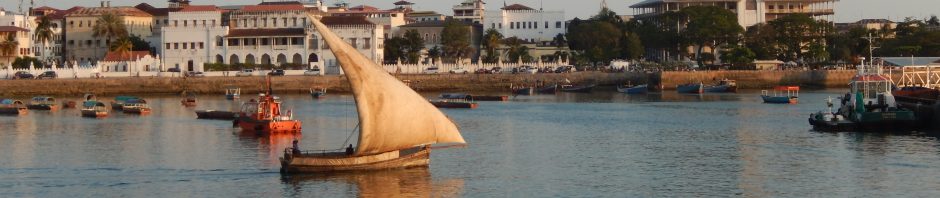
 

Posted in Travel | Tagged , , , , , , , , , , , , , , , , , , | Leave a comment

Zimbabwe, Zambia, Tanzania, South Africa and Zanzibar 2014

DSCN0955

                                                                             Our Itinerary

Wed 24/09/2014 Sydney 9.50am to Joburg 4.15pm
Thurs 25/09/2014 Joburg 10.40am to Bulawayo 12.05  Overnight train to Victoria Falls
Fri 26/09/2014 Victoria Falls
Sat 27/09/2014 Livingston
Sun 28/09/2014 Livingston
Mon 29/09/2014 Livingston to Lusaka
Tues 30/09/2014 Lusaka to Kapiri Mposhi 16.00 Tanzara train
Wed 1/10/2014 Tanzara train through Zambia
Thurs 2/10/2014 Tanzara train through Tanzania
Fri 3/10/2014 Tanzara train Dar Es Salaam to Zanzibar
Sat 4/10/2014 Zanzibar
Sun 5/10/2014 Zanzibar
Mon 6/10/2014 Zanzibar
Tues 7/10/2014 Zanzibar
Wed 8/10/2014 Zanzibar
Thurs 9/10/2014 Zanzibar 5.35am to Joburg 11.50am
Fri 10/10/2014 Joburg 6.15pm
Sat 11/10/2014 Sydney 3.05pm

Tuesday 23rd September, 2014        Newcastle to Sydney

At the dollies’ house at 5.30am then bring them home about seven o’clock. Mark goes into work – has a lot to get through before we leave on the train to Sydney this afternoon. It’s school holidays so Abi isn’t at preschool. I take them to Gregson Park for an hour then to Woolworths to pick up some food for the train and the plane – potato chips and mandarins. Abi wants to see Pa so we drive into JSA but he’s out meeting someone.

Back home Elkie wants to climb the stairs as usual and Abi has the ipad up in Angie’s room with the door shut. I hear a big bang and she yells out – ‘ebwryfing’s fine up here Ma’. I ask her what the noise was and she says it was Elkie’s high chair. I ask her if she’s been climbing on it – ‘No Ma. It just felled over’ – so cute.

Lauren picks them up about 1.30pm and I get stuck into the housework ready for Al who’s minding the house and our cats while we’re away. Mark comes home about three o’clock and helps with the final packing. We drive both cars to Lauren’s to park in their driveway. We have last minute kisses and cuddles before they drive us to Broadmeadow Station at 4pm. So hard to leave our three beautiful girls. Just hope Lauren is okay.

Arrive at Central Station about seven o’clock then catch another train to St James. From here we cross Hyde Park to Jillian’s then the three of us walk up to the Fitzroy for too many drinks – a good night. Mark and I sleep on the lounge because Tam and Isaac are still living here after their time in Laos. Woken by a cat walking on us and the other one going ballistic on the carpet – pretty funny.

Wednesday 24th September, 2014         Sydney to Johannesburg

Wake at 5.30am – say goodbye to Isaac who’s going for his usual early morning bike ride but Jillian and Tam are still in bed by the time we leave at 6.15am. Walking across Hyde Park this early is really lovely then we catch the airport train to the international terminal. It’s quick checking in our bags but immigration takes a while – lots of passengers going through.

I line up at the Tourist Refund Scheme to get money back for our camera and video camera that we bought a few weeks ago after both of them died while we were in Bali in May. At McDonalds we have breakfast while watching heaps of planes landing and taking off – always busy at this time of day. While Mark minds the bags I wander off to buy two bottles of duty free Bacardi and look at watches for ages but decide I like mine more than any of them and I don’t need one anyway. A nice way to pass the time, though.

We ring Lauren – Abi tells us that she had ‘the most tewible dweam in the whole world’ – all her preschool girlfriends had Elsa capes on but she didn’t have one – a nightmare for a three year old dolly. Lauren is taking them to Westfield today for a Frozen concert so Abi is really excited – Pelkie is too little to know yet. I ring Jackie, my darling sister – she doesn’t like us going away since Mum and Dad aren’t here anymore – I know how she feels. I miss ringing them like I always did at the last minute and at every stop along the way. No matter how happy I am, there’s always a sadness here deep in my heart – my little one and my beautiful mum and dad.

We board at 9.30am and take off a bit late at ten thirty. Because we’re with Qantas for a change we’ve got a bit more leg room than on the budget planes we’ve been travelling on for the last few years. But then Mark’s headrest keeps falling off and the same thing happens to the guy sitting in front of him. Maybe the budget panes aren’t that bad after all. The air steward is really funny but can’t fix them as they don’t have a Phillips-head screw-driver on board – ha ha.

Mark is in an aisle seat while I’m in the middle with a nice young black guy next to the window. I don’t get to talk to him as he has music earphones in the whole trip. We do share chocolates and mandarins though. Lunch is really nice with a champagne for Mark and a Bacardi for me – both pop a Temazapam to get some sleep. No luck probably because it’s a daytime flight and we’re not tired anyway. We do get the odd snooze but that’s it for the whole trip. But because it’s Qantas we have individual television screens so we both watch movies and tv shows to pass the time.

After eight hours we can see thick white ice floating down below us – very spectacular as we’re flying close to Antarctica. A lot of other people are up the back of the plane to look out the windows near the toilets and I chat for ages to a young South African boy called Frankie.

After fourteen hours we land at Johannesburg’s Tambo Airport at 4pm South Africa time. The landing is very rocky which makes both of us sick on the stomach and I’ve got a headache. First time I’ve ever felt air sick but it disappears within minutes. The terminal is a new one since we were here in 2007 – built in a sort of spiral around a central three storey hole. Mark gets money from an ATM (10 ZAR – Rand – to 1AUD) while I confirm tickets for our Bulawayo flight tomorrow.

Now we hang out near the Information Desk as I received an email from Mbizi Backpackers yesterday to say that someone will meet us here at 5 o’clock. We decided to book a cheap place (Mbizi Backpackers) near the airport as we’re leaving tomorrow morning on another flight. Lots of people are standing around holding up boards with passengers’ names on them so I do a continual circuit seeing if anyone has our names written down. Considering the groovy website and the Mbizi name, I’m looking for a trendy black guy with long dreds

But after half an hour I ask the lady on the desk if anyone is here from Mbizi. A young white guy standing right next to me pipes up, ‘thet’s me’ – wtf? How was he ever going to find us and vice versa. He tells us to follow him to the carpark where a pock-faced man called Patrick is waiting in an old car. Apparently the boy is Kevin, his son, who Patrick is training up to look after the backpackers so he and his girlfriend can go on a holiday. Kevin looks unimpressed to say the least – looks like a spoilt preppie type who probably lives with Mummy. So much for getting picked up by a Bob Marley look-alike.

And the drive from the airport reminds us of how much we hated Johannesburg last time. Even here on the outskirts, it’s an ugly, boring, dry city with a shanty town of poor black people just near the airport. Along the way we also see black locals selling badly-made wooden tables and chairs and old tyres fashioned into animal shapes.

Patrick talks the whole way telling us how much he hates the Nigerians – ‘all bastards’ – because he’s been caught with them booking rooms at the backpackers then never turning up. What happens is they pay the 10% deposit so they get a printout to show immigration that they’ve got somewhere to stay but then piss off as soon as they land. Even so, it’s a bit hard to feel sorry for Patrick. ‘I can’t like him’ as Abi used to say.

The backpackers is in the suburb of Boxsburg (even hate the name) and really just a house with a tall electrified fence and on a wide, empty main road. Inside, though, we like it a lot better – painted in the brightest colours – every room different. Our orange bedroom is comfy and the toilet and bathroom is just across the hallway. Patrick shows us where we can make breakfast in the morning and takes us out to the bar/chill-out area in the back. But first we’re starving and, predictably, they don’t serve food here – a crappy place – so we have to walk a mile away to a daggy complex of rundown shops to buy Chinese. The woman serving us is a cranky slllll…ut (as Lauren would say) and the Pinball place across the road has a sign that says ‘No Dangerous Weapons, No Firearms, No Drugs’. Seriously, who’d live in this shithole of a country?

Back at Mbizi we eat out near the bar – food is ok but doesn’t taste like Chinese what the hell is that all about? Mark stays up to have a few beers with Patrick and a few other backpackers but I’m too tired to drink and go to bed. After a good sleep I wake thinking it’s morning but it’s still only 11.30pm – jet lag! Both wake again at 1am – bonk – then again (not the bonk bit) at 5am to the noise of other people leaving.

Thursday 25th September, 2014       Johannesburg to Bulawayo to Victoria Falls

Today is the first real day of our holiday and the adventure starts with a morning flight to Bulawayo in Zimbabwe – formerly called Rhodesia. At six o’clock we have showers and Mark makes breakfast of tea, coffee and toast. The weather is beautiful without a cloud in the sky so we sit in the sun outside. Here we get a text from Lauren showing us a video of Abi singing ‘Let It Go’ on the stage at Westfield. We’re sooooo proud and both cry. Our dear little one. She looked nervous but she sang it right through.

DSCN0085

Last night Mark had arranged with Patrick for someone to pick us up at 8.15am to take us to the airport. It’s nice waiting in the sun in the front garden but we finally realise our lift isn’t coming and ring Patrick on his mobile. He stumbles out the door still half asleep – not a good look – and rings his driver. ‘They’re all bloody hopeless’, he says.

In fifteen minutes a taxi pulls up at the gate and we’re soon speeding towards the airport with Matthew, a lovely black man, who tells us that he’s taking over from his friend who couldn’t make it for some reason. He tells us that his twenty-three year old brother was car-jacked and murdered two weeks ago. The police haven’t caught the guys who did it. Very typical of Johannesburg which has the honour of being called the ‘murder capital’ of the world.

At nine o’clock Matthew drops us at Tambo’s departures drop-off area. After checking in our bags and passing through immigration, we wander around the shops then have an orange juice and a coffee. As we noticed last time we were here, it’s black people doing the selling and waiting on tables while the white people are on the cash registers – I don’t think we’re imagining this.

A minibus takes us to our South African Airways plane which is sitting out on the hot tarmac – a friendly group of people. Most of the black men are wearing cheap, daggy suits and the ladies are wearing nylon wigs – must be very hot and a possible reason for the body odour – NOT being racist, just a fact. At 10.50am we take off for the short one hour flight. Lovely hostesses serve us chicken and pasta salad and drinks. There are spare seats so we both grab a window seat to watch the scenery below. Not that there’s much to see, just an endless expanse of dry brown land with a few green farms just out of Johannesburg.

We land at Bulawayo’s tiny airport at noon where we pay US $30 each for visas. We don’t need to get any cash as Zimbabwe uses US dollars which we’ve brought with us. I ask some airport staff about getting into town as we can’t see any taxis outside. They give us blank looks like they’ve never been asked that question in their lives – ha ha. Apparently there aren’t any buses either but Patricia, who works at the airport, says she’ll drive us. Just love it! Definitely in Africa!

DSCN0096

Patricia is a plump, pretty Zimbabwean lady who never shuts up and tells us her whole life story on the thirty minute drive into town. She’s divorced and lives with her sister who minds her children. The road is flat and straight with barely another car and we like the look of Bulawayo from the start. The wide streets are lined with Jacarandas luckily blooming their purple flowers right now. There are some nice houses on the outskirts and lots of large stone British buildings in the centre. Even here the main streets are shaded by Jacarandas and we pass pretty parks and markets. There are lots of people around so it has a good vibe.

We’re catching the overnight train to Victoria Falls tonight so we need to get to the station to buy our tickets before we can do any sight seeing. Patricia drives us straight there and insists on coming in with us. We’re glad she does because the guys at the desk can’t speak much English and there seems to be a problem. After much talking between them, Patricia tells us that there isn’t a first class tonight, which we don’t care about, but that we can’t buy tickets yet because the train has just come in from Victoria Falls. Not sure why we can’t just get our tickets now but they keep promising her, ‘very soon’.

DSCN0099

In the meantime we put our big packs in storage then wait another half an hour before they give her the nod. She also explains to them that we want to buy the whole carriage as second class holds four bunks and we’d rather be on our own. It takes a while for them to understand what we mean but soon we hand over the super-cheap sum of $30US. Not bad for a twelve hour trip with our own bunks. Patricia gives us big cuddles as a celebration and we give her toy koalas for her little boys.

Now she drops us in town before she heads back to the airport. We’re starving so we eat pizza in a sort of open-sided food hall packed with locals. All the women are wearing the awful nylon wigs and most of them have huge bums that stick right out – just an observation. In the streets men are selling spotty bananas – yes, Jule and Steve – from rough carts. It’s very busy but a nice sized city reminding us of big country towns at home with their wide streets and colonial buildings.

DSCN0108

At the market I buy a pair of wooden ear-rings then we wander around a craft shop. Outside we catch a taxi to a restaurant we’ve read about in the Lonely Planet called 26 On Park. Oh, this is lovely. A long shaded driveway leads to a lovely old home with a wide green lawn surrounded by flowering gardens. There is a deep verandah with tables and chairs but we choose a table under the trees – cooler here.

The owner is Greg Friend who comes out to chat with us. He’s a white guy – haven’t seen any others since we flew in – and he gives us a history of the house which was built by Cecil Rhodes. He also talks about the history of Bulawayo and how screwed up the country is thanks to Robert Mugabe. He became president 1980 as the Zimbabwe’s first black leader. This might sound a good thing but he took over all white-owned commercial farms handing them over to the landless black Zimbabweans. But they had no idea about farming and just sold everything off so that there’s only one white farmer left around Bulawayo where before 1980 there were hundreds. It’s why the formerly agriculture-based economy collapsed and hasn’t recovered.

We spend the rest of the afternoon drinking lime sodas for me and about a hundred Hansa beers for Mark. He actually drinks them out of Hansa and has to swap to Mozambique Beer. For a while I hang out reading on a lounge inside and we use the wifi to get onto Facebook. Two obese ladies turn up in a taxi and order huge desserts and laugh their heads off.

DSCN0117

Later we have dinner on the verandah as the sun starts to set through the trees. The food is excellent and we pay a lot (US $46) – fish, chips and salad for me and t-bone steak and vegetables for Mark. Bob Marley is playing somewhere inside and ‘No Woman No Cry’ makes me cry for my little one. I think it’s why I always like to be on the move. If I stop to think I get sad – can’t go there.

At six o’clock we get a taxi back to the station. It’s dark driving through town and I feel better and very excited to be catching the train.

At the station Mark gets our bags out of storage then we find our cabin. Very basic but we love it. Local people are walking along the platform carrying bags on their heads to the other end of the train and I chat with a guy who seems to be in the next carriage.

DSCN0146

I’m feeling really tired so Mark makes up the bunks and we pull out our blankets and pillows that we always bring with us. Leaving Bulawayo is excellent with the open window keeping us cool and watching the town slip behind us. The train is definitely worse for wear though and is so noisy we can barely hear each other talk.

Despite the racket, we fall asleep pretty quickly but then we’re woken at 8.30pm by someone banging on the door – ‘tickets please’. The ticket guy is also accompanied by a funny guy hiring extra pillows, sheets and blankets so we pay for one set – only US$4.

We also ask about buying water as we’ve only got about a third of a small bottle left between us. Again we get a bewildered look and ‘water? No’. wtf? Hasn’t anyone ever wanted to buy water on this twelve hour trip? A definite opportunity here for someone to make a bit of money. And anyway, holy shit, we’re going to be dying of thirst by morning.

DSCN0136

I take the top bunk because the lower one is wider for Mark. The temperature drops in the night but we’re cosy with all our blankets. I get up a couple of times to use the horrid loo. No water in the taps and I’m a bit scared that someone will grab me and throw me out the open doorway. I should wake Mark but he’s taken a sleeping pill and wearing ear plugs.

Later I wake up and can’t get back to sleep so I read by torchlight. We do have little lights above each bunk but predictably they don’t work.

Friday 26th September, 2014        Victoria Falls

We’re both awake at 5.30am so I squeeze in with Mark – more bonking – not easy on a rattley train.  The sun is just coming up and we’re pulling into the small station at Dete. We’re due to arrive in Victoria Falls in about an hour so we start getting our stuff organized. After half an hour we pull out of Dete only to return ten minutes later. The word goes out that we’ll be here till 9am as there’s a derailment just ahead.

DSCN0186

No worries – we chat with a lovely black lady called Sylvia who is carrying her nine month old baby Cassandra on her back and a French guy called Floyd in the next cabin. Our water is gone but there isn’t anything to buy at the station. We ask if there’s a shop in town but they say ‘no’ – anyway we’re not game to walk over to the houses in case the train leaves.

DSCN0163

Soon we leave Dete again, returning half an hour later. Apparently we’re just being shunted from one track to another so other trains can pass going in the opposite direction. The word now is that we won’t be getting to Victoria Falls till three o’clock this afternoon – eight hours late! Oh well, we’ve got plenty of time up our sleeves so there’s no great hurry to get there.

DSCN0169

We sleep, read and talk to Floyd until we leave Dete for the last time. The scenery is constant – dry brown grass and spindly trees, round grass huts with pointy thatched roofs, cows pulling carts, antelopes and Mark even sees a group of people dancing in feathers and skins in the middle of nowhere. We see signs for elephants but only see some poo on the side of the track. Without any water my mouth is definitely tasting like elephant dung.

Later we stop at a station where we’re told to close the windows because the baboons will jump in and steal whatever they can get their little hands on.

DSCN0198

Here we also say goodbye to Sylvia and where we see a tiny kiosk up on the embankment. They don’t sell water and the only liquids Mark can buy are two bottles of coke. No use to him with his diabetes though. I wander over to some village houses for a look where I see a local lady rushing towards me calling out ‘you want mineral water?’ – very happy to see that she’s carrying bottles of cold water in a bucket. We grab a couple each and I give the cokes to two young girls from the train.

DSCN0207

At 2.45pm we pull into Victoria Falls, almost eight hours behind schedule. The station is cute with the grand colonial Victoria Falls Hotel just across the road. Seeing warthogs grazing around the grounds reminds us of Swaziland. We’d love to stay here but it’s way out of our budget. Anyway we know there are a few good backpacker places here with Shoestrings at the top of our list. Floyd from the train is planning to stay there tonight as well.

An old man is waiting on the platform and asks if we want a taxi. The main township isn’t far but our packs are too heavy so we jump in. We like the look of a couple of big hotels – very ‘African’ with soaring thatched roofs – but the shopping area is pretty ugly and the rest just souvenir shops. Every second place is a tourist agency advertising safaris, walking with the lions, helicopter rides, sunset cruises, rafting … You could spend a fortune in this place because nothing here is cheap.

Anyway, we jump out at Shoestrings only to be told that they only have dorm rooms left. We decide to try somewhere else first so we stop at the Victoria Falls Rest Camp where Julie and Steve stayed with Intrepid. Apparently this is popular with tour groups and they’re booked out as well.

Now our driver says he knows a better place – very clean and cheap. We drive way out of town to pull into a messy driveway with religious scenes and slogans painted all over the walls of the guesthouse. We don’t like the look of the white owner but say we’ll look at a room until he tells us it will be US $80 – no way!! ‘I can come down’ he whines – fuck off!!

It looks like a dorm at Shoestrings will have to do unless we can get a room at the Victoria Falls Backpackers. It’s a bit out of town but then town looks like a shit-hole anyway so we don’t need to be in walking distance. And joy of joys, they have a room and this place is lovely – very compact with cute cabins, an open-air kitchen, a chill out area and a pool. We’re soooo hot and can’t wait to get into the water.

DSCN0217

A guy called John greets us and I ask about sunset cruises for today. He says we’ll need to be ready to get picked up at four o’clock so we’ll have to hurry. He now shows us the Zebra Room – very cute with a few even cuter outside bathrooms to choose from. Someone has gone to lots of effort to decorate the whole place and we feel very ‘on safari’. The reception is in a round hut with a tall pointed roof and just outside our room is a low stone wall surrounding a fire pit. And our room has two fans with mosquito nets – no air-con so we need to get in the pool fast. Yes I’m very happy. The water is perfect but we don’t stay in long as I want to wash my hair before we leave.

Right on four we meet a small van outside with only one other passenger – a strange little Australian guy wearing a hat and a scarf in this sweltering heat.  He’s a sort of Aussie version of Mr Bean and we feel sorry for him. We drive for about fifteen minutes further out of town to the edge of the Zambezi River where a small group of dancers are waiting to greet us. They’re all garbed out in grass skirts and playing traditional instruments. We get dragged in for a dance and photos – fun!

DSCN0220

On the wooden wharf we have to pay US$10 each entry fee to the national park to add to the US $40 each for the cruise. But then we get any drinks we want and food as well – pretty cheap especially if we see some animals. The boat is wide and flat bottomed with plenty of cane tables and chairs. Mark and I grab a table right at the front next to the water where we’re presented with ‘welcome drinks’ – a lovely red and yellow colour and tastes good. Eventually the rest of the guests arrive – about thirty people in all – a table of French idiots, a big group of elderly Japanese (all little) and a lovely Canadian lady called Cheryl. She sits with us and is heaps of fun.

DSCN0231

Besides the tourists, there’s a staff of eight including the captain who gives us a welcome talk before we set off. A few other boats are out on the water already – a couple of bigger two storey ones and some very little ones. Mark soon spots a white water bird and we imagine that this will be the extent of the wildlife.

DSCN0249

But then suddenly we’re speeding towards the south bank where we can see an elephant down by the water. Now we’re speeding off in the other direction – hippos this time. A family of four with a couple of bubbas.

DSCN0239

Then we head towards the falls where more hippos are bobbing around. But the highlight is an elephant who comes down from the Zambian side and swims right across the river in front of us – great excitement!

DSCN0282

Meanwhile we’ve been having free drinks and served lovely finger food. As the sun sets in a golden sky we have cups of tea and hot scones. I feel very Agatha Christie!

DSCN0254

Before we disembark we have a ‘thank you’ talk from the captain who hints that we might like to give a donation for the crew – another $10. We talk to the funny Aussie guy on the way back then get dropped off at the Rest Camp in the dark. We want to have dinner at In Da Belly Restaurant which is inside the Camp and recommended by Lonely Planet. It’s a nice open-sided place with the usual thatched roof but horrible orange plastic chairs inside – a definite design flaw, ha ha.

The whole place is filled with tour groups which makes us glad to be on our own. For $18 we have a horrible crocodile curry (Mark) and tomato soup (me) with two beers and a coke. While we wait for our food we use their wifi and see photos of our girls at Oakdale Farm.

At the main gate we ask about getting a taxi so one of the guys takes off on a pushbike into town to find one for us. Both exhausted, we’re in bed by 8 o’clock. We wake at 2.30am so I ring Lauren – 10.30am at home.

Saturday 27th September, 2014         Victoria Falls to Livingstone

I can’t get back to sleep after talking to Lauren so I read till 5.30am then wide wake again an hour later. Mark has been up already – showered and shaved and looks especially handsome.

Before breakfast we ask John at the desk about booking a helicopter ride later today and about getting to the Falls this morning. He organizes a flight for 2 o’clock costing US$130 each. This is very extravagant for us but we’ve never been in a helicopter and this is probably one of the best places in the world to do it. And it’s on our ‘bucket list’ as well.

Now for breakfast around the fire pit. There aren’t many people around as most have already left for safaris etc. We order tea, coffee, toast, tomatoes and eggs and talk to Dennis the white owner. He’s an engineer and was born here in Zimbabwe. He’s rightfully worried about the economy and the political situation.

DSCN0313

To put it mildly, the country is fucked. There’s rampant inflation, critical food and fuel shortages as well as terrible poverty and unemployment. And with dickheads like Mugabe running it there won’t be any relief from more political troubles. Makes our politicians look okay – jokes, but okay.

Later Dennis introduces us to Dufus, a strange long necked figure carved out of wood and supposed to be Dennis himself. He takes photos of us with our camera and asks us to put it up on you tube or something – not!

Now, because we’ll be leaving for Zambia this afternoon, we have to check out of our room and leave our packs near reception. John calls us a taxi and now we’re off for Victoria Falls!

At the entrance we pull into a car park lined with market stalls selling the same, same wooden giraffes, elephants etc. A group of men in animal skins and carrying spears are doing a native dance and baboons are going mental bonking each other in the trees opposite.

Mark pays the US$30 entry fee each then we read some of the info and maps on the walls inside. Now we set off through the trees where we can hear the roar of the Falls. Our first glimpse is amazing with even better views as we walk to all sixteen viewpoints along a network of paths that allows us to see them from every angle. The Falls are an incredible 1708 metres wide – the world’s largest curtain of falling water.

DSCN0334

The paths are through a true rainforest with the heat and humidity intense. We’re both wet caused by the ‘rain’ sprayed from the Falls twenty four hours a day even in the dry season. It’s almost the dry season now so it must be extra amazing during the wet months from February to May. But apparently because there’s so much water crashing over the edge, the spray is so thick you can’t even see the Falls.

DSCN0342

On opposite bank of the Zambezi are the Zambian viewpoints but we’ve read that we can see most of the Falls from the Zimbabwean side so we probably won’t bother. In some sections the sunlight passing through the spray creates beautiful rainbows and we can see people way, way down below doing the very popular white water rafting trips. It’s supposed to be very dangerous here so we’re glad to have the excuse of leaving this afternoon.

DSCN0363

Back near the entrance we find a tall statue – Mark says ‘Dr. Livingstone, I presume.’  This is what Henry Stanley said to David Livingstone after he’d been searching for him for four years. Info is that Livingstone disappeared while looking for the source of the Nile – he didn’t find it, by the way. But what he did find was Victoria Falls which is why his statue is here – get it?

Near the main gate we sit in the open-sided Rainforest Café for cold soda waters then find a taxi in the car park opposite to take us back into town. We want to check out the main township but we don’t think we’ll be there too long – looks small and very touristy.

As it happens, we’re right. Just shop after shop selling souvenirs and tours but nice enough anyway. We find Mama Africa in a little dusty side street which is a restaurant we’ve seen recommended somewhere. It’s a colourful, laid back place and very ‘African’. We sit on a side verandah overlooking the little outdoor area. The temperature outside is stinking hot but it’s nice and cool in here. And the food is great – a spicy African hotpot for Mark and a club sandwich and salad for me.

DSCN0407

Now we catch another taxi back to the backpackers where we set ourselves up in hammocks under the trees. We read, doze and have cold drinks for a couple of hours while we wait for our helicopter guy to pick us up. At two o’clock he’s on time and we meet another passenger called Greg, a very serious, macho looking guy in safari clothes who looks like he wrestles wild animals for a living.

We drive for about twenty minutes out of town through the dry savanna that we’ve become used to seeing by now. We bump our way along rough dirt tracks to the heliport which we’re hoping isn’t an old shack in the bush run by a couple of black guys. No offence but Mark said if it’s a black pilot he’s not going. We’re both worried about the flight no matter who’s flying it and we mouth ‘I’m scared’ to each other.

Very relieved to see that the heliport is new and impressive which should probably mean that the helicopter is also new and well maintained.  We’re also relieved that the guys running the show are white and so is the pilot – British actually. Again no offence to black people but safety doesn’t seem to be a high priority in most third world countries and we don’t want to die just yet.

Inside we’re greeted by a sweet girl who gives us forms to fill in – you know, scary things like ‘next of kin’ – wtf? We also meet Sally and Elizabeth who’ll be our flying companions. Glad to hear that they’re helicopter virgins as well and look suitably as nervous as we are. One guy comes to whisper that we’ve all been up-graded to a twenty two minute flight but not to tell the people waiting for the next one. I’m not sure if getting an extended time is a good thing or not.

We‘re given safety instructions and told to run in a sort of squatting position to the chopper that’s revving up on the helipad. We all put on headphones so we can hear our driver who introduces himself as Ben. Funny to find out that macho Greg is also a helicopter virgin and looks shit scared – ha ha.

DSCN0444

The lift-off is surprisingly smooth and we’re soon flying over the town and the Falls. It’s the only way to really understand the amazing river system.

Looking downstream we can see the zigzag of the gorges and upstream the wide Zambezi River as it meanders towards the huge drop. The river itself is dotted with hundreds of islands and we can see elephants in the national park.

DSCN0440

The flight takes us over the Falls several times in both directions. The pilot banks the helicopter as we circle so we can see right into the chasm. It’s all very interesting but I start to get bored and still a bit worried about crashing so I’m glad when it’s time to head back.

Sally and Elizabeth return to town with us and we drop them off first. Next we drive way out of town in the opposite direction to take Greg to his lodge – a very creepy safari looking place perched on a hill sitting in the middle of nowhere.

Back in town we ask our friendly driver to stop at an ATM then on to the Victoria Falls Hotel where we plan to have high tea – one of the must-do things here.

The hotel is a grand Edwardian place built in the early 1900’s when Cecil Rhodes famously attempted to link Cape Town to Cairo by rail. The entrance is surrounded by tropical gardens, lily ponds and century-old shade trees. And there are warthogs grazing around just outside the main door. Here we’re greeted by a tall, black doorman wearing badges all over his jacket. He’s a natural comedian and promises to store our bags and arrange transport to take us to Livingstone in an hour.

Now we follow him to the Stanley Terrace overlooking a wide lawn with a panoramic view of the Victoria Falls Bridge. And the high tea is perfect – only $30 for the two of us. We have bite-sized sandwiches, an assortment of little cakes and tarts and, of course, scones with jam and cream. I cock my little pinky finger to drink my tea – another Agatha Christie moment.

DSCN0468

Afterwards we walk around the gardens then check out the hotel itself. In the lounge area a local man wearing a white suit is playing a grand piano to add to the posh atmosphere. The décor is very traditionally English with brocade lounges, fringed lamps, potted palms and animal heads on the walls.

Outside we’re met by a sweet man called Oliver who will drive us to the border. Passing through the outskirts of town we now come to the famous Victoria Falls Bridge which crosses the Zambezi River just below the Falls. As the river itself is the border between Zimbabwe and Zambia, the bridge links the two countries and has border posts on the approaches at both ends.

First we go through immigration at the Zimbabwe post where we’re tested for the Ebola virus that’s currently sweeping through West Africa. It’s already killed thousands of people so all African countries are on high alert. One of the symptoms is a temperature so we all get zapped by a sort of laser on our foreheads to see if we’ve got a fever. All clear so we jump back in the van with Oliver to cross the bridge.

On the Zambia side we have to go through their immigration which also means paying $50 US each for visas. Here Oliver hands us over to Nyambe who says ‘You can call me God’. We move our packs into our new van as a warthog wanders across the border.

God is another funny guy and keeps us laughing all the way to Livingstone which is only about a fifteen minute drive. On the way he stops so we can walk down to the Zambezi which is looking lovely as the sun drops towards the horizon.

Arriving in Livingstone we can see that’s it’s a much nicer town than Victoria Falls. The main street is extra wide with a few attractive Edwardian buildings lining the road. We head straight for the Jolly Boys Backpackers where I’d booked a room this morning. It’s a ‘jolly’ looking place behind a tall, bright yellow brick fence. Guards on the gate let us through into a pretty leafy area. This leads to the pool which has sun lounges and wooden picnic tables under shady trees. This is amazing! There’s also a bar where we can buy food and a couple of chill-out areas where young backpackers are lounging around on floor cushions. Everyone is on their ipads which means wifi! The reception is colourful with two young girls booking people in – very glad that we booked ahead.

Our room – the Rhino Room – is excellent – very African with our own bathroom and a verandah outside – perfect except for the single beds and no way can we push them together.

Now Mark wanders downtown to find an ATM while I transfer photos from the camera to the laptop. We can’t be bothered going anywhere tonight so we order food from the bar and, of course, lots of drinks. All very nice except for the never-ending Jesus music and sermons that are blaring all over town – shut the fuck up!!

Hang out getting pissed in the chill-out pit then bed at 8 – a great day!!

Sunday 28th September, 2014      Livingstone

Wake at 2.30am – still out of whack with sleeping times – then fall asleep till eight o’clock. Mark has been up since 6.30am – showered and reading in bed. We eat breakfast – baked beans and cheese on toast, tea and coffee – sitting at one of the long picnic tables then hang out on cushions on the verandah. We manage to upload lots more photos onto Facebook and see pictures of Lauren and our bubbas – they make us soooo happy.

The girls at the desk tell us how to get to the bus station as we want to book tickets for Lusaka tomorrow. We also book a safari for 2.30pm since we’ve decided to stay here again tonight.

Now we head off past the church – still singing and broadcasting sermons at full blast – while lots of people in their Sunday best are milling around outside. And, because it’s Sunday, the streets are quiet and all the shops and businesses closed. It’s more lively near the bus station with lots of stalls selling drinks and food for the passengers. Mark lines up to book two Business Class tickets for Lusaka at eight in the morning. The Business Class tickets are $25 for the two of us for the six and a half hour trip.

From here we walk past the market selling fruit and vegetables, dried fish, blankets, horrible clothes as well as the awful nylon wigs all the ladies wear. We notice that every second shop is an auto repair place – not surprised considering the state of the cars.

At a supermarket across from the backpackers we buy drinks, chips and a Magnum that’s so melted I literally have to drink it from the pack.

Back at Jolly Boys we spy Floyd from the Bulawayo train and give him a wide berth. He’s holding fort with some other poor backpackers – will talk their ears off. We rest in the cool of our room after the long hot walk then lie around on the verandah cushions to order lunch – chicken wraps. We’re still hot so we have a swim in the lovely pool then get ready for our safari.

At 2.30pm we’re met by a smiling man called Oliver who takes us to our open-sided ‘safari’ truck. Luckily we’re the only passengers so we pick good seats which will give us the best views of all the ‘wild amiyals’, as Abi would say. We fly out of town getting almost blown out of the truck then turn off after five kilometers. We stop first at a lovely resort right on the Zambezi River where we follow Oliver upstairs to pay for the safari. Now we’re on our way to the Mosi-oa-Tunya National Park, itself running alongside the river. Because it’s only sixty six square kilometers there aren’t any predators – big cats, that is – because they’d eat all the other animals.

DSCN0611

Oliver tells us all this at the entrance gate and promises he’ll do his best to find us lots of animals. Firstly we see a family of warthogs then antelope, impala, bush bucks, baboons, zebra, giraffe and elephants. Oliver tells us that a few years ago in Zimbabwe, someone poisoned a waterhole and four hundred elephants died. Their tusks were hacked off and loaded onto trucks before anyone knew about it.

DSCN0594

He also tells us that because there aren’t any predators in the park, the animals are really relaxed so we can get very close to them – manage to get some great photos. Later he stops at the river where we walk down to the edge to see a hippo just disappearing under the water. It’s a lovely time of day to be here.

We also stop at a little cemetery which was the original site of Livingstone. People were dying in droves from what they called ‘black river fever’ which we now know was malaria. It’s why they moved the town away from the river in 1905 to where it is today. In those days the country was called Northern Rhodesia eventually becoming the Republic of Zambia on 24 October 1964 – just a bit of interesting info for me to remember.

DSCN0628

Now Oliver tells us that he can take us to see some rhinos. He’s not really supposed to but because there’s only two of us he can sneak us in. We’ll have to give the guards a tip but this is too good to pass up. We drive for a few kilometers to a sort of checkpoint where rangers wearing full camouflage are lounging around a hut where they obviously have turns of sleeping. There are three guards watching over the rhinos 24/7 while the others ‘live’ here. Oliver tells us that the Chinese send poachers in to kill the rhino to get their horns that they think gives them super sexual powers – fuckers!

We pick up one of the rangers who’s carrying a rifle and drive for about twenty minutes to a remote place to meet three other guards. They’re also wearing the full camouflage and carrying rifles. On sunset we follow them in single file through the long grass till we get to the rhinos. There are three here grazing, oh so close. We can’t believe we’re seeing this!

DSCN0651

One of the guards whispers that the big one is a mum called Louise and the two babies are her daughters, Light and Hope – so cute! Apparently the park was given four rhinos a few years back but the poachers killed them within weeks so now they have this super tight security. Now there are nine in all so it’s obviously working.

Back at the truck we line up for photos with the guards – so funny making us all laugh. We give them a $20 tip to share and they’re stoked. Heading back Oliver stops on the side of the main road where we can see lots of broken glass. He and the ranger get out to check for blood in case it’s been caused by a vehicle hitting an animal.

DSCN0662

As we drive through the park the sun is almost set – very surreal. We feel super high after our unexpectedly amazing time here.

Back in Livingstone at dusk we see lots of locals coming back from church – is this all these people ever do? – and it’s dark by the time we pull into Jolly Boys. We give Oliver an extra $10 for being such a lovely guide – he’s very happy.

Dinner again by the pool – a barbeque happening tonight.  Steak, chips and salad – is all good but the guy on the barbeque has cremated the steak and we can barely swallow it. We upload more photos and see Floyd in the same spot and still chewing the ears off the same people. Two German girls next to us are freaking out about a huge spider that they saw over near the kitchen. I go over for a look and can barely see it – don’t think they’d handle Australia’s creepy crawlies.

Oh, and the church music is blaring again – bed at 9.30am.

Monday 29th September, 2014        Livingstone to Lusaka

No need for alarms when we’re on holidays – awake at 5.30am. More bonking, showers and packing then breakfast at seven o’clock outside near the pool. Mark has a healthy yoghurt, muesli and banana while I have scrambled eggs and bacon. I get a call from Lauren – Josh has been a prick and she’s a mess. Fucking great! I talk to her for ages and she seems a bit better but I feel helpless. I’m so worried and wish we could go home earlier but I know we won’t. She can talk to Doug and hopefully he can help her sort it out – won’t hold my breath – another fucking useless prick.

We catch a taxi to the bus station which is typically chaotic with lots of buses lined up and ready to go.  Some have their itinerary printed on a piece of cardboard taped to the side so we grab seats on our Lusaka bound bus before wandering round the market. We’re travelling with Shalom Bus Service and it looks in pretty good condition. Apparently the trains to Lusaka are unreliable and the rail line is dodgy so buses are the recommended way to go.

DSCN0684

We’re supposed to leave at eight o’clock so we jump into our front row seats. We’ll have good views the whole way. The bus is full so it’s a bit smelly (body odour) but should improve once the air-con starts up – or will that just blow it around? For the thirty minutes before leaving we have to put up with a psycho preacher who’s screaming out verses from the bible as he marches up and down the aisle – wtf? After he finishes each of his rants all the God-fearing passengers pronounce with great enthusiasm, ‘amen’ – fucking brilliant! We hope he doesn’t do this for the whole trip and fortunately he gets out as we start to move and jumps onto another bus.

Driving through town we see how much busier it is today – lots of people with everything starting to open for business. Like in Zimbabwe, we haven’t seen any white people except the odd traveler so I don’t know if any live here at all.

The rest of the trip – 482 kilometres – is mainly through open countryside – the same brown dry landscape we’ve seen the whole trip. Now and again we see thatched roofed mud brick homes and people sitting on the side of the road selling vegetables or firewood.

The bus stops to pick up and drop off passengers in the small towns of Zimba, Kalomo, Choma and Batoka – mainly women with babies strapped to their backs. Other women carry things on their heads and at one stop our driver buys a live chicken through the bus window.

DSCN0694

And while all this is happening we have very loud gospel music and videos playing on the screen right above our heads. It never lets up for seven whole hours! And every town is full of churches and Christian signs of some sort – St Mary’s Hospital, St Christopher’s School etc. Hate Christianity!!

The best thing is that the road is surprisingly good and our driver is very safe but the air-con isn’t working properly and it’s stinking hot. Of course, this means that the body odour is rife and is getting worse as the day wears on. It seems that deodorant isn’t a part of life here in Africa.

DSCN0705

We pass lots of people just sitting in groups under trees, herds of tiny goats, cows crossing the road and trucks packed with people standing up in the back. With the beautiful weather, we really enjoy the whole trip.

At 3.30pm we finally reach Lusaka and the craziest bus station we’ve experienced for a long time. Men are swarming all over the passengers as we  get off – some are taxi drivers after a fare and others try to grab our bags from under the bus to put them on their trolleys. Mark fights them off and we run the gauntlet with a taxi driver we’ve agreed to go with.

Outside is still the busiest place we’ve seen on the trip so far. Apparently, Lusaka has become something of a boom town with new buildings going up everywhere with many chain stores and shopping mall springing up all over the sprawling suburbs. The capital was moved to Lusaka from Livingstone in 1935 because of its more central location and its position on the main rail and road links. It really does have an optimistic air of a town on the rise, the perfect example of what economic liberalisation has done for Zambia compared to the mess in Zimbabwe.

And in the eyes of rural Zambians, Lusaka is the glittering capital which still persuades many village people to migrate to the city in search of jobs and dreams. Tragically over sixty per cent of the country’s two million population are unemployed, but with surprisingly few beggars or major theft and most people try to make an honest living selling their wares or services.

But back to the diary. The place we’ve chosen to stay is the very unoriginally named Lusaka Backpackers and is close by. Once we get away from the main streets, we find ourselves in a leafy, quiet area with tree-lined laneways. And the backpackers is nice with a pool and a simple bar under a bamboo shelter. It’s nowhere near as appealing as Jolly Boys but we’re only here for one night.

The guy on the desk is helpful and we ask him about using their computer. Just as we came into Lusaka, Mark had noticed a billboard advertising cheap flights to Dar Es Salaam. He’s not overly fussed on the train trip so we spend an hour looking up different airlines but with no luck. We’d needed to have booked weeks ago to get the cheap deals. Anyway, I want to do the train thing and we’re both happy that we looked into it anyway. It might have been nice to have extra days in Zanzibar but I think we’d kick ourselves later for bailing out on the overland journey.

DSCN0713

And talking of the train, the guy on the desk tells us that we have to book at Tanzara House tomorrow morning as it’s too late today. If we can’t get train tickets we’ll end up having to fly anyway – very confusing but exciting. Love travelling like this.

Our room is a little log cabin in the back yard – simple to say the least with two tiny windows and a slate floor. We have single beds again – this time with black mosquito nets hanging from bamboo contraptions attached to the ceiling. The showers and toilets are just a stone’s throw across the grass with outdoor basins to clean our teeth. Not too bad for $40 a night

It’s getting dark by now and we plan to have drinks/dinner at the posh Taj Pamodzi Hotel in the heart of Lusaka’s business and government district. So all poshed up ourselves, we find a taxi driver outside in the laneway. His name is Patrick and he’s a real sweetie – very happy and chatty. He’s impressed that we’re going to the Taj so our expectations are pretty high.

And, of course, whenever that happens you’re sure to be disappointed. Even though it is part of the famous Taj chain of hotels it isn’t one of the magnificent historic buildings like the Taj in Bombay where we had cocktails in 2005. This Taj was probably built in the eighties with typical eighties décor – now just daggy but in a way we like it. Set amongst tropical gardens, the entrance has the usual circular driveway and we pull up like royalty. Inside we wander around checking out the two restaurants then head straight for the Marula Bar.

There doesn’t seem to be a ‘happy hour’ but two white wines each only cost $20. The lounges are all taken with middle class Zambians – mostly business people – and a few European couples. For dinner we choose the fanciest restaurant with white linen tablecloths and the waiters in white uniforms. It has a soaring thatched ceiling and open on one side to the pool and gardens. And we even have a band all decked out in red uniforms. I form a crush on the singer who is a dignified, older man wearing a sort of Canadian Rockies hat. He also has a wooden arm with the wooden hand sticking out the end of his sleeve. He’s strangely appealing with a very high voice and he smiles through every song. They make me think of my beautiful Mum and Dad – ‘Irene Good Night’, ‘The Cucaracha’ and everyone’s favourite African song, ‘The Lion Sleeps Tonight’. I love it and sing along – the two wines have gone to my head already. Poor Mark.

The food is very good – we have calamari for an entree then Mark orders a huge rump steak with olive mash for a main while I have spinach and cheese cannelloni. Dessert is a chocolate pudding with ice cream presented perfectly as a posh restaurant should. And now we’re totally stuffed!

While Mark is trying to pay the bill with his credit card – machine doesn’t work – I chat with the singer and the drummer who are outside having a fag. They’re soooo nice and tell me how religious most Zambians are – you reckon??!!

We finally pay at another counter, the grand sum of $58 – so cheap! Outside we try to ring Patrick but we can’t get through so we walk out onto the main road. Doesn’t take long to get another taxi and we’re back in our little hut by ten o’clock.

Our plan for tomorrow is to get a bus from here in Lusaka to Kapiri Mposhi about three hours away where we’ll hopefully board the three day train to Dar Es Salaam. It will all depend on whether we can get tickets in the morning.

Tuesday 30th September, 2014       Lusaka to Kapiri Mposhi to Tanzara train

My darling crawls into bed with me at six o’clock – bonking then shower together – a good start to the day. I wash and dry my hair then we order breakfast from a tiny lady in the funny little kitchen. She’s wearing a white coat and a tall chef’s hat – hilarious. We have to pay her but she doesn’t have any money to give us change.

We wait by the pool till she brings out rubbery eggs for me with a side of chili sauce – ‘sorry, no tomato’. Mark’s breakfast of muesli, fruit and yoghurt is better but our tea and coffee come out much later – cold and in chipped cups – cute.

The weather is perfect again with clear blue skies and already getting hot. We find Patrick outside in the laneway and ask him to drive us to Tanzara House to buy our train tickets. He stops first at the very modern Levy Shopping Centre so Mark can find an ATM. Tickets have to be bought in cash.

Now we drive past the mad bus station through clogged streets and the endless road works. At Tanzara House, Patrick waits in his car while we try to find someone, anyone. We knock on all the doors but no answer. We go back downstairs to ask the man on the desk. ‘Lady not here, come soon. You wait’.

Finally two men arrive and tell us that the lady who books the tickets isn’t here because her kids are sick. Apparently no-one else can sell us tickets – wtf? One of them finally rings her and she says that she’ll come in. We wait for an hour, sitting on a ripped lounge in the shabby hallway till she turns up at ten o’clock. A bit of a shemozzle but no worries!

And the good news is that we can get sleeper tickets – first class at $60 each – super cheap for three days and two nights. She’s actually quite impressed with us because Zambia’s vice President is a white man called Guy Scott – she wonders if we’re possibly related? (By the way, by the time I’ve typed up this diary, Guy Scott is now the acting President after the sudden death of Michael Sata, on 28 October 2014 just weeks after we were there). She also tells us that we should get a bus to Kapiri as soon as we can as they usually take a lot longer than the supposed three hours.

So now Patrick races us back to the guesthouse where we quickly pack. Off again, we stop at the shopping centre to stock up on food. In a sort of Woolworths, we buy fresh sandwiches and salads for the bus as well as drinks and chips for the train. The people here are lovely and I keep bumping into a nice man who lets me get in front of him at the check-out.

The bus station is even more chaotic than yesterday if that’s possible. Touts rush us to buy tickets for their particular bus but luckily we’re used to this and don’t get frazzled. We try a couple of different companies but finally get a bus that they assure us is ‘leaving now’ – a fib for sure. Anyway, we make a dash for the bus that, naturally, doesn’t leave for half an hour.

Most of the seats are already taken so Mark is sitting up the front while I’m down the back next to a shy young girl. I’m lucky to have a young woman with a fat baby boy on her lap sitting just across the aisle and there are lots of other little ones who are all sneaking looks at me.

And like yesterday we’ve got a religious nut with us – a woman this time – standing in the middle of the aisle preaching more Jesus stuff. It’s made even more chaotic as hawkers squeeze past her yelling out whatever they’re selling – drinks, food, mobile phones, school books and shaving machines.

Off at last, it takes us over an hour to get out of Lusaka because of all the road works. Gospel music is playing again but not as loud today. With no air-conditioning it’s very hot even with the windows open.

Being in an aisle seat I keep myself occupied with checking everyone out around me. The ladies are either wearing the dreaded nylon wigs or have plaited their hair in corn rows. The men usually have shaved heads but some just keep it cropped really short. The lady opposite breast feeds her little boy a few times and just leaves her boob hanging out afterwards. I ask how old he is – ‘one year’, she says. I give him one of the toy koalas we’ve brought with us and he soon comes over to play with the strap on my bag – dear little one.

All the way we need to stop at a series of police check points – we can’t work out why. We see people burning off the grass alongside the road as well as the usual mud brick and thatched homes, people selling wares under trees and little dusty villages. An accident between two old vans slows us down but no-one seems to be badly hurt.

DSCN0731

After a couple of hours the bus stops in a small town so we can use the toilets and buy something to eat. We’re starting to get worried about reaching Kapiri Mposhi in time to catch the train. If we miss it today there isn’t another one till Friday – oh shit!

A Polish man who’s been on the bus with his wife and two male friends asks me if I know how far we have to go because they’re also booked on the train. I find the conductor who tells us that we’ll be there in forty five minutes.

DSCN0732

We finally arrive at 3.30pm – almost five hours since we boarded the bus. Never trust timetables in these places. The Kapiri bus station is much smaller than Lusaka but we still get swarmed as we get off the bus. We’re in a desperate hurry as the train is supposed to leave at 4pm and we’re not sure how long it will take to get to the station. No worries – we’re there in five minutes and the train hasn’t left. The taxi driver and his mate insist on carrying our bags even though Mark tries to wrestle them away.

The train is very long. Apparently, it consists of three first class sleepers, three second class sleepers, three third class seats cars, a second class seats car, a restaurant car, a bar car, a first class lounge car and a couple of baggage vans – yes, very long.

It’s optimistically named the Mukuba Express – not sure how ‘express’ it is because I’ve read that it’s always running at least half a day late. We’ll see what happens with our trip. And The Man In Seat 61 website gives more info – ‘the Tanzara line is 1,860km long and was only opened in 1976, built with Chinese funding and assistance.’

On the platform, Mark finds the carriage marked on our tickets. Standing next to the doorway we’re met by Marjorie, our first class hostess dressed in a pale blue railway uniform. She’s a strange looking young woman, very made up and looks a bit like a tranny. I love her immediately.

DSCN0734

Marjorie shows us to our first class sleeper cabin. It’s shabby and basic with two double bunks on either side compared to three on either side in second class. The only problem with first class is that men and women have to be segregated. This isn’t in the plan.

Now we meet a young couple called Maggie and Terry who also don’t want to be separated. We’ve decided that the four of us will bunk in together which shouldn’t be a problem. Marjorie is okay with it but then says we can have a cabin each as some people haven’t turned up.

By now it’s four o’clock when we’re supposed to leave and guess what? – we do! Watching the scenery as we pull out of Kapiri we feel that we’re on a true adventure. Till 6.30pm we read and snooze then Marjorie shows us that we can lock the door to our cabin which means we can ‘go out’ for dinner.

DSCN0797

The train jumps sideways and up and down so it’s a very wobbly walk through two other sleeper carriages, the bar car, then three more seats-only carriages to get to the dining car. It’s as basic as our cabin, with about ten small tables on either side of the aisle and open windows letting in the night air cooling us down after the hot day. The food is super cheap and tasty – a beef stewy thing for me and a chicken stew for Mark both with white rice, tomato and a spinach mash.

Maggie and Terry turn up so we plan to meet in the bar afterwards. I stagger back to our cabin to dig out my duty free Bacardi then stagger back to the bar. The guy behind the grungy bar is busy talking to a couple of other guys leaning on the counter while playing very loud music.

DSCN0769

We spend the next couple of hours getting to know Terry and Maggie. She’s from New York and Terry comes from London – really good company especially Maggie who has the gift of the gab but not annoying like a lot of Americans. They’ve been travelling for a month through South Africa and Zambia so they have a lot of stories already.

I absolutely love this night and I love this train. Sitting in the bar next to the open window trundling through Zambia makes me sooo happy. We head back to our cabin at 9.30pm and check out the toilets. I don’t want to imagine what the third class toilets are like because first class has a lot to be desired. No running water anywhere but just a huge plastic drum of water next to the pan (so big we have to squeeze in through the door). A plastic bottle with the top chopped off is used as a scoop to wash the wee wees and poopedys down onto the tracks.

Into our cosy bunks at 10pm after taking a Triazapam each – we might need it with all the noise the train is making. Another brilliant day!

Wednesday 1st October, 2014               Tanzara train through Zambia

I wake at six o’clock, put on makeup and use the horrid toilet. Mark sleeps till seven then has a ‘shower’ which translates to finding a tap with water. I can’t find my favourite red glasses and think I must have left them in the bar last night – will probably never see them again. No worries because I’ve brought along a spare.

After cleaning our teeth with bottled water we head for the dining car for breakfast. In the next carriage we stop to say hi to the four Polish people who’d been on our bus yesterday from Lusaka. They seem to have brought along all their own food and are having breakfast in their cabin.

In the dining car we both order a ‘Full Breakfast’ for 15 Kwacha ($3) each. Two overly cooked eggs, two slices of toast, beans with tomato and a sausage (I’m so hungry I could eat a sausage on a Zambian train) plus tea and coffee.

DSCN0787

The waitress has zero people skills – slams down the menu, salt etc – no smiles and reminds us of Helga the waitress who hated us in China when were on an overnight train with Jillian and Eddie in 2006. But this little waitress gives everyone the same treatment – needs to go to hospitality school or maybe her life is just shit.

DSCN0913

Back to our cabin we lounge around all morning watching the world go by. We stop for hours at a small station where the local ladies walk beside the track selling drinks, peanuts and bananas all carried on their heads. Ragged little ones play on the tracks and we think how lucky our little bubbas are at home. Some little girls only about six years old have a baby strapped to their back – must be a baby brother or sister.

DSCN0737

At another station a lot of women are walking past the train carrying bundles of sticks on their heads and others balancing plastic dishes filled with rice or grain of some kind. One lady is selling live chickens and someone near us buys two from their window.

DSCN0775

At one stage we hear a commotion and everyone has their head out the train watching two women have a punch-up. One seems to be very drunk and the other looks like she’s trying to drag her home. A crowd soon surrounds them and a couple of men try to carry the drunk one but she gives them a left hook as well – funny at first but tragic really, poor lady.

DSCN0812

Later Marjorie comes in for a chat then we go to sit in her empty cabin. She shows me photos of her eight year old daughter, Marie. Marjorie had married a man from the Congo but when he wanted to take a second wife, she left him. We swap Facebook addresses and Mark comes in to take photos of us all.

DSCN0804

Now we read, sleep and I take heaps of photos and videos – so many amazing things to see especially at each station. At 11.30am, Marjorie comes in to say goodbye as we’re about to arrive at the border at Nakonde. We have to leave the Mukaba Express and get on the Kilamanjaro which will take us through Tanzania to Dar Es Salaam on the coast. This supposedly will be another day and night – thinking positive. We’re already three hours late getting here so it doesn’t look good for a 3.25pm arrival tomorrow in Dar according to the timetable – love how precise they are.

We’ve already packed our gear – I found my red glasses – and ready to get out at Nakonde to jump straight onto the Kilamanjaro – just kidding because, surprise surprise, it isn’t here yet! We’re hanging out on the platform with Maggie and Terry and the Polish crew not knowing where to go.

DSCN0836

A man wearing jeans and a red shirt keeps telling us to follow him but he’s not wearing a railway uniform so we don’t trust him. He becomes angry with me – ‘you go over there with those people’ he says in disgust as he points to the big cement station where the local people have to wait.

‘You don’t remember me from the train?’ – he scowls in disbelief but sorry I don’t because we met so many people. Finally we realise that he does work for the railway and let him take us to a separate building with a few bench seats. This is apparently where we ‘white people’ are to wait for the train. Soon two local ladies arrive from immigration to stamp our passports out of Zambia.

Meanwhile Maggie and I are both tending to matching wounds on our left forearm where a piece of tin sticking out of the gate ripped into us. Maggie has medicated wipes and I remind myself to add them to our travel list.

Now Mark and I mind all the bags while Maggie and Terry go for a walk. The train won’t be arriving any time soon so we’ve got plenty of time to explore. An hour later we swap and Mark and I set off past the station. A row of very basic tiny businesses with hand painted signs lead down to the dirt track behind the main building. A hairdresser, a bottle shop, a grocer and a restaurant are primitive to say the least but probably very modern here.

We pass mud-brick family homes along red dirt paths before coming across a sprawling market. It’s nothing like the markets of Asia – very dry, dusty and hot without any shade at all and not a blade of grass to be seen. Most of the ladies are shading themselves with hand held umbrellas and I wish I had one too.

One woman is stirring a big pot of boiling entrails but quickly covers it with a lid when I ask to take a photo. In face no-one here wants their photo taken so I just click away with my camera down near my hip.

DSCN0847

More ladies are selling peanuts, dries fish, tomatoes, cabbages, red onions, eggs, potatoes and horrible clothes that have to be wrapped in plastic because of all the dust. We don’t buy anything.

Back at the station waiting room, Marjorie comes over for a chat. She has her friend, Eunice, with her who I’ve already met in our carriage. Marjorie has been cleaning our old train ready for the return journey to Kapiri once the Tanzania train gets here. She tells us that she’s heard that it will arrive about 3 or 4 or 5 – very helpful!

Mark lies down on the cement floor to try to cool down and have a sleep. Meanwhile I write in the diary then wander outside. I meet a young mother with a cute toddler so I go back to get my bag so I can give him a toy koala. Later two men turn up with Ebola testing lasers. This time we have to open our mouths very wide so they can point the laser at the back of our throats. A sign on the wall describes the symptoms of Ebola in pictures – fever, headache, red eyes, stomach cramps, vomiting, farting, etc

The Kilamanjaro finally pulls in at 4.30pm and the guy in the red shirt comes to get us. When he thinks I can’t hear, he asks Mark, ‘Is she your wife? I think maybe she is hard woman’ – ha ha. But even though we board at 4.30pm we don’t leave till 5.30pm – lots of shunting and loading on water and supplies. By the way, we’re now nine hours behind schedule.

Like our last train, it seems that we’ll have our own cabin and so will Maggie and Terry. A few minutes after pulling out of Nakombe, we stop at Tunduma Station which is on the Tanzanian side of the border. Here we have to fill in forms, hand in our passports and pay $50 each for visas.

It’s dark by the time we leave but there’s been lots to see at the station. Soon one of the train guys comes along to tell us that we’ll have to share with Maggie and Terry as more people have arrived. No problem really and we’re soon settled in.

We all have dinner together in the dining car which is much the same as the Mukabar. The new waitress isn’t much better and just leans on the table and stares at us like we already know what’s on the menu. She brings a dish and a jug of soapy water for everyone to wash their hands – I like this idea. Food is good – chicken, chips and a coleslaw looking thing. Drinks with our mates till 10.30pm then bed with a Triazapam each – sleep really well.

Thursday 2nd October, 2014        Tanzara train through Tanzania

I wake at six to use the toilet then jump back into bed till eight o’clock. Mark and I clean our teeth then wander down to the dining car with Maggie and Terry. Today breakfast consists of toast, an omelet and two tiny cold frankfurts with tea and coffee as usual.

We decide to have turns of using our compartment so Mark and I go first. We have a sort of wash with baby wipes but then Mark finds a tap with water coming out of it – luxury! We change into clean clothes then swap with Maggie and Terry.

Again today we love looking out the window as the train trundles along. Sometimes we don’t appear to be going any faster than walking pace as we slowly creep and crawl over the Southern Highlands but at other times we really hurtle along. There seems to be a lot of damaged railway wagons alongside the track, presumably the result of previous derailments and crashes.

DSCN0867

Later we hang out in the first class car – sounds very grand but it’s just as seedy as the rest of the train including a few threadbare lounges with broken springs and stinking of body odour. This might be bearable but it’s full of men watching a very loud, very violent video so we head back to our bunks to read.

Maggie and Terry read books from their ipads while Mark and I have our usual paperbacks – a generation thing. We’ve brought our favourite page-turner murder mysteries – all good ones this trip – then dump each book when we’re finished for someone else to read.

One that I won’t dump, because I want to keep it, is Swahili For The Broken Hearted by Peter Moore – specially bought for this trip as it covers his journey from Cape Town to Cairo – he even catches this exact train! Also very appropriate as we’re heading for Zanzibar – very Swahili!!

The countryside has changed today from the brown barren landscape of last week to green hills and trees. We even pass through a number of tunnels but still stop at every station for an eternity. Here we enjoy hawkers selling their usual wares and Mark buys bananas and peanuts from a lady with a baby on her back.

Despite the change in vegetation, we still see the same mud huts, vegetable gardens and herds of pigs and goats. Children wield sticks to herd the family cows and always give a big wave – not much other excitement for them I imagine.

Lunch for Mark is beef and rice while I have chicken and rice – 4,000 TZS (Tanzanian Shillings). Sounds a lot but the exchange rate is !AUD to 1,500 TZS so it actually costs around $2.50. After lunch we upload photos onto our laptop in the bar – more blaring music and stinking hot. Miraculously on the way back to our compartment we pass a door where we can hear what sounds to be someone having a shower. We check it out later and can’t wait to get in. This is heaven after sweltering like pigs for the last two days.

Afterwards I chat to Eunice (Marjorie’s friend) who tells me that she’s heard that there’s been an accident near Dar and we might have to get off and go the rest of the way on buses. Oh God, what a nightmare! By this time the train, which was already very long, has almost doubled in length as we’ve picked up lots more carriages along the way. There are now hundreds of people and getting everyone on to buses would be chaos.

Okay, so now it’s mid-afternoon and according to the schedule we should be just about be pulling into Dar. We know we’re waaaay late but are still hoping that the derailment rumour is wrong and we’ll get there sometime tonight.

Maggie and Terry spend the rest of the afternoon in the bar so Mark and I have the compartment to ourselves. Buy more peanuts and bananas out the window and read and doze. Outside is very green with date palms, banana trees and even bamboo. Surely we must be getting close.

At six o’clock we still haven’t heard anything so we head for the bar which is now over-flowing with drunks and loud music. What a scream but could be a bit scary if someone got out of control so we move to the dining car with Maggie and Terry.

Maggie has a satellite phone which she needs to stick out the window and point to the stars. She sends a text to her Dad in New York to track where we are. Unbelievably he replies that we’re only half way from the border to the coast! We ask the waitress and she says ‘tomorrow morning’ but another guy says ‘no, tweleb o’clock’.

The only thing is to get pissed then have a good night’s sleep.

Friday 3rd October, 2014     Tanzara train through Tanzania to Dar Es Salaam then Ferry to Zanzibar

At 6am we’re all woken by a lady who wants our pillows and bedding. This is a good sign. No way to find out the update on the derailment so we all decide to just get dressed and pack ready to go. Mark and I clean our teeth then have another cold shower – heaven again.

At the next station one of the train staff tells us that we’ll have to change trains and pay an extra 18,000TZS each – ah, we don’t think so! Maggie then gets other news that the train swapping thing is an hour away and then it’s only another hour to Dar – whatever!

Anyway we don’t even leave this station till 8.30am but finally stop half an hour later where we can see the collapsed bridge ahead of us. This is not a good place to disembark. A narrow rocky path runs next to the rails with bushy banks running steeply downhill.

Because the land falls away so quickly, it’s a long drop from the train steps to the ground so we all help each other. The nice thing is that everyone is smiling despite struggling to carry all the shit we’ve all got with us – backpacks for us tourists and for the locals, sacks, chickens, bunches of bananas and bags of vegetables. Most ladies also seem to be carrying a baby on their back as well as balancing a sack of something on their head.

In single file we scramble down the hill where we come across the burnt-out derailed carriages at the foot of the ravine. Apparently they’d been carrying sulphur which caught alight as the train hit the bottom. Far into the distance we can see people, who’ve already passed the derailment, walking along the track towards what we hope is the waiting train. It’s an amazing sight!

We only walk about a hundred metres along the ravine before climbing back up the embankment. Going up takes much longer as everyone struggles with their load.

At last up on the tracks again we follow the rails towards the not-waiting train. From here we can see that a lot of people have set up camp trying to make some sort of shade out of anything they can find.

Of course, it’s about a hundred degrees by now with the sun at full blast. Mark thinks that a couple of low straggly bushes near us might make a good place to shelter if he spreads my sarong over the top but the land slopes away very steeply so it doesn’t work. Other people, though, like his idea and some are sitting under jackets in the long grass.

Mark finally breaks off a couple of long thin branches and strips them of leaves to use as props for the sarong. It works perfectly giving us both enough shade to hide from the sun while we squat on the rails. The Polish people now set up something similar but Maggie and Terry decide to walk back to sit under the bridge.

Later some of the male passengers are handing out cold drinks to people without water. Apparently they’ve been looting the train and a few of the train staff members are after them and a couple of minor fights break out. Luckily we have plenty of water with us for a change.

We sit here for two sweltering hours till we happily hear a ‘toot toot’ – the rescue train! It doesn’t give us much time to scramble off the tracks as we try to throw all our gear as well as Maggie and Terry’s stuff out of the way. I seriously almost get hit by the stairs that are jutting out from all the carriages. Mark drags me backwards but then I lose my balance on the embankment and start to slide down the hill on my belly. Mark grabs my hands and pulls me back up – only a few scratches but scary for a second.

Meanwhile one of Maggie’s bags had been dragged along under the train splitting it open to deposit all her undies along the track – how’s that for bad luck! We grab it all and stuff it back in so she doesn’t get embarrassed.

By now we think that she and Terry should be coming back from the bridge but we can’t see them at all. Everyone is madly throwing their gear onto the new train which could leave any minute for all we know. Mark climbs up into one of the carriages while I pass the bags up to him through an open window.

All along the tracks people are loading big bunches of bananas, live chickens and whatever else they’d been carrying on the earlier train. We still can’t see Maggie and Terry so we’ll just have to take their gear with us even if they get left behind. We can always wait for them at the station in Dar.

Finally Mark sees Terry in the distance with Maggie rushing right behind him. We wave madly out the window so they can find us. All good in the end because they’d actually walked all the way back to the old train to pinch cold water and soft drinks for the four of us.

In no time we’re all aboard and with a sudden jerk we’re off and on our way. The whole train is ‘third class only’ which we prefer for a short trip – hard-backed benches with open windows and a wide aisle. I love watching the locals, most of who are dozing after the tiring train-swapping experience.

The one hour trip is fun as we pass through Selous Game Reserve then the outskirts of the city. These outer areas look very tropical and we feel excited to be heading for the coast and Dar Es Salaam. This is Tanzania’s largest city and the country’s financial centre although it’s no longer the capital. For some reason, it lost its status as the official capital to Dodomo in 1973.

At Tanzara Station we fight our way onto the platform amongst the hundreds of other passengers disembarking. We lose Maggie and Terry but find them again outside. They plan to head straight to Zanzibar today but we’ve decided to stay here for a night and head over in the morning.

Strangely, there aren’t any taxis or tuktuks anywhere so we all walk out onto the busy road outside the station. This is chaos so we say goodbye to Maggie and Terry – we figure we’ll catch up with them in Zanzibar. Right now all we care about is escaping the heat to a hotel in the city centre. We eventually find a tuktuk to stop but the driver has never heard of Libya Street where we plan to stay and he speeds off.

Walking down to the corner where the traffic is even more hectic, we wave down another tuktuk guy to pull over and he nods that he knows where it is. Of course he doesn’t and stops three times to ask directions. Mark has already worked out where we need to go from our map and tries to tell him but our clueless driver just keeps going around in circles.

But finally we arrive in the Arab quarter and it looks amazing! This old area has been influenced by both sultans and Europeans which means a great atmosphere of chaotic markets and historic buildings.

The streets are narrow with local life being played out on the footpaths and open shop doorways. The hotel we’ve chosen from the Lonely Planet has been recently pulled down so we ask directions to the Safari Hotel. This is along a winding alleyway with a daggy, but interesting, Arabic foyer. The guys behind the desk are eager to please and $35 for a double room isn’t bad.

While Mark books in, I check out the lounge area behind the foyer. A very hairy-faced man in white robes is watching the Haj on the television – looks super-boring but he’s definitely engrossed. Dragging our bags up two flights, our room looks okay so I unpack while Mark strips off for a shower. It’s been four days since we’ve been really clean so he can’t wait.

At the same time I try to set up the camera charger and realise that we don’t have power. I race back downstairs to tell the manager. ‘Sorry, no power’, he smiles. Okay, so can we change rooms? ‘Sorry all rooms no power”. What the fuck?!

Back upstairs to pack and check out. The manager looks quite hurt that we’re leaving – does he really expect us to stay? – ha ha. We’ve decided that we might just have time to catch the last ferry to Zanzibar and tell our taxi driver to ‘step on it!’. The ferries leave from the old port area on Sokoine Drive just across the road from St Joseph’s Cathedral.

Not surprisingly, the ferry area is chaos and plagued with touts who bang on our taxi roof and swarm around us so we can barely push our way out the doors. By now we still haven’t had a shower and feel extra hot and sweaty and we’ve both got headaches. We shoo the touts away because we’ve read that we should only buy tickets directly from the ferry companies in the tall building with shiny blue windows.

Inside we find our Polish friends who are also trying to get to Zanzibar today – no sign of Maggie and Terry though. Apparently all the tickets have been sold but we can put our names on a stand-by list. If we miss this ferry we’ll have to wait until 7am tomorrow morning. This means finding another hotel here in Dar Es Salaam and we’re just not up for it.

Soon a young woman approaches handing us our tickets ($40 each) but our Polish mates have missed out. We feel a bit guilty because they were here before us but only two spare tickets are available and they need four. They’re disappointed but are sweet about it – we like them a lot.

But now we need to make a dash for the boat. Down by the water there is more chaos as we join a mass of desperate people funneling into a narrow doorway leading to the immigration area. No politeness here as everyone pushes and shoves while young men scramble a barrier to get to the front. Not sure what all the madness is all about because we doubt the boat will leave without half its passengers.

Can’t see Maggie and Terry at all and, in fact, we seem to be the only westerners here. At last inside, our bags are scanned and we board the Azam Marine Ferry.

We’ve bought First Class tickets which means that we sit in a large air-conditioned cabin at the top of the boat with big comfy seats and a television. A guy in uniform stands at the door to tell the inevitable gate-crashers to bugger off. At first we’re separated but then the kind man next to me says he’ll swap so Mark and I can sit together.

For entertainment, a Charlie Chaplin movie is playing on the tv at the front. Neither of us has ever seen a silent movie let alone a Charlie Chaplin one. It’s surprisingly good and really funny.

The side walls of the cabin are full length glass so we watch Dar Es Salaam slip by as we make our way up the coast before crossing the waters of the Indian Ocean to the Zanzibar Archipelago. The Archipelago is actually made up of three main islands (Unguja, Pemba and Mafia), plus a few smaller ones. Unguja is the biggest and is what most people talk about when they refer to Zanzibar. The capital of Unguja is Zanzibar City and the most well-known section of Zanzibar City is called Stone Town. So now we all know.

About 5.30pm we approach Unguja and here is Stone Town picturesquely spread out along the shoreline – no surprise that it’s a UNESCO World Heritage Site. And it’s looking all gorgeous and mystical in the soft golden glow of late afternoon – exactly how we’d hoped! It’s an exotic mix of Arabic, Portuguese and British architecture and, in front, traditional dhows sailing lazily past with their iconic lateen-shaped sails.

But now at Malindi Port it’s time to disembark. I’m swept along with the crowds to be deposited on the wharf while Mark has to fight his way through a crazy mob to retrieve our backpacks under the mountain of luggage.

We know that shortly after independence in 1964, Tanganika and Zanzibar merged to form the nation of Tanzania. So it doesn’t seem to make sense that on our arrival in Zanzibar we foreigners need to show our passports and complete immigration cards, even though we did the whole border crossing thing when we entered Tanzania on the train from Zambia. No-one seems to know the reason why but at least there aren’t any fees and no need for a new visa.

Next a temperature laser is beamed on our foreheads to test for Ebola then we try to pass through customs with the usual pushers-in – not just men, everyone – seems to be the thing to do here.

Outside is more commotion so we make our way out onto the narrow road in front of the beautiful Old Dispensary. We quickly find a taxi and ask our driver to take us somewhere cheap but in the centre of Stone Town. He drives along the water’s edge and past the impressive Old Fort. Through the Portuguese Arch we veer away from the harbour to pull up at Mazsons Hotel, apparently once the home of Sheik Abdallah and one of the oldest buildings in Stone Town. In front is a peaceful garden complete with a fountain, an ornamental pond and date palms. Even better is the backdrop of a two storey Portuguese house complete with faded wooden shutters – oh, yes!

Inside we find an elaborate polished wood paneled foyer and think ‘we can’t afford this”. But Mark manages to bargain the guy down to $85 which is a lot more than we usually pay but we’re happy to have a bit of luxury after three nights on the train.

Our room is on the top (third) floor and we’re very impressed. Our window looks out onto a small square and we have a huge bed, air-con, a television, a day bed and our own bathroom.

Of course, having a hot shower is at the top of our list then we quickly change and head back outside to explore. There seems to be lots of places to eat and drink and we know we’re going to love this town.

Our first stop is Fodorhani Gardens just across from the Fort and right on the waterfront. Each evening street vendors set up their stalls, selling seafood and meat kebabs, samosas, fruit, grilled maize, Zanzibar pizzas and sugar cane juice.

Apparently it’s always packed with tourists and locals and tonight is no different. It’s an interesting place but seems a bit of a tourist trap – the seafood is overly expensive and the vendors are sleazy to say the least – ‘you will be supporting the children’ – liars!

We really can’t be bothered with this bullshit so we set off to find Mercury’s Bar named after Freddy Mercury of Queen fame. And besides that, we really, really want a drink!

Mercury’s is only a five minute walk along from the Old Fort, past the Sultan’s Palace and just after the Big Tree, on the ocean side of the road. The night is beautiful – warm and calm and we couldn’t be happier.

Inside Mercury’s, Queen music is playing and the bar walls are decorated with posters of Freddy. The menu tells us that Freddy Mercury was born here in Stone Town as Farookh Bulsara in 1946. Although he spent most of his childhood in boarding schools in India, Zanzibar is definitely claiming him all for herself.

Neither of us have ever been a huge Queen fan but Mark does occasionally like to launch into the operatic part of Bohemian Rhapsody. We sit on decking above the beach to catch the cool sea-breeze and to watch the dhows sail past – a great setting. We share a seafood pizza and a calamari salad and get stuck into beers and Bacardi.

An early night after a tiring but wonderful day. Can’t believe that this morning we were still on the train – so much has happened!

Saturday 4th October, 2014      Zanzibar

It’s 5.30am in Zanzibar. We’re woken to the sound of the call-to-prayer from the nearby mosque then fall back asleep till six to the patter of rain on the roof. Normally this would worry us but after being on the move for the last week, it’s a good excuse to lie in.

At 7.30am we’re up showering and Mark is washing our clothes, absolutely filthy after the train trip. Later on the roof we find the dining room where breakfast is part of the cost of our room. With only one other person eating, there’s more staff that guests – maybe we’re early.

Four beaming staff members wearing crisp white uniforms all stand to attention behind a long buffet table. We feel obliged to put things on our plates even though we don’t really want them. The guy on egg duty is thrilled when we ask for a Spanish omelet each. We also manage toast, cereal, watermelon, tea and coffee – we leave the pastries behind. It’s all very innocently cute.

And funnily, a television in the corner is showing an endless line of bearded, robed Arabs lining up to kiss the hand of a very old, bearded, robed Arab – don’t think we’ll be watching that in our room.

The good news is that from the balcony we can see that the clouds are breaking up with patches of blue peeping through. From here we look out over the rooftops and church spires to the sea. It looks wonderful and we can’t wait to get out there.

Our plan is to wander around to get our bearings and decide what to do depending on the weather. Back to our room, we ring Lauren at Bluey’s – she hates it as usual – then upload our recent photos onto Facebook and find gorgeous pictures of our dollies that Lauren has put up. Oh, how we miss our three girls!

But now we do what everyone else does in Stone Town – get completely lost in the maze of narrow alleyways.

Zanzibar is often described as a cultural melting pot because of all the different peoples who’ve settled here over the centuries. In one way or another they’ve all left their mark on the island – architecture, customs, food, beliefs, religion and on the people themselves. And Stone Town is where it all comes together. We wander through dark winding alleys, some lined with souvenir shops, cafes, coffee shops and other smelling of the spices the island is famous for.

Because Zanzibar is predominately Muslim, we women need to keep our knees and shoulders covered – no problem for me because I always wear long skirts or trousers anyway. Showing my legs is something I thought was a good idea to leave behind years ago.

Everywhere we walk, people call out ‘jambo’ (hello) and ‘karibu Zanzibar’. Most men wear long white robes and kufi caps – round brimless hats with a flat crown. A few wear western t-shirts and long pants but the most interesting are the Rastas with their long dreadlocks wrapped up in knitted caps in the typical Rastafarian colours of red, green and gold.

The women all wear full length, colourful kangas, Zanzibar’s traditional garment. It’s basically a long piece of material looped over the head and wrapped around their waist. Some wear the hijab, a black veil that covers the head and chest, and some even wear a niqab which is an extra bit that covers the face as well.

Of course, this all makes for brilliant photo opportunities and we take heaps of video footage as well. Down by the water we buy ice-creams and mingle with the locals in Fodorhani Gardens.

With a local map, Mark now works out how to find the Emerson Spice Hotel. I accidentally came across a photo of this place when I was searching through travellers’ blogs about Zanzibar and it looks amazing. Famous people have stayed here, like Matt Damon and Juliet Binoche, and it’s described as ‘a feast of the senses’ for people who don’t care about useless shit like minibars and televisions. I doubt we’ll be able to afford it but I just want to have a look anyway.

Zigzagging through the passageways behind the Fort, we eventually find it tucked away in a small square and looking like something out of The Arabian Nights.

The hotel was originally an old merchant’s house and once home to the last Swahili ruler of Zanzibar. But now it’s been beautifully restored by an American man called Emerson Skeens who’s lived here in Zanzibar for over twenty years.

It literally takes my breath away – built in the Swahili Arab style, it has soft, washed-out mauve/blue walls, ornately carved wooden balconies, hanging lanterns, arched windows with louvred shutters, studded Zanzibar doors, potted palms and even a handsome robed doorman standing on the steps.

In the courtyard in front, two men in kufi caps are selling vegetables on the ground and a veiled woman walks past. It’s like a film set for an old Arabian movie!

I can’t wait to see inside to check out the foyer. No disappointment here – I feel like we’ve been transported back in time to the days when Sultans ruled the island.

An English man at the desk introduces himself as Russell and is happy to show us around. We follow him up bare wooden staircases from room to room all built around a central atrium with a mosaic tile fountain at the bottom.

Russell tells us that Emerson, who sadly died in June this year, had been a film and camera fanatic, so the building and the rooms are like stage sets. Each one is completely individual, inspired by movies, books and operas but all have the same fantasy feel of exotic Africa.

No two rooms have the same interior design, either, unlike the generic five star hotels that all look exactly the fucking same no matter what country you’re in. The Kate Room has a bathroom with two huge stone baths while the Aida Suite has a lounge area, bathroom, bedroom and another room upstairs.

What all the rooms do have in common are lush fabrics, intricate latticework, vine covered balconies with open-air showers and stone baths, richly painted walls and gorgeous four-poster Swahili beds. I take lots of photos so I can drool over them later.

Back downstairs we ask Russell about the best place to go for a beach break. He recommends Pongwe on the east coast or Nungwi on the northern tip. He also tells us that while the rooms cost between $200 and $250 a night, if we turn up on Tuesday when we get back to Stone Town we can have one for only $150. Mark says we can’t pass this up – a lot more than we’ve ever paid but this is a once-in-a-lifetime experience. Really excited now and even happier when Russell takes us up to the open-sided roof-top restaurant.

Moe latticework up here around the roof which is lined with silk hangings and furnished with rattan chairs and wooden tables. And here is Stone Town spread out below us. We have three sixty degree views of this mystical old city and the blue waters of the Indian Ocean beyond. It’s still only eleven o’clock so we easily find a table for lunch.

Our waiter is a jolly, very black-skinned man wearing the usual white robes and kufi cap. The menu is amazing – mostly seafood and all of it looks good. Drinks first because we’re so hot – lemon sodas, iced tea and chilled hibiscus tea – then lunch of lobster salad for Mark and salt and pepper squid for me. It’s all cooked in the tiny open-air kitchen in one corner.

The food is perfect and colourfully presented on bright blue plates – very ‘tropical island’. Not like me to rave about food and I even take photos. This place has absolutely nailed it all!

On a real high now, we decide to check out some of the historic buildings and head straight for Beit El-Ajaib opposite the Fodorhani Gardens. You can’t miss it – it’s the biggest building in Stone Town.

Like most of the old buildings here it was once a sultan’s palace. Incredibly, the sultan kept wild animals chained up for display on the front lawn and had the main door made wide enough so that he could ride an elephant through it!

Not quite so outrageous today after being converted to a museum but, with a dhow in the central courtyard, it’s still very impressive. Beit El-Ajaib is also locally known as the House of Wonders for an unusual reason – Zanzibar actually had electric lighting before London and was also the first building in East Africa to have an elevator!

Outside sit a couple of old Portuguese canons used during the Anglo-Zanzibar War in 1896. And, did you know that this was the shortest war in history – only lasted two days! It was actually a question we had at trivia a few months ago – Mark was naturally the only one who knew the answer.

Nearby we visit the Sultan’s Palace, Beit El-Sahel, which today is another museum, this one dedicated to the Zanzibar royal family. The furnishings are all still here – like a time capsule. We see the biggest crystal chandeliers in the world (maybe), stained glass, Persian rugs, Zanzibar beds and antique furniture. The rooms are huge but still seem very homey. The wide verandah on the top floor looks out over the water – like a painting. We like this place.

From here we keep walking towards the port where the ferries come in. We pass the ‘Big Tree’, a massive, old landmark fig right next to the Old Dispensary. It’s a popular meeting place for locals and where tour guides wait to pounce on tourists getting off the boats. We ‘promise’ one nice man that he can take us out to an island tomorrow but I think we’re going to head for the beach instead so I hope he doesn’t wait for us.

But right now we want to visit the Old Dispensary – a grand, four storey building with decorative balconies painted white and a soft pale green. This is the first building you see as you leave the ferry and it couldn’t be more perfect – it just screams ‘Zanzibar’! It’s said to be one of the most finely decorated buildings in Stone Town, with large carved wooden balconies, stained glass windows, and neo-classical stucco adornments (guide book info meaning ‘really fancy’).

Originally intended to be a hospital for the poor, the owner died while it was still being built and his widow didn’t have the money to finish it. Later in colonial time it was sold off and the new owner decided to use the ground floor as a dispensary with the upper floors turned into apartments. It fell into disrepair in the 1970’s but thankfully restored about twenty years ago.

Inside we climb the carved, walnut staircase to the middle floor then sit on the balcony overlooking the waterfront. Two musicians wearing white robes and red kufi caps are playing traditional instruments and try to teach us a few words in Swahili. They tell that when we enter a house or shop, someone will say ‘karibu’ (welcome) and we should answer ‘ahsante’ (thank you). We give them a good tip.

Meanwhile we order lime sodas and capirinhas and watch all the action in the street below and across at the port – touts, hawkers, cars blowing horns and lots of containers being unloaded. This is the perfect end to our cultural activities for the day.

Now we return to the labyrinth of the old city looking for Mrembo, a traditional spa that I’ve read about on the net somewhere. With his good map reading skills, Mark finds it easily and I’m in love again. It looks very unpretentious, tucked in amongst tiny souvenir shops, cafes and local businesses.

Very old thick stone walls washed in a pale green with a gold coloured stone floor keep it cool as well as creating a very Arabic atmosphere. Mrembo is apparently big on natural ingredients so that only locally grown flowers, herbs and spice make up all the ingredients used in their treatments.

Inside we’re greeted by a pretty Swahili lady wearing all-white except for a baby pink wrap on the head. She asks us to sit in one of the adjacent rooms decorated with antiques, old lamps and a wooden screen. Mark decides to head back to the hotel but I book in for a half hour back massage – $25.

I’m shown to a very dark cubby-hole sized section divided off with a white carved screen. A fat lady wearing dark glasses (what’s that all about?) gives me a wonderful oil massage while traditional music is playing with the mysterious smell of Udi incense wafting around me.

I’m soooo happy but now I have to find my way back to the hotel. I set off in the right general direction and just when I think I’m lost, I actually pop out from an alleyway directly opposite Mazsons. Now we have time for showers and for me to give myself a manicure and a pedicure while we watch Sex and The City on television.

Just on sunset we set out to experience the town at night which translates to ‘finding a bar’. Leaving the hotel, we turn right for a change and come across the water on the opposite side of the promontory. It’s so nice here – very quiet and a lot cooler in the calm evening air. We wander through the foyers restaurants of gorgeous Arabic-style hotels occupying once derelict Portuguese buildings. Some are over $350 a night so we won’t be booking in. Through a pointed Islamic doorway we see a dhow out on the water with a backdrop of a pink twilight. If it sounds idyllic, well it is!

There are so many fantastic hotels around here, big and small and all with stacks of atmosphere. Darkness creates a secretive feel as we meander through the tiny streets, although we never feel nervous – maybe being a bit naïve. In no time we end up back around near Fodorhani Gardens but we head for Livingstone’s instead.

This is housed in the old British Consulate building and still has the original, wide sweeping staircase in the bar. Outside we kick off our shoes to sit at a table and chairs on the sand while we order ‘happy hour’ cocktails. This finishes in ten minutes so we order two each – margaritas for me and caipirinhas for Mark. This laid back atmosphere is what we love about travel in these exotic countries – just picture candlelit tables under trees decorated with coloured string lights, feet in the sand, good music and a stone’s throw from the water

But we can’t stay long as we’re hoping to catch a dance show at The Fort. Luckily this is only a five minute walk and next to the House of Wonders. The Fort was originally built by the Omani people to defend against the Portuguese but now it just contains a few sad little curio shops, a basic restaurant and a small amphitheatre used for performances and festivals. At the entrance we pay the small price of $10 for the show and a drink each.

We’re happy to find that the whole thing is very amateurish and doesn’t seem to be an over-priced tourist trap at all which we thought might be the case. We’re the only people here except for a few local families and a couple of German girls who we chat with before dinner. One of them has been teaching in Zanzibar for a year so she knows her way around. We ask them about the best beach place we should head for tomorrow.

The food is good. We share a seafood salad and Food de Mare pizza and order more drinks from the waitress who reeks of body odour – feel sorry for the poor little thing. The show begins with one guy playing hand-made drums while another guy sits on the ground hitting a long tin instrument. Then two ladies and two men dance while another man plays a strange, long trumpet thing. One pretty woman pulls me up to dance – fun except that I must look an idiot next to the very rhythmic Swahili ladies.

Later we walk back to Stone Town Café near our hotel. The waitress is wearing a veil so we should have realized that this is a ‘no alcohol’ place but we just order a couple of diet cokes that we sneakily top up with my Bacardi. Another hotel nearby looks amazing with an indoor swimming pool in the foyer but they don’t sell alcohol either – ‘goodbye!’

But we’re in luck with our next choice. This is the very popular Africa House Hotel in a lovely one hundred and fifty year old building. We stroll around the entry and some of the lounge areas set up with floor cushions and shishas – very Arabic! A wide deck looks out over the sea which is just a black blob at this time of night but we’ll definitely be back to watch one of Zanzibar’s glorious sunsets. Reggae music is playing and Mark dances with the bar staff. I think it’s time for him ‘to go home now!’

Sunday 5th October, 2014      Zanzibar

As usual we’re woken by the pre-dawn call of meuzzins echoing from loudspeakers in every direction. There are over fifty mosques in this small area of the island so there’s no way we could sleep through the call-to-prayer. Breakfast upstairs is the same ritual as yesterday then we pack our bags in preparation for heading to the opposite side of the island.

A taxi driver called Georgie is washing his car outside the hotel entrance and says he can take us to Pongwe for $45 – expensive but he says that the roads are very rough so it takes a long time. There isn’t any type of government-owned public transport on Zanzibar so, besides taxis, the only other option is one of the privately owned daladalas. These ramshackle trucks are a bit like the songthaews in Thailand so there’s no real timetable – when they’re full, you go!

But then we find out that today is a special holiday in Zanzibar and that everyone will be moving around the island or heading for Stone   Town. This means that getting a daladala will be almost impossible so we decide to take a taxi to Nungwi at the top of the island which will be a bit cheaper at just $30.

But typically this isn’t just a matter of jumping in and off we go. The Zanzibar police require that our taxi driver must pay a permit that has to be shown at various checkpoints along the way. We can’t seem to find out why and Mark thinks that the drivers don’t even know themselves. Probably just another corrupt money-making scheme dreamed up by the police that we’ve seen in lots of other third world countries.

So from Mazsons we bump along rutted backstreets to Georgie’s office. This is a tiny, grubby place with two old chairs and chickens scratching around the door. It looks like it might be a good day to head off to the beach because most businesses will be closed anyway because of the public holiday.

Georgie explains that this is called Eid-al-Adha which, after the famous Haj (the pilgrimage to Mecca), is the second most important celebration for Muslims. He says that it will be four joyful days when everybody is out and about celebrating. In Stone Town partying will take place in lots of open area with all the villages turning into festival venues.

While we wait for the permit, we watch as women and children move from house to house visiting friends and relatives. Everyone is wearing their best clothes – girls in bright veils and boys in long white or cream robes and kufi caps. The little ones look so cute!

After an hour we’re ready to go and we have a new van and a new driver called Bashiri. Past the Darajani Market on the edge of Stone Town, we drive through Zanzibar Town and out into the green countryside.

The road hugs the coastline so we pass through lots of small fishing villages and the island’s largest fish market. Ducks, chickens, goats and cows – it’s a nice drive except that the rain has started and the wind has picked up as well. Everyone seems to be heading to a village festival or waiting for daladalas on the side of the road.

After an hour and several police checkpoints we pull into the very uninspiring Nungwi. This was traditionally the centre of Zanzibar’s dhow-building industry, but now it’s just a ramshackle fishing village that’s been sidelined by guesthouses, bars, shops, restaurants and backpackers.

Unlike villages on most tropical islands, this is dry and barren with rocks everywhere – looks like a building site except that nothing seems to have been repaired here for years. I take an instant dislike to the whole place except that the weather has improved – sunny and no wind on this northern tip of the island.

Bashiri drops us off at the end of a laneway near the beach where we hope to find some cheap accommodation. We decide to have lunch first on the wide verandah at Mumma Mia – carbonara and penne tomato – overlooking the sand.

While Mark mind our packs I wander off in search of a room. Right next door I like the look of Barrack Bungalows so we check in. Fifty dollars is pretty good for our own air-conditioned bedroom with Zanzibar beds and a hot-water bathroom. Our bungalow has a tall thatched roof and sits in a pretty garden overhung with coconut palms.

After settling in we wander up the beach where I buy necklaces and woven cups from Marie, a friendly young woman with a cute, four year old daughter – oh Abi, we want you little baby!

So okay, the sun is shining, the sand is white, the water is turquoise, thatched restaurants and bars line the water’s edge and I’m still not getting it – the vibe just isn’t happening for me – a nutcase, for sure!

Later we sleep and read then walk along the sand to the Copacabana for sunset drinks. The wifi isn’t working so we move back up to Barrack Restaurant where we sit at a table on the sand. But just after ordering prawns and tuna, I feel terrible on the stomach and deadly tired. I can’t eat a thing and rush back to our room to be sick while Mark has to eat it all.

Monday 6th October, 2014      Zanzibar

It’s raining! I want to get out of here today but Mark wants to stay. At Mumma Mia for breakfast we have toast with scrambled eggs, fruit, juice, tea and coffee – very ordinary! The only really good thing about Mummas is the fast wifi so we upload photos and talk to Lauren.

Then because I don’t want to be here, I take refuge in our bungalow and sleep till noon while Mark goes exploring. Coming back, he tells me to stop sulking and drags me out of bed. The rain has gone and I know he’s right anyway so we set off towards the point to have lunch at an interesting café built out over the water. It’s busy with good people-watching and good food – a seafood pizza and a Zanzibar dish to share.

Further on we meet Michael, a very tall thin young man who wants to show us his shop. We need to start buying a few gifts for home anyway so we follow him up a short, sandy laneway. He’s very happy when we spend $105 on necklaces, masks, wooden animals for the dollies, an elephant for Jack’s collection and earrings.

On the way back, Mark has a massage supposedly for $20 an hour but it’s all over in forty minutes. Meanwhile I’m back in the room reading – very lazy.

On sunset we head off for dinner and drinks. I like the look of Mang’s Bar and Restaurant – a basic place with a low thatched roof just near Michael’s shop. We really like the atmosphere with lots of interesting westerners and good music playing. The slow, steady rhythm of reggae seems to beat continuously around here and of course Bob Marley is king.

Across the wall behind the bar is a hand-painted sign reading the ubiquitous ‘Hakuna Matata’ whish we hear everywhere on the island. It literally means ‘don’t worry, be happy’ – a good philosophy that I promise to take on board just as soon as we get back to Stone Town – ha ha.

The food here is excellent as well – chicken, chips and salad for me and beef with rice for Mark. A group of Masai walk past all dressed in traditional colourful sheets and carrying long sticks – very impressive.

After waaaay to many drinks we head back towards our place but stop at another beach bar and chat with the barman – no-one else here. A trapeze thing is attached to the vaulted roof and he swings as we talk. Later two Masai men stop for a chat then it’s off to bed – a much better night.

Tuesday 7th October, 2014     Zanzibar

Up at 7.30am for a shower together then a walk along the beach before we leave. Outriggers and dhows are bobbing in the shallows and a few are being repaired on the sand. Three ladies wearing colourful kangas with scarves wrapped around their heads are each carrying a bucket and a spear. They wade out up to their thighs looking into the water for fish. I try to be friendly and take photos but they give me filthy looks and shoo me away. Yes, I hate it here.

Further along past a herd of cows on the sand we meet our Polish friends sunbaking right on the water’s edge. They’re going home tomorrow and if I were them I’d be spending it in Stone Town and not in this shit hole. But I suppose if you come from Poland you’d probably think this place is paradise. Go to Thailand!!

Back at Barraka we have breakfast – pineapple juice, watermelon, banana and pineapple with tea and coffee – on the sand because the kitchen has been demolished since yesterday. We arrange for transport back to Stone Town and we’re on our way by 9.15am.

The van’s windows are tinted so I ‘can’t see a fucking thing’ as Mum used to say when her eyesight was failing – ha, ha, she was so naughty! Okay so now I’m getting pissed off even more because I can’t take photos or video. Mark tells me to chill out – o-kaaaaay!!

On the outskirts of Zanzibar town we stop at a bank to withdraw more Tanzanian Shillings then ask to be dropped off at the Darajani Market. Like most central markets, its bustling with people selling everything you’d expect from an East Africa market – food (bread, meat, fish, spice, fruit and vegetables), clothing (kufi hats, shoes and kangas) plus the inevitable spices.

I’m soooo happy to be back here especially when we once again thread our way into the exotic labyrinth of the old city. We’re heading straight for the Emerson Spice and here it is, right in the heart of Stone Town, surrounded by the hubbub of local life and the comings and goings of the neighbouring mosque.

Russell is at a meeting but we tell the man on the desk about Russell’s offer. Luckily he’s okay with it so we follow him up four flights of stairs to the lavish Turandot Room. This is decorated in red and gold with a dark polished floor and a stone bath in the corner. A modern toilet is hidden in a small curved room with a carved wooden door. Moroccan stained glass and brass lights hang from the high ceiling and a Swahili four-poster bed is draped in a white mosquito net trimmed with gold satin. Everything reflects the opulence of what this place once was and the luxury of the lives the people led here. We’ll just pretend for a day.

And, by the way, this isn’t a reproduction, all the furniture and lights are antiques collected by Emerson from the island itself. Another great thing about the hotel is that while everything looks other-worldly, all the room are equipped with an air-conditioner, fan, great wifi and hot water – all you get in a five-star hotel except for a television which we don’t want anyway.

But what we love most about our room is the balcony. Palms and climbing plants keep it totally private as well as having a sort of carved wooden pergola complete with swing. In the corner is an outdoor shower and cement tub hand painted with flowers – we jump straight in to cool down and just to get it there anyway.

And because our room is on the third floor we have a good view of Stone Town rooftops as well as the verandahs of surrounding buildings. We’re so close that we can hear children plying and watch women squatting on the floor either cooking or washing.

Back outside we set off to look for lunch. On the way we buy a few more gifts then come across the Emerson on Hurumzi, the second and more recent hotel restored by Emerson Skeens. This is just as exotic as the Emerson Spice but more of an understated elegance – white stuccoed walls, dark polished wooden ceilings and beams, chandeliers, a black and white chequered marble floor and antique lounges covered in maroon velvet.

The friendly man at the desk takes us up a wide polished wooden staircase to the restaurant on the roof. Each level is more intriguing than the last with the top level opening into a watermelon-pink foyer sparsely decorated with antique side-tables and potted palms – I can’t believe we’re seeing this!

From here we climb a steep ladder-like staircase to the roof. I’ve read that this Tower Top Restaurant is supposed to be one of the most romantic restaurants in the world! Not sure about that but it does look brilliant!

And because Emerson on Hurumzi is the second tallest building in Stone Town, the restaurant has even better views than the Emerson Spice. From up here we can see not only the minarets of the many mosques but also Hindu temples, Christian cathedrals and churches all sitting side by side. It shows the eclectic mix of faiths that have blossomed In Stone Town because of the tolerant Swahili attitude.

With only a couple of tables and chairs, most of the area is covered in Persian rugs with floor cushions and low carved tables. The roof has the same silk tent ceiling and the kitchen is behind a low screen – can’t believe they manage to cook in this tiniest of spaces.

We sit on the floor near a funny English family – the mother has the best giggle – I love Pommies! I want to laugh at everything she says. The waiter demonstrates how to fold the napkins into funny shapes and we all have a go.

Soon our Arab host dressed in a cream robe kneels in front of us to explain the menu – all very upmarket but cheap. After lime sodas, I have a calamari salad while Mark has a tuna and beetroot salad followed by two traditional Zanzibar desserts – very sweet with honey and cardamon.

While we’re eating our desserts, our host comes over again for a chat. He explains the history of the building which was built by the British. They built it this high so they could keep an eye out for baddies on the harbour then, after freeing the slaves, the Arabs moved in – the reason why we sit on the floor.

Later we weave our way through the narrow alleyways packed with street vendors and buildings, grey and weathered, all huddled together. Different areas reveal different cultures – Shanghai’s fancy mansions, Kiponda’s old gold markets, Vuga’s European villas and the palatial towers of the sultans. The residents of historical Stone Town must have lived a life of luxury that we can only dream about.

Every building is part of Zanzibar’s colourful history – slavery, colonial rule, royalty and the spice trade. Even the famous Zanzibar doors tell the history of the house inside. When a house was built here, the door was traditionally the first part to be erected. The greater the wealth and social position of the owner, the larger and more elaborately carved his front door. I take photos of Arab and Indian doors to post in a blog on my Spice website when I get home.

Back to the Emerson Spice for another outdoor shower, a ‘snuggle’ and a read under the ceiling fan. We actually sleep till five o’clock then head for the water.

Because the Eid-al-Adha celebration is still happening, there are literally thousands of people at the Forodhani Gardens. Women and children are sitting in family groups on blankets and the playground is packed – so cute seeing tiny veiled girls lining up for rides. Kerosene lamps light up the food stalls and we say ‘sorry, already eaten’ about a hundred times. On the harbour wall, young boys do acrobatic dives into the water with crowds cheering them on.

Later we wander up to the old Post Office which has been converted into a series of trendy restaurants. A wide verandah runs the length of the top floor so we choose a table overlooking the cobbled laneway to watch all the action while we eat. We’ve chosen a tapas bar with fabulous food once again – meatballs, octopus, meat skewers, fried cheese and bread with balsamic vinegar. Drinking beer and Bacardi, we love this place.

We walk home along the water where there are even more people than before. Back at the Emerson Spice, I head for bed while Mark has a few more beers on the roof.

Stone Town is awesome!!

Wednesday 8th October, 2014     Zanzibar

Our last full day in Zanzibar. We want to make the most of it so we’re up at seven to shower (outside, of course) and pack, ready to change hotels. We want to find somewhere cheaper for our last night.

Breakfast is on the roof at eight o’clock with blue skies all around us. An interesting bunch of guests make for good people-watching and the food is predictably top quality once again – a fresh fruit platter each, mango and pineapple juices then eggs, tomato, eggplant and onion with toast and tea. The temperature is warming up already so we’re prepared for another hot day.

Downstairs we ask the man on the desk if he could recommend a cheap hotel nearby. A Swedish lady wearing a long kaftan seems to work here as well and offers us a room at Emerson on Hurumzi for $100!! Of course we’re ecstatic and jump at the chance. (More about the Swedish lady later because I already have a girl crush).

We head straight there so we don’t miss out. Here is the same guy on the desk that we met this morning. He calls to a handsome man in a white robe to show us a few rooms. Again, each one is distinct and the furnishings are all antiques. Add to this large stone baths and open air verandahs with views across the city, old Zanzibar beds, glass chandeliers and hand-painted window panes – you get the picture.

They’re all amazing but we choose the Rose Room for its gorgeous rose pink colour and the sun flowing in through the open windows which overlook the lively Peace of Love Square. Hyped up again, we set off towards the market to look for the Anglican Church.

Because the laneways are so narrow we can’t see past the overhanging rooftops. So at times we see the church spire through a crack in the buildings but then when we seem to reach where we just came from – it’s the weirdest thing.

Also strangely, the skies have suddenly opened up and we’re caught in a terrific downpour. We’re both drenched in seconds and the cobbled alleyways are already flooding. We visit a couple of gold and silver shops mainly to escape the rain but I’d also like to buy some silver jewellery. Bad luck, there isn’t anything I like but I’m not bothered in the least.

This area of Stone Town is just as amazing as the rest with endless photo opportunities, as they say – weathered but beautiful buildings with flowering vines trailing down from upper floor balconies, coconut palms surrounding an old well still in use and a man carrying long lengths of sugarcane on his shoulder.

Eventually we stumble across St Monica’s Convent and the Anglican Church next door. The convert is a colonial beauty, painted a brilliant white with Arabic archways along the balconies on both floors. The tropical gardens in front are shaded with date palms and coconut trees and the path from the stone fence is lined with clipped hedges – love that colonial/tropical mix.

Next door at the entrance to the church we shelter from the rain, which is still coming down in buckets, with other tourists on a verandah near the ticket office. Beneath here is where the slaves were kept before being shipped off to other parts of the world.

Zanzibar was at the forefront of the slave trade during its peak in the 19th century when men, women and children were captured on the mainland, then brought here to be auctioned at the slave market outside. We pay $5 each then an old man takes us down stone stairwells to the dungeons below. These are incredibly small considering how many poor people they jammed in here. There’s only a small opening at one end for fresh air so that lots of them died before they were even sold.

Upstairs our guide shows us a painting of Reverend Spears, a British man who was responsible for freeing the slaves here in Zanzibar. He also built St Monica’s and the church on top of the slave chambers. Inside the church we have a quick tour then visit the slave memorial outside – a sad place.

Weaving our way back through the laneways, now ankle deep in water, we check out of the Emerson Spice and check in to the Emerson on Hurumzi. The sun is out again and pours in through our three arched windows. The room is huge with a four-poster bed draped in sheer white curtains, antique bedside tables, a lounge and chairs upholstered in green velvet, a black and white marble floor and a mirrored wash stand. But this is just one of our rooms – we also have another bedroom and a bathroom! And as finishing touches, our bed is sprinkled with red rose petals and there’s a bunch of fresh flowers on a table in front of the lounge.

The room also opens up onto a private courtyard packed with tropical plants and vines growing up a latticed trellis. The hotel seems to have lots of these secret little nooks and crannies everywhere. Unbelievable that we’re only paying $100 for all this gorgeousness!

After a quick unpack, we check out the nearby Hindu temple then spend ages buying gifts for home from a nice Indian couple. From here we wander down towards the water and settle in for lunch at the interesting Tempo Hotel. This is just another of the many fabulous hotels right on the beachfront. We have yet another perfect seafood meal – lobster bisque, calamari salad, shrimp salad, hot chips and lime sodas. Meanwhile we watch kids playing down near the water and dhows sailing slowly past.

Back to our hotel where we pay for our room, confirm our Kenya Airways flight for tomorrow, order a taxi to pick us up in the morning and ask for a 3am wake-up call. We spend the rest of the afternoon reading on the bed then about 5pm we spend ages in an antique shop that Mark came across earlier. It’s an Aladdin’s cave, jammed with great stuff but too expensive.

As the sun starts to set we climb up to the roof for sundowners. Mark orders a beer while I’m happy with my Bacardi and coke. As we watch the sun disappear into the ocean, the Islamic call-to-prayer adds to the Eastern ambience of Arab-style pillows, small tables and hanging lanterns.

Great people-watching too as the Swedish lady from the Emerson Spice has turned up and is greeting a group of friends. She’s about my age but very classy – not in a ‘wearing expensive label clothes’ way but confident in who she is. With her long hair, ethnic jewellery and black kaftan she has the bohemian look I love – it’s says culture and travel, being yourself and not giving a flying fuck about the latest fashion or fad – going to chuck out all my dopey ‘corporate’ clothes when I get home.

After the sun sets across the water, a full moon rises over the rooftops of Stone Town – nice. In the dark, we set off for Fodorhani Gardens. Like last night there are thousands of people eating from the food stalls but mainly they just seem to be hanging out. Everyone is dressed in their most colourful finery especially the ladies and little girls. The local boys are again running and launching themselves off the harbour wall into the sea much to the delight of the crowds.

Livingstone’s is just a short walk along the sand which is also packed with people. While we order more drinks we watch everyone having a riotous time with the usual dhows sailing close to the shore. Dinner is spaghetti bolognese for me and lobster for Mark. A lovely end to our amazing time here in Zanzibar.

Bed at 10pm for our early start.

Thursday 9th October, 2014     Zanzibar to Nairobi to Johannesburg

The alarm wakes us at 2.30am and we’re ready and packed by the time the guy from the desk knocks on our door. We follow him on foot through the dark lane ways as the taxi has to park way over near the mosque at the waterfront. It’s always exciting getting up this early with no-one around and the temperature a lot cooler.

The airport is about half an hour away and very small and deserted at this early hour. It’s pretty dingy too and the staff hasn’t a clue. One guy checking in his bags ends up going behind the desk and getting on the computer to sort out whatever problem is they’re having. The rest of the staff is standing around chatting and laughing. No-one is in a hurry but we’re finally pointed to a bus that takes us to the plane revving up on the tarmac.

After all the slowness, we actually take off twenty five minutes early – pretty funny. The plane is nice and we end up with two seats each. Breakfast is served with tea and coffee. We’re flying AIR Kenya so instead of heading straight for Johannesburg we have to fly two hours north to Nairobi first – love that we’re going to another country even if we’ll only see the airport. And no real problem especially as we get to fly past Mount Kilimanjaro – Africa’s highest mountain, in case you didn’t know.

At Nairobi’s Jomo Kenyatta International Airport we hang out in transit for an hour and a half having something to eat and getting onto Facebook. I give Lebo’s Backpackers in Soweto a call as we’re hoping to stay there tonight. They do have a room and she tells us to give them a call when we land and they’ll have someone pick us up for $40.

The five hours to Johannesburg goes quickly with individual screens to watch a movie. While we’re waiting for our bags to turn up on the carousel, I ring Lebo’s Backpackers. No-one is available to come and pick us up so we’ll just have to get a taxi. The drive is forty minutes past the horrible city and towards the south west. Ugliness is everywhere – shrivelled, dry, dust and windy – with a backdrop of huge hills of dirt – hideous scars left over from the gold mining.

And reaching Soweto is no improvement although it’s the last thing you’d expect anyway. This is where the poor blacks were dumped when they were brought here to work in the mines. Now there’s supposed to be a sort of middle class here with some nicer areas but it all looks horrible. Our driver keeps ringing people on his mobile as he obviously doesn’t know where we mean although he keeps saying ‘Yes. I know’. If it was the Amazing Race we’d be eliminated! And it’s already showing $70 on the meter – fuck that!

Finally we pull up at Lebo’s, a colourful place with a green park opposite. This is the most attractive place we’ve seen anywhere around here. Across the road are a few guys hanging out under the tress and bicycles are lined up for the daily bike tours they arrange here. I can tell right now that I won’t be doing that – too fucking lazy.

Inside we meet the lovely Mary who shows us our room – $40 for a small, basic bedroom with a shared bathroom next door. The eating area is right outside our door and all the girls who work here are having something to eat and having a riotous time.

We check out the rest of the place which is really tiny but very cutely African. We get talking to an Aussie couple who are having a wine and a beer in the courtyard. Rob and Helen are in their late fifties and we get on like a house on fire from the start. They’ve been in Ethiopia for a month and on a truck safari for six weeks. It was a bit of a disaster with a lazy guide and really old people in the group and they say they’ll never do one again. We plan to meet up again for dinner and drinks later.

We’re stuffed after our early start and decide to have an afternoon nap. On dark we have dinner with Rob and Helen as well as Elody, a young German girl, and Dan, a young Swiss guy. Elody is working in a women’s centre helping victims of domestic violence and she’s been here for six weeks already. Dan has been to Namibia and so we’ve all got lots of travel stories to swap. Besides the great company, the food is excellent. The lovely cook reminds us of our hostess at Legends Backpackers in Swaziland – very second word is ‘Ayaya’ with a huge smile.

We have a lovely salad, coleslaw and baked fish with ice cream and cake as dessert. More drinks afterwards by the fire with very loud music. I go to bed later leaving Mark and Rob drinking the bar dry.

Friday 10th October, 2014       Johannesburg

Breakfast is with all our mates from last night – Rob, Helen, Elody and Dan. While Elody goes off to work and Rob and Helen plan a bike ride around Soweto, Mark and I pack for our afternoon flight home. We book a car to take us to the airport then set off to walk to Nelson Mandela’s house. We visited it in 2007 but really it’s the only thing to see in walking distance of Lebo’s, so we’re told by Mary on the desk.

The’ easy walk’ ends up being over an hour through an ugly, barren suburb with a hot wind blowing in our faces. Fucking hell!! The only greenery is weeds growing in the gutters and most houses look like building sites with piles of dirt and rubbish filling the front yards.

At first there aren’t any footpaths at all but the closer we get to Mandela’s the better the road, the sidewalks are paved and there are even a few trees. This is along the tourist bus route so things have been spruced up.

We know when we’re almost there by all the cars and buses but we’re still surprised at the change in the area. Since we were here seven years ago, Nelson Mandela’s house has been ‘fixed up’ – this translates to ‘fucked up’! A wide concreted area has replaced the dirt footpath and a tall fence surrounds the old house that you now enter through a sort of ticket office. The authentic atmosphere is gone with the little house now sitting forlorn amongst modern cafes, restaurants, souvenir shops and market stalls.

Very thirsty, we find an outdoor table under a tree for drinks to order lunch as Lebo’s doesn’t provide it. From here we watch the locals dressed in skins and feathers milling around waiting for their next street performance – a bloody circus!

We decide to escape back to the backpackers but, guess what, no taxis. All the tourists seem to turn up in bug tour buses – huge, air-conditioned things that drive rich people around the sad streets so they can gawp at the poverty.

I hate the thought of the long walk back in the heat and the wind and I keep looking behind hoping to see a taxi or a bus heading our way. Actually only a couple of cars pass us the whole time and the only person we see is a little boy trying to get money out of us. This place is like something after the apocalypse – a slight exaggeration but I hate it anyway.

Very glad to arrive back at Lebo’s and start getting ready to leave. Rob and Helen still haven’t returned from their bike tour so we can’t say goodbye. While we wait for the car we sit outside with Rob and cool down with a soft drink each. He’s an interesting young guy who’s spent the last month in Windhoek in Namibia so we enjoy our last hour here at Lebo’s.

Not sorry to be leaving Soweto, though, and definitely not sorry to be leaving Johannesburg or the whole bloody country for that matter. Past the slag heaps, the boring suburbs, the ugly city, we’re happy to escape to the airport terminal.

A late afternoon takeoff means a night flight and after a Temazapam each we sleep away at least some of the fourteen hour trip back to Sydney

Saturday 11th October, 2014

Sydney

Home to our beautiful family

Final thoughts – the most adventurous and probably best holiday we’ve ever had. Loved it all!!!


Posted in Travel | Tagged , , , , , , , , , , , , , , , , | Leave a comment

Laos and Thailand 2001

Saturday   27th January, 2001               Sydney to Bangkok

After kissing goodbye to our precious cats, Benny and Layla, we leave home with Angie and Lauren to say goodbye to Mum and Dad and then on to Pelican Airport to catch the plane to Sydney. I break my heart sitting on the plane as I see my two beautiful girls waiting at the fence to wave us off. A month is a long time to be away from them and I can barely stand to think about it. It takes me nearly the whole forty minutes to Sydney to stop crying but feel better once we arrive.

At the Domestic Terminal we grab the airport bus to the International Terminal and by now we’re both feeling very excited. I love the feeling we have when we get here. Everything is done and we can relax usually for the first time in months.

At the baggage check-in we’re second in line as we’re here three hours early. This means that we get great window seats at the back of the plane. To pass the time, we eat pizza, buy a travel book called ‘The Wrong Way Home’ by Peter Moore, eat McDonalds and then find an outdoor beer garden and bar. Sitting in the sun and drinking beer must be the most relaxing thing in the world. Two beers later we pass through immigration and buy duty free bottles of Bacardi and Jim Beam, a carton of cigarettes for presents (or bribery) and a disposable underwater camera.

Our Thai Airways plane takes off at 5.15pm and we quickly move to the centre aisle next to us which has three empty seats. This is such a bonus as we can lie down for almost the whole trip. We make the most of it all by me drinking strong Bacardi with orange juice and Mark drinking a couple of wines. Dinner is good and so are two movies. Neither of us sleep but we manage to pass an enjoyable nine hours.

As we land, it’s 10pm in Bangkok and 2am in Sydney. Airport formalities are quick and we pick up a few maps and brochures from the information booth. We decide to get the airport bus into the city even though it’ll take longer than a taxi. This is our first backpacking trip on our own so we’re going to start it in the right vein.

We arrive at Khao San Road after forty minutes and, although it’s now midnight, it’s absolutely pumping. We’d expected to find deserted, dark streets but everything is open and the street is full of raging backpackers. This is incredibly exciting and any traces of tiredness have now gone.

Our first priority is to get accommodation even though we’re dying for alcohol. The last time we were here we’d eaten at a fabulous café around the corner so we head towards there to get a room. This is the Sawasdee Guesthouse and it looks fantastic. The whole lower floor consists of the café, bar and foyer which all open onto the street. People are lounging around drinking and eating and listening to music. We want to stay here so much but they’re full so off we trudge to the guesthouse next door.

Everywhere is booked out and we start to have visions of sleeping on the street. Along Thanon Rambutri we try the Viengtai Hotel where we stayed with Intrepid tours but they have only one deluxe room left and want $70AUS even though it’s already one o’clock in the morning.

Further along we ask at a little café that had become our favourite last time. So relieved when they tell us they have spare rooms. Not so relieved when we drag our gear up a winding cement staircase and see what’s on offer. Besides looking like a firetrap, it’s dirty and the shared bathrooms are hideous. The rooms are partitioned off from each other with the top foot or so made of mesh. This means we can hear people talking in the other rooms and they sound like a bunch of drug addicts. The place itself reminds us of where Richard stayed in The Beach so we’re very polite but say we’ll keep looking.

The lady who owns it is so sweet and runs after us down the street to tell us of another guesthouse down a nearby alleyway. Luck must be on our side as we just beat a young French couple to the door and take the only room left.

This is the 7Holder Guesthouse run by a smiling Thai lady called Mumma. Our room is on the bottom floor, it’s clean and we even have a bathroom. All this for 150 baht or $6 AUS. Besides this we’re only ten metres through a winding alleyway to Khao San Road where we head after chucking our gear on the bed. As usual there’s loud music, tuk tuks and backpackers everywhere.

We have beer and food at a table in the street and then on to another café for more beer. At 2am we decide we’d better get some sleep even though we feel great. After quick cold showers to cool us down we finally get to sleep.

Sunday  28th January, 2001.                  Bangkok

At 7:30 we’re up for more cold showers and have hysterics at the towel that comes with the room. We’d been worried that we wouldn’t get one but this thing is almost the size of a bedspread – you had to be there. After throwing on our clothes we’re out into the street as quickly as we can.

Today we have a heap of things planned to do. Outside it’s blue skies and hot already and just how we remember Bangkok. Our alleyway zigzags between Thanon Rambutri and Khao San Road and has double storey wooden Thai houses running along one side and mainly guesthouses on the other. It’s a nice atmosphere. One strange thing though are the Dog’s Toilet signs painted every few metres on the wall of the alley – what the?

Breakfast is in Khao San Road at a big, busy open-air café with fans buzzing overhead and loud music coming from somewhere in the back. The sun is pouring in and this is absolute heaven. Unbelievably, there are still some of the same people we saw last night still sitting in the same seats and looking definitely worse for wear. We only have 120 baht until the moneychangers open so this means we eat like the other backpackers. We share two slices of toast, one mushroom omelet and a small bottle of water.

After breakfast we ask Mumma if we can book the room for another half-day as we want to have cold showers before we get on the train tonight. She’s a sweetie and lets us have the room for 120 baht till 6pm. We talk with her and her daughter, Dang, while admiring the buddha shrine in the foyer. This has the usual offerings of incense, fruit and flowers and surprisingly a bowl of Tiny Teddy biscuits – what the?

Out into Khao San Road we change $100US into baht and ring home from a little place down an interesting alleyway off the main drag. It’s cool and dark and very basic with cheap cafes and tables and chairs set up down the middle. The phone connection is bad but great to hear Mum and Dad and it only cost us 100 baht ($4AUS).

Before we start our planned itinerary, we’ve got one more thing to do and that’s to get over to the Royal Hotel to pick up our train tickets. Following a map, we get out onto a busy road and pass open-air pavilions where people are playing some sort of gambling game with cards maybe like lotto or scratchies.

Across an intersection choked with traffic we come to the Royal. The foyer is big and impressive with lots of activity and, amazingly, here are our tickets. We’d booked them through Intrepid Tours in Australia as this weekend is the Chinese New Year celebration long weekend and most trains would have been booked out ages ago. I don’t know how else we could get to Laos except to fly to Vientienne. We’d decided to go overland, though, as we want to cross the Friendship Bridge on the Mekong.

Outside the Royal Hotel, we walk for a while next to a small canal (called a klong in Thai) but soon hail down a tuktuk to take us to Jim Thomson’s House. It’s an exhilarating twenty-minute drive through the streets and a great way to cool down. Being Sunday the traffic is thin so we avoid being choked to death by exhaust fumes as we have on some previous rides especially in India. We eventually turn off the main road and into a rutted side lane to reach Jim Thomson’s House situated on the edge of a klong.

Jim Thomson was an American who was based in Thailand during the war and then stayed on to revitalise the Thai silk industry. He disappeared when on a walk whilst holidaying in Malaysia and his house is now a major tourist attraction. The setting is magic and the gardens are a jungle of tropical plants and flowers. The house is actually two very old teak houses that he had transferred here from Ayutthaya in 1959 and joined together to house his vast collection of antiques and treasures. I can say that this is my ultimate dream home.

The entire house is teak with overhead fans in every room and all with shutters opening onto the garden or the klong below. A tiny slow-walking Thai girl leads us from room to room describing the treasures each one holds. Crystal chandeliers from Belgium, Chinese vases from the Ming dynasty, 18th century paintings and rugs and every piece of furniture unique. It’s sparsely furnished so that each piece looks like a piece of art and yet there is an overall feeling of comfort and homeliness. I just love it.

Before we leave we have lunch at a café next to a pond near the house. While chatting to some European tourists we have a Thai chilli fish dish and a large cold Heineken. One traveller tells us where to get the BTS (Bangkok Transport System), or the monorail, which has been newly built since we were here in 1997.

It’s only a short walk down the laneway and up to the platform where we’re on the train before we know it. This is extremely clean and almost empty, being Sunday I guess, and we have good views of the city from up here. We want to get to the Oriental Hotel which apparently is at the end of the line so this has worked out perfectly.

After a fifteen-minute ride we’re back down in the streets looking for the Oriental. We ask the way but we always seem to get someone who is trying to send us off somewhere else, for a commission presumably. Bangkok must be full of men combing the streets for lost looking foreigners they can pounce on. Despite being caught twice last visit, we still manage to be conned and end up in a tuktuk at a pier on the Chao Praya River where some guy is trying to sell us klong tours.

We end up stumbling upon the Oriental ourselves only to be turned away at the gate for looking like filthy backpackers – great. No real problem as the up-river water-taxi pier is nearby. It’s a creaky old wooden building which is what we love about Asia. With longtail boats and ferries of all shapes and sizes, the river is almost as busy as the streets. Our ferry is already jammed with people and we have to jump onto the back deck as the boat washes up against the pier. The sun is scorching but the breeze from the river cools us down and it’s an enjoyable ten minute ride upriver.

We’re part of the crowd that jumps off at the busy pier near Wat Po and we’re soon heading for the temple. Here, two different tuktuk drivers tell us that it’s closed till three o’clock but they can take us to another temple in the meantime. This is weird as the Lonely Planet doesn’t mention anything about it being closed in the middle of the day. We walk around to the main entrance and, of course, it’s not closed and never is – just another scam to make money – nice try anyway.

Inside the grounds of Wat Po are tourists, tourists and more tourists. It’s about two hundred degrees in the shade so the first thing we do is buy drinks and ice creams near the souvenir stalls. The main reason we’re here is to have a massage at the Wat Po Massage school so we set out to find it amongst the labyrinth of temples, stupas and pagodas. The school is situated in two open-air buildings with overhead fans and rows of raised beds. People are lined up at the entrance showing how popular it’s become. We book in and told we’ll only have to wait about half an hour.

To pass the time we wander around the complex and spend most of our time in the temple of the huge reclining buddha. Many Thai people are in here making offerings of flowers and burning handfuls of incense at small shrines at the base of the buddha. There are rows of tiny candles, brass vases of flowers and smoke from burning oil and incense – so beautiful. Along the walls of the temple are rows of monks’ bowls and Mark drops coin donations in these before we go back out into the sun.

At the massage school we still have a ten minute wait so we sit in the shade in the doorway and watch some young Thai girls having foot massages. Our turn now and we’re lucky to be on adjoining beds. I’m given a pair of baggy pyjama pants to put on as I’m wearing a long skirt and then we’re ready to start. The massage is great at times but so painful at other times. It consists of half an hour of pulling, pushing, stretching and cracking. Despite the pain the atmosphere in here is wonderful with the massage people all dressed in bright yellow pants and tops and the ceiling fans keeping us cool.

Outside in the street I buy a bag of cold watermelon from a street cart and then we hail down a tuktuk. I tell the driver we want to go to Wat Mahatat but he can’t understand what I’m saying and then cracks up laughing when he realises what I said and how I said it. He starts telling his mates and it’s a great joke on me – ha, ha.

At Wat Mahatat there are no tourists but us and it’s so much more peaceful, like a temple should be. The large temple in the centre is surrounded on all four sides by long open-air pavilions lined with rows of about fifty larger-than-life golden buddhas. Local Thai people are lying around on the cool cement floors, some asleep, some talking and some eating. It’s like a family day out.

A man takes us into the back of the main temple where about a hundred people are doing a slow-walking meditation led by a monk sitting cross-legged on the floor in front of them.  At the rear of the temple are huge gold-leafed sitting buddhas where the man who’d shown us in, hands us lotus flowers to give as offerings. He shows us how to make the offerings with palms together and heads bent. A bit pointless since we aren’t Buddhists but it’s a nice experience and he gets paid for the flowers. We have another quick look around the grounds before finding another tuktuk to take us back to Khao San Road.

At a tiny upstairs internet place, we send E-mails off home and I’m in tears again. I just hope everything is okay – a month is so long. Back down in the street we buy cushion covers for $4AUS each and a hemp water bottle carrier. We try a different café now for rice and a Thai salad that’s so hot I can’t eat more than a mouthful but Mark eats the lot. We change more money and then race back to the room for cold showers. I have three in a row as I just can’t cool down then I end up passing out on the bed while Mark packs. He’s my darling.

At 6pm we say goodbye to Mumma and head around to a massage parlour in another laneway between Khao San Road and Thanon Rambutri. This is so popular probably as it’s got a good write-up in Lonely Planet. We have to leave our packs just inside the door and I worry the whole time that they’ll be gone when we come out.

Firstly we’re taken to a room at the back where we have our feet washed and dried, then since we’ve already had a body massage today, we ask for foot massage. There’s obviously a communication breakdown, though, as we’re led upstairs to a dark room where the floor is covered in mattresses and where tourists are all getting the torture treatment. Our foot massages never happen and we end up with the torture treatment too. It’s funny but we’re glad when it’s over and can retrieve our bags again.

In Khao San Road we order food from a table set up in the street, as this will be our last chance to eat before we get on the train. Mark orders chips and gets fried rice instead but no problem and we both have a beer. It’s dark by now and still hot and steamy.

With our packs on, we set off through the crowds to the end of the road to get a tuktuk to the station. Hualomphong Station is packed and very exciting. After buying water for the train, we board at 7.30pm. I keep nodding off in my seat as soon as we sit down so Mark makes up the top bunk for me and I’m dead to the world before the train pulls out at eight o’clock. Mark stays up for another half an hour but has an early night as well.

Monday     29th January, 2001               Vientienne, Laos

The night is comfortable but freezing in our overly air-conditioned carriage. Although I wake a couple of times to put on more clothes, I have plenty of sleep. Mark also sleeps exceptionally well considering he’s too big for the bed.

At five thirty in the morning, I’m awake in my bunk, writing up the diary and eating chocolates – extremely pleasant. At seven o’clock I wake Mark and we do the going to the toilet/cleaning our teeth ablutions before our American breakfast arrives.

This is provided by a young girl who’s been sleeping in her seat with the breakfast food in a plastic bag at her feet. We have eggs, a tiny sausage, bacon, toast, jam and tea then watch the passing countryside as we speed towards the border at Nong Khai. The scenery is rather uninspiring and the day looks slightly overcast but we are on a fantastic adventure so stop complaining, Virginia.

Finally we pull into Nong Khai station where we’re met, not surprisingly, by a crowd of tuktuk drivers. The tuktuks here are really a little trailer pulled by a motorbike so they’re probably called something else. We share with a well-travelled European guy who says we’ve paid too much as the border is only about a kilometre away.

Here we quickly pass through customs and immigration on the Thai side of the border then cram into a tiny bus with other travellers to take us to Laos. The Laos border is situated on the other side of the Mekong River and we cross the Australian-built Friendship Bridge to reach it. Again, formalities are quick as we already have our visas and in no time we’re racing off in a taxi with the friendliest little man ever.

The difference from Thailand is immediately apparent. Previously a part of France’s Indochina along with Cambodia and Vietnam, Laos has only allowed foreign travellers in since the nineteen nineties. Being effectually cut off from the rest of the world for almost twenty years it’s remained a rare treasure of what South East Asia once was.  It’s obviously a much poorer country than its neighbouring Thailand but quieter, much less westernised and also what we’d hoped for – we love it already.

We’ll be staying in Vientienne tonight but we want to see Buddha Park, called Xieng Khuan, on the way. The park is actually a small distance in the opposite direction but it’ll save us coming back thirty kilometres later. We drive for about fifteen minutes through villages along the Mekong and see that most of the houses are grass shacks and the road is rutted and unpaved.

Buddha Park is, as the name suggests, a park full of buddha statues of all shapes and sizes. There’s a massive reclining buddha, hundreds of smaller ones, stupas and flowering bougainvillea everywhere. Situated on the banks of the Mekong, it’s a peaceful setting and there are only a few people around so we enjoy the serenity. I give flower offerings (no idea what I’m doing) while Mark climbs the steep stairs of a temple.

Back in the car, we set off for the capital of Laos, Vientienne. This is supposedly the quietest capital city in the world and it appears to be just that. Most buildings are only two floors high and the streets are wide with very little traffic. Despite this, it doesn’t really impress me too much but this is probably due to the weather which is still a bit cool and overcast.

We’ve decided on a guesthouse near Chinatown called Vannasinh which turns out to be a good choice. It’s in a side alley, atmospheric, small and cheap at $20AUS a night. It’s a bit smelly but appears to be clean and we have our own bathroom with the ‘throne’ really looking like a throne on it’s raised dais.

Since we’re starving we quickly dump our gear and head out for food. We eat at the closest café which is run by an aging French hippie making it a mix of Asian and Western. After a quick snack we grab a tuktuk outside to take us to the Talaat Sao or the Morning Market. This is the local shopping centre and most of the things for sale are hideous western clothes and basically a lot of junk. We don’t stay long and then spend ages trying to find another tuktuk to take us to the middle of town where there’s supposed to be some interesting cafes along the river.

Our driver obviously has no idea what we mean and very happily drives us straight to a huge golden stupa. We have no idea where we are but think we may as well get out for a look as it’s probably somewhere we’ll eventually want to see. No-one speaks English and our driver has disappeared so we hit the Lonely Planet only to find we are at Laos’ most sacred/important religious monument. This is Pha That Luang which translates to World-Precious Sacred Stupa.

It may be precious but it’s less than exciting and we wander across the road to the monks’ quarters which are set in beautiful flowering gardens with colored shrines and temples. This is incredibly interesting and we watch the monks going about their daily chores in their saffron robes and have fun with some local kids who want to see themselves on the video.

Back out on the street we luckily find a tuktuk driver who does understand us and we head off for the river cafes. At a leafy café on a quiet corner we eat chicken, fried noodles and vegetables then drink Lao Beer while talking to some friendly English backpackers. It’s more touristy here than where we’re staying and we prefer our quiet little area.

The river is definitely not beautiful here and is disappointingly just big and muddy but then it is the famous Mekong. Since we stayed in a guesthouse on the Ganges last year, our goal is to stay on famous rivers all over the world but we’ll wait till we get to Luang Prabang where the Mekong will hopefully be more picturesque.

Our next plan is to get out to Wat Sok Pa Luang which is a temple a few kilometres out of town. Instead of a tuktuk we have our first ride in a jumbo. These are slightly larger vehicles but just as colourful and noisy. Our driver is a sweetie and takes us straight to the village next to the temple which is our real destination.

Here in a stilted wooden hut we have a wonderful time. The hut is open on three sides and surrounded by palms, banana trees and bougainvillea. On wooden benches at the top of the stairs, a few backpackers in sarongs are lounging around drinking tea after their massages and herbal saunas. Can’t stop laughing getting into our sarongs and then enter the sauna which is my first ever. There’s six of us crammed in here but it’s barely possible to see the person next to you. Sweat is pouring out of us which I suppose is good but it’s so hot and claustrophobic that I can’t stand it. I feel like running out the door like a mad woman but everyone else is looking very ‘cool’ so I have to behave. I keep thinking ‘I’ll stay till I count to fifty’, or something like that, and so I stay a respectable fifteen minutes before making my escape. Mark is much more impressive and braves it for about half an hour.

The thing to do now is to not shower for three hours to let the herbs get into our pores. I’m very proud of my first sauna and we cool down while talking to two young English guys who teach school in China. We all drink green tea and then it’s our turn for massages.

For forty minutes we lay on raised beds getting our first Lao massage which is at least as painful as the Thai massages we’d hoped to have left behind us. It’s still a magical experience, though, as we lay here watching the other travellers and the monks and villagers below us.

Back into the sauna again – five minutes for me and ten minutes for Mark. More cooling down and then we dress before walking up the dirt track to the temple which is uninteresting except for a few monks wandering around. We have no idea how we’ll get back to town until we see our driver who’s waited for us all this time. It really goes to show how few fares there are if he’s prepared to wait hours for us. We’re so grateful anyway. On the way into town we pick up a Dutch girl who’d been at the sauna and is walking all the way back. She’s also grateful as it’s getting cool by now.

Despite looking forward to hot showers, we only manage a lukewarm bottom wash and have to jump into bed to warm up. Of course, we both fall asleep and have to force ourselves to get up at seven o’clock. So tempting to stay here but we don’t want to miss out on our first night in Laos.

Besides this, we have to work out how we’re going to get to Vang Vieng tomorrow. We try to book a tuktuk for the morning from the guy behind the desk in the foyer but he tells us to just go out onto the road and one will come along. This sounds a bit dodgey but it’ll have to do. Outside it’s dark but a bit warmer so it’s nice walking around the streets. Our guesthouse is only a street away from a busy area of local cafes and shops. This whole area seems to be just for locals and there isn’t a backpacker to be seen.

We choose a café where lots of Lao people seem to be having a great time. The décor is basic to say the least but this is the real thing and what we prefer. The floor is littered with lettuce leaves and other green vegetables and we soon find out why. Our meal consists of a table full of dishes and an electric bowl in the middle with steam rising off the hot water inside.

Copying the locals, we put onions, garlic, noodles and slithers of meat into the boiling water to cook. These are then fished out with a pair of chopsticks (not easy), place inside a lettuce leaf, add rice paper, sprouts and ginger, wrap it like a parcel and then dip it into a chili, satay or soy dipping sauce also on the table. It’s great fun and by the end of the meal we’re also ankle deep in lettuce leaves. Mark loves this food and is having the best time eating and drinking Beer Lao. I admire the white tiled walls, plastic tables and chairs and plastic flowers then wander outside to watch two women preparing the dishes for the next lot of customers.

Walking home we pass a nightclub and decide to have a look as we’re wide awake by now. Inside we can’t see anything except the stage and a spinning disco ball on the ceiling. As our eyes adjust we can see that there’s a few locals spread around and a lot of young girls. In the ladies loo I can barely get in as it’s packed with them all ploughing on heaps of makeup in the mirror.

We can’t really work out what happening on stage as each song is sung by a different person who disappears immediately afterwards. Don’t know if it’s a talent quest or this is normal. Anyway, they’re all good and we get slightly drunk and even have a romantic dance. The drinks are incredibly expensive and two beers each cost more than our room. Being less than sober, we find this hysterical. It’s worth it anyway to see another side of Lao life. Home, then, to pack and straight to sleep.

Tuesday    30th January, 2001     Vientienne to Vang Vieng

The alarm wakes us at six o’clock and we’re dressed and out on the street in fifteen minutes. The main road is deserted but a tuktuk appears from nowhere and we’re soon off to the bus station. We’ve only got a vague idea about when buses leave for Vang Vieng but we can get a songthaew if it doesn’t work out. No problem as a bus is leaving at seven o’clock and we manage to get seats.

The bus station is a hive of activity so we’re kept amused while we wait. The best thing about our wait is that we buy fresh French bread sticks filled with salad from one of the many young girls wandering around with baskets full of them. The weather is warm and sunny already so everything is wonderful.

We leave on time with half the bus filled with travellers and there’s standing room only for lots of people. The aisles are stacked with sacks of grain and vegetables which is usual on Asian buses and no-one seems to mind.

It’s an interesting three-hour drive and through open windows we see how primitive most people live. Villages consist of grass huts and we even pass a line of working elephants walking along the road through Kasi. I swear, I nearly jump out the window with excitement. After an hour of driving through flat cultivated areas, the last two hours are quite mountainous and reminds us of Northern Thailand. Plastic spew bags are handed out and thrown out the window as people fill them up. Mark is feeling sick as well and we’re so glad to reach Vang Vieng at eleven o’clock.

This is really just a village that’s become popular with travellers for its limestone caves as well as being a stopover between Vientienne and Luang Prabang which is still seven hours north. We love it immediately.

Our bus takes us right into the dusty village square which is surrounded by cafes, guesthouses and the local market. On the way in we see a guesthouse we like so we race back to book a room. This is two floors high although the metal reinforcing rods sticking out of the roof indicate the hope of an optimistic future. Our room is clean and sunny although we do have a leaking toilet and only warm water.  At $8AUS a night I don’t think we’ll complain.

A quick unpack and we head down to the river. This is the Nam Song and it’s picture-postcard material. It gently bends towards the village with limestone karsts as its western backdrop. The mountains are spectacular and rise up one behind the other as far as we can see to the north.

The village is situated on only one bank of the river but two bamboo pedestrian bridges lead to another smaller village not far from the opposite side. Water buffalo are wading in the shallows and three naked little boys are playing in the deeper water.

We walk along a path that runs along the water’s edge and come across the La Pavot Café set up high in the trees. A bamboo staircase leads up from the river and we sit on the verandah amongst hanging plants and caged birds. While we wait for our drinks a young boy sits near us with his pet monkey. We really could sit here all day but we’ve got so much to see.

Back along the river we find a path that leads to the morning market which is situated in a large open-sided building. The fruit and vegetables look wonderful as well as the French bread rolls and baguettes. At a tiny stall set up with plastic chairs we order a noodle dish and watch the girls preparing the herbs and vegetables in a mortar and pestle. It looks like a thick vegetable soup and comes with a plate of lettuce leaves. After eating I bargain for place mats and a table runner all woven locally. The girls serving are so sweet and one looks too young to have a tiny baby.

Now it’s time to find out where we can hire rubber tubes to float down the river. We know about this from reading other travellers’ stories and it sounds wonderful. A guy in a stall on the edge of the square hires us two tubes for the afternoon so we hurry back to the room to get into our swimmers.

Our guesthouse has a very unique safety protocol. Each time we go out we have to leave our keys on a table in the courtyard. This is ‘guarded’ by someone who’s either swinging in a hammock or lying on a nearby mattress. The only problem is that the ‘guard’ is always asleep and you just grab your key each time you come back. Love to have such a laid-back approach to life.

Back in the square we find a tuktuk driver who’ll take us up river. On the way out of town we stop to pick up an ancient Hmong couple who are heading back to their village. They’re both wearing the traditional Hmong dress of indigo clothes with coloured trim – wonderful. The four of us do lots of smiling and nodding and then wave goodbye as we’re suddenly dropped off on the main road. We find the river a few hundred metres down a dusty laneway and push off into the cool river.

At first this is relaxing and just what we need but the river is running so slowly and we don’t seem to be getting anywhere fast. We decide to put our thongs on our hands and use them as paddles. We pass groups of young people smoking dope and drinking beer they’ve brought with them. We pass fishermen and buffalo but there’s really not much else to look at. We see other people desperately trying to push themselves along by using sticks and all of them are jealously eyeing off our rubber paddles. No way baby, I want to get the hell out of here.

Two hours later we’re overjoyed to see the village. We’re dripping wet as we walk through the market but I just want to get to a shower. Thankfully, the water is hot and Mark also does some washing and we hang it out to dry on the front balcony.

Another thing we’d read about was that we must watch the sunset across the river at the aptly called Sunset Café. Firstly we have a drink on the verandah of the French-owned Nam Son Hotel also situated on the banks of the river. This is very French-colonial with white wicker furniture and potted plants. Instead of buying alcohol, we’ve brought along our duty free Bacardi and Jim Beam disguised in water bottles.

After a couple of drinks we move over to the Sunset Café where lots of other travellers are eating and drinking and all waiting for the sun to set. The café is next to one of the bamboo pedestrian bridges and we watch people crossing over to reach the small village on the other side.

Travellers are also being transported across the river in trailers dragged by noisy engines, women are washing themselves and their clothes and children are playing in the water. Surrounded by flowering bougainvillea and with the limestone peaks opposite it’s just too beautiful.

The sun finally sets in a cloudless sky and is definitely worth the wait. We order noodles and a Lao dish for dinner and talk to two French-Canadian girls. After more drinks we walk back to the guesthouse and then a wander around town in the dark. We stop for a drink at the only bar in town but soon head back for an early night at eight o’clock. A great day.

Wednesday        31st January, 2001               Vang Vieng

Because we have so much sleep we’re awake and up by 6.30am. We decide to check out the village on the other side of the town centre. The morning is fresh and a lovely time of day to be out walking. The village is slowly coming to life and we watch people cooking and sweeping. The houses are all raised off the ground and are mostly grass and bamboo huts with a couple of wooden and cement buildings owned by the wealthy few.

Within the village we come across Wat That where local women are putting food onto bamboo trays set up under the trees. After preparing the food they fill about six metal bowls on each tray. Nearby, monks in saffron robes are sitting around outside the monks’ quarters and village men are squatting in another area opposite. Other village women put handfuls of rice into alms bowls set in rows on a long table in the centre of the compound. Other people walk along the table giving offerings of money and sweets into each bowl. Soon the monks collect a bamboo tray each and their own alms bowl and carry them to an open-sided building where music is being played.

Our video camera battery runs out so we race back to our room for a new one while the sun is rising now in a pale pink sky. By the time we get back to the temple, all the village people have taken places on the floor inside the building while the monks sit together at the front. The chanting begins and we watch this fabulous spectacle for an hour amazed at how lucky we are to be here.

We’re starving by now so we leave in search of breakfast. Down a dusty street back in town, we eat in a clean little café where a television is belting loud karaoke music. Strange hearing the Eagles and Credence Clearwater sung with an Asian accent – just doesn’t make it somehow.

In a nearby shack we hire little-girl type pushbikes from a happy lady and set off through the village. Bicycle riding is not my talent but Vang Vieng is perfect for amateurs – no traffic and wide dirt roads. We ride through the other side of the village and down to the Vang Vieng Resort which is really just a few sad looking huts down on the river. I think they make most of their money from tourists who have to pay a toll to get through here to reach Tham Jang cave on the other side of the river.

Riding across the wooden bridge is a bit of a worry but soon we arrive at the steps to the cave. More money here before starting the climb of a hundred or so steps to the mouth of the cave. Besides being totally exhausted by the time I reach the top, we’ve also forgotten to bring water with us. The cave is impressive but has been touristified with walkways and bridges inside and all lit up with coloured lights. So hideous really and we don’t stay.

Back down the stairs we walk around the other side of the cliff to find a few smaller caves which all contain buddha shrines and offerings of incense and fruit. A grotto at the base of the cliff is filled with clear running water and some Japanese tourists are there have a hilarious time. We decide to go back to get our swimmers as the heat is stifling by now and the water looks so good.

After changing at the guesthouse, we cycle first to the market and then down to the river. Across another bamboo bridge with a makeshift tollgate in the centre, we come to an interesting tourist attraction. A hand painted sign on a stick reads ‘The Vang Vieng Tan Centre – Sunbathe Centre’ and consists of a few straw mats on a piece of grass about two metres square down on the riverbank. We guess you pay to sunbake on the mats which is not a bad initiative if it wasn’t for a pile of rubbish sitting several feet away.

From here we try to get to Luci Cave indicated by a sign pointing across a dry rice paddy. We stupidly try to cycle across it but have to turn back. Then we have to climb over a bamboo fence where Mark nearly breaks his leg when the fence collapses under him. We continue our pathetic bike riding adventure by trying to follow some other lost riders along the riverbank. This is no easy task as the bank consists mainly of rocks and we end up getting off and pushing.

At last we come to a sign pointing to a cave five kilometres along a dirt road. This leads to a small village of grass huts but the thought of riding five kilometres there and back in this heat is too much. We head back along the river, across the bamboo bridge and up through the market to finally have lunch in a lovely leafy café. It appears to be owned by a French guy who’s probably an artist. Lunch is wonderful – fresh baguettes with chicken salad and banana milkshakes. From here, Mark decides to go to the bank while I E-mail home before we get back down to the grotto near Tham Jang cave for a swim.

We never do get there. An E-mail from Angie tells us that our precious cat Benny is sick and he’s at the vet now. When I read that he can’t move his back legs I know this is it. Angie wants us to ring home as soon as we can and I’m frantic by the time Mark gets back. No-one knows where we can ring although some say the post office but it’s closed now until two o’clock.

We race back to our guesthouse and they tell us to go to some other place where there’s a phonebox to make international calls. I ring Mum and Dad and Angie is there. The vet will do what he can but my darling boy may have to be put to sleep. I’m inconsolable and spend hours lying on the bed crying. Mark is so sad and we feel helpless. I don’t know what to do with myself and just want this pain to go away. I want to be home with my poor girls – they’ll be heartbroken. I can’t apologise for feeling like this over a little cat but he’s been my baby for fourteen years and I can’t imagine what it will be like without him.

I have to think that there may be a chance and make myself get up. We go for a walk down to the school and watch the tiny little ones come out all immaculate in their white blouses and navy sarongs called phaa nungs.

We have a massage in a small family hut along the road above the river which would normally be a great experience but I can’t stop seeing Benny’s little face. We have dinner in a little café next to the guesthouse and drink a few Bourbons and Bacardis to numb our brains. I take a sleeping pill and I dream that Benny is better. I keep waking and the dream is wrong and our precious boy is still sick.

Thursday   1st February,2001       Vang Vieng to Luang Prabang

We’re up at seven o’clock to shower and pack. Still crying but have to keep going as we have to get to Luang Prabang today as we’ve arranged to meet Julie and Steve there. Since we arrived two days ago, the bus stop has been moved out onto the main road instead of the near the market. This means a ten minute walk across an old airstrip that was built by the Americans during the Indochina War.

After getting our tickets and me securing our seats, Mark races back into town to buy some food. He comes back with bottled water and four beautiful french rolls filled with hot chicken salad. We leave about eight o’clock with the bus virtually full of travellers. They’re an interesting crew and the scenery is lovely but all I can do is cry and cry for Benny.

After an hour along Route 13, the road begins to wind up and down spectacular mountains and we can see it snaking its way over other mountains ahead of us. Villages appear periodically along the side of the road which falls away on either side. The ground is so steep that the back of the huts are built up on stilts and we wonder why these villages would be here at all. After two hours we all pile out to go to the toilet in the long grass and then stop again two and a half hours later for lunch in a small village.

This is a strange place as we soon have an audience of young children but who seem very shy and stand back from us. No-one is trying to sell us anything and the little ones even seem a bit afraid. I give them a bottle of Pepsi that they all politely share with each other. About five little girls no more than six years old themselves have babies strapped to their backs and some are carrying umbrellas for shade. We show them what they look like in the video camera and they all look on very seriously – not the giggles we got from the school kids in Vang Vieng. It highlights how remote these villages are and how relatively few westerners travel this route.

Route 13 was the scene of many Hmong guerilla attacks even up until five years ago and the road is still considered to be potentially dangerous. For me, I’m more afraid of plummeting over the side than of being attacked by guerillas. I must say, though, that our driver seems to be very safety conscious unlike lots of other drivers we’ve experienced in Asia. Back on the bus we have to share seats with a Lao man and Mark is also feeling bus sick. The only thing is to watch the road as much as we can or take our minds off our stomachs by listening to the driver’s music tape that we’ve heard several times today already. Our favourite is ‘My Itsy Bitsy Tenny Weeny Yellow Polka Dot Bikini’.

At last after six hours on the road we can see the Mekong down below us and at four o’clock we finally arrive at the Luang Prabang bus stop a few kilometres out of town. Here we’re met by jumbos and six of us pile into one including a Lao man with his sack of grain. The jumbo driver takes us on a detour to the man’s village where we drop him off and then we continue into town to find guesthouses for the rest of us. The other passengers are a friendly American guy and a young French couple.

At the first guesthouse Mark and the French guy look at a room but say it’s too dark. The American guy jumps out and says he doesn’t care and he’ll take it. Our next stop is the Mekong Guesthouse where the French couple grab the only room. We decide to leave our backpacks here and set off on foot to look for somewhere to stay. Maybe that dark room wasn’t so bad after all.

Luang Prabang is lovely and deserves its reputation as the ‘best preserved city in South East Asia’. Since 1995 it’s been World Heritage listed by UNESCO to preserve its historical, cultural and architectural beauty. It’s everything we’ve read about – quiet streets, a mixture of Lao and French buildings, temples, monks, chickens, guesthouses and cafes.

The streets are clean and there are potted flowering plants outside most houses. It’s situated on a peninsular where the Mekong and the Khan rivers meet and surrounded by green mountains – beautiful. It’s relatively flat except for a temple-topped steep hill in the middle of town called Phu Si. Only 16,000 people live here and there’s very little western influence at all.

We walk along the bank of the Mekong which runs wide and muddy below us down a steep embankment. All along this street are cafes and guesthouses but no empty rooms anywhere. Along a side street we can hear a loud temple drum and expect to turn the corner and witness another special religious moment. Instead we find a group of young monks having a jam session with drums and tambourines. Great to see that teenagers are the same everywhere.

After numerous turndowns we finally find a room on the bank of the Nam Khan. It’s upstairs in a quaint little guesthouse with a nice verandah set up with tables and chairs. Our room is clean and has hot, or nearly hot, water and we have our own toilet all for AUS$14.

While Mark goes back to get the bags I find an internet shop to E-mail home. I spend the next half an hour sobbing as I read the messages from Angie and Lauren about out poor, sick baby boy. I’m heartbroken that I can’t be there with him. I’m so proud of the girls. It must be so hard for them to see him this sick. They told him that they love him and Lauren whispered ‘Benny Ball Kibble’ in his ear and she thinks he heard. I told them to give him a kiss on the cheek from his Mummy and I think it will be today that he’ll be put to sleep. Can’t bear to think of it or what the girls will do. I should be with them.

Mark finds me and takes me down to a café on the river to have a beer. Just as it is on the Mekong side of town, there are cafes all along the banks of the Nam Khan on this side of town. They all have tables set up under trees and so, with the beer and this soothing atmosphere, I calm down.

The bank on other side of the river is cultivated in terraced vegetable gardens and we can see the rows of plants being painstakingly watered with watering cans. Although we’ve only been here a matter of a few hours, and it’s probably my state of mind, but I already know that Luang Prabang is where you could find peace and heal the soul.

We don’t know if it’s today or tomorrow that we’re to meet Julie and Steve as we’ve lost contact over the last few days. They’ll arrive from the opposite direction to us as they’re on a boat coming down the Mekong. We notice a few travellers wandering around so we think that the boat must have already come in. I ask them if an Australian couple had been on today’s boat. The girl says yes and that the woman looks like me. That’s them!

Suddenly we hear Steve call us and there they are in the back of a jumbo. So happy to see them but not good timing with me being so sad. I can’t wreck their holiday so I’ll have to be okay. I have a cry when I tell Julie and they both really understand as they’re just as crazy about their dog, Nelson.

To get a room they have to go out of town a bit but they can move in the morning. We meet them again at seven o’clock and it’s great to hear of their Thailand and Mekong River adventures. We all get on so well and love all the same things. Dinner is on the main street where tables and chairs have been set up on the footpath. We’re all tired and go back to bed about ten thirty. After taking another sleeping pill I cry myself to sleep.

Friday        2nd February, 2001               Luang Prabang

We wake early and I’m still crying for Benny. I’ve dreamt about him and see his dear little face all the time. We meet Julie and Steve in the main street at eight o’clock. They have a new guesthouse right here in town so we all set off for the Post Office so I can ring home. It’s shut for some reason but I manage to buy a phone-card and ring from a telephone box in the street.

Lauren is there and tells us that our baby boy has died during the night. We’re so, so sad but glad that he went by himself. He was always such a good little man and it’s just like him. Lauren is so sad but so sensible. It was his time to go and she knows it. She and Angie brought him home from the vets this morning and Doug buried him in the back garden where he always loved to be. They put him under the trees near the fountain and put the angel statue on top of his grave. Can’t bear to think that he’s gone but I can’t bear to think of him suffering. He just couldn’t get better and his little body had just had enough. Home will never be the same again.

It’s good that Julie and Steve are with us, otherwise I think I’d just go back to the room all day. We all have breakfast at a sunny café near the market and then Mark and I hire a sidecar rickshaw to go in search of the airline offices. It takes a while to find them but the weather is beautiful and we have a fun and unexpected tour of this part of town. They’re both situated along a rutted road running parallel to the main street and amidst temples and coconut trees.

Inside Lao Aviation we’re held up while a moronic French couple ask hundreds of stupid questions. We book a flight back to Vientiane for Monday afternoon and then cross the street to the Vietnam Airlines office to confirm our flight to Hanoi on Tuesday. While we’re waiting the French morons turn up and quite happily push in before us. What is it with people?

Another rickshaw back to meet Julie and Steve then we all hire a jumbo to take us out to Kuang Si Falls thirty two kilometres out of town. It’s an interesting, if dusty and bumpy, one-hour drive. The villages we pass through are basic grass huts and the people are friendly. We see green rice terraces and water buffalo down in the stream below and finally arrive at a picturesque village near Kuang Si. Our jumbo driver drops us at the bottom of the hill where it’s a five-minute walk up to the falls. A couple of grass shacks along the track are selling fruit and we buy bananas to put on the bread rolls that we’ve brought with us.

I’m not particularly a waterfall person but these falls are truly pretty. The water cascades down over limestone formations which spread the water out into fanned shapes which pour into milky turquoise pools below. The main pool empties into a series of lower pools and bamboo bridges allow people to get close to the main falls.

We decide to have lunch before going for a swim but the bananas have big black seeds in them, ‘like eyeballs’ Julie says. Hideous! Mark and Julie climb to the top of the falls while Steve and I sit around in the sun. The top pool has a sign that tells us to ‘DO Not Swimming Here’ so we walk down to the lower pool and get changed in a tiny wooden shed. Steve’s noticed a guy who’s been hanging around and watching us so we have turns of swimming while the others mind the bags. The water is wonderful and such a beautiful colour but it feels strange on our skin – caused by the limestone from the rocks apparently.

After our swim we all walk back down the hill and tell our jumbo driver that we’ll meet him down further as we want to walk around the village. Small grass shacks sell weavings and Julie buys a lovely purple scarf. Off the road the village people are busy chopping bamboo and making things out of dried grass. One lady is making spoons out of bamboo and I buy a set even though they’ll be impossible to take with us. Seeds are lying out to dry in the sun and naked children are playing in the stream. It’s so lovely here and there are even wooden water wheels on the opposite bank. A lady is washing herself in the water and healthy looking turkeys, ducks and chickens are wandering around in between the huts.

Back in the jumbo and it’s another dust-swallowing hour back to town. We’re all starving by now and have lunch in an outdoor cafe on the main street. I have a beautiful salad with egg, chicken, ham, lettuce, tomato, onion and hot potato while Mark has chicken noodle soup. For me, the combined influence of French, English and Laos on the food here is really the ultimate.

We plan to meet Julie and Steve later this afternoon and go to read our latest E-mails from the girls. We both cry as we read how Benny died and how they buried him. They’d given him cuddles and kisses and told him they loved him and told him that we love him too. It just breaks my heart that we couldn’t say goodbye.

To say our own good-byes to Benny we climb the many steps to the temple on top of Phu Si. As the sun goes down over the Mekong, we say goodbye to our little man. Goodbye our precious baby boy, our little mate, our clever handsome little man. You brought such happiness to our lives – you’ll live in our hearts forever. Thank you, Benny.

Julie and Steve are with us so we all decide to eat at the night market. There’s an array of meats, cooked and uncooked, like whole pig’s heads and Mark orders chicken on a stick. This includes its head and feet and he eats it all. I have watermelon. From here we all walk to the Kaem Karn Food Garden on the Nam Khan for traditional music. Unfortunately, three of the band are ‘absent’ so the music is off. Mark now eats buffalo sausage and black sticky rice – disgusting!

An early night.

Saturday   3rd February,2001                Luang Prabang

Still crying when I wake and my eyes are so puffed up by now I look like I’ve been in a fight. We get up at seven o’clock to get out of the room. We also hope to see monks on their early morning alms rounds so we head off towards the temples. As we turn the first corner here they are coming towards us in a long line.

This is a magical sight as the air is slightly misty this early and the streets are empty. The monks are barefoot and wearing saffron robes and each carrying their wooden alms bowl. Village people are kneeling along the footpath and place handfuls of cooked rice into each monk’s bowl from their own silver donation bowls.

We spend the next hour wandering around the pretty temple area. Monks are sweeping and doing other morning chores while the local people are also beginning their day. In the backstreets around the temples are wooden houses, chickens, cafes and guesthouses and many French colonial buildings. Some of these have been converted into guesthouses and we decide to move into one of the very atmospheric ones this morning. The Bounthieng Guesthouse is white with blue louvred shutters and overlooks the Mekong which is another bonus. There are palm trees across the road and lots of small cafes nearby.

After meeting Julie and Steve in town for a noodle breakfast at eight o’clock, we move to our new guesthouse, change money and meet them again at Talaat Dala. This is the central market that sells just about everything from fresh fruit and vegetables to toiletries and plastic homeware. We wander around in here buying incense and Steve and Julie buy a metal cooker. Huge bags of tobacco are interesting but we don’t stay long as we’ve got a walking tour planned for this part of town.

From the market we follow the Lonely Planet’s directions which takes us past the hospital – please God, don’t let us get sick – and then watch a group of men playing a game like boche. We visit Wat Wisunalat and the Watermelon Stupa, walk along the Nam Khan and see two men making a buddha statue. It’s a pleasant, peaceful walk in the morning sunshine.

Back in town we all have cakes at the Scandinavian Bakery and then book massages for tomorrow at the Red Cross. I ring Mum and Dad and talk to Angie but she doesn’t sound good. We continue with the second part of our walking tour that involves revisiting most of the area we saw this morning. The main wat is Xieng Thong which was built in 1560. The low sweeping rooflines of its buildings are typical of Luang Prabang architecture. Situated on the Mekong and dotted with flowering trees, it’s extremely appealing.

Back in the main part of town, we buy silk wall hangings from a small market near the Post Office and Julie buys more cushion covers. Afterwards, we return to the temple area for afternoon tea.

This is at the Auberge Calao mansion which also overlooks the Mekong. We’re the only guests but enjoy our bacon salad roll and beers on the verandah. We all decide to have a sleep for an hour and then meet again at the internet café. Mark and I get more sad messages from the girls and feel so helpless that I can’t be with them.

Dinner is at our favourite street café on the main road. Mark has pork with ginger and I have a chicken salad covered in nuts. Then, because we’re feeling lazy, we all catch a jumbo to the Kaem Karn Food Garden.

The night is warm and it’s pleasant sitting out here in the open next to the river and listening to the traditional music. The ‘band’ has turned up tonight. We eat hot chili beef salad with lemongrass and lots of bacardis and bourbons. We leave Julie and Steve now to go back to their own guesthouse.

Before heading back across to the Mekong, Mark and I buy pancakes covered in condensed milk, bananas and chocolate from a street cart then stop to talk to some young local people playing guitars and singing. Near our guesthouse we have a beer at a corner café that looks too inviting. It’s dimly lit and open on two sides. The television is on and showing ‘Charlie’s Angels’ in Lao – very interesting. Bed at eleven o’clock and a good sleep despite the hard bed.

Sunday      4th February, 2001               Luang Prabang

Julie and Steve move into our hotel at eight o’clock and we all have breakfast at an outdoor café overlooking the Mekong. Actually, it’s a bit of a stretch to call these cafes ‘cafes’ as they’re really just some tables and chairs set up on the bare ground under the trees next to the river. It’s perfect especially in this weather and with this setting. The street is quiet except for the ubiquitous crowing roosters, who really only add to the wonderful laid-back atmosphere.

A jumbo now to the Red Cross on the other side of town. This is set in an old wooden Lao-French house, which makes most of its money giving massages and herbal saunas. Julie and Steve are taken upstairs while Mark and I are shown to a room at the back. For 25,000 kip ($6 AUS) we have an hour-long Lao-Swedish massage. From here we all walk up to Talaat Dalat and find a jumbo decorated in colourful plastic flowers to take us out to Ban Phanom.

This ugly, dusty little village is only fifteen minutes out of town and is known as the silk-weaving village. It’s become a recent tourist attraction and definitely spoiled because of it. There’s only a few other people here besides us this morning but, by the size of the shop, it obviously gets package tourists coming out from town by the busload. The shop is a newly built cement monstrosity filled with local women sitting with their weavings and waiting for customers. It’s the same stuff we’ve seen everywhere in Luang Prabang and we’ve already bought one each at the market yesterday. As we walk in they all hold up their silks and look at us hopefully. It’s so overwhelming and it seems too awful to walk out but we do anyway.

Across the road we watch a young girl giving weaving and spinning demonstrations and another lady making paper. It’s a bit touristy but interesting anyway and Julie and I both buy silk-covered books that we’ll probably never use.

We rest in the afternoon and plan to meet again at four o’clock outside the guesthouse. While Mark and I are waiting on the steps, we’re approached by a man called Mr. Somboun who offers to take us upriver to Pak Ou Caves. We ask him if he has a ‘fast boat’ or a ‘slow boat’ as we have to be back by one o’clock tomorrow to get ready to fly out in the afternoon. He tells us that he has a ‘slow boat’ but that it can go fast. Can’t ask for more than that. We agree to go tomorrow at 8.30 am for $20 AUS for the two of us.

Now we all wander around till we come across a lovely leafy café, which, for some reason, has shrubs, covered in eggshells – what the…? Must be eggplants (ha, ha). After pineapple shakes we head down to the internet café. There’s a message from Lauren and she’s so lonely and sad, as no-one understands why she’s so upset about losing Benny – after all ‘he’s only a cat’. After fourteen years it’s hard to imagine him not with us anymore.

Dinner is in an upmarket café in a side street but my heart isn’t in it. Afterwards, we walk along the Mekong and stop at yet another open-air café surrounded by lanterns and coloured lights. We all get slightly drunk after having our first taste of ‘lao-lao’. This is rice whiskey, distilled locally which obviously means it’s extremely strong and we only need a couple of shots each to make us all very ‘happy’. An older American couple are also drinking lao-lao and they tell us they’re on their way up north to spend a few weeks smoking dope – amazing. Another stop for a beer near our guesthouse and we finally fall into bed about eleven o’clock.

Monday     5th February, 2001      Luang Prabang to Vientiane

Mark and I are both feeling surprisingly good after our night on the lao-lao although poor Julie as been up spewing all night. She and Steve are leaving this morning to catch the seven o’clock bus to Vang Vieng. It’s been great to be with them and a shame it’s over so quickly but we’ll see them again at home in three weeks time. While we say goodbye outside in the street we’re lucky to see monks on their alms rounds coming towards us. We’re the only tourists here – always better when it’s the real thing and not some staged tourist attraction.

After waving goodbye, Mark and I hang around watching the monks and then head back to our room to shower and pack. For breakfast we decide to splurge and walk around to Villa Santi. This one hundred and twenty year old French colonial building was once the home of King Sisavong Vong and is still decorated with antiques and Lao art. The villa is beautiful with its two floors overlooking an inner garden. We’re shown to a table on the balcony and have a wonderful buffet breakfast for $20 AUS.

Now it’s time for our boat trip up the Mekong to Pak Ou Caves. We meet our boatman as arranged at 8.30 am and follow him down the steep embankment to his boat. We’re thrilled that we’re the only passengers and also with our boat which is extremely picturesque. It’s an old wooden longtail, painted green and white and set up with tiny polished wooden kindergarten-sized seats. It’s open on all sides but we have a roof for shade and even some tied-back curtains.

The two hours to the caves are rather uneventful but I’m a bit better today and feel almost carefree out here on the river. We’ve brought our pillows with us and Mark makes up a bed in the bottom of the boat for a snooze. I watch the activity along the river although there’s not much to see. A few people working in vegetable gardens, some hanging washing out on bamboo poles and some men making a boat down near the water.

The Mekong is quite dangerous in parts as the water swirls around the rocks jutting out from its muddy depths. We pass another ‘slow boat’ and almost get deafened by a couple of speed boats that roar past us. These look so out of place and I have no idea why you’d want to experience this remote beautiful country by hurtling down the Mekong at top speed encased in life-jackets and crash helmets – each to his own, I guess.

After a couple of hours we pull in at Ban Xang Hai also called the Jar Maker Village. Here hundreds of pottery jars are filled with the sticky rice that ferments into lao-lao. On the river bank we’re met by two women and a little girl from a Hmong tribe. The Hmong people live all around this area and still wear their traditional dress of black loose pants and kimino style jacket with bright pink and blue silk trim. All three have different styled hats but all in the same black, pink and blue colours. The women are extremely beautiful with soft delicate features and great smiles. They’re selling their embroidery and we promise to buy some after we’ve been to the village.

This is clean and quaint and so many wonderful things for sale. There’s the usual silk hangings as well as countless buddha images and opium pipes. I fall in love with a very antique looking brown and gold pipe and naturally buy it – what a treasure. There seems to be lao-lao jars everywhere but we don’t have time to see anything being done. On the way back to the boat we buy two wristbands and an awful embroidered bag from the Hmong ladies. All only $4 AUS so it’s no problem.

Back in the boat and it’s only another fifteen minutes to the caves. This is on the other side of the river and we can see one cave overlooking the river high up in the side of a limestone rock face. The boat pulls in to a tiny wooden jetty and we climb the cement stairs to the lower cave called Tham Ting.

An old man shows us how to make offerings to Buddha with incense, candles and flowers. This is so wonderful. We love doing this. The cave is crowded with thousands of buddha statues particularly the Luang Prabang standing buddha and the whole cave looking out onto the blue cloudless sky and the huge brown Mekong below us.

From here we climb up to Than Phum or the upper cave. Oh no, here’s more Hmong women on the stairs selling more of their horrible embroidery – I definitely cannot buy anymore. At the upper cave Mark goes through the ‘offerings-to-Buddha’ thing – know what we’re doing now.  Look at more statues and then time to get back to town. The trip back only takes an hour as we’re travelling with the fast flowing current this time. There’s almost a drama when we nearly get swamped by one of the dickhead speedboats and our camera and video camera both get wet but there’s no real damage done.

Back in Luang Prabang, we still have a few hours before we have to be at the airport. We walk back downtown to the internet shop, buy a phonecard, try unsuccessfully to ring home, revisit the market, buy a silver urn, a temple gong and a red opium pipe and then have lunch. This is in a café but feels more like being in someone’s loungeroom – very appealing and there’s no menu. You just get whatever your given which is noodles and cost us only $1 AUS. Just love it.

Another unsuccessful attempt to ring home and then we have bacon and cheese salad breadrolls with pineapple and yoghurt shakes from our favourite café. From here we grab a tuktuk to pick up our bags from the guesthouse then through the now-familiar streets of Luang Prabang and out to the airport.

The terminal is a low modern building lacking any adornments or character. I finally get through to Lauren and she’s so sad. She’s bought a kitten but thinks she might take him back – too soon yet, I think. Angie has just gone out so I’ll ring her from Hanoi.

The waiting area is full of flies and uncomfortably hot and humid. We’re pleased, then, to discover that the restaurant is air-conditioned and we spend a pleasant hour cooling off in here drinking and diary writing. We’re looking at a very small plane outside the window and hoping like hell that it isn’t ours. It is. It definitely doesn’t instill us with confidence. Lao Aviation doesn’t have the best reputation but we can’t face ten hours backtracking across the mountains to Vientiane. We’ll take the risk.

Besides us, there are another eight passengers, which just about fills the plane. We take off at five o’clock and the next forty minutes are probably the longest of my life. Despite spectacular scenery as we put-put our way over endless mountain peaks, our ears are popping and we can see the sky through gaps in the emergency door parts of which have been covered with sticky tape. Lao Aviation – never again!

Sighs of relief as we land at Wattay airport. Everyone else has noticed the gaps around the door as well as the black engine soot on the wings. Anyway, we’re here and we share a taxi with a New Zealand guy called David. He works and lives in Hong Kong and travels all over Asia in his spare time. He knows Vientiane well and takes us to the Haysoke Hotel where we can get a good deal.

The hotel consists of a three floored newish building with a picturesque wooden French house next door. We like the house and our room is big with cane furniture but a bit grubby. We share a bathroom so for $20 AUS it’s not such a good deal. But we do have a television and it’s an experience to watch Lao TV. After quick showers we meet David outside and we all walk around to a bar he knows about.

‘Casper’ is set in the garden of a lovely old French villa. Most of the tables are filled with westerners but there’s also a lot of young heavily made-up local girls wandering around – prostitutes, I suppose. At first we sit at the outside bar and order jugs of bia sot which is the local draft beer. For 10,000 kip or $2.50 AUS we get two drinks each.

I can’t believe how much food we now manage to get through. We all share hot chips, vegetable/rice rolls wrapped in rice paper, chicken salad, tuna salad, fried pork rice and a Korean barbeque. This involves putting hot coals in a hole in the centre of the table then sitting the Korean barbeque on top. This is a stainless steel dish raised in the centre and a moat around the edge. The moat is filled with a watery broth which you use to cook noodles, cabbage and lettuce. Two eggs are also broken into the broth and stirred while strips of meat are cooked on the top. Interesting but painstaking and not that great.

We’re so tired now after an eventful day and definitely sick of drinking. We can’t believe that all this food and two jugs of bia sot only cost us $16 AUS. Glad to be rid of David’s incessant talking, Mark and I can’t wait to get back to our room and be alone. We watch our video on the television and then to sleep at last.

Tuesday    6th February, 2001               Vientiane to Hanoi

After early showers we’re out in the street for breakfast. Next door is a grotty local café with the usual flies, plastic chairs, fans, buddha shrines and dead chickens hanging from ceiling hooks. We sit at an outside table as it’s hot already. No-one can speak English so we just point to some bamboo steamers stacked on top of one another on a cart in the street.

We’re given five small steamers – spicy ducks feet, chicken wings and feet, birds eggs, dumpling and pork mince wrapped in Mekong seaweed and all washed down with warm Lao tea. What a great last breakfast in Laos. It’s a bit weird but the real thing and the reason we’re here after all. The bill comes to ‘ten five sousand’ meaning fifteen thousand kip.

From here we wander around the area stopping at a few wats and watching women sell live fish on the footpath. The streets around here are smelly and dirty but it’s an interesting town with more street life than Luang Prabang.

We make our way down to the river that’s lined with a string of ‘malaria’ cafes as Mark calls them. They look exactly that – a ramshackle mess sitting along the marshy banks of the Mekong. Thailand is easily visible on the other side of the river which is quite low at this dry time of year with sandbanks protruding from its shallows.

The humidity has got to us already and we head back to the room for a rest. Mark packs while I go in search of salad rolls. I find the rolls and I find the salad but there doesn’t seem to be any way that I’m going to get the two to come together. I compromise with a cold pork and cheese roll from a street cart – tastes good but will probably kill us.

We leave our bags in reception after checking out of our room and then catch a jumbo to the post office. From here we set off down the wide avenue of Thanon Lan Xang where we can see Laos’ version of the Arc de Triomphe called Patuxai. On the way we watch people sitting under trees on the footpaths having their fortunes told. No-one can speak English so we miss out.

At Patuxai, we pay 1000 kip to climb the six flights of stairs to the top for great views of the city. So hot now so I buy cold watermelon from a street cart then catch a jumbo to Fountain Circle. Of course, the fountain is dry so we keep going back to the hotel to pick up our packs.

Our last jumbo ride in Laos and we’re off to Wattay International Airport. As usual when we leave a country, we wonder if we’ll ever be back and what it’ll be like if we do. Despite being so sad over the last few days, we’ve loved this country and its happy people. I’ve felt at peace here and hope that western influences don’t manage to destroy its beautiful culture.

The airport terminal is modern and impressive and a cool relief from the heat outside. In an upstairs restaurant, we order satay beef and rice (Mark, of course) and a tuna club sandwich (me, of course) from a sign with coloured pictures of the meals on offer.

Mark has a diet coke which is the first he’s been able to get since Bangkok and he’s thinking of blowing the budget and ordering another. I ask for a chocolate milkshake and get a glass filled with chocolate ice water and two small jugs, one with milk and the other with liquid sugar. The little waiter is so worried that I’m not drinking it but when I explain what a chocolate milkshake is, he’s really interested – may have started something new in Laos.

Meanwhile we’re very happy to see that our Vietnam Airlines plane is the sleek and modern craft outside the window. Back outside, the heat on the tarmac is scorching but at 3.40 pm we’re up, up and away, finally heading for Hanoi and a new three week adventure in Vietnam.


Posted in Travel | Tagged , , , , , , , , , , | Leave a comment

Nepal 1999


Wednesday 15th December, 1999.        Varanasi to Kathmandu

Leaving India behind us, we’re off on a new adventure to the Himalayan kingdom of Nepal. The flight on Indian Airways is only fifty minutes and it’s all spectacular. The snow covered peaks of the Annapurna Mountains rise above the clouds and we circle our way down between rugged mountains surrounding the green Kathmandu Valley that stretches out below us. As we land at Tribhuvan International Airport, we’re 1200 feet above sea level and the day is warm with a brilliant blue sky.

The formalities are quick and soon we’re speeding away in a rusty old car which we’ve been told is the airport taxi. The driver and his friend are both street-wise young men who seem to be taking us on a wild goose chase. When I ask ‘are we going the right way’ the driver assumes we’ve been here before and we say ‘yes, many times’.

Now we’re back on what looks like a main road and are soon driving through the narrow crowded streets of Kathmandu. It’s different to India but similar, too. Like India, the buildings are all in need of a coat of paint and washing is hanging out from upper balconies. The streets are crowded but, because only a few women here wear saris, there’s less colour and there’s not a cow to be seen anywhere.

An inner area called Thamel is the backpacker district and where we have a booking at the Kathmandu Guesthouse. Thamel is like an oasis for people who’ve been in India for too long. Here are cafes, bakeries, pubs, souvenir shops and tourist agencies.

Despite this, Thamel still retains its Asian flavour with its dusty, narrow streets and cycle-rickshaws. Before long, our ‘taxi’ pulls in at the Kathmandu Guesthouse. After reading the Lonely Planet this was the only place we wanted to stay. As well as being in the centre of all the action, it’s the original hotel around here and the most famous especially if you want to meet other travellers.

There’s a large paved courtyard in front where tables and chairs have been set up under the trees. A bar is at one side and trekking shops and a bicycle rental place are along the alleyway to the street. Inside, the foyer looks like a postcard of a chalet. The walls and low ceiling are lined with dark panelled wood, there’s a copper and brass open fireplace with comfy lounges pulled up in front, Indian carpets, red velvet curtains and huge windows looking out onto an inner garden.

We carry our packs inside and then we’re shown to our room along a wooden panelled corridor. Small offices, an internet room, a beauty parlour, a massage room and information rooms lead off here. The whole place appears to be extremely organised.

Our room is on the first floor and entered through arched double wooden doors. Down two steps and we’re in a huge room with the bed at one end then lounge chairs, a dressing table, a television, wardrobes and the biggest bathroom we’ve ever seen. We have a long vanity, a toilet and a bath and a shower with the first shower curtain we’ve seen in Asia. To top it off, the toilet works and we have water  – hot water – luxury!

Leaving the unpacking till later, we go out to check out the area. In front of an old Newari house, we sit in the sun near a buddhist monk wearing the maroon robes like those in Sarnath. Incredibly, the streets are empty of rubbish and there’s no smell – more luxury. Later in the courtyard of our guesthouse we order Carlsberg beers and then, after dark, we wander around to the Rum Doodle Bar, also famous as a traveller’s haunt.

The temperature has dropped and the atmosphere in here is cosy with an open fire and trekking paraphernalia on the walls. Although we’d only planned to stay for a beer, the fire is too nice to leave so we order dinner as well. It’s also hard to pass up the menu. Mark orders steak and vegetables while I order soup and garlic bread. More beers and then back to bed.

Thursday   16th December, 1999.          Kathmandu

Mornings are foggy at this time of year in Kathmandu so it gives us a good excuse to sleep in. We don’t leave the room until 9.30am and have breakfast at Alice’s Restaurant. This is an atmospheric rooftop café and another well-known hippie eating place.

Across the narrow street are other sunny rooftop cafes packed with travellers and below us the street is buzzing. We decide to hang around Kathmandu today and start out by doing a walking tour of the old area.

Rickshaws are easy to come by and we’re soon being cycled through the crowded streets. The air looks hazy from dust or fog or both – very otherworldly. Our driver drops us off at Thahiti Tole which is a busy little square with lots of tiny temples around the outside and a large 15th century stupa in the middle.

Rickshaw drivers in colourful hand-embroidered skullcaps are lounging around in the sun and in no obvious hurry to find any customers. From here we keep walking through narrow streets to visit more temples and an old monastery and later to the tiny Ugratara Temple which you visit if you have sore eyes.

Next to this is a lump of wood onto which you nail coins to get rid of a toothache – seriously. If this doesn’t work a whole street nearby is dedicated to dentists. We can’t read the signs but it doesn’t matter as over each doorway hangs a hand-painted pair of smiling dentures. My Buddha, don’t let us get a toothache.

Further on, we climb a wooden ladder to reach a tiny shop not much bigger than a closet. Here we buy an embroidered wall hanging from two men who are sewing other hangings just like it on old treadle machines. Sewing is the done thing here in Nepal and we’ve seen people using these old machines all through the streets.

This area is incredible as the shops are either down one step through a baby-sized doorway or up one step to a cupboard-sized room. I can’t see why this is. I mean, the Nepalese are a small people but they’re not pygmies. These shops definitely aren’t made for tall Westerners especially like Mark and we both have to bend our heads to get through the doorways.

As we keep walking, Mark buys a pair of red zip-off pants with embroidered edges and I buy a navy woolen coat with maroon trim – very Nepalese. It’s actually cold enough here at night to wear a coat and I just have to get the ‘look’ even though we’re not going anywhere near mountains or snow.

I swear we must be the only people in Kathmandu who aren’t trekking – already been or about to go. We just haven’t got the time and besides that we’re so stuffed from our India stint we can barely walk down the street. That’s my excuse, anyway.

We soon find our way back to Thamel, pick up our photos and have lunch in one of the sunny rooftop cafes we saw this morning from Alice’s Restaurant. The cafe is above a bakery that makes fresh bead rolls and cakes all day and, consequently, is always packed.

Now we decide to ask if we can get a cheaper room at the Kathmandu Guesthouse. We don’t need our huge room that’s costing us too much money. We’re in luck and not only can we get a cheaper room but we like this one even more. It’s on the next floor and we have a window at the back that looks out over trees and an old Newari house and a balcony at the front from where we can see snow-capped mountains. The sun is streaming into the bedroom and the bathroom and our verandah overlooks an inner garden and pond.

By now, it’s three o’clock and just enough time to cycle to the hilltop temple of Swayambhunath. We hire mountain bikes near the guesthouse and set off through the busy streets. Mark’s a good rider but I haven’t been on a bike in years so I’m hopeless – and scared.

There’s so much traffic but I go screaming (literally) through the first few streets being totally amazed that I’m still on the bike. At a chaotic intersection we both get off and push our bikes across and then jump back on them again as the traffic thins. After crossing a wide bridge we start the climb to the temple. This area is only a few kilometres from the centre of Kathmandu but already it’s taking on a more rural atmosphere. We can see terraces and green fields and always the snow-capped mountains (love saying that) in the distance. The road is unpaved now and full of potholes, which are really hard to miss. Near the top we pass a school and then at last the temple steps are in sight.

Here are the usual stalls and shops all trying to tempt the hundreds of tourists that visit the temple every day. Although it’s a popular tourist destination, there’s no tourist buses or hordes of people like we’ve seen in some places in India. I guess that late afternoon is a good time to miss the crowds. The majority of people here are Nepalese either making their way up the stairs or just hanging around. It’s quite peaceful which is just as it should be.

Tall trees shade the whole area and are growing beside the steps all the way to the top. Two huge buddha statues painted orange and yellow sit on either side of the base of the steps and coloured prayer flags are strung high up in the trees across the path. A man passes us carrying two huge bundles of dried twigs from a pole across his shoulders and two girls are grooming each other’s hair looking for bugs, I suppose.

At the bottom of the stairs is a huge prayer wheel inside a small doorway and outside is a row of smaller prayer wheels. Mark walks along the row spinning each one to send off prayers to Buddha ‘heaven’ – lovely.

After chaining up our bikes we start our climb of the three hundred and sixty steps to the temple. Not having one iota of fitness it’s a hard climb. I take it slow and Mark doesn’t mind waiting. There’s so much to occupy us on the way up anyway.

The Nepalese women are so colourful in their traditional clothes and on every landing are stalls selling jewelry and trinkets. Swayambhunath is also called the Monkey Temple and there’s a tribe of them here playing in the trees and on the handrailings. We’re nearly there but going up the last group of steps I’m almost on my hands and knees – pathetic.

At the top at last to find the whole area crammed with temples, a monastery, carved pillars, bronze statues and stalls selling prayer wheels and other religious curios. Of course, dominating it all is the huge central stupa where the eyes of the Buddha look out from the four sides of the base of its golden spire.

Best of all are the fabulous views of the green Kathmandu Valley with snow-capped mountains (sorry) in the distance.  On the hillside behind the top platform are other stupas and shrines and monkeys everywhere. These ones are small and incredibly cute to watch.

Before heading back down the stairs, it’s my turn to spin the prayer wheels. One of the reasons I wanted to come to Nepal was to do just this. Half way down the stairs we stop to buy silver bangles and rings from a smiling local lady and have fun bartering. At the bottom we pay the little man who watched over our bikes even though we’d chained them up.

Apparently if someone doesn’t keep an eye on them, kids let down the tyres and then you have to pay them to pump them back up – ingenious really.  Riding back into Kathmandu, I’m feeling more confident and only manage to sideswipe one little boy. It’s starting to get dark by now so we’re glad to get back into Thamel and the guesthouse.

Hot showers and a change into our ‘good’ clothes. I wear a beautiful black shawl I’d bought in India and we have a posh dinner in the courtyard sitting next to a wood fire. A few beers and then we find the dingiest little bar down the street. It’s down a tiny alley and up a ladder-like set of wooden steps, very dark inside, posters of Bob Marley on the wall, candles on the low tables and sixties music coming from behind the bar.

We sit on the floor on cushions and order cocktails with strange Kathmanduish names – very hippie. Of course, we love it and should have stayed instead of going on to the Irish Pub further down the street. No atmosphere here and feeling drunk anyway so we spend the rest of the night watching a crappy movie on the AXN station in our room.

Friday 17th December, 1999Kathmandu to Patan to Bhaktapur

Another sleep-in and again we don’t leave the room till 9.30am. Along a side street we find an interesting café where we sit on cushions in a cosy corner for a good breakfast of omelets and toast. Today we’ve planned to visit some of the other towns in the valley so we barter for a taxi to take us to Patan and Bhaktapur.

Patan is the closest and only takes us half an hour to get there. All three towns of Kathmandu, Bhaktapur and Patan have a Durbar Square which is situated in front of the palace. They’re all surrounded by temples and great places to buy Nepalese souvenirs. In Patan’s Durbar Square, we buy a prayer wheel, buddha masks and a silver ganesh.

Bhaktapur is another half-hour away and situated amongst greenery, cultivated terraces and with snow-capped mountains (sorry again) close by. The town dates back to the 14th century and looks it. We’re dropped off in a square surrounded by ancient looking shops and houses then walk down the hill to where women are busy working in vast vegetable gardens.

Mark is buying mandarins but the stall owner is ripping us off so he tells her to shove them. Back up in the main part of town we watch people washing clothes in the street, tying together bundles of straw and, everywhere, women sewing or knitting. We wander through tiny winding alleyways and in every doorway people are sitting in the sun talking or playing with children.

We take photos of two little boys whose eyes have been rimmed with black kohl. It’s a relaxed town but there’s no-one being terribly friendly. I think they see tourists here all the time and although it’s incredibly interesting, we decide to head back to Kathmandu. By now, I’m also feeling sick again and can’t wait to get back to the room.

The trip back is horrific. As we come into the outskirts of Kathmandu it’s bumper to bumper traffic and every vehicle is spewing out buckets of black shit. We thought India was polluted and we’ve been looking forward to the fresh air of Nepal. What a joke. Back to the room for a sleep then salad rolls for a picnic dinner on the bed.

Saturday   18th December, 1999.          Kathmandu

We’re both feeling slightly better today but so very tired. We stay in bed till ten o’clock – our longest sleep-in yet. Breakfast is in a leafy courtyard café near our guesthouse. Neither of us eat much and we have constant dashes back to the room for emergency toilet visits.

Christmas is only a week away and the foyer of our guesthouse has been decorated in red and green and Christmas carols are being played outside – getting homesick now. Ring the girls from a small place near the guesthouse and this makes me even more homesick. Had enough of travelling, sightseeing, guidebooks, changing money, taking photographs….

Nevertheless, we can’t help ourselves and take a cycle-rickshaw to Kathmandu’s Durbar Square. More stupas, shrines and temples – ‘same, same’. It is pleasant here, though, and we buy more souvenirs, climb the steps of the temple of Maju Deval and have some laughs with a couple of sadhus.

Sadhus are Hindu wanderers usually on pilgrimages from one spiritual centre to the next. The sadhus here follow different gods. One is wearing bright yellow robes and has three vertical lines (tilakas) on his forehead indicating that he is a follower of Vishnu. The other very jovial sadhu wearing red robes follows Shiva since his tilaka is three horizontal lines and he’s carrying the symbol Shiva on a long staff. I sit with the jovial sadhu on the steps of Jagannath Temple and for a small donation for his journeys I’m given yellow marigolds to wear around my neck.

Durbar Square is also the place where locals like to be seen or just to hang out reading or playing musical instruments. I should say it’s where men hang out as there are no women sitting around doing nothing.

Around the outskirts of the square are flower sellers, women selling fruit from big cane baskets, and hundreds of spices being sold from big canvas bags.

Another rickshaw ride takes us back to Thamel. Lunch is the beautiful crusty bread rolls with salad at our favourite sunny rooftop café. The afternoon is spent shopping for presents for home – had a gut full of shopping, too. We are very happy, though, with some ethnic looking cushion covers and a brass and silver urn.

By late afternoon we’re doing all the last minute things like picking up the last rolls of photos and final gift buying and Mark buys a huge bag to carry all this extra stuff home. After a few beers in the courtyard, Mark goes back to the room to pack while I go out to buy more rolls for tea – can’t stop eating them. An early night.

Sunday  19th December, 1999       Kathmandu to Singapore

We’re ready to go in plenty of time, so we just have to buy salad rolls for breakfast/lunch. Mark packs all our gear into the back of a taxi and off we go to the airport. At Departures there’s stacks of people so there must be a few planes all leaving at about the same time as ours at 1pm.

As we line up for baggage check-in, an airport ‘official’ hints that he can get all bags through without having to pay an excess. There’s lots of winking going on suggesting that we’re somehow special and he’ll look after us. We go along with the charade but the joke’s on him. If he thinks he’s going to get money out of us he’s out of luck because we haven’t got any left.

No money also means we can’t buy anything to eat in the Departure lounge. We’ve got a few coins so Mark tries to get the guy serving to let us buy a drink with only half the money but he looks at him like he’s an idiot.

To occupy ourselves we look at everything in the duty free shops but then just have to be bored and both sit there staring into space. In a moment of mindless delerium I have a sudden flash, ‘can you imagine India hosting the Olympics?’ This somehow sends us into hysterics and keeps us amused for the rest of the day.

We leave an hour late but the take off is great as we have our last glimpse of Kathmandu and the snow-capped Annapurnas. We make up some time but at Singapore’s Changi Airport we literally have to run to catch our connecting flight to Sydney. Of course this means that there wasn’t enough time for our bags to be transferred over but we don’t realise this till we get to Sydney.

Definitely not happy but we’re reassured that they will come on the same flight tomorrow and will be delivered to our home. Also not happy that we fly through a storm on the horrid little shit-box Aeropelican plane on the way back to Newcastle.

Please God, if I’m going to die in a plane let it be somewhere madly exotic and not, please God, in a mangrove swamp fifty kilometres from home. No problem, and I’m incredibly happy when I see my darling Dad, Angie, Lauren, Jacky, Emily and Alex waiting at the terminal at Pelican. Home, then, to see my beautiful Mum and all is well.


Posted in Travel | Tagged , , , , , , , , , | Leave a comment

Bali 2003


 Monday     26th May, 2003            Sydney to Denpasar, Bali

We leave home at 5.15 am on a cold, rainy morning. Drive to Sydney without any holdups and leave the car in the longterm carpark. Very miserable weather still and we wait ages for the courtesy bus to take us to the International Airport. We check in and for once we’re sorry to see that there’s not many passengers.

Bali has suffered so much since the bombing of Paddy’s Bar and the Sari Club on October 12th last year and it looks like the tourists are still keeping away. The trial of the terrorists is starting this week in Denpasar so I guess this is scaring people away even more. Mark and I don’t understand this mentality but everyone does what they have to do.

I can’t believe we’re at the airport again so soon. It’s less than three months ago that we were taking off for Egypt so I feel exceptionally lucky. Mark is my dream, my love, my hero. He knows what going back to Bali means to me and what it will mean to the both of us to buy our wedding rings there. No gold or diamonds could replace or mean more than the plain silver rings we want to buy.

My heart is full when I think of this beautiful little island. I don’t know why but it feels so right. My heart breaks for the Balinese people and maybe going will help a tiny bit. I think we’ll have to prepare ourselves for big changes, though. Will we find Barney and will Ketut be at Aneka?  Has the bombing destroyed this perfect little paradise?

Through to immigration in Sydney, we buy perfume, bacardi, bourbon, Bailey’s and a book for Mark – Richard Branson’s autobiography. Ring Mum and Dad then board on time. We leave at 10.50am and move seats since the plane is only a third full. Mark has three middle seats and I have two seats next to the window.

Outside is still dark and raining but within minutes we’ve broken through the clouds and brilliant golden sunshine pours into the cabin. God, I feel like we’re there already! We’re flying Garuda so the hostesses are gorgeous Indonesian girls in traditional dress. Mark gets a couple of hours sleep but I’m too excited and read up on the guidebook. We want to cram in as much as we can.

As we leave Australia, the coastline looks amazing but the best sight is the islands of Indonesia a few hours later. We fly past a few on our right, one with a volcano peeking up through the mist that surrounds it. The captain soon announces that the weather in Denpasar is clear skies and thirty degrees – awesome!

At last we see our beloved Bali. It even looks wonderful from the runway. Palm trees grow right up to the airstrip and part of it juts out into the ocean. The terminal is so Balinese with fountains and ponds and traditional architecture. Nowhere else looks like this! We pass quickly through immigration as only about seventy of us disembark while the others go on to Jakarta. Sadly, of the seventy that get off in Bali, only a handful are tourists and the rest are locals.

We can feel the heat even inside the terminal and get a blast of it as we walk outside. It’s only 2.30pm so we’re still copping the midday heat. It’s what we love and adds to the excitement. The usual airport chaos is missing and only about ten tour-guides are here holding up their little name placards.

We’re met by a sweet girl who leads us to a van across the carpark. Even this is gorgeous and surrounded by flowering shrubs and tropical gardens. As we drive into Kuta, she tells us how different things are since the bombing. Even so, the streets are much busier than we’d expected and it all looks so fantastic. It’s still the Bali we love and I’m so excited.

Down Jalan Pantai Kuta towards the beach and then along the beach road which is still busy – bemos and motorbikes everywhere and even some tourists walking around. It doesn’t seem five years since we’ve been here at all and much, much better than we’d expected.

We’re booked into the same hotel that we’ve stayed in twice before as it feels like home to us. We turn into the long driveway to Aneka Beach and see that it’s as beautiful as ever. The foyer is open on two sides and as we check in all the wonderful smells of Bali over-power us. I feel that I could burst with happiness. We ask for a room with a sunny balcony and unpack a few things before going down to the bar.

Wayan is still working here and Ketut will be on tomorrow. Wayan has tomorrow off so he agrees to take us up to Ubud for the day. Now we order Bintangs and a cocktail and can’t get the huge smiles off our faces. Mark is as happy as I am. I can’t remember feeling this way since we were here last. My heart is full and I feel totally me. It’s so good to be in singlet tops and thongs – total freedom.

The pool is right next to the bar and there are a few people sunbaking and swimming. Can’t wait to get in the water ourselves and it feels wonderful. The gardens around the pool are so lush and flowering bougainvillea is everywhere. This is the loveliest hotel – not too big and so clean and friendly. It’s also only a few metres to the beach and opens straight out onto Poppies I.

After swims we decide to check out the laneway and walk down towards the beach. The same stalls are here and so is our favourite café right on the corner across from the beach. We’re the only customers and lap up the sunshine and the excitement of this area. Young motorbike and bemo drivers are hanging around waiting to pick up fares but not having much luck. Barney isn’t here today so we’ll just have to keep looking for him.

For lunch we have satay, noodles, shrimp salad and beers – so cheap – and then walk over to the beach. It’s lined with palms and other tropical shade trees and the massage ladies are still here in force. We pay 40,000RP ($8AUD) each for an hour-long massage but then I end up with a foot scrub for $2AUD which I don’t ask for, one fingernail done for free and a piece of leather tied around my wrist ‘because I like you, Jenny’ – what a scream!

I promise to buy sarongs, bracelets, etc and come back for the full fingernail and toenail treatment. Not relaxing but I love the ladies and it’s all part of the Bali experience that you have to do. We talk to the ladies about the bombing and they all say ‘fuckin’ arsehole, Amrosi – we like to kill him!’.

The sun is setting now and the beach is packed with Balinese. This happens every day and we watch the families and young people walking around and playing games on the beach. From here we wander back up Poppies to change money and then back to the room to use the internet. Mark has had to bring his laptop with him as he’s not even supposed to be on this holiday and he’ll have to try and run the lab from here. There’s no luck with the internet so we find an internet café along the laneway. This is a change from five years ago when there wasn’t one internet cafe in the whole of Bali.

Now we walk up to Jalan Legion which is the main thouroughfare and the street where the bomb went off. Before October last year, this street was choked with traffic day and night, but now it’s almost empty. This really brings home the effect it’s had on Bali – no tourists, so no jobs and no money.

It’s depressing so we walk back down Poppies where things seem much more ‘normal’. There’s even a few more cafes opened since we were here in ’98 and we want to try them all. Firstly I just have to spend some money and buy six black cane placemats ($2AUD each), a shirt for Mark ($6AUD) and a scarf ($3AUD). Now we stop at a new café for dinner and soda waters then Mark has another swim at Aneka before going back to our room for bacardis on the balcony. A beautiful night but still hot and humid – sleep with the air-conditioning on.

Tuesday              27th May, 2003            Kuta to Ubud to Kuta

Wake at seven after a good sleep then walk north along the beach towards Legian – a gorgeous morning. We cross to Poppies II and have breakfast at Bali Corner Café. The stalls are just opening up and we really love this time of day here. We eat noodles, omelets and pineapple juice while Mark makes a few work and options trading phonecalls home.

After getting changed in our room, we meet Wayan out in front of the Hard Rock Hotel on the beach. The road is busy again this morning but mainly with Balinese going about their lives rather than the much-needed tourists. We head up Jalan Melasti and out of Kuta towards Sanur.

From here we keep driving to Batubulan where we stop to look at stone carvers at work. Wayan also takes us to a batik making centre and then on to Celuk. This is the silver-makers village and where we hope to buy our rings. I tell Wayan that we want to visit a small family business instead of the touristy ones on the main road. He drives us along narrow laneways overgrown with greenery and finally pulls into a grassy yard surrounded by trees and Hindu shrines.

There’s about six young guys here making silver jewelery on the open verandah and one of them shows us how it’s made. Inside is a small showroom where we find plain, wide rings that we love. Mark’s ring is too small so we go outside to watch them fix it. We also want to buy a very Balinese looking ring but no luck with sizes here. We’ve decided on two wedding rings each – one modern and one ‘alternate’. We look at two more silver shops but still nothing – have plenty of time so no problem.

Now we head towards Ubud which is about another half-hour away. A few minutes after leaving Celuk we’re hailed down by police who take Wayan to the back of the van and demand a 50,000 RP bribe. Other vans carrying travellers are also being pulled over and Wayan says it happens all the time. He knows it’s corrupt but still laughs about it – great attitude because there’s nothing he can do.

The scenery is tropical to say the least – rice paddies, coconut trees and everything a brilliant green. We pass through lots of small villages which all look the same with each family living in compounds behind decorated stone walls – very beautiful and very typical of Balinese architecture and design.

At last at Ubud. This village/town is the artistic centre of Bali and it’s more elevated position makes it cooler and less humid than the coast. It’s still so hot today, though, and Wayan takes us straight to the open-air Padi Prada Restaurant on Monkey Forest Road for lunch. This is amazingly beautiful and typical of so many Balinese eating-places. It’s hard to find anything here that isn’t tropical, tropical, tropical.  It’s open on all sides and we choose to sit upstairs where the tables look directly onto waterlogged rice paddies.

We can even see farmers in the distance ploughing the fields with ancient wooden ploughs pulled by water buffalo. Beyond the rice paddies are coconut palms and grass and bamboo houses. We’re the only ones here and have a lovely lunch of fried chicken and club sandwiches then beers and a cocktail called Rice Paddy. We can see a couple of beautiful bungalows down below and built level with the rice fields. We ask the cost and, because of the lack of tourists, they’ve been reduced to US$80 from US$160. After looking through one which also has its own pool, we book it for Saturday night.

Wayan turns up and we walk down to the monkey forest where he’s parked the car. I ask about seeing a village and he says he can take us to see a family home. This is back in Batubulan and on the main road. Most Balinese families live in family compounds which consist of about eight separate buildings set within high stone walls. Inside the ornate gate Wayan introduces us to an old man and his wife. She’s sitting in the shade on one of the verandahs and slicing up a huge cylinder of cooked rice. She lays each slice onto bamboo screens that her husband puts out to dry in the sun. These are homemade rice cakes and she gives us one to try.

We see the tiny primitive kitchen and an open-air room with a raised floor and a four-poster style bed on it. This is apparently for weddings but we can’t really get the drift of it all. There’s four small spirit houses on stilts, chickens, roosters for cock fighting, a shed for storing rice and to keep it dry during the rainy season, lots of skinny kittens and two young girls making ceremonial baskets from bamboo. It’s a nice atmosphere.

We stop again in Batubulan village to buy three carved wooden hangers. The old lady’s shop is just a shack and everything is caked with dust. She obviously hasn’t been doing much business lately so we’re glad we stopped here. Now we drive around the back laneways just off the main road to see a different world. It’s so lush and peaceful and I know I could live here.

Back in Kuta, Mark spends an hour emailing from his laptop in our room. Meanwhile I email home from a little place in Poppies I and change some money. Then it’s time for a beer and cocktails at Aneka and we’re so happy to see Ketut here today. We know him from the last two times we stayed at Aneka and we had a funny day with him in 1998 when he took us on a trip to Nusa Dua. He’d borrowed a car and had no idea how to use the gears so we kangarooed our way out of Kuta not even stopping for a red light then ended up with a flat tyre at Benoa Beach. Of course the spare was also flat so we had to get a taxi back. He’d also brought along his little three-year-old son who he told us was ‘very naughty, not like Daddy’. He’s still laughing and smiling even when he tells us about ‘the bomb’.

All life seems to have been either before or after ‘the bomb’ – it’s been a definite turning point in the lives of all the Balinese people. Ketut was to be at the Sari Club that night but he’d taken a group of tourists up to Lovina for the day and was too tired to go out.

After he makes me a milk cocktail we walk up Poppies to a massage place I’d seen an hour ago. This is Maria Massage and it’s in a tiny shed divided into two rooms. Maria’s husband, Wayan, also does massage so Mark and I get done at the same time. The room is so cute with frangipanis in a bowl under the table and the atmosphere only spoilt by loud Eminem music coming from across the alleyway. All part of the Kuta experience. We pay 50,000RP (AUD$10) for one hour – more expensive than before but heaps cheaper than home. It’s a good strong massage as well so it’s well worth it.

On the walk back home we stop at the open-air AP Bar for drinks. We sit on tall cane stools at the bar and watch all the action in the laneway. Lots of people around tonight and the café behind is almost full. This is a great atmosphere and we love to be hot and wearing our daggiest clothes and no-one cares. Mark drinks too many beers and I have banana daiquiris while we talk to a young English couple called Eve and Martin. Back to bed by 9.30pm.

Wednesday        28th May, 2003                      Kuta

Wake early again and we’re out in the streets by seven o’clock. We’ve decided to hang around Kuta today and check out the alleyways between Poppies I and Poppies II. What a discovery! All the times we’ve been here and only now do we find a fabulous world in these little laneways. It’s wonderful in here – interesting houses and girls in ceremonial dress putting out offerings of flowers, rice, fruit and incense from woven baskets.

There’s small rundown shacks selling local food cooked while you watch. These are called warangs and you sit on old, wooden benches and order real Balinese food. The only problem is that none of these people can speak English and it’s all too difficult. We decide to eat in a tourist café a bit later but first we want to visit the bombsite – been putting it off but we must see it before we go home – like a pilgrimage, I guess.

We follow Poppies II to the Bounty Hotel which almost backs onto the Sari Club and where we stayed for a few nights last time. It’s so quiet around in Jalan Legian where the two clubs once stood. Paddy’s Bar and the Sari Club are totally gone and are now vacant blocks behind tall metal fences. All the buildings around here are being rebuilt or repaired and the whole area looks like a demolition site.

At the corner of the Sari Club is a shrine to the people who lost their lives here. Some personal messages from parents and one from a daughter to her mother make us so sad. We’d been at the club with the kids in 1998 so we remember what it was like – not a fancy nightclub, just a little beach bar with people in thongs and T-shirts – just a place to have fun.

I remember the morning we found out what had happened. It was a Sunday and I put the television on while I was eating breakfast. I saw news footage of a fire and bomb explosion in an Asian nightclub and then heard them say The Sari Club. I thought it must be a club of the same name in a major city but then they said Bali. I called out to Mark and we watched it in disbelief.

The rest of the day brought worse news of the number of casualties and the next week we heard nothing else. I couldn’t handle it at all. I was so sad for the people who were killed and injured but we knew from that first second what it would do to Bali and the Balinese people. The tourists just left and, now seven months later, very few have come back.

Now we head back down into the little alleyways and meet a friendly lady called Agung. She’s been buying vegetables and she shows us her home. She tells us that she does massage so we promise to come back later. Her house is so ‘Balinese’ and it’ll be an exciting change from the beach massages.

In another alleyway we see ceremonial Balinese umbrellas and decorated spirit houses behind a tall stone fence. Inside the garden women are weaving flowers and we ask them what’s happening. They tell us that there’ll be a big, religious celebration here tonight and to come back about eight o’clock. Unreal!! This is what we want to see – real Bali culture.

We finally stop for breakfast at the Secret Garden which is an interesting café tucked away behind some market stalls. Even though it’s still early it’s hot already and the verandah is the coolest place to be.

Mark has to make more phonecalls to work – so hard for him, trying to give me a holiday but copping it from the Amdel bosses. Jo Navaro had told him a few days ago ‘Mark, I do not give you permission to go to Bali’ – well, here we are and I’m so proud of my baby. He’s ready to chuck it and Joe’s attitude just confirms that he’s right to resign. He’s so calm about it all but I know he wouldn’t let me know even if he really was worried. He walks back to the hotel for more emailing while I buy five tops and a skirt from a very happy lady.

At Aneka pool we hang around swimming and sunbaking but not for long – too much to do. Swimming in this pool is my idea of heaven. The gardens and trees are so lovely and the pool has three dragonhead fountains at one end and the open bar all along one side. After cooling down we wander back down the laneway to Agung’s house. I love it inside more than the outside. It’s not as primitive as the family compound that Wayan took us to yesterday but it’s still the same setup. There’s spirit houses in the tiny yard and separate buildings for the kitchen and bedrooms but all opening onto a long verandah.

Agung meets us in her bra and introduces us to her daughter, also called Agung, who massages as well. Mark goes with old Agung and I go off with young Agung to a little house in one corner of the yard. A mattress is on the floor in a type of loungeroom and I have a great but very strange massage for the next hour. Her ten-year-old son comes back from school with two of his friends and then her husband turns up. Meanwhile I’m on my back, naked to the waist. No-one seems to take any notice so I don’t stress either. Afterwards we have photos taken together – a lovely experience.

Not far from Agung’s house, we find a very bambooey café for lunch. It’s opposite the cockfighting ring and a very green area with tall trees and shrubs. We like it here so much. A young hawker comes into the café and we buy nine CD’s from him for AUD $3 each. He’s very excited at his big sale and we’re very happy to have added to our Café Del Mar collection.

I decide to have a manicure and pedicure and find a little place in the next laneway. Mark gets his nails clipped then goes back to the room for a rest. Meanwhile, I spend an agonising hour with a lady called Maria who hasn’t got the faintest idea what she’s doing. She laughs the whole time and I don’t have the heart to tell her to stop. By the time I leave, I’ve been scraped under every fingernail and there’s a hole in the middle of one where the scissors slipped. A pretty young German girl is waiting to get her hair permed and I feel like telling her to run and don’t look back!

At 4.30pm we walk down to the beach to look for Barney. I even ask some of the other bemo drivers but they don’t seem to know him. Instead we find a nice little man called Made who drives us out to Jimbaran Bay for 70,000RP (AUD $14) – much more than we’d have paid before but the Balinese need the money more than we do so we don’t barter much at all. The drive out there is nice in the late afternoon sunshine and only takes about twenty minutes.

We came here last time so we know what to expect. Very basic cafes are set up all along the beach and we go to Maima Café where Made takes us. All the cafés are the same with plastic tables and chairs set up on the sand in front of thatched areas where you pick your fresh seafood and have it cooked over hot coals.

Before sitting down we walk right up to the southern end of the beach and watch kids playing in the sand and fisherman hanging out around their boats. This area is so alive with local people. The sun is almost setting and the sky has turned to gold. A few surfers are out in the water and it’s a perfect night – warm and still – just like every night here in Bali. Back at Maima we order beers and our seafood. It’s so expensive here now and we spend AUD $50 for twenty king prawns and calamari.

We choose a table out on the sand and have a wonderful meal of salad with our garlic seafood. Some roving musicians are entertaining other people further down and they’re even playing Bob Marley – what could be more perfect? Now Made drives us back to Kuta. We decide to walk along the beach and stop at another café for an Arak Attack. This is the very alcoholic local rice wine with lemon juice. Before heading back to Aneka we want to check out the religious festival that’s supposed to be happening in one of the back laneways tonight.

We find it easily and watch from the gate for ages. At first we’re not sure if it’s the right thing to do but one of the men beckons us to move closer. About a hundred people are crammed inside with the women wearing the traditional Balinese sarongs and lace tops with coloured bands wrapped around their waist. The men are all in white pyjama-like outfits with coloured sashes. One woman is chanting and singing while other women give offerings at the spirit houses. This is magic and we didn’t realise all these wonderful things happen just near our hotel.

Duty free drinks of bacardi and Jim Beam on our lovely verandah before bed.

Thursday   29th May, 2003            Kuta to Nusa Dua to Kuta

Sleep in till eight o’clock this morning then get a phone call to tell us that we’ve won a holiday. I’d filled in a survey at the Maima Café last night and miraculously we’ve won ‘a major prize’. They’ll tell us all about it if we go out to Nusa Dua for ninety minutes. They’ll send a car to pick us up and bring us back and we get a free breakfast at one of the resorts. Mark is suspicious straight away but they deny it’s anything like time-share. We think, why not? We’ve got nothing planned this morning so why not go for the drive.

The weather is perfect again with blue skies and the temperature in the low thirties. It’s a thirty-minute drive to Nusa Dua and we enjoy every minute. The resort is nice and we wait on big cane lounges in the huge open-air lobby. At last we’re met by Toni, a sleazy Irishman who we hate on sight. With him is a young Malaysian guy who’s learning the trade. His name is Oz and is too nice to be with this creep.

Firstly we have breakfast but we have to eat with them obviously so Tony can size us up. Then he takes us downstairs to give us the con job. Mark doesn’t let him get away with anything and we can see him getting more and more hostile by the minute. He finally says ‘you’re not going to sign anything today, are you?’ – like we’re the scum of the earth. So happy that he hates us as much as we hate him and that he still has to give us the ‘free’ holiday. Up in the foyer a nice Balinese lady gives us our voucher and we take off back to Kuta laughing all the way – suck eggs, Tony!

The driver drops us at Bemo Corner as we want to walk around here for a while. There’s more traffic in Jalan Legian today and we’re so happy to be back in Kuta. In Poppies II, I’m abducted by a young girl who takes me down an alley to have my fingernails and toenails painted pink with white and red flowers.

From here we walk down to the cock-fighting laneway and find a Thai café for lunch. We sit on cushions on the floor and are served by a smiling man and his wife. Leaning against the wall with overhead fans cooling us down, it’s wonderful to watch the world go by outside. We love it here. Told that the cockfight starts ‘at one or maybe two’ (Balinese time) so we walk back to Aneka for a swim. This is the hottest day we’ve had so far and there’s a lot more people around the pool today.

At 2.30pm we go back to watch the cockfight. It’s in full swing and there’s about a hundred men all yelling at the top of their lungs as they make their bets. It’s amazing to see and there’s lots of blood. It’s a cultural thing so we don’t judge but glad to see that they don’t fight to the death.

The men who own the cocks really seem to love them so it’s hard to work out. Apparently it started as a religious thing with the spilling of blood for the gods. I like the area around the ring the best. Underneath the trees are warangs selling all sorts of interesting foods and other types of betting games going on as well. We’re the only westerners here and I’m the only woman watching but no-one seems to mind.

Mark needs to do some emailing from the room so I go back with him to wash my hair. Now down to the bar and we meet Tom, an eighty year old Australian, who’s come to Bali twice a year for the last fourteen years. He was here when the bomb went off and told us that two girls from the hotel never came home. Another two sisters from Germany survived but then one of them was eaten by a crocodile when they went to Australia a few weeks later – true!

Happily, Ketut is here and he always makes us happy. He laughs after every sentence and has a permanently beaming face. We make arrangements with him to get a driver to take us out along the east coast tomorrow. He also arranges with two lady friends of his to come to our room to give us massages. Can’t believe that we’ve had a massage every day since we came and they’ve all been in different places.

Afterwards, we walk down to the beach then find a taxi to drive us to the Kuta Night Market. It’s only about a five-minute drive but we probably wouldn’t have found it on our own. It’s down a side-street in an open-sided shed with lots of stalls and warangs inside. Only Balinese people here and a lot of them seem to be getting take-away food. It’s all freshly cooked so it’s a lot healthier than our fast-food at home. We wander around looking at all the food then choose a popular warang.

We order fish and prawns in garlic and chili and watch it all being cooked in big woks. The people are nice and like getting in the video. We eat at one of the long tables in front and have the best meal here so far. So much cheaper than Jimbaran Bay which has become so over-priced in the last few years. No-one ever comes here to the Night Market so it’s still the price that the Balinese pay.

Meanwhile my scraped fingernails from Maria, ‘The Manicurist From Hell’, are giving me hell especially when I eat. The slightest bit of salt just about has me going through the roof and the fingernail with the hole is now bruised as well. I’d hate to see the poor girl who was waiting to have a perm – she’s probably bald by now.

Walking back to Aneka we stop at a Chinese temple which we also hadn’t known existed till now. Learning so much more on this trip – have become better travellers after lots of trips since 1998. The temple is like all those we saw in Vietnam – so ornate and so much atmosphere. A few people are praying and burning incense but it’s quiet at this time of night.

Next to the temple we see another Balinese ceremony and we watch at the gate. Again we’re invited in and this ceremony is even more interesting than the one we saw last night. This is a water purifying ritual and the men are stripped to the waist and walk up to a small doorway in a raised temple and have water poured over their heads. Women wear simple saris and do the same. Other older women are sitting around in ceremonial dress and some are burning fires. This is amazing and something I never thought went on in such a touristy area as Kuta.

From here we walk back to the hotel through the very huge Hard Rock Hotel. It’s impressive but leaves us cold and we much prefer our homey little Aneka. Drinks on the verandah again before going to bed. This is our last night as we’re off to the east coast early in the morning.

Friday        30th May, 2003            Kuta to Tirtagangga

Wake at 7.30am to another beautiful day. After packing, Mark emails and I wash my hair. In the foyer we pay our phone bill, confirm flights and check out of Aneka. Ketut’s friend, Nyoman, is waiting for us and stores our packs in the back of his van.

We plan to have breakfast on the road somewhere so we set off about eight o’clock. It’s hot and humid already but luckily the van is air-conditioned. We pass through Sanur and then along the coast road which we’ve never been on before. Later we turn inland to the small town of Gianyar which we really like. Further on we stop for breakfast at a small café on the outskirts of Klungkung.

This is in a lovely setting near a bridge and with a rocky cliff-face behind. It’s very green here and we sit in a raised pavilion with a thatched roof. While we wait for breakfast we wander down to some covered verandahs and find an artist painting unusual and lovely pictures. He introduces himself and shows us his studio and gallery and his huge sculptures made from dead trees. They’re all of the human face or body and are simply amazing. He’s so gentle and makes no attempt to sell us anything. These people are incredible.

Now onto Klunkung which is a surprisingly large town. If we had more time I’d love to check out all these places – will definitely come back again next trip. Not far from here, we turn off the main road and onto a winding narrow road overhung with thick vegetation. It’s so beautiful here. We’re on our way to the coastal town of Padangbai to hopefully do some snorkelling.

Padangbai is a terminal for boats to Lombok and other outer islands and a long jetty stretches out into the ocean. Nyoman drives us to a string of shacks near the water that rent out boats and diving gear. I think we’re the only customers they’ve had here for a long time but still there’s no hassling.

We hire an outrigger, a driver and snorkelling gear for AUD $40 then change into our swimmers in the van. The young guys at the hire shop take us down to the beach. This is so lovely. There’s no waves here so the water is calm, crystal clear and aqua blue with a narrow strip of white sand all along the curved bay. There’s a very laid-back, holiday atmosphere here with a few cafés and guesthouses across the road from the beach – would definitely love to be staying here. Another smaller wooden jetty is nearby and there’s some sort of colourful, religious ceremony happening at its far end.

Meanwhile our boat is ready. It’s a small, white outrigger and our driver is Ketut who’s brought along his young friend, Made. We push off from shore and head out of the bay. It’s so nice to be on the water to cool down but definitely getting sunburnt already. We sail around a couple of small headlands for about twenty minutes till we reach Blue Lagoon.

Ketut makes anchor then he and Made fish while Mark and I put on our snorkelling gear and flippers. The water is warm in Bali so no need for wet-suits like we had to wear in the Egypt a few months ago. The reef here can’t compare to the Red Sea but it’s still lovely and we see heaps of coloured fish. We hold hands again and I’m in love with this undersea world. Mark has been snorkelling and diving lots of times before but snorkelling is the last thing I thought I’d love – a great surprise. There’s always something wonderful and new to learn no matter how old you are.

Back on shore, we leave Padangbai and head inland to the very unusual village of Tenganan. It’s unlike any other Balinese village although it’s actually the home of the descendents of the original Bali Aga people who lived here before the beginning of the Majapahit dynasty in the fourteenth century. The village is a few kilometres off the main road and at the end of a leafy track that winds its way through other small villages.

Tenganan had become a big tourist attraction but hardly anyone comes out this way since the bombing. At the entrance to the village a few shops are selling souvenirs and, in particular, the very special kamben gringsing weavings. These are made by the time-consuming double ikat method which means that the threads are dyed to make the patterns before the weaving is done. They’re very expensive and I don’t even like them that much.

We pay a fee to get in through the stone wall that surrounds the village and find even more weavings here for sale. The setout of the village is amazing with two very long stone houses facing each other with lots of small doorways along each one signifying the many different houses within them. So many of these houses use the front room to display even more weavings – there’s literally thousands, but who will ever buy them?

The longhouses are built up a hill for several hundred metres and with a few communal buildings in the centre. We sit in the shade for a while and laugh at a chicken picking food out of the mouth of a cow that’s lounging around on the grass. Now we follow Nyoman up the hill where most of the village people seem to be hanging out.

We’ve picked a great time to visit the village as there’s to be a big festival tomorrow and today is when all the food is prepared. Most of the young people are hanging out together while the adults are congregated in groups doing different stages of the food preparation. The men are chopping all sorts of vegetables in enormous amounts while the women are cooking in big black pots over open fires. They talk the whole time and I can tell that it’s the local gossip by the rapt looks on their faces. This is so primitive here and it’s been a great chance to see more of real Balinese life.

Leaving Tenganan, we drive back to the main road and on to Candi Dasa. This is a coastal town but there doesn’t seem to be a main centre and it all seems to be strung out along the water’s edge. It’s more green and overgrown here than I’d imagined and it’ll be another nice place to stay next time. We stop now at the up-market Lotus Café right on the water and have a posh lunch of chicken stuffed with ham and cheese and a few beers.

From Candi Dasa, we turn inland again for about half an hour then turn off the main road and start climbing upwards to the picturesque area of Tirtagangga. This is our destination for today and we hope to get a room at the guesthouse inside the grounds of Tirtagangga’s Water Palace. This was built by the local rajah early last century and consists of a series of ponds, pools and fountains.

Nyoman pulls up at a small market outside the entrance and helps us carry our bags inside. Here we meet Made who leads us around the Royal Pools to the Tirta Ayu Homestay. This is so wonderful and atmospheric with Chinese-style roofs on three different levels. It’s old and elaborate and yet totally unpretentious. It overlooks the pools and sits at the base of a cliff thick with tropical greenery.

The bungalows are built up the hill behind the main building and reached by tiny winding paths through a jungle of flowering trees and palms. For only AUD$30 a night we have our own bungalow with a verandah and a bathroom open to the sky with a sunken tiled bath that’s filled by a fountain head high up on the wall.

The rest of the afternoon we spend lounging around in the big cane chairs on the verandah drinking our duty free grog and reading. Mark then has a one-hour massage with Made in the room while I sit outside catching up with the diary and getting rid of my flowered finger and toenail polish.

Dinner is in the open-air restaurant that overlooks the ponds. This afternoon we’d booked the pick of the tables which sits on it’s own in an alcove that juts out from the rest and has the best views. We have satay chicken, pork, soup and lots to drink. It’s been a long day so we have an early night with our mozzy ring burning and listening to the sounds of frogs and geckos.

Saturday   31st May, 2003             Tirtagangga to Ubud

This morning we wake to the sound of the ever-present geckos. We love it because we know we’re in Asia even before we open our eyes. The weather is perfect again and so hot that Mark has an early swim in the big, upper pool before breakfast. It looks especially gorgeous here this morning and we wish we could stay for a few days.

We walk across stepping stones through the pools and out into the market. Across the road is a bamboo and thatched café that looks out over rice paddies so that’s where we head for breakfast. The young waiter, who is also the cook, is so happy to see us. While we wait for our food, we watch the village kids walking to school and I feed carrots and bananas to a tiny monkey. The poor little thing is tied to a pole and holding a broken piece of tile that he can see his reflection in. Our breakfast is proudly delivered but it’s the worst food imaginable. Mark had ordered a cheese omelet so he gets a dry vegetable omelet with two slices of cheese on another plate. My watermelon juice is good although my toast is hard as a rock and there’s no butter. No problem, the setting and the lovely waiter make up for it.

Very hot now, so we go back to the room so I can change into my swimmers. We swim in one of the lower pools where a few Balinese kids are having a great time. Fountains pour water into both sides of the pool and, looking back at the guesthouse and the jungle growing up the hill behind, I can’t imagine anything more beautiful. We can’t stay here for long, though, as Made has arranged for his Uncle Ketut to drive us to Ubud. Ketut helps us take our packs to his van and we leave about ten o’clock with Made waving us off.

Today we drive along the inland road over the mountains instead of yesterday’s coast road. From Tirtagangga we drive up and up and around and around. The road winds its way through luxuriant tropical growth and lots of small villages. At the village of Budakeling, Ketut tells us that this is where many silversmiths live. We’re so excited that we may be able to find our Balinese-style wedding rings here. Ketut pulls up and we follow him down a laneway overhung with vines and bougainvillea. At the end next to a rice paddy is a lovely Balinese house and here at last we find the exact rings we’ve been looking for. We love that we’ve bought them here because it will always be a special memory.

The road continues to climb upwards after Budakeling until we have panoramic views of green fields and rice paddies stepped into the overlapping hills. At a lovely bend in the road, we stop to walk down a hill that’s layered with rice fields and watch groups of people cutting and thrashing harvested rice. We take lots of photos but no-one speaks English so there’s a bit of a communication problem – a lovely, friendly atmosphere, nevertheless.

Further on we stop at a tiny village to look at cloves that have been laid out on the road to dry in the sun and I talk to one of the village ladies. One day we’ll come back to this lovely area.

The village of Sideman is further on and here we stop again to watch women weaving the very beautiful songket material. The fabric is interwoven with gold or silver thread and we buy two beautiful hangings after visiting the weaving shed. It’s feels so ancient in here. It’s not a tourist attraction but the real thing and we feel a bit intrusive. Now we continue along Sideman Road which is so fantastic – small villages, Mount Batur behind us and endless views of emerald green rice paddies.

We finally arrive in Ubud around lunchtime and book into our luxury suite at Padi Prada. Our bungalow is set in a flowering garden and has a big bedroom, a kitchenette, a bathroom, a separate shower room and a large verandah with a raised platform in the middle for relaxing and eating. We’re directly on the rice paddies where farmers are ploughing the fields with water buffalo. We even have our own pool. It’s hard not to feel self-indulgent in the face of their hardship and poverty.

After a swim we walk down the main street and eat lunch in a nice café. The power is off so it has to be salad – no problem. Mark buys a shirt and I buy a shawl for Mum. Another swim and then we both have a massage at the hotel’s spa. This is in a small stone room near our bungalow and half is open to the sky. The atmosphere is so magical I could cry. We have a one-hour oil massage each with two sweet young girls – so relaxing it’s hard not to fall asleep.

On dusk we watch the sun setting over the rice paddies – another magical moment. Now we get dressed up in our new Balinese clothes and catch a bemo around to the Ubud Palace for the nightly performance of the Legong Dance. Last time we were here with the girls we saw the dance in another palace but this time the setting is even better.

We walk through lily ponds to sit in front of the stone façade which is lit up from below making a surreal spectacle. I love the dance and the traditional instruments and sitting outside on this warm, still night. Bali truly is paradise on earth.

We move to the restaurant towards the end of the dance and watch the rest of it from here. I don’t like the menu – too fancy and a rip-off – so we just have a drink and walk around the next street to a lovely open-air café. This is much more fun and more ‘us’ as well. The young waitress is a sweetie and we have a lovely night.

Sunday      1st June, 2003              Ubud to Kuta

A great sleep in our huge four-poster bed. Breakfast is fresh tropical fruits and juices. It’s served on the verandah on the platform and we dress in sarongs to feel the part. After a quick walk around town, we decide to have our own private Balinese wedding ceremony. We change into new sarongs and set the video camera up near the pool with the rice paddies behind us. We tell each other how we feel and put on our wedding rings. This is so romantic and to us it will always be the real ceremony.

The heat is melting us so we have a skinny-dip in the pool and then change to go to the monkey forest. This is only a few metres down the road which is shaded by thick overhanging vines. We love the monkey forest even though we’ve been here twice before. At the entrance we buy peanuts then walk up the wide path to the main area. I swear, I could watch them all day. There’s lots of babies hanging on to their mummies and lots of naughty little ones running around on their own. One big monkey steals the whole bag from Mark’s pocket and sits there stuffing himself while all the others try to run in and snatch them off him.

We meet one of the caretakers who shows us around and takes us to a temple on a hill which we never knew about. He shows us three miniature paintings that he’s done himself. Ubud is well known for its miniature art so we buy all three. Then he takes us down to the beautiful old temple at the bottom of the gully where a small stream runs through the forest.

This place is my utopia – peace itself. It’s so serene and incredibly beautiful. The temple is overgrown with bright green moss and the sunlight streaks through the vines in long yellow rays. Monkeys are jumping all over the place and most are climbing up the cliff face on their way to the rice paddies. Apparently there’s a leader monkey and when he says go, they go.

Back at Padi Prada we pack up and organise a bemo to take us back to Kuta. It’s a hot one-hour drive but there’s always something to see on the way. We get dropped off in Poppies I and decide to stay in a cheap guesthouse as we’ll be leaving tonight at nine o’clock to go to the airport.

Halfway up the laneway we find a nice place with a small pretty pool for AUD$14. The room is dark and dingy and very basic but it’s perfect for today. In the laneway we have lunch and buy a few last minute presents for the girls. We spend the rest of the afternoon having a few drinks and on dusk we walk back down to the beach. There’s a huge crowd here tonight all cheering on tug of war teams.

We watch for a while then have a last drink at Aneka with Ketut. So happy that we met him again but sad that we never found Barney. Maybe next time. Now we go back to the room to pack then arrange for transport to the airport. Our last dinner is at a busy café in the laneway and, like always, we really, really wished we were staying longer.

On the drive out to the airport I feel so happy and grateful that Mark thought of bringing me here. It’s been a full and wonderful week and not at all the sad experience I thought it might be. The Balinese people are incredible and have an attitude to life that we can only envy. We’ll always come back to Bali and buying our wedding rings here is more precious to us than anyone will ever know.

I love you Mark. I love you Bali.


Posted in Travel | Tagged , , , , , , , , , | Leave a comment