Our Itinerary
12/5/2017 Friday Sydney to Hobart
13/5/2017 Saturday Hobart
14/5/2017 Sunday Hobart to Richmond to Port Arthur
15/5/2017 Monday Hobart to Sydney
Friday 12th May, 2017
Sydney to Hobart
This morning we’re off to Hobart for four days after grabbing super cheap flights a few months ago. We probably should stay longer but this will be just a taste of Tasmania and we plan to pack lots in, as we do wherever we go.
Although Hobart is the capital of Tasmania, Australia’s island state and once called Van Dieman’s Land, it’s quite small compared to other capitals. This means we’ll have time to do all the local sights as well as hiring a car to head out of town on Sunday.
Landing mid-morning at Hobart Airport and with no immigration or customs to go through, we’re out of here in half an hour. Travelling the seventeen kms by taxi along the Tasman Highway to the city center we have views of the Derwent River and the iconic Tasman Bridge.
In no time, we’re booking into our accommodation at the Montacute Boutique Hotel in the historic village of Battery Point. And the Montacute is very ‘cute’ with pretty gardens, a cosy sitting room and open fire, a communal kitchen and a comfy bedroom. All for only $100/night! Its location is perfect, just minutes from cafes, restaurants, bars, the waterfront and Salamanca Place.
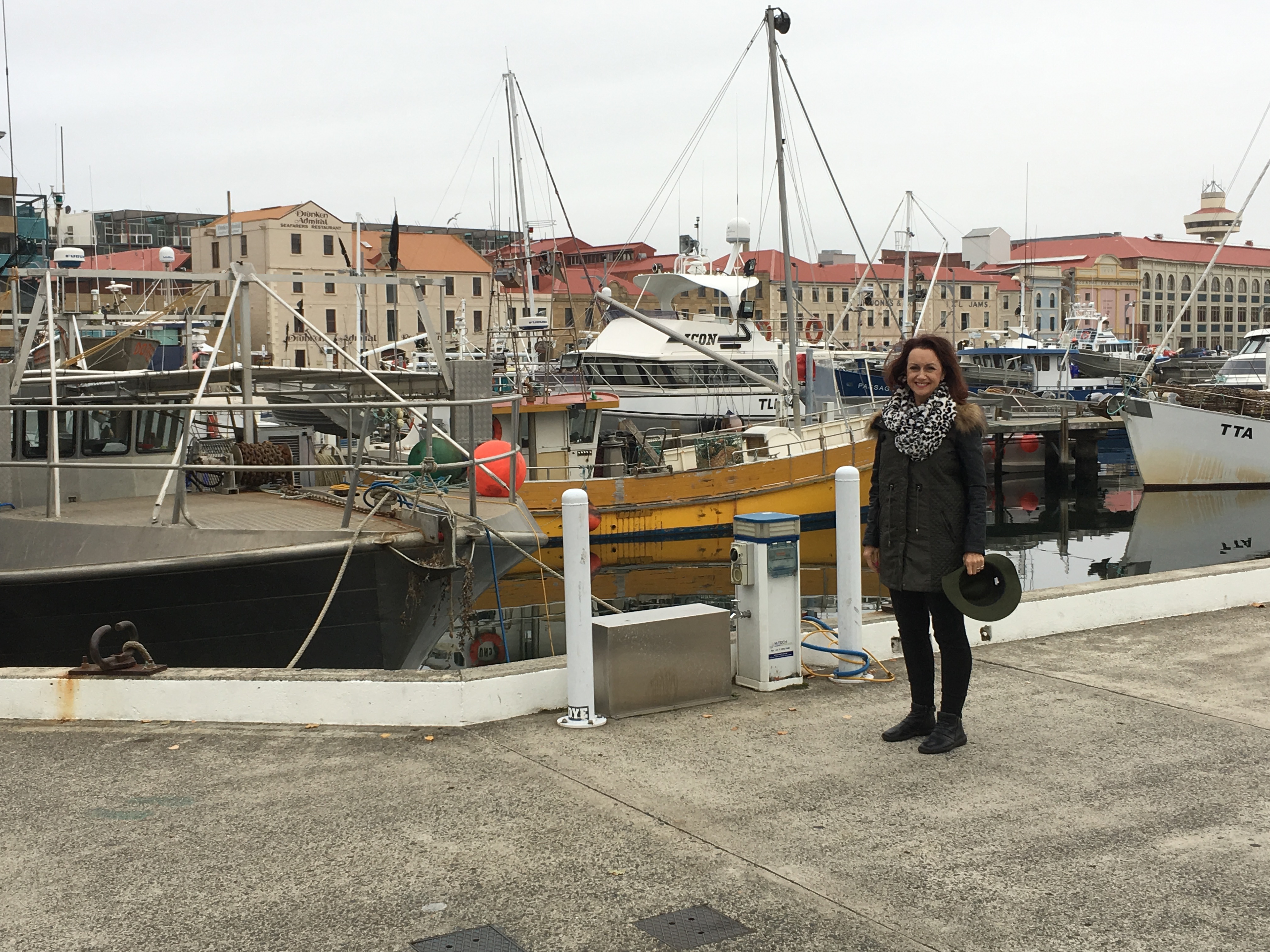
After settling in, we set off for the river stopping on the way to have a coffee and a hot chocolate in a homely café set up with old leather lounges. From here we walk down to Constitution Dock in Sullivans Cove home to Hobart’s fishing fleet. It’s also famous as the finishing line for the annual Sydney to Hobart Yacht Race, which begins on Boxing Day and wraps up here on New Year’s Eve.
It’s a perfect day to be down here, cool but with no breeze at all. Like most things in Hobart, the Dock is very old, built in 1850. It’s an attractive rock-walled marina backed by restored Georgian sandstone warehouses but awful to think that it was all built by convict labour.
From here we visit the Tasmanian Museum and Art Gallery (TMAG) which has an extensive collection of natural history specimens including the skeleton of a Thylacine better known as the Tasmanian Tiger. This is why we wanted to come here.
And since the Thylacine became extinct in 1936, the Tasmanian Devil became, and still is, the largest carnivorous marsupial in the world – the other reason we’ve come here. Glass showcases exhibit stuffed specimens of the ugly, little things – black furry chunks that make loud screeching noises and have a horrible smell. Nothing much going for it at all and now the poor creatures face extinction themselves due to a facial tumour disease – life can be cruel!
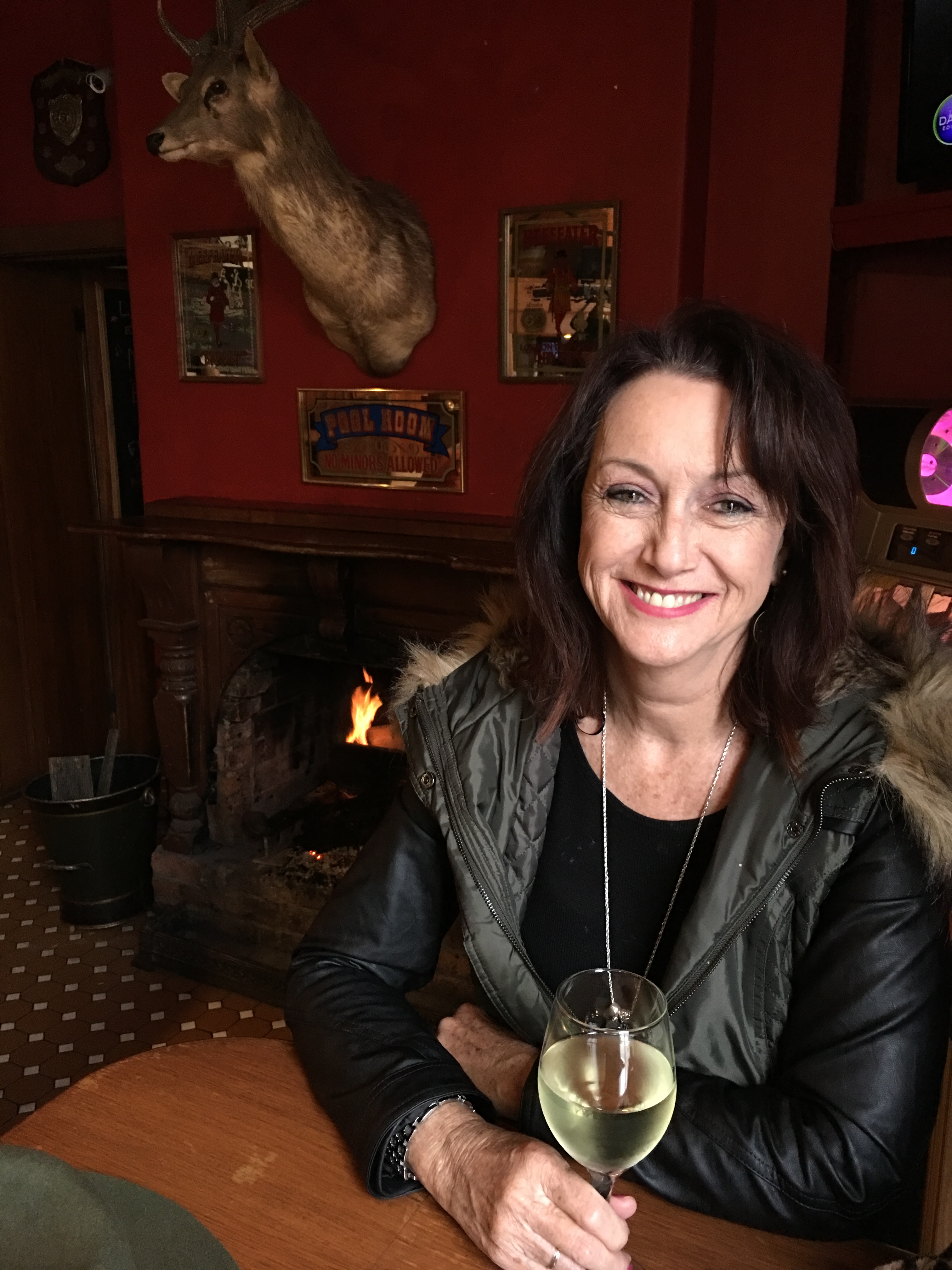
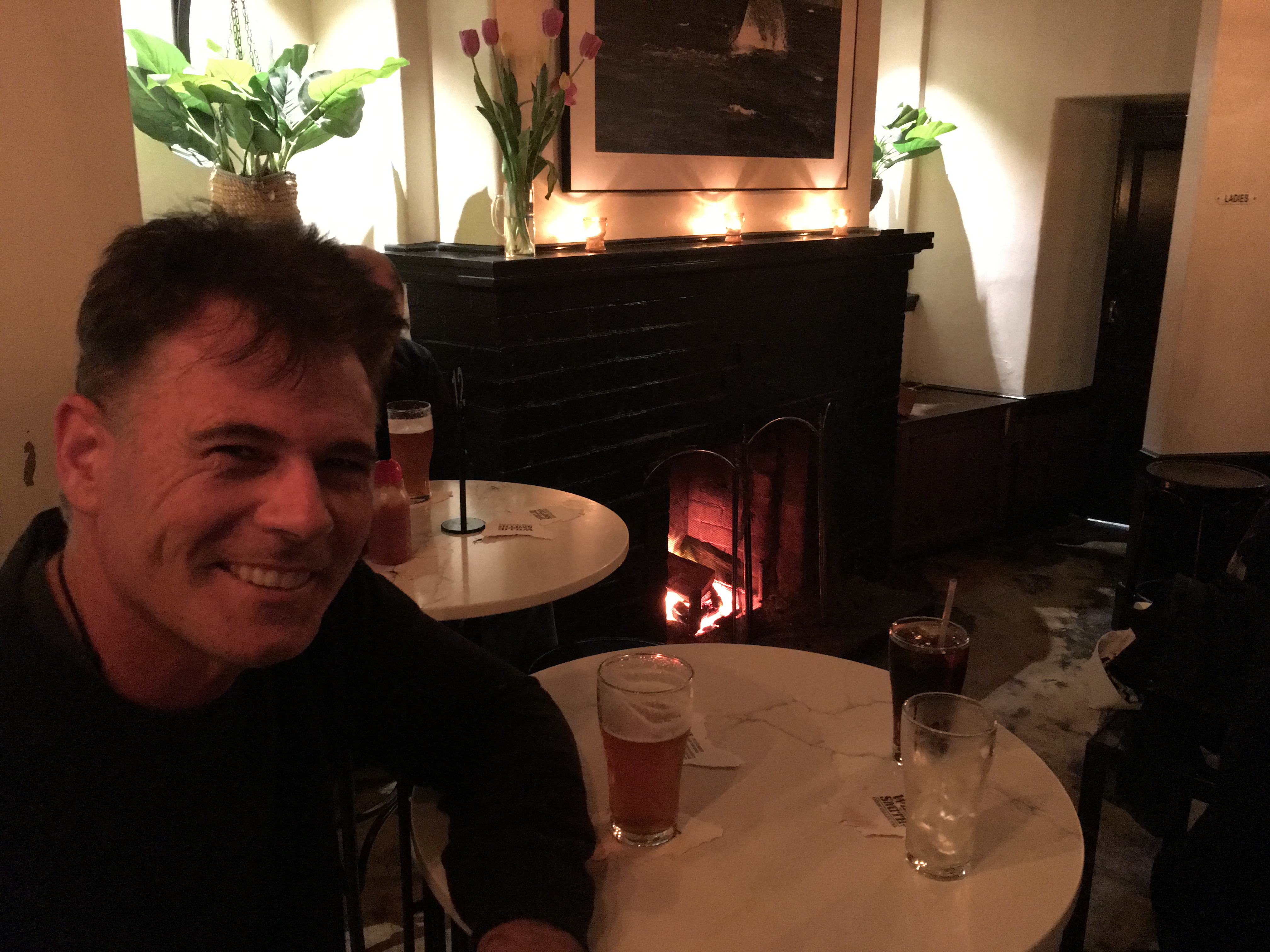
Okay, enough educational stuff, we seek out the Hope and Anchor, the city’s oldest pub built in 1807. More cosiness here with a roaring fire, dark painted walls, an animal head over the fireplace and lots of warm wood.
Back outside we check out Mawson’s Hut but can’t be bothered paying to get in. So back to the Montacute for an afternoon rest.
On dark we set off again for the water and choose one of the historic public houses (pubs) to have a meal and a drink. We choose The Whaler, built in the early 1800’s during the whaling days here in Tasmania. With sandstone walls inside and out it really does feel like stepping back in time.
Saturday 13th May, 2017
Hobart
Changing hotels every day is what we always do when we travel and this is the plan for this morning. Most people think we’re crazy but we like to have different experiences and stay in different areas. It creates more memories – believe me.
So checking out of the Montacute we walk over to Liverpool Street in the city to book into the quirky Alabama Hotel. Built in the 1850’s, it’s very eclectic, packed with art and retro décor. Like the Montacute, we need to share bathrooms but for $100 per night it’s another bargain.
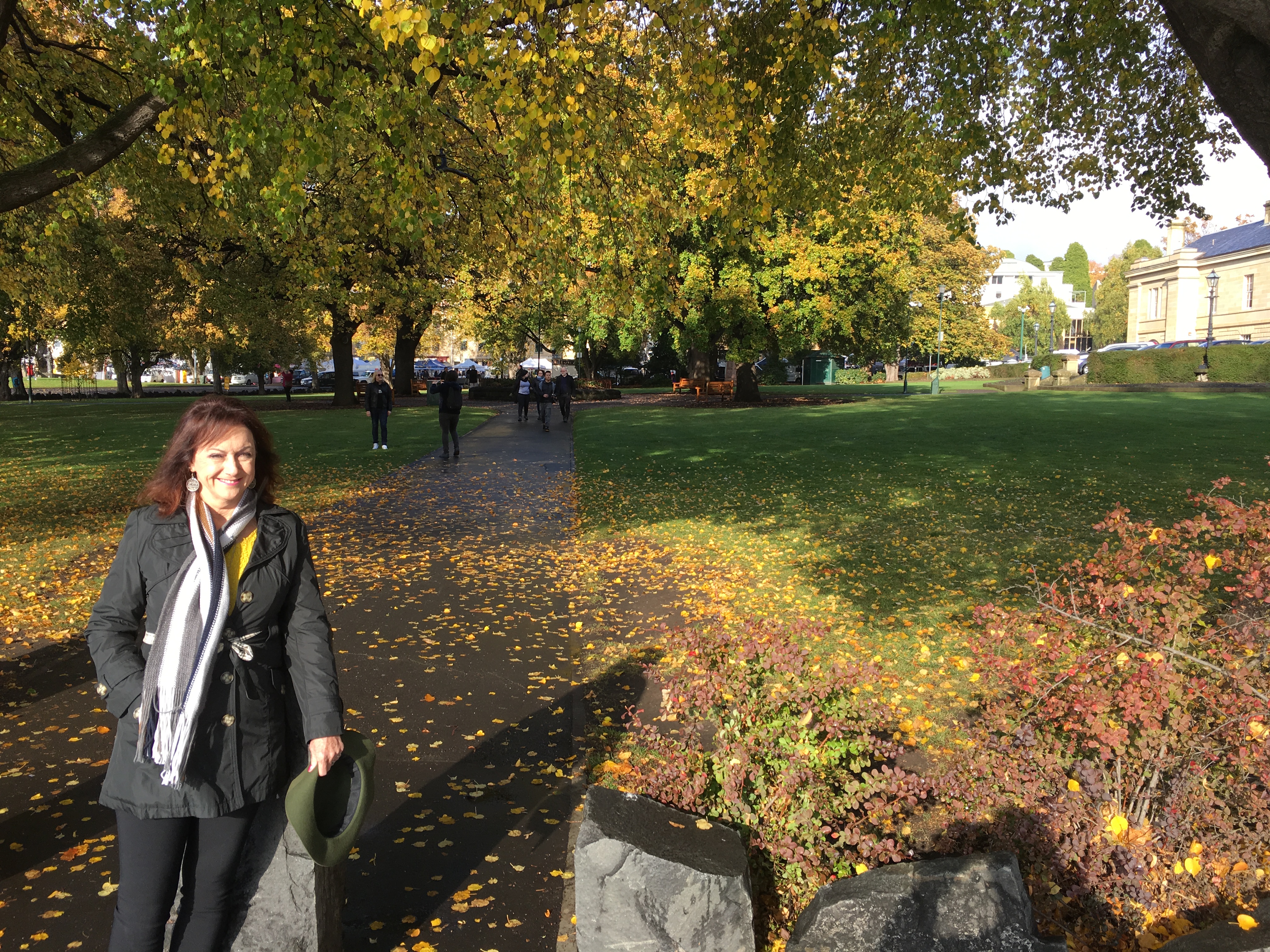
Back outside, we wander around the city then down to St David’s Park which is looking gorgeous at the moment with all the trees glowing yellow or red in their autumn colours. This area was once a cemetery, St David’s Cemetery in fact. But then in the early 20th century it was decided to turn it into a park. Lots of the bodies were moved but most are still here beneath us. Wow!
Now it’s time to head to Salamanca Market on the waterfront. This open-air market is only held on Saturdays with around three hundred stalls set up in front of the gorgeous sandstone warehouses. Even though there are hundreds of people, it’s quite spread out so it doesn’t feel overly crowded.
No crappy made-in-China shit here but also no interesting second-hand antiques and collectibles like the flea markets I’ve always loved rooting around in. This is all that wanky locally hand-crafted clothing, soaps, jewellery and timber ware that everyone else in the universe loves except for me! All expensive as hell but I’m not interested in buying anything anyway. We just have a wander then stop for a coffee and hot chocolate in one of the busy cafes.
Time now to catch the MONA Ferry which crosses the Derwent from the Brooke Street Pier on this side to the Museum of Old and New Art (MONA). One of the main reasons we’ve come to Tasmania is to visit this famous and controversial museum. Since it opened in 2011, international tourism has boomed with MONA being the island’s main attraction.
Down on the wharf we line up in the ‘posh people’ line as we’ve bought tickets to travel in style in the luxury VIP lounge called The Posh Pit. It’s wonderful, daaarling! Plush seating, floor length windows, a private bar with waiters, canapes and other appetizers plus plenty of wine and beer.
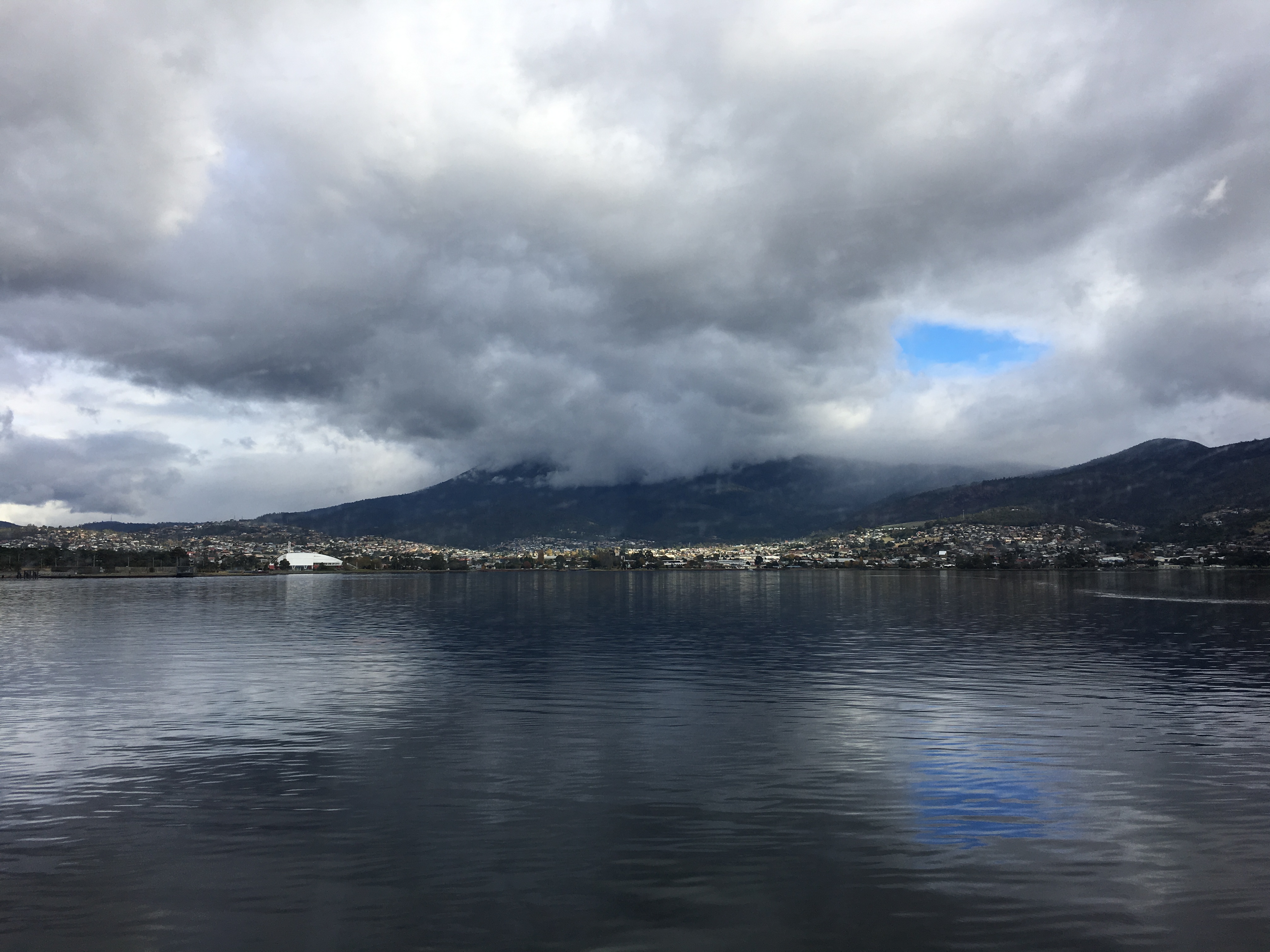
The crossing is perfect, chilling out in our classy lounge area with views of Kunanyi (Mount Wellington) soaring 1,200 metres above the city. We don’t have a great view today though with clouds hiding its peak. And on the opposite bank, here are the terracotta walls of MONA rising from the Derwent River.
After thirty minutes, we’re pulling up at Franklin Wharf and the entrance to MONA where we pay the $25 entry fee. The museum has been carved into the sandstone cliff so that most of it is underground. Even before we see the exhibits I’m blown away by the architecture of this crazy place but then, combining exhibits and architecture is the first thing we come across.
This is the Waterfall of Words, named “Bit.Fall,” Overhead valves release synchronized water droplets that form words as they fall through the air. All this is happening with a stunning sandstone cliff as the backdrop.
Going up ramps and elevators, we explore more floors. In the biggest gallery room is “Snake” by Sir Sydney Nolan. It’s huuge at forty-six metres long and made up of hundreds of panels that create a larger image of a snake.
Then there’s the brilliant red fiber glass sculpture of the “Fat Porche” and Brett Whiteley’s giant painting “The Naked Studio”.
But, of course, we must seek out the ‘vagina wall’ titled “Cnts… and other Conversations”. This is a series of plaster casts of women’s vulvas/vaginas which is supposed to challenge body image anxiety. Like every female who sees this, I try to identify my own vajayjay but because I don’t spend much time with my head between my legs I just pick the ‘prettiest’ one. Ha ha
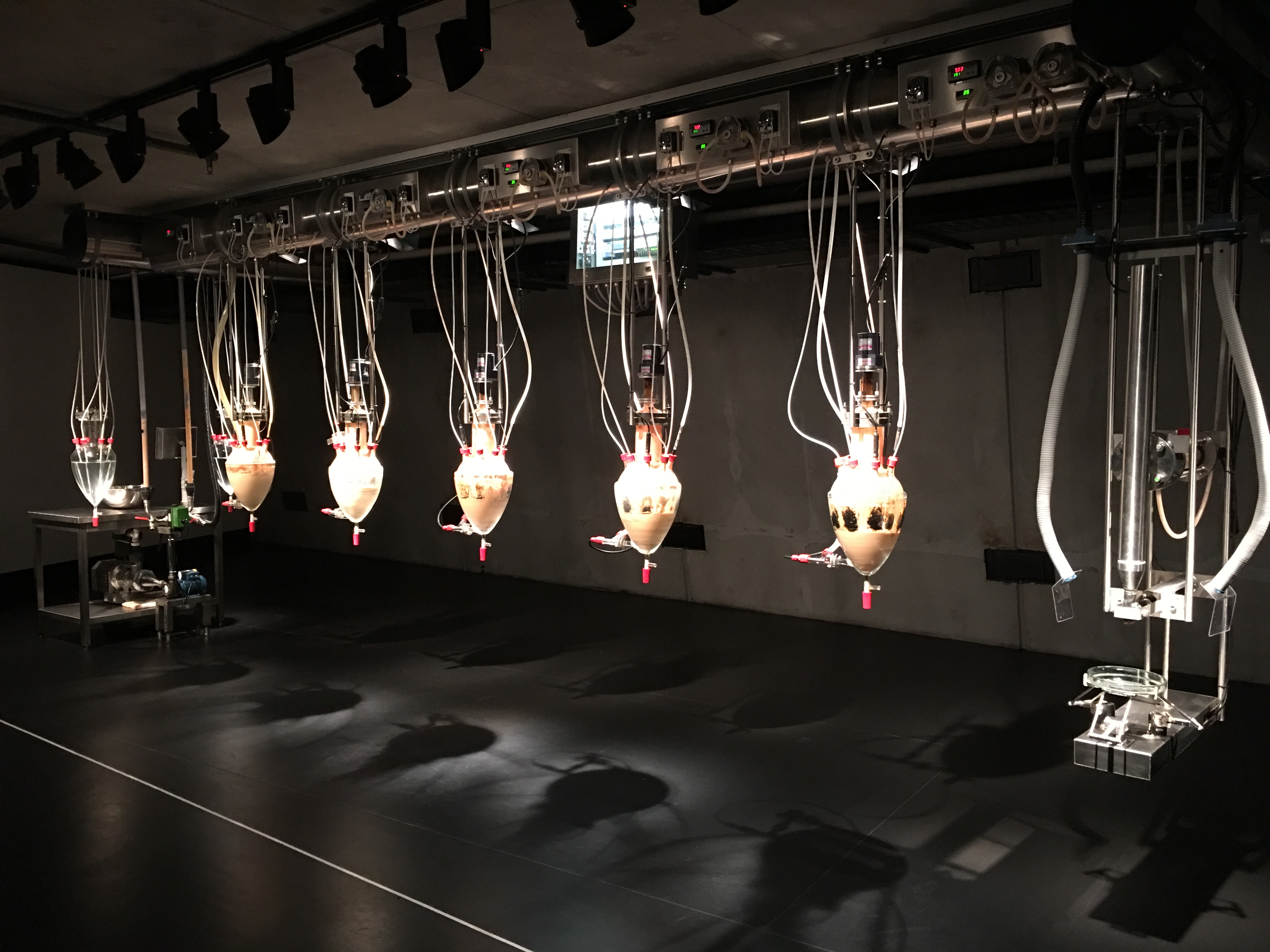
The other famous exhibit is the ‘poo machine’ called “Cloaca Professional” that mimics the human digestive system. We watch one of the twice daily “feedings” when small portions of food are placed into a receptacle where it’s ingested, then passes through a series of processes before it’s pooped out at the other end! Brilliant!
But who/why/how does this mad place even exist? Apparently, all this ingenuity and craziness was created by the very eccentric Tasmanian art collector and professional gambler David Walsh. His story is movie-worthy as he made his millions on blackjack and racetrack gambling which he then used to create MONA.
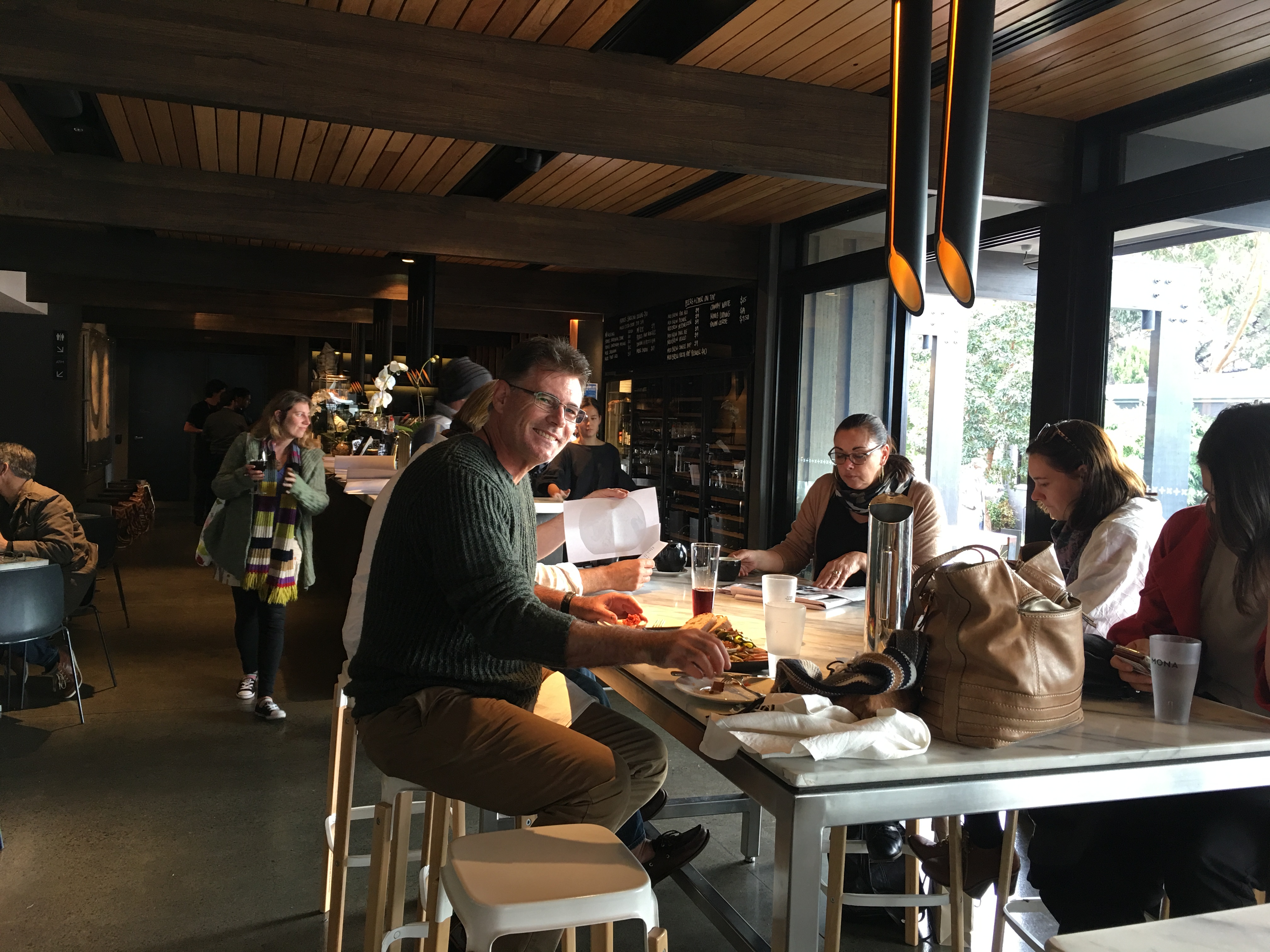
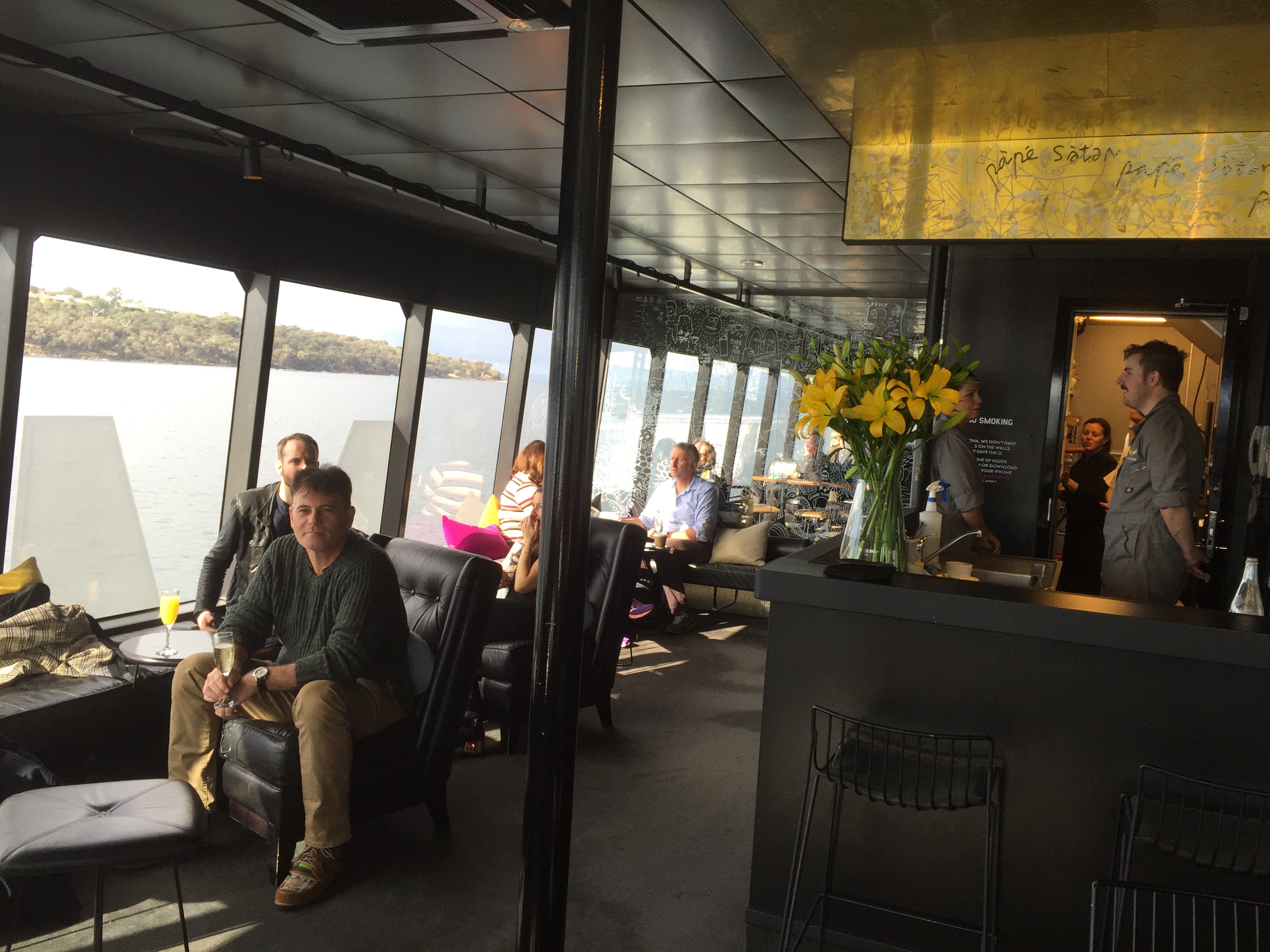
But back to the Museum. After an hour or so, we emerge on the top level where we check out the outside exhibits then have a light lunch in the Morilla Wine Bar. After, we head back down to the wharf for our return ferry to the Hobart Waterfront. We make most of the short trip by drinking wine, beer and mimosas and snacking on the very fancy appetizers. This Posh Pit ferry experience has been so much fun and an absolute bargain for only $55 each.
Back at Brooke Street Wharf we come across horse drawn carriages, replicas of 19th century carriages, that can be hired for jaunts around the colonial waterfront area. It looks fun but expensive!
Nearby are Hobart’s famous floating fish n’ chip punts, so even though we’re not that hungry, we must have this unique experience. We choose Flippers for its cute fish shape and find a spot inside so we can view what’s going on in the harbour. Not surprisingly, the battered fish is very good along with fat chips and a salad.
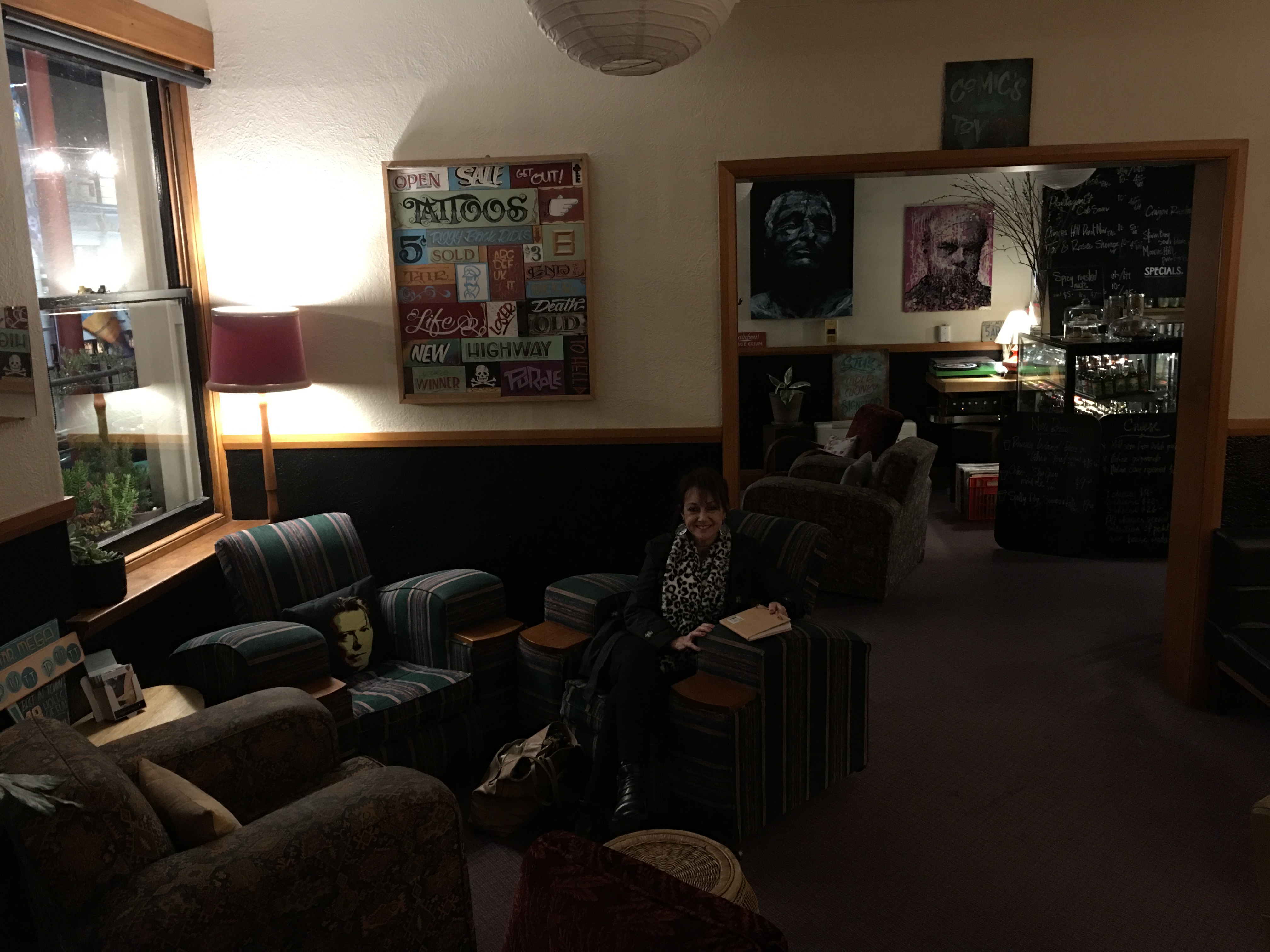
What a great day already! Back at the Alabama, we change into our going out clothes and hang out for a while in the comfy lounge area just off the bar. Threadbare art deco chairs, old table lamps, potted plants, books and cushions make for a welcoming atmosphere and we like it here a lot and would choose it over the Montacute – prefer this grungy, shabby, lived-in feel.
Instead of heading back down to the waterfront, we’ve decided to spend the night in North Hobart. This is only a short taxi ride where we’re dropped in the Elizabeth Street restaurant and bar area. This has a great vibe and obviously a nightlife hotspot.
There are so many places to pick from along here and we stop at a couple of trendy places for a drink then wander down the street deciding where to eat. The choice is endless – Thai, Indian, Chinese, Italian, Japanese, Turkish, and Modern Australian.
We end up having an excellent Mexican meal at Pancho Villa. While the food is great the ambience is the big drawcard for us. It’s dark and moody with high ceilings, a huge metal chandelier, intricate light fittings and tall arched windows fitted with stained glass in blues, yellows and pinks. And then there’s the wall of skulls, reminiscent of the vagina wall at MONA. Just saying!
Taxi home fairly early.
Sunday 14th May, 2017
Hobart to Richmond to Port Arthur to Hobart
We wake to another sunny but cool day. Just the right weather for our day trip to Richmond and Port Arthur.
Picking up our hire car, we check out of the Alabama and check in to Lenna of Hobart in Battery Point village. Lenna is an Italian Renaissance-style sandstone mansion built in 1874 and expensive for us at $195 per night but worth it to stay in this gorgeous National Trust building.
Now we decide to visit Farm Gate Market in Bathurst Street. It only happens on Sundays so we may as well take a look even though we won’t be able to buy much as we’re flying home tomorrow and taking fruit across state borders is a no-no. But we really must buy some apples – Tasmania is the Apple Isle, get it?!
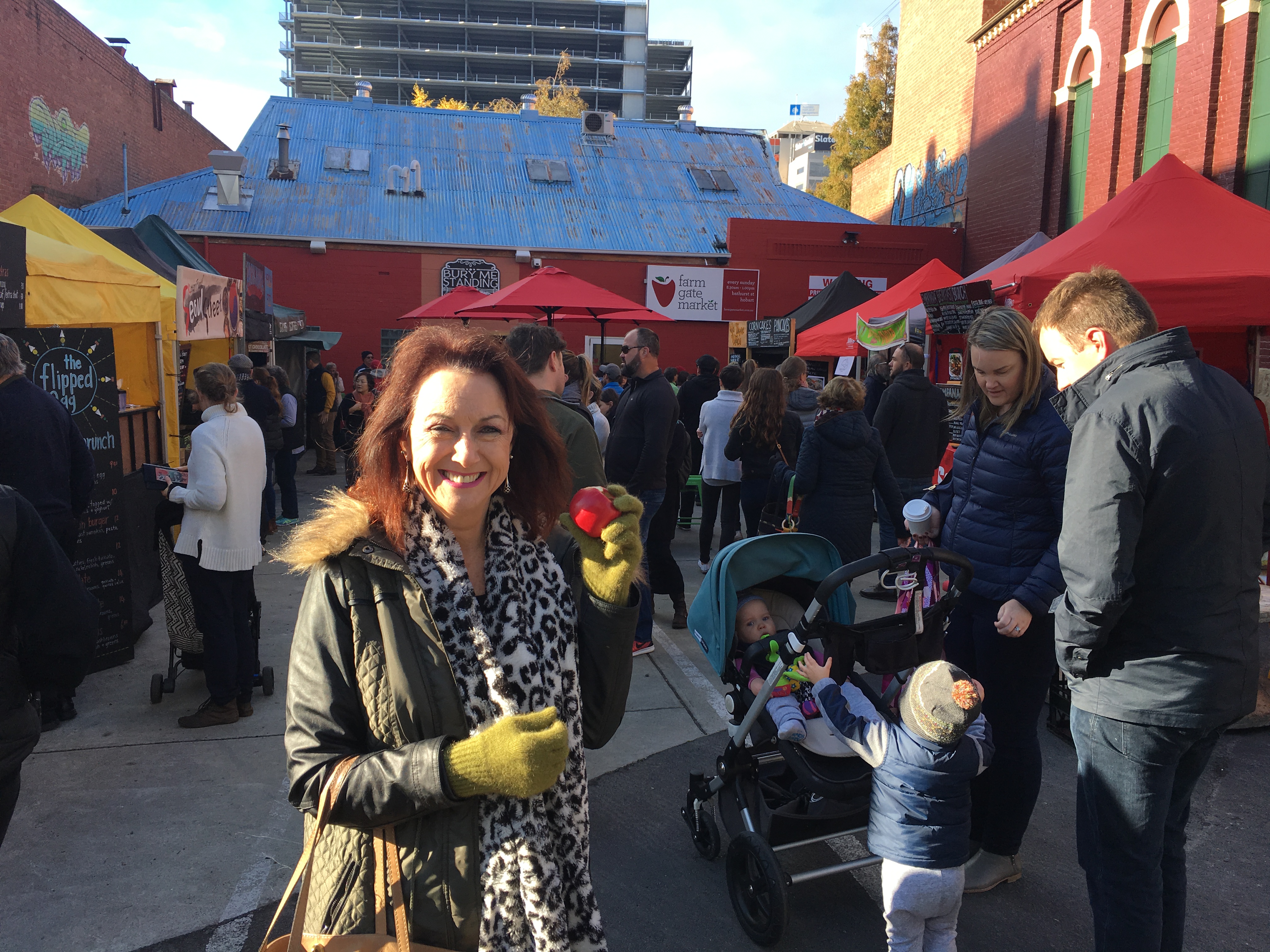
The market is buzzing with healthy people buying healthy fruit and vegetables, seafood, meat, cheeses and honey. And the philosophy for the market is that everything sold here, whether fresh or cooked, must come solely from Tasmanian producers and growers.
We don’t stay too long, firstly because we never stay anywhere too long, and secondly because we need to get our arses to Richmond. So, heading north along the Tasman Highway through the beautiful Coal River Valley wine region, we arrive in historic Richmond in less than half an hour.
Built by convicts in 1825, Richmond Bridge is famous as the oldest bridge in Australia which is still in use so this is where we head as soon as we arrive. It’s just as impressive as the photos with tall golden poplars at one end and wide grassy areas that lead down to the Coal River. Like most things in Tasmania, the six arches of the bridge are made of sandstone.
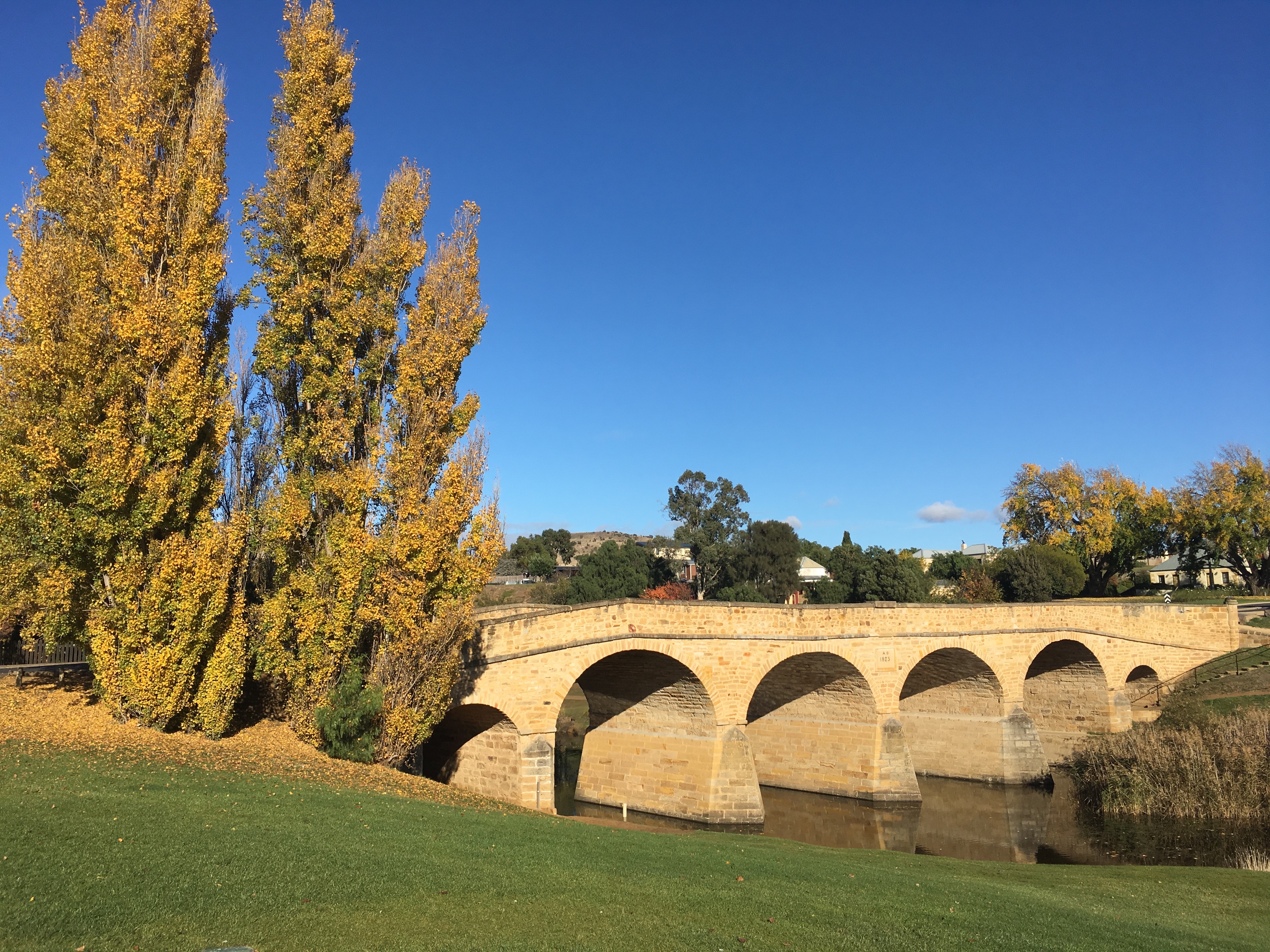
In fact, many of the old Georgian buildings here in Richmond – fifty actually – have been built with the same warm, golden sandstone including St John the Evangelist Catholic Church which is the oldest continuously used Catholic Church in Australia – lots of ‘oldest’ things here.
Besides the bridge and the church, this whole colonial-era town is a photographer’s dream. The village is beautifully restored with shops, galleries and cafes now inhabiting the old Georgian buildings. We stop for a cuppa and Eggs Benedict at one of the sunny cafes then visit a jumble sale at the church hall. Now this is the type of market I love!
Before leaving, we wander around town then set off for Port Arthur. From here it’s about eighty kilometres across the Tasman Peninsula via the Arthur Highway which passes through forests, farmland and pretty open countryside. In some parts, mist lays low in small hollows and dark clouds lie on the horizon.
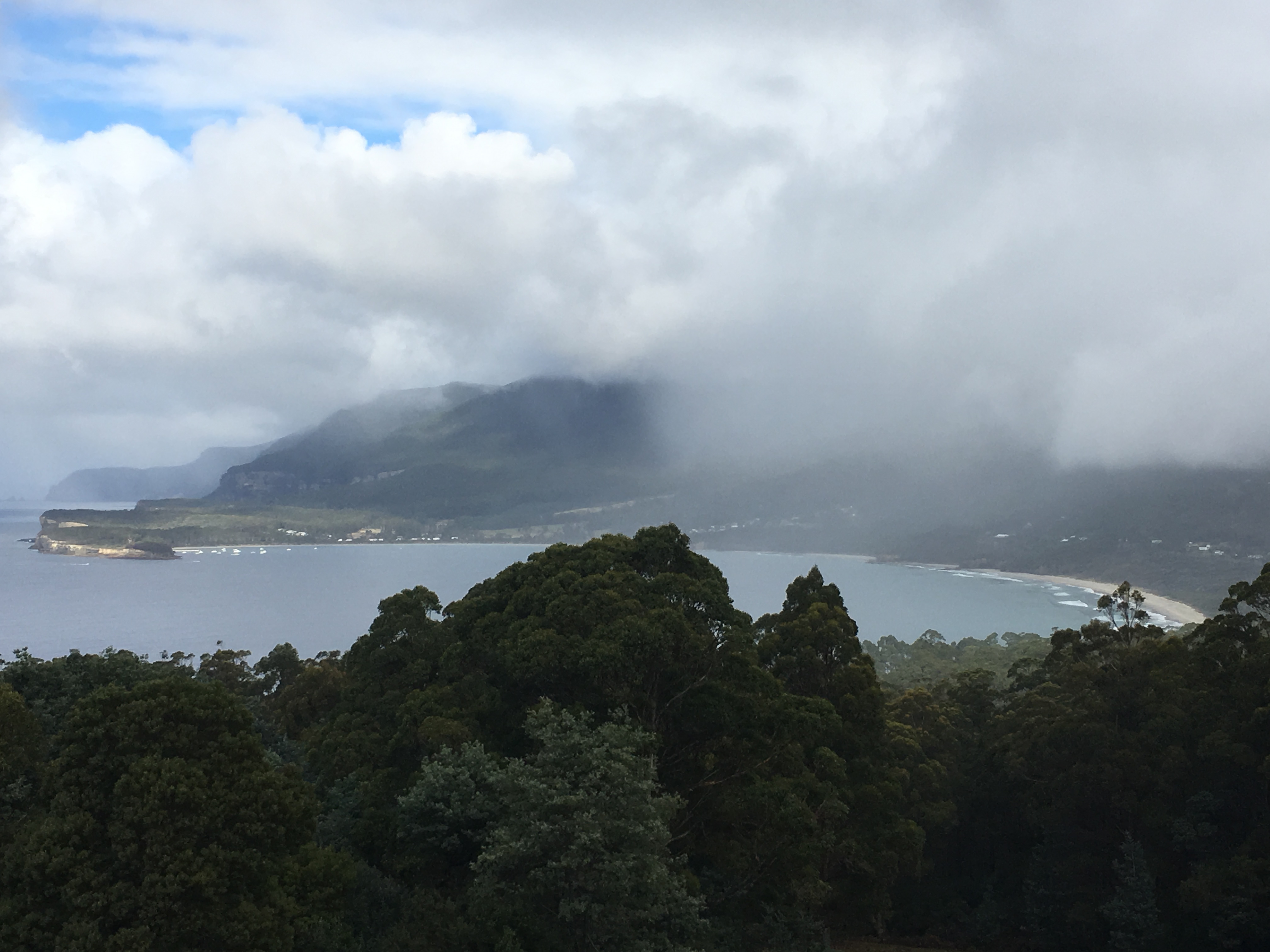
After an hour’s drive, we arrive at the sprawling complex of the Port Arthur Historic Site. This is said to be the best preserved convict settlement in Australia. Built in the 1830s, it was a brutal penal colony where Britain’s worst offenders were sent as punishment. But not all were serious offenders as you could be sent here for petty crimes and even juvenile delinquency.
By now the clouds have disappeared and the sun is shining in a brilliant blue sky. I don’t really know what I expected but I didn’t imagine how really lovely this place would be. More than thirty historic buildings and ruins us spread out on the one-hundred and fifty-hectare site that includes lawns, English Oaks, gardens and seaside views of Mason Cove.
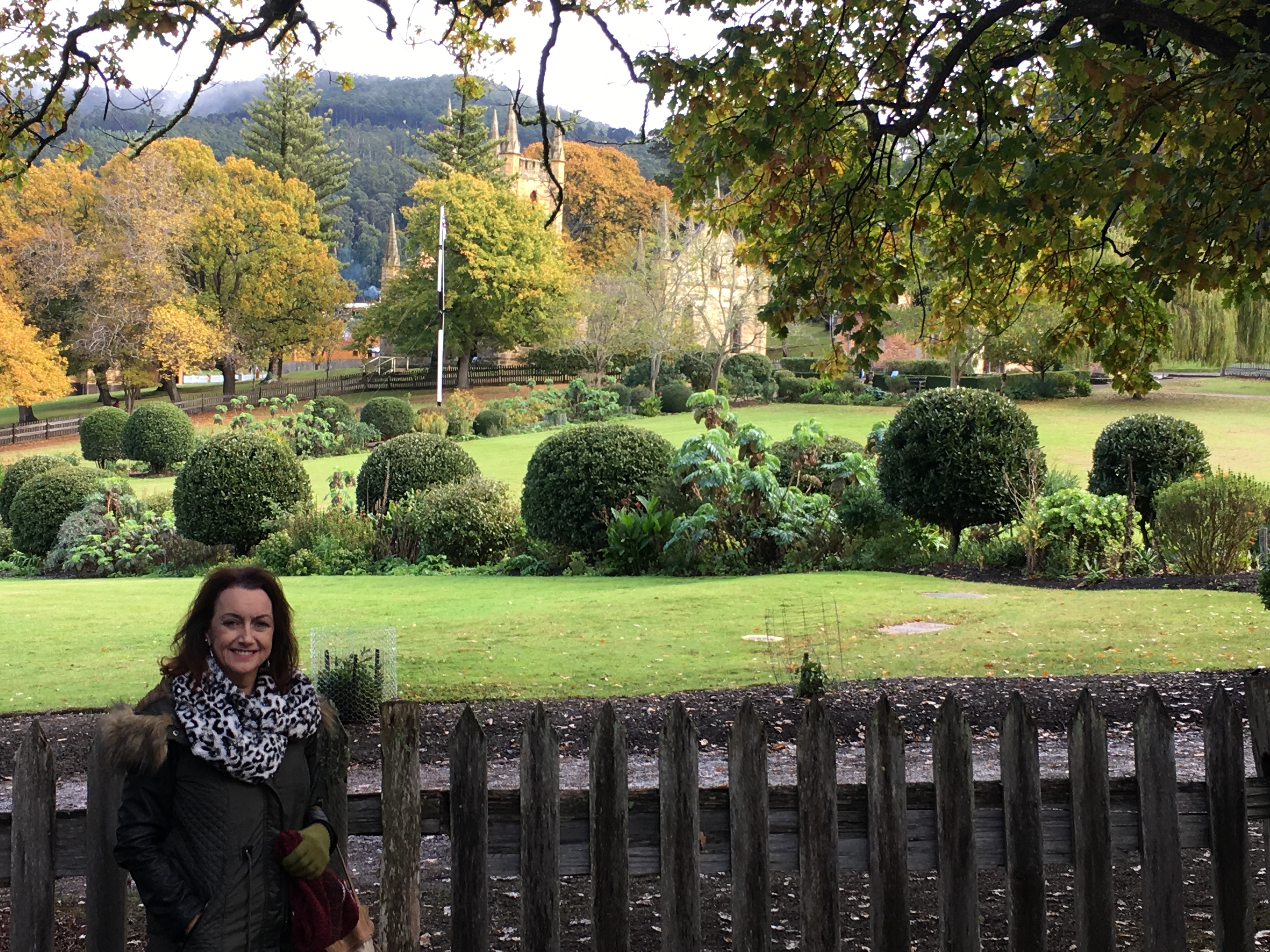
At the office we pay for the $55 entrance fee then decide which complimentary guided talk we’ll do first. We choose the Penitentiary as it’s the most dramatic although now it’s just a roofless shell after it was destroyed by fire in the late nineteenth century. Later we visit the Convict Church, the Separate Prison and the Commandant’s House. The horror of isolation and torture the conflicts must have endured here is hard to imagine.
But Port Arthur is also the site of a more recent unthinkable tragedy when in 1996 a lone gunman killed thirty-five tourists. It’s the deadliest mass shooting by a single person in Australia’s modern history.
Many victims were killed in the Broad Arrow Cafe which has understandingly been demolished and a new cafe built nearby. As a sign of respect, this tragedy has been dealt with dignity and never mentioned in any of the talks. The only good thing that came out of this is that it led to Australia’s tightened gun laws.
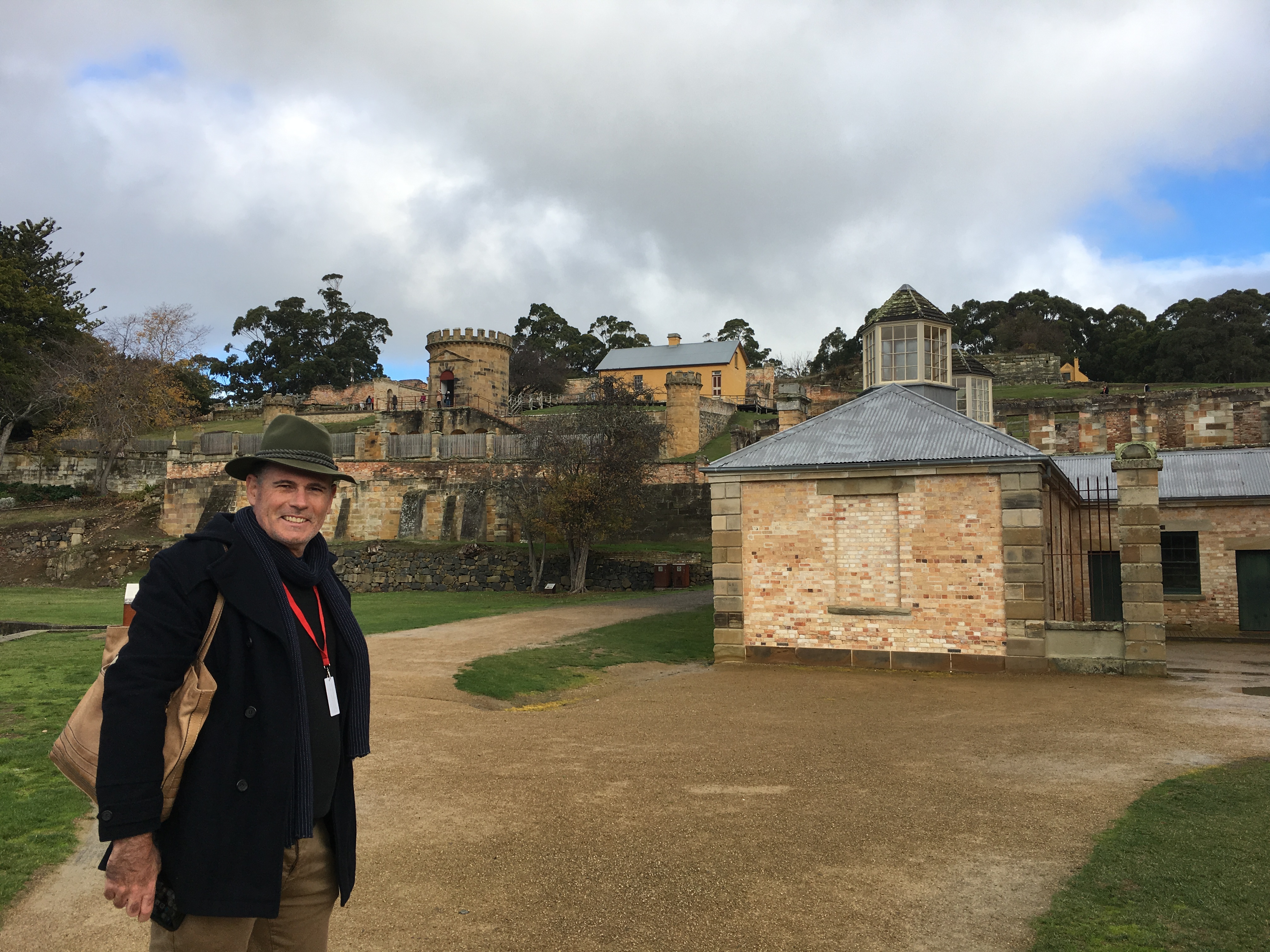
Before we leave, we join the harbour cruise to circle the Isle of the Dead which was a burial island use as a cemetery for the convicts. We also chug past Point Puer Boys Prison on its own small island and have a completely different view of the main site from the water.
Back in Hobart, we have showers and dress up for another night out. Before heading out, we have drinks in the Chandelier Lounge Bar and explore some of the other rooms in this historical old home because, guess what? You don’t actually stay in the house itself but in a new accommodation wing – very nice but just a typical hotel room really.
Close to Lenna, we come across a lively pub with a band and lots of already drunk middle-aged people bopping their hearts out. It’s so much fun here but after a while, we decide to look for somewhere quieter and somewhere more heritage – we ARE in historical Hobart after all!
This next place is all we hoped for – cosy, an open fire, lots of warm wood and a sign that reads ‘Drinking Consultants in Front Bar’.
A nice walk home in the crisp night air.
Monday 15th May, 2017
Hobart to Sydney
As part of the price of our room is a complementary continental, serve-yourself breakfast in the Alexander Room. Like the rest of the building, this has been beautifully restored with two marble fireplaces, intricate ceilings, arched French doors opening onto a balcony and even ionic columns – I want one! All this wonderful architecture is set off with a chandelier, white linen table-cloths and gilded mirrors above the fireplaces.
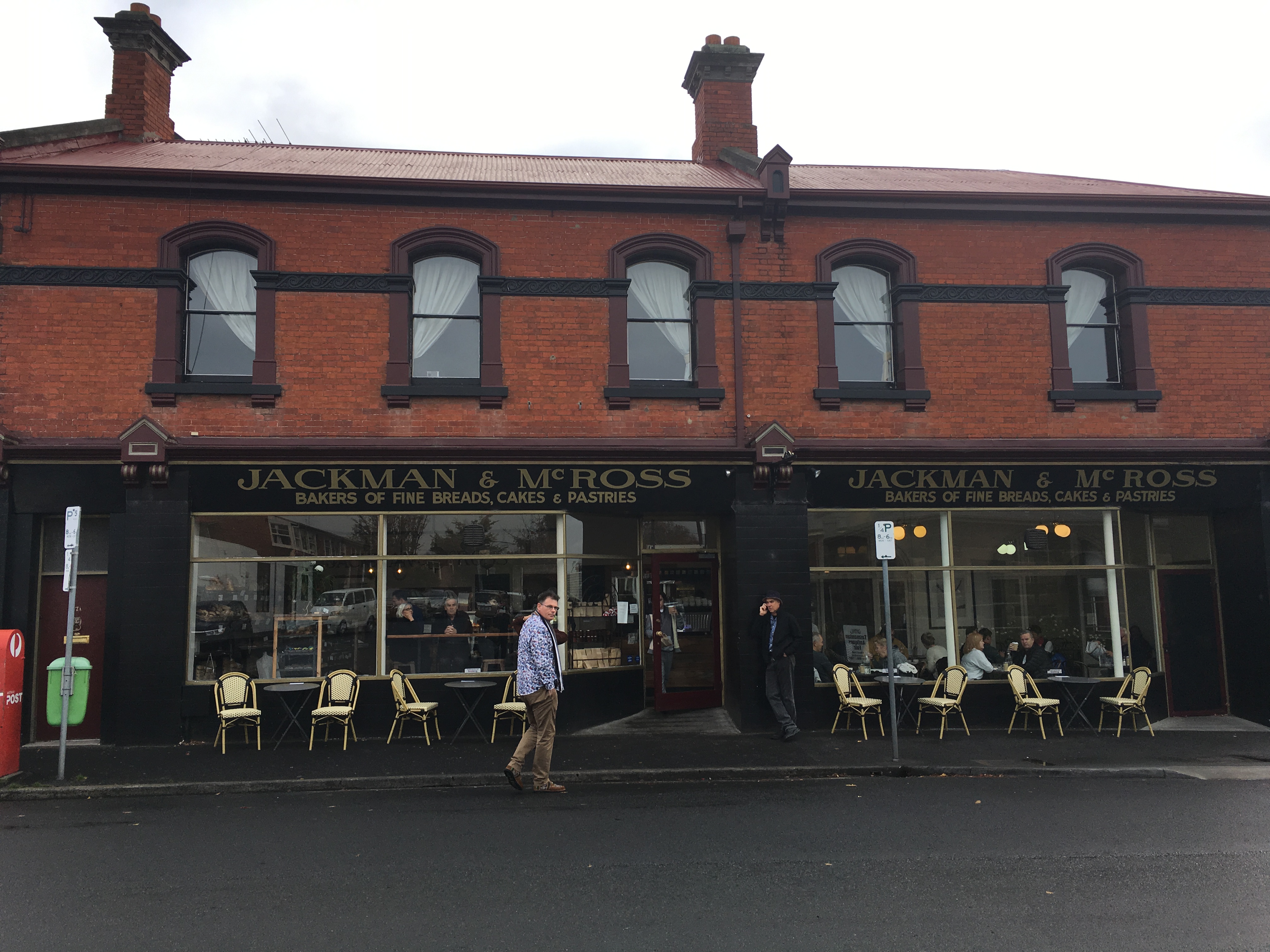
One place that stands out in Battery Point is Jackman and McRoss, a 19th century bakery on Hampden Rd. A much-loved part of the community, it’s known for its quality and traditional baking. We must go! Finding a tiny table inside, Mark has a coffee and we share a bacon and egg baguette.
This afternoon we’re flying home but we want to visit a couple more places before we head for the airport.
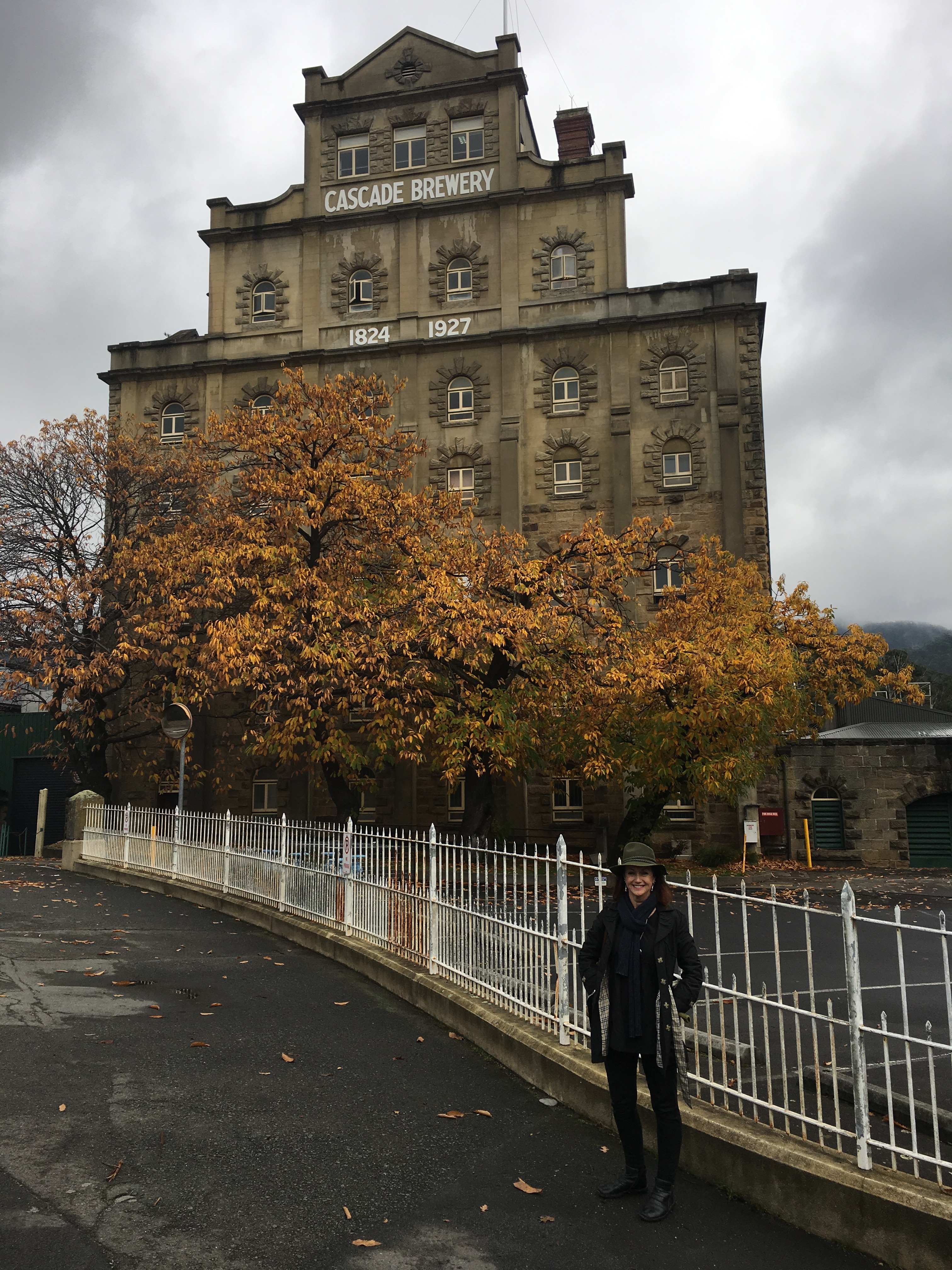
One is the Cascade Brewing Co set in the foothills of South Hobart. Established in 1884, it’s famous as the oldest operating brewery in Australia. We’d love to do a tour but it doesn’t fit in with our timetable so we now visit The World Heritage-listed Cascades Female Factory.
Over half of the 25,000 convict women sent to Australia in the early nineteenth century came here where they suffered terrible treatment, overcrowding and disease leading to an excessively high death rate. This included children and babies. We wander around the walled sandstone yards thinking that all this happened not that long ago really.
But now it’s time to set off for the airport to drop off our hire car then fly out an hour later.
Final Thoughts: A very interesting few days. We’ve learnt a lot about our history and had some fun as well. Would we go back? Maybe when I’m veeeerry old but until then we’ll be jetting off to somewhere more exotic … and hot!


